Ippudo
Our verdict
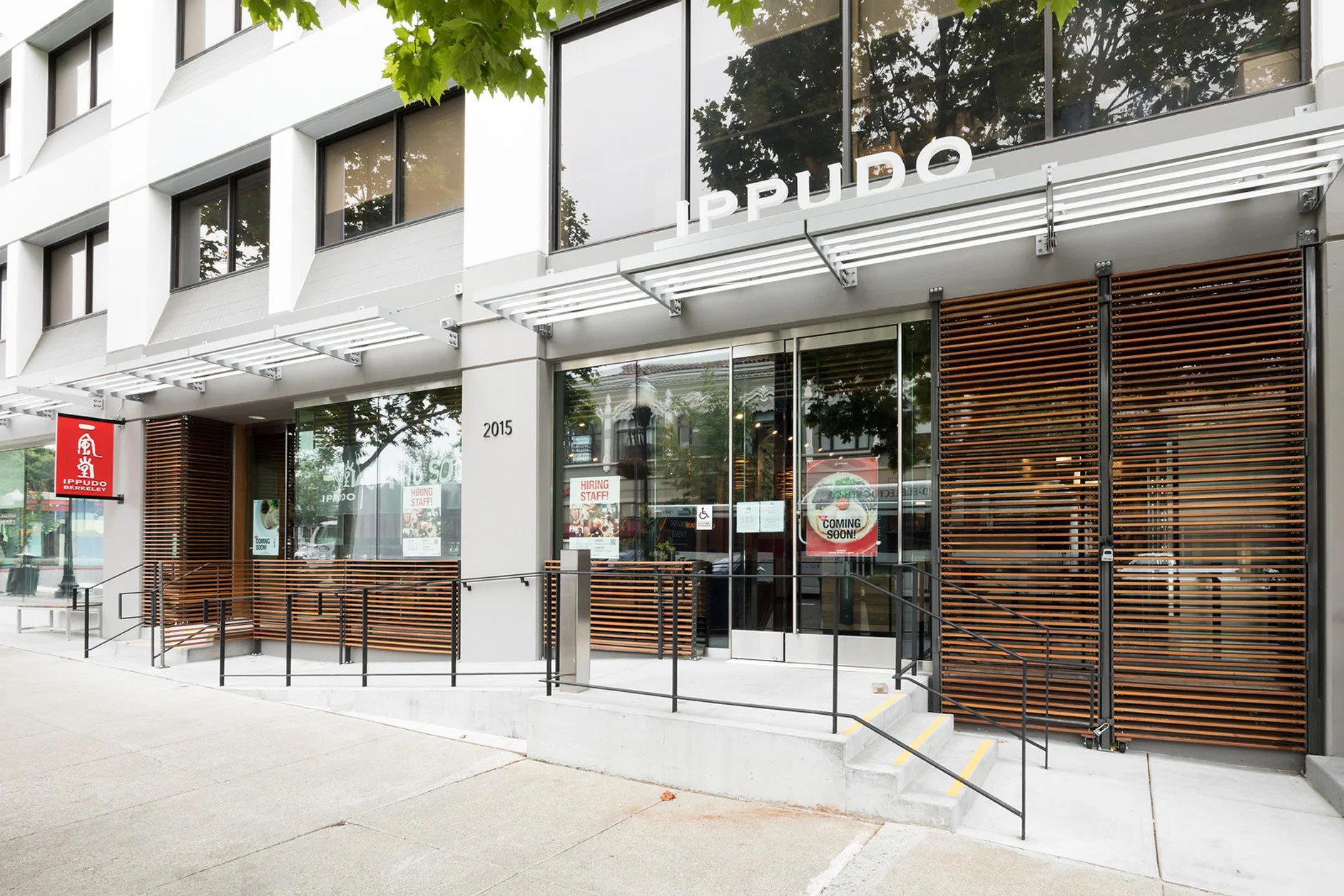
Ippudo brings Hakata-style ramen to Berkeley's Southside neighborhood, delivering the tonkotsu tradition that made the original Fukuoka chain a reference point for the format globally. Located at 2015 Kala Bagai Way, the Berkeley outpost sits within a dining corridor that increasingly draws comparisons to the Bay Area's broader Japanese food culture, where broth-focused cooking has carved out serious, loyal audiences.

Pearl is the En Primeur Club membership app — saves, bookings, and concierge access live there. Same editors, same standards.
- Address
- 2015 Kala Bagai Wy, Berkeley, CA 94704
- Phone
- (650) 963-2508
- Hours
- Mon–Sat 11 AM–10 PMSun 11 AM–9:30 PM
- Website
- ippudous.com
- Directions
- Get directions
- Booking
- Book on Resy
The menu
What to order
- Shiromaru Classic
- Akamaru Modern
- Karaka Spicy
What Hakata Ramen Looks Like at Scale
There is a version of ramen that exists as comfort food and a version that exists as craft. Ippudo, the Fukuoka-born chain with locations across Asia, New York, and now the Bay Area, has always occupied a deliberate middle ground: producing Hakata-style tonkotsu at volume without collapsing the standards that define the format. The Berkeley location at 2015 Kala Bagai Way sits in that same register. Southside Berkeley, anchored by the UC Berkeley campus and a dense corridor of independent restaurants, is an area where dining preferences skew toward specificity. Ramen here competes not just with other noodle formats but with the broader expectation that a bowl should have a reason to exist.
Hakata ramen has a clear cultural lineage. The style originates in Fukuoka, on Japan's Kyushu island, where the defining variables are a milky pork-bone broth cooked to opacity, thin straight noodles served firm by default, and a spare topping set that keeps the broth as the primary argument. What Ippudo exported from that tradition, starting with its 1985 founding in Fukuoka and its landmark New York opening in 2008, was an interpretation that maintained those structural commitments while making the format legible to non-Japanese audiences. Berkeley inherits that lineage.
The Southside Setting
Kala Bagai Way is a short street just east of Telegraph Avenue, within walking distance of the main UC Berkeley campus buildings. The address places Ippudo in a zone that functions as both a student dining area and a destination for East Bay residents who treat the neighborhood as a dining corridor rather than just a campus amenity. The physical approach involves the kind of density typical of Southside: storefronts close together, foot traffic steady across lunch and dinner, the ambient noise of a neighborhood that operates at high occupancy most of the week.
Inside, the ramen-house format follows conventions established by the category globally: counter seating alongside table configurations, a design language that nods toward Japan without over-performing it, and a pace of service calibrated for turnover. That pace is not a flaw but a feature of the tonkotsu format, where the broth is the slow element and everything else moves efficiently around it. Readers considering the Bay Area's broader Japanese dining options can cross-reference AKEMI in Berkeley for a higher-ceremony Japanese dining experience in the same city.
Tonkotsu as Cultural Document
To understand what Ippudo is serving, it helps to understand what tonkotsu actually requires. The broth is produced by boiling pork bones at a rolling boil for hours, a process that emulsifies the collagen and fat into a white, viscous liquid with depth that is architectural rather than subtle. This is not a broth that gestures toward pork flavor; it is pork flavor concentrated to a point where every other component in the bowl has to hold its own against it. Noodles are thin and alkaline, with a snap that resists the broth rather than absorbing it passively. The canonical toppings — chashu, soft-boiled egg, nori, green onion — function as seasoning notes rather than focal points.
Ippudo's version of this tradition has earned global reference status not through quiet obscurity but through documented volume and consistency. The New York location generated years of coverage in publications that track serious restaurant culture, and the chain's expansion across Asia built a comparison set that most ramen operators in the United States cannot match. For Berkeley diners who have encountered the format in Tokyo or Fukuoka, the question is always whether a transplanted version holds its structural integrity. That question is worth asking here as it is at any outpost of an internationally distributed concept.
Berkeley's Ramen Position Within Bay Area Japanese Culture
The Bay Area has a Japanese food culture that runs deeper than most American cities outside New York and Los Angeles. That depth reflects both historical Japanese-American community presence in the East Bay and a more recent wave of chef-driven Japanese concepts in San Francisco. Ramen specifically has tracked a familiar trajectory in the region: from novelty to destination format to a category dense enough to support genuine differentiation. Berkeley's dining base, partly shaped by university demographics and partly by a long-running local food culture with high ingredient standards, has proven receptive to ramen as a serious format rather than a late-night fallback.
Within that context, Ippudo's position is that of a known quantity with institutional credibility. It is not the same kind of operation as the hyper-local, single-location ramen specialists who have emerged in San Francisco, nor is it the experimental ramen-adjacent concepts that test format limits. It is a practitioner of a specific, well-documented tradition, executing that tradition at scale. For diners who want editorial context on where Berkeley sits within the Bay Area dining conversation more broadly, the full Berkeley restaurants guide maps the city's range across formats and price tiers. Adjacent Berkeley dining worth considering for a fuller Southside visit includes 900 Grayson, Agrodolce, Ajanta, and Angeline's Louisiana Kitchen, each representing a distinct culinary tradition within the same neighborhood cluster.
Calibrating Expectations
Ippudo operates in a different register than the fine-dining tier represented by destinations like The French Laundry in Napa, Lazy Bear in San Francisco, or Single Thread Farm in Healdsburg. It does not share the ambitions of tasting-menu institutions like Alinea in Chicago, Atomix in New York City, or Le Bernardin in New York City. What it offers is something calibrated and honest: a specific regional Japanese format, executed with the consistency that comes from institutional knowledge rather than daily improvisation. That is a different value proposition, and for a significant portion of diners, a more regularly useful one.
The comparison set that actually applies here is the tier of ramen-focused restaurants in the Bay Area that have built reputations for broth quality and noodle specification.
Planning Your Visit
Ippudo Berkeley is located at 2015 Kala Bagai Way in the Southside neighborhood, accessible from the Downtown Berkeley BART station by a short walk east toward campus. Given the location's proximity to UC Berkeley, expect demand to spike during the academic year, particularly at prime lunch and dinner windows midweek. Current booking information, hours, and any reservation requirements are best confirmed directly through the venue, as these details are subject to change with seasonal staffing and campus calendars. The format is designed for relatively quick table turns, which means walk-in access is typically more viable here than at counter-only omakase or tasting-menu formats. For diners building a longer East Bay dining itinerary, the Southside corridor connects efficiently to other Berkeley neighborhoods worth exploring, and the EP Club Berkeley guide provides the neighborhood-level mapping to do that planning coherently.
Frequently asked questions
Where is Ippudo located?
Ippudo is located at î2015 Kala Bagai Wy, Berkeley, CA 94704, Berkeley.
How does Ippudo Berkeley fit into the broader Bay Area Japanese ramen scene?
Ippudo occupies a specific position in the East Bay: it is a documented Fukuoka-origin chain with over 200 locations across Asia and the Americas, which places it in a different category from independent Berkeley ramen shops. The Bay Area's depth of Japanese food culture means the competition is real, but Ippudo's Hakata tonkotsu recipe has a traceable lineage back to founder Shigemi Kawahara's 1985 Fukuoka original. At the Berkeley address on Kala Bagai Way, that pedigree is the primary reason to choose it over a local alternative.
What should I order at Ippudo?
Ippudo's menu centers on its tonkotsu ramen, the Hakata-style pork-bone broth format that defines the chain's identity from Fukuoka to its Berkeley location on Kala Bagai Way. The Shiromaru is the baseline expression: a cleaner, lighter tonkotsu. The Akamaru builds on that with added flavor concentrate and fragrant oil. Either bowl is a reliable entry point into the Hakata tradition as Ippudo practices it globally.
Is Ippudo reservation-only?
Ippudo Berkeley operates on a walk-in basis, consistent with the chain's casual ramen format at its locations worldwide. Peak dining hours on weekends and weekday evenings near the UC Berkeley campus can produce waits. Arriving before the main lunch or dinner rush is the practical way to avoid queuing.
Pricing, Compared
Comparable venues nearby, for context on price, style, and recognition.
| Venue | Cuisine | Price | Notes |
|---|---|---|---|
| IppudoThis venue — the venue you are viewing | Hakata-Style Tonkotsu Ramen | $20–30 | Not listed |
| Norikonoko Japanese Restaurant | Homestyle Japanese | Not listed | Telegraph, Homestyle Japanese |
| Ramen House Ryowa | Japanese Ramen | Not listed | Downtown Berkeley, Japanese Ramen |
| AKEMI | Modern Japanese Fusion & Sushi | $20–30 | East Solano Avenue, Modern Japanese Fusion & Sushi |
| Zabu Zabu | Downtown Berkeley, Japanese Shabu-Shabu | Not listed | Not listed |
| Picoso Taqueria | Mexican Taqueria | Not listed | Berkeley, Mexican Taqueria |
Continue exploring
More in Berkeley
Restaurants in Berkeley
Browse all →
Bars in Berkeley
Browse all →
Hotels in Berkeley
Browse all →


Details
- Lively
- Trendy
- Energetic
- Casual Hangout
- Group Dining
- Open Kitchen
- Sake Program
- Beer Program
- A La Carte
- Sake
- Beer
Current opening hours
- Monday
- 11 AM–10 PM
- Tuesday
- 11 AM–10 PM
- Wednesday
- 11 AM–10 PM
- Thursday
- 11 AM–10 PM
- Friday
- 11 AM–10 PM
- Saturday
- 11 AM–10 PM
- Sunday
- 11 AM–9:30 PM
Hours can change for holidays and private events. Last verified .
Big open light-filled space with an upbeat, lively, and welcoming atmosphere, though often crowded and noisy.