
Ippotei Honten puts Osaka’s Chinese and dim sum tradition into a low-cost, everyday register rather than a banquet-room frame. Its Tabelog Chinese WEST “Tabelog 100” selections in 2021, 2024, and 2026 give the place critical weight, but the appeal is also practical: a Namba room built for counter seats, table seats, take-out, families, and quick decisions.
Pearl is the En Primeur Club membership app — saves, bookings, and concierge access live there. Same editors, same standards.
- Address
- 2 Chome-6-22 Nanbanaka, Naniwa Ward, 大阪市浪速区 Osaka 556-0011, Japan
- Phone
- +81 6-6641-8381
- Website
- ippoutei.com
 Saves & bookings on Pearl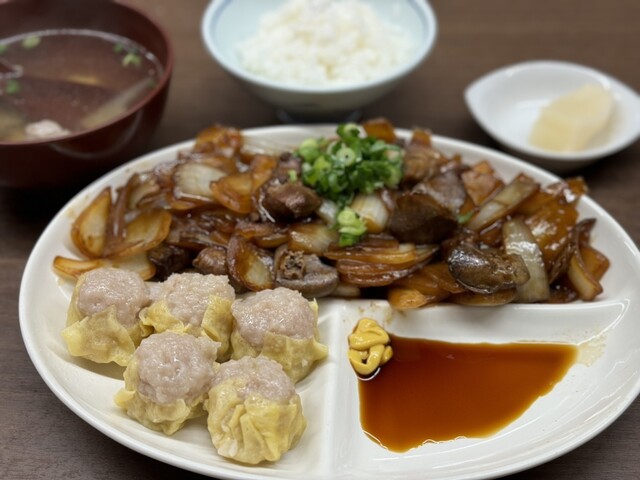
Approaching Osaka from the Namba side, the city’s appetite is inseparable from its retail tempo: station traffic, shopping arcades, and small restaurants for people who know what they want. It is the right setting for Chinese cooking absorbed into Kansai daily life, where dim sum and Chinese set-plate culture are less ceremony than repetition, speed, and value. Ippotei Honten fits that Osaka category: compact, useful, and judged by whether the food has enough character to justify a regular detour.
Its selection for Tabelog Chinese WEST “Tabelog 100” in 2021, 2024, and 2026 matters because it places a modestly priced Namba address in a regional conversation often dominated by polished Chinese dining rooms or narrow specialist shops. That contrast is the story. Osaka values practical excellence, and Chinese food here succeeds when recognizable dishes, efficient service, and disciplined sourcing make inexpensive food feel considered rather than careless.
Osaka Chinese cooking in its everyday register
Japanese Chinese food is not one cuisine but a set of translations: Cantonese dim sum, Sichuan heat, town Chinese staples, and local adaptations built for workday lunches and station-area eating. In Namba, that rhythm is compressed. The district does not reward long explanations. A restaurant handles volume, keeps prices accessible, gives customers a reason to return, or disappears into the background noise.
Ippotei Honten’s category listing, Chinese and dim sum/yum cha, points to the practical side of that tradition, not a chef-driven tasting format. It also explains why ingredient sourcing matters. At the luxury end, sourcing is announced through provenance, farms, and seasonal produce lists. At this tier, proof is quieter: consistency through repeated service, fillings that hold shape, dough and wrappers handled with care, and kitchen systems that keep a small bill from reading as compromise. The craft is not hidden; it is built into the room’s pace.
The nearby casual comparison is useful. Menya Joroku Nanba ten sits in a similarly low-price bracket, while aglio olio and Ushi Tora occupy slightly higher casual territory; Genbee Nanba ten moves into a more expensive evening range. Ippotei Honten’s position is sharper because recognition and affordability overlap. Low price alone is not the point; Osaka has countless inexpensive counters. The distinction is a recognized Chinese and dim sum address working in the same city logic as ramen, udon, and quick-service Osaka staples: eat well, avoid fuss, keep moving.
Why the sourcing question is about consistency, not theatre
In high-end Japanese dining, sourcing often becomes performance: fish markets, prefectural vegetables, named wagyu, rare rice. Osaka’s everyday Chinese rooms work differently. The question is whether supply chain and kitchen prep can support volume without flattening texture. Dim sum and Chinese comfort dishes are unforgiving because shortcuts show fast: fillings dull, wrappers fatigue, fried items lose precision, and sauces drift sweet or heavy.
For that reason, Tabelog’s repeated inclusion is more meaningful than a passing popularity spike. Selection across multiple years suggests steadiness in a category where consistency is often harder than novelty. A diner choosing among Osaka’s casual specialists can read the award history as a filter: this is not a luxury Chinese room competing on wine service or private-room polish, but a Namba address whose reputation has held within a crowded field of Chinese and dim sum cooking in western Japan.
The counter-and-table format reinforces that reading. Counter seating suits solo diners and short meals; tables keep it useful for friends and families. Take-out adds another Osaka layer, in a city that has long made room for portable staples, department-store counters, and rail-station meals. Do not approach this as a slow, destination-only dinner. It belongs to a denser itinerary: Namba shopping, a theatre evening, a transit day, or a casual meal before bars, hotels, or late-night food elsewhere in the city.
How to place it in an Osaka itinerary
The strongest case for the restaurant is editorial rather than romantic: it gives visitors a route into Osaka Chinese cooking without a banquet budget or long-form tasting menu. That makes it useful in a broader Namba and Minami plan, especially for travellers seeking one meal that reflects local dining habits rather than international luxury codes. Its family-friendly positioning also matters in Osaka, where serious eating is not always separated from children, groups, and casual routines.
There are limits. This is not the address for private-room ceremony, card-heavy corporate dining, or a chef biography as the meal’s main narrative. It is part of the city’s everyday specialist network, the ecosystem of bakeries, ramen counters, kushikatsu shops, curry rooms, and compact bars. Readers building a wider Osaka map can pair it with Our full Osaka restaurants guide, then branch into Our full Osaka hotels guide, Our full Osaka bars guide, Our full Osaka wineries guide, and Our full Osaka experiences guide.
For nearby and adjacent dining research, compare breadth rather than hierarchy: 551 Horai (551蓬莱) for Osaka’s mass-market Chinese bun culture, 52CHO-ME BAKERY and.cafe for daytime pacing, 99 Pizza Napoletana Gourmet and a canto (Italian) for the city’s Italian thread. Broader Japan references, from [ki:] in Kyoto and.know in Kumamoto to [Curry Senmon Ten] Maruyama Kyoju. in Sapporo, (Shoku) Vietnam in Kawasaki. 鮪と炭火焼き うお炭 秋葉原店 in Tokyo, and -Grilled beef Sukiyaki- KAMAKURA TANUKIAN 鎌倉 たぬき庵 in Kamakura, show how regional casual dining can carry as much identity as formal restaurants. For overseas context on Japanese drinking and everyday formats, see Jōdo Saké Bar in Los Angeles and Onigiri Time in Pasadena.
The verdict is simple: choose this for Osaka’s grounded Chinese-and-dim-sum lane, not spectacle. The critical signal is there, the format is accessible, and the setting fits Namba’s habit of turning serious food into something casual enough to repeat.
A Quick Peer Check
Comparable venues to anchor price and recognition.
| Venue | Cuisine | Price | Notes |
|---|---|---|---|
| Ippotei HontenThis venue — the venue you are viewing | Traditional Osaka-style Chinese & dim sum | $ | Not listed |
| Nama Gyoza Seizo Tokoro Tenshin no Kimochi | Handmade Gyoza & Taiwanese Mazesoba Izakaya | $$ | Taishō |
| Lime Light | Modern Chinese and wine bar | $$ | Osaka |
| Taishu Chuuyuuka Shokudo Hakkai | Chinese restaurant | $ | Osaka |
| 551 Horai (551蓬莱) | Traditional Chinese Dim Sum & Pork Buns | $ | Namba |
| Suigyoza no Mise Harbin | Traditional Chinese dumpling house | $$ | Ibaraki |
Recognition history
Dated appearances from independent guides and award organizations, with the underlying list record or original source where available.
Tabelog 100 #8 · No. 8
Tabelog · Tabelog 100 - Chinese cuisine - WEST - 2026
Continue exploring
More in Osaka
Restaurants in Osaka
Browse all →




Bars in Osaka
Browse all →

Hotels in Osaka
Browse all →



Wineries in Osaka
Browse all →
At a Glance
- Classic
- Cozy
- Lively
- Solo
- Family
- Group Dining
- Casual Hangout
- Late Night
- Standalone
- Beer Program
Current opening hours
- Monday
- 11:30 AM–8 PM
- Tuesday
- 11:30 AM–8 PM
- Wednesday
- 11:30 AM–8 PM
- Thursday
- 11:30 AM–8 PM
- Friday
- 11:30 AM–8 PM
- Saturday
- 11:30 AM–8 PM
- Sunday
- Closed
Hours can change for holidays and private events. Last verified .
Atmosphere is that of a nostalgic, long-running neighborhood Chinese eatery near Namba: bright but modest, with counter and table seating, a bustling, lively feel at peak times, and a homely, unpretentious setting that emphasizes comfort over design flourish.