Inn of the Seventh Ray

Wine Spectator Award of Excellence
Our verdict
Set along a creek in Topanga Canyon, Inn of the Seventh Ray has occupied an unusual position in Los Angeles dining since the 1970s: a nature-immersed restaurant that predates the city's current fixation on organic sourcing and outdoor atmosphere by decades. The canyon setting, open-air terraces, and a menu leaning on plant-forward and whole-ingredient cooking make it a reference point for a particular strand of California dining that the rest of the city is only now catching up to.

Pearl is the En Primeur Club membership app — saves, bookings, and concierge access live there. Same editors, same standards.
- Address
- 128 Old Topanga Canyon Rd, Topanga, CA 90290
- Phone
- (310) 455-1311
- Hours
- Mon–Thu 10 AM–2:30 PM, 5:30–9:30 PMFri 10 AM–2:30 PM, 5:30–10 PMSat–Sun 9 AM–3 PM, 5:30–10 PM
- Website
- innoftheseventhray.com
- Directions
- Get directions
- Booking
- Book on the venue's website
The menu
What to order
- Yellowfin tuna crudo
- Seared Hokkaido scallops
- Oven-roasted Chilean sea bass
Where the Canyon Comes Before the Kitchen
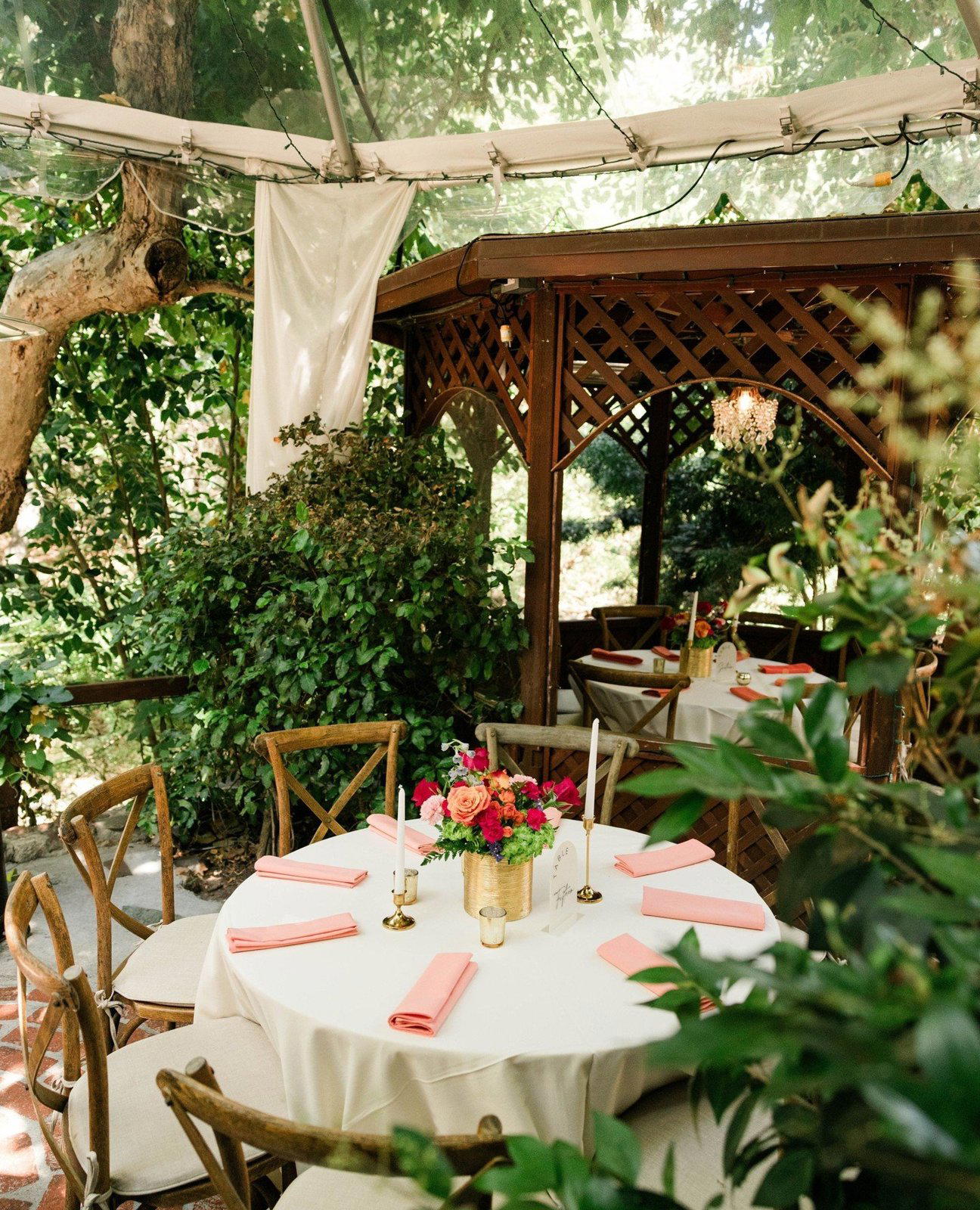
Most Los Angeles restaurants announce themselves through a facade, a valet queue, or a design statement visible from the street. Inn of the Seventh Ray announces itself through a change in air. The drive up Old Topanga Canyon Road from the Pacific Coast Highway traces a canyon carved by Topanga Creek, and by the time you reach the restaurant's address at 128 Old Topanga Canyon Rd, the city has receded in a way that few venues within Los Angeles County can claim. Sycamores and oaks close overhead. The creek runs audibly below the terraced dining areas. The physical context does work that no interior designer could replicate.
This matters editorially because the Inn has been doing it since the early 1970s, long before the current generation of California restaurants began threading outdoor seating, local sourcing, and environmental atmosphere into their identity. The canyon dining format that now reads as aspirational in newer Californian openings was, here, simply the original condition.
A California Dining Tradition the City Keeps Reinventing
California's relationship with ingredient-forward, plant-centered cooking has gone through several cycles of reinvention. The Alice Waters generation of the 1970s framed it as political and agrarian. The wellness-conscious 1990s reframed it as health doctrine. The 2010s reframed it again as sustainability and fine-dining credentialism, producing Michelin-recognised tables like Single Thread Farm in Healdsburg and the farm-to-counter ethos visible at Lazy Bear in San Francisco.
Inn of the Seventh Ray predates all of those reframings. Its founding in the early 1970s placed it inside a distinctly Californian counterculture tradition that treated food as a form of consciousness as much as nutrition, and the canyon location was never incidental to that identity. What is notable now is how the rest of the industry has moved toward it rather than the reverse. The language of seasonal menus, organic sourcing, and immersive natural settings has become standard fine-dining vocabulary. The Inn was writing in that vocabulary before the industry had formalised it.
That historical position separates it from a restaurant like Providence, which arrived in 2005 with a technique-first agenda, or from the more recent Taiwanese-inflected precision of Kato. It also sits at a different angle from the molecular ambition of Somni or the Japanese craft rigour of Hayato. Those restaurants argue for cuisine as intellectual and technical achievement. Inn of the Seventh Ray argues for cuisine as environmental experience, and has been making that argument longer than any of them.
Local Ingredients, a Broader Methodology
The editorial angle that makes Inn of the Seventh Ray legible to a contemporary audience is the intersection of California's indigenous ingredient culture with techniques that arrive from outside it. Southern California's growing conditions produce year-round herb and vegetable variety, stone fruit, citrus, and coastal seafood access that few American regions can match in consistency. The restaurant's longstanding orientation toward whole-ingredient, plant-forward cooking means the kitchen works from a larder that the state has always been able to supply abundantly.
This is a model that has since been validated at the highest technical levels globally. Le Bernardin in New York City built its reputation on treating primary ingredients with restraint rather than transformation. Alinea in Chicago took the opposite route, subordinating ingredient identity to conceptual technique. Inn of the Seventh Ray has historically occupied a middle position, where the ingredient is the point but the preparation draws on a range of culinary traditions rather than a single regional canon.
That positioning connects it to a broader global conversation about what happens when local product meets imported methodology. Atomix in New York City works Korean ingredients through a fine-dining European grammar. 8 1/2 Otto e Mezzo Bombana in Hong Kong applies Italian technique to a market shaped by Chinese ingredient culture. Osteria Mozza, a few miles east in Hollywood, takes Italian tradition and runs it through California produce. In each case, the tension between methodology and place of origin is generative. At Inn of the Seventh Ray, that tension has played out across five decades in a canyon rather than a city block.
The Canyon's Position in Los Angeles Dining
Los Angeles dining has expanded dramatically since the Inn's founding. The city now supports multiple Michelin-starred restaurants, an increasingly confident bar scene documented in our full Los Angeles bars guide, and a hotel sector whose ambition is tracked in our full Los Angeles hotels guide. The winery footprint within the region continues to grow, covered in our full Los Angeles wineries guide, and the city's experience tier has broadened significantly, as mapped in our full Los Angeles experiences guide.
Within that expanded ecosystem, Topanga Canyon occupies a distinct geographic and cultural position. It is not West Hollywood, not Beverly Hills, not the Arts District. It is a semi-rural corridor that has maintained its counterculture character through successive waves of LA gentrification, partly because the canyon geography creates a natural barrier to the kind of development that transforms urban neighborhoods. Inn of the Seventh Ray has benefited from that insularity while also contributing to it: the restaurant is part of why Topanga reads as a destination rather than a pass-through.
Comparable canyon-dining propositions elsewhere in California tend toward the high-production winery experience format, as seen at properties around the Sonoma and Napa corridors near The French Laundry in Napa. Inn of the Seventh Ray occupies a narrower, more specific position: a sit-down restaurant that uses its canyon ecology as the primary sensory context, without the winery infrastructure or the wine-tourism pipeline that underwrites properties in those northern regions.
Who Books Here and Why
The dining room, terraced along the creek, attracts a range of visitors that reflects the restaurant's dual identity. Locals from the canyon and the Malibu corridor treat it as a neighbourhood anchor. Visitors from the broader LA area make the drive for the outdoor setting, particularly for evening service when the canyon cools and the creek becomes audible. The occasion skew runs toward anniversaries, proposal dinners, and events where atmosphere is weighted more heavily than cuisine precision.
That audience profile differs from the tasting-menu clientele at Michelin-tracked tables in central Los Angeles but aligns with a broader shift visible across the industry: diners increasingly factor setting and atmosphere into their restaurant decisions at a weight that rivals food quality. Researchers tracking US dining behavior have documented this shift consistently since the mid-2010s. Inn of the Seventh Ray was, structurally, already built for it.
For visitors cross-referencing across dining categories, Emeril's in New Orleans offers a useful contrast: a chef-driven destination that built its identity around personality and technique in a city whose dining culture is defined by tradition. The Inn's identity, by comparison, is built around place rather than personality, which gives it a durability that chef-dependent restaurants rarely sustain across five decades.
Planning a Visit
Inn of the Seventh Ray sits at 128 Old Topanga Canyon Rd, Topanga, CA 90290, accessible via Topanga Canyon Boulevard from the 101 to the north or from the PCH to the south. The canyon road requires a car; there is no practical public transit option. Evening reservations during summer and early autumn tend to be in highest demand, when the outdoor terrace is at its most comfortable and the canyon light at its most atmospheric. Advance booking is advisable for weekends and special occasions.
Quick reference: 128 Old Topanga Canyon Rd, Topanga, CA 90290. Drive access required. Weekend evenings book ahead.
Frequently asked questions
Where exactly is Inn of the Seventh Ray?
Inn of the Seventh Ray is located at 128 Old Topanga Canyon Rd, Topanga, CA 90290, Los Angeles.
Is Inn of the Seventh Ray suitable for a special occasion dinner in Los Angeles?
The location at 128 Old Topanga Canyon Rd places it roughly 30 miles from central Los Angeles, making it a deliberate destination rather than a casual drop-in. The creek-side setting and the restaurant's decades-long presence in Topanga Canyon give it a character that most urban Los Angeles venues cannot replicate. It draws a mixed crowd of Malibu and Westside regulars alongside visitors seeking a counterpoint to the city's more design-driven restaurant scene.
What dish is Inn of the Seventh Ray famous for?
The restaurant has built its reputation around California's ingredient-forward, plant-centered cooking tradition rather than a single signature dish. The menu draws on indigenous and local ingredients, positioning it within the lineage that Alice Waters helped establish in Northern California and that Los Angeles has continued to develop. Specific current dishes are best confirmed directly with the restaurant at 128 Old Topanga Canyon Rd, Topanga, CA 90290.
How hard is it to get a table at Inn of the Seventh Ray?
The terraced creekside dining room has limited capacity by design, and the setting makes it a recurring choice for both canyon locals and visitors from the broader Los Angeles area. Weekend evenings and warmer months draw higher demand given the outdoor seating. Booking ahead, particularly for dinner, is advisable — check the venue's official channels for current reservation availability.
Accolades, Compared
Comparable venues nearby, for context on price, style, and recognition.
| Venue | Cuisine | Price | Awards | Notes |
|---|---|---|---|---|
| Inn of the Seventh RayThis venue — the venue you are viewing | Organic New American | $50–100 | Wine Spectator Award of Excellence | Not listed |
| Restaurant at The Getty Center | California Mediterranean | $30–50 | Not listed | Brentwood |
| Wife & The Somm | Seasonal California Wine Bar | $50–100 | Star Wine List · Wine Spectator Award of Excellence | Glassell Park |
| Faith & Flower | Modern American Fine Dining | Not listed | Not listed | Downtown |
| Little Beast Restaurant | Progressive American Comfort Cuisine | $50–100 | Not listed | Eagle Rock |
Recognition history
Dated appearances from independent guides and award organizations, with the underlying list record or original source where available.
Wine Spectator Award of Excellence
Wine Spectator