
Tabelog 100 #43
Our verdict
Imparfait brings Osaka’s French and innovative cooking into a small counter format in Utsubohonmachi, with fish-led cooking, wine and sake service, and recognition in Tabelog French WEST 100 for 2025 and 2023. The appeal is less about grand dining-room ceremony than precision at close range, placing it among the city’s compact, reservation-led restaurants where technique and restraint carry the evening.

Pearl is the En Primeur Club membership app, where members save venues, book tables and use the concierge.
The menu
What to order
- Straw-grilled seasonal fish
- Multi-course modern French menu using Japanese ingredients
Osaka has a quieter dining register beyond its neon corridors: office blocks, residential streets, and dining rooms that reveal themselves without always announcing a night out. That setting suits the city’s modern French and Innovative category, where European technique can sit alongside Japanese expectations for seasonality, pacing, and restraint without requiring hotel-dining theatre.
Imparfait belongs to that more focused tier. The restaurant is best read through its confirmed signals rather than through excess mythology: it is listed in Osaka, categorized as French and Innovative, and recognized in the 2025 Tabelog Hyakumeiten selection. Those details give diners a useful frame before booking, especially in a city where serious meals can be understated rather than showy.
French technique filtered through Osaka's counter instincts
Japanese French cooking has never been simple imitation. Since the late twentieth century, many restaurants have treated French methods as a structural language rather than a fixed set of dishes. Osaka’s version is especially pragmatic. The city’s dining identity prizes immediacy, value awareness, and little unnecessary ceremony; even when the cooking is technically ambitious, the experience often stays grounded.
That is the context for Imparfait. Its Tabelog Hyakumeiten recognition in 2025 places it inside a specialist restaurant-review frame rather than a general Osaka popularity contest. The 3.65 score signals sustained attention in Japan’s restaurant-review culture, where high scores are not casually accumulated and niche categories are closely compared. Awards are not guarantees of personal taste, but here they clarify the competitive set: not street-food shorthand, not banquet dining, but a French and Innovative restaurant in western Japan.
The French and Innovative category also matters culturally. Osaka’s restaurants often work well when they meet local expectations halfway: careful handling of ingredients, disciplined pacing, and a sense of focus that does not become spectacle for its own sake. Imparfait’s listing suggests a restaurant to evaluate through that cross-current rather than through a rigid, old-fashioned French dining model.
For travellers mapping the city through food, this is not the takoyaki-and-kushikatsu shorthand. Those pleasures still define Osaka’s street-level appetite, and other Osaka dining rooms show how everyday eating can be direct and specific. A French and Innovative meal operates at another end of the same instinct: considered pacing, clear intent, and substance over spectacle.
Where it sits in the city's reservation-led dining map
Osaka’s premium dining map is less centralized than Tokyo’s. Serious meals appear across the city rather than only in one luxury zone. The city gives restaurants access to diners who understand weekday lunch discipline and evening meal planning. That geography encourages focused restaurants less dependent on tourist footfall.
Within the comparison set, format and intent draw useful boundaries. Kanmichi Pakutei, W. Bolero Oosaka honmachi ten, Hirokawa Tailor, BOTANI:CURRY, and Aozora blue point to different ways Osaka can be read through dining, from comfort-food fluency to more specialized meals. Imparfait is not competing with everyday staples; it is best considered by diners looking for a more composed French and Innovative option.
The decision is partly practical. Imparfait’s listed budget, Dinner: JPY 10,000 - JPY 14,999; Lunch: JPY 5,000 - JPY 5,999, places it in a planned-meal bracket rather than a casual drop-in category. Diners should confirm current hours, availability, and booking requirements directly with the restaurant before building an evening around it.
That kind of restaurant has become one of Japan’s persuasive answers to Western fine dining. It can reduce unnecessary stiffness while preserving the discipline that gives French cooking authority. The pleasure is not excess. It is seeing how an Osaka restaurant listed as French and Innovative uses its category, budget level, and recognition to signal a meal with focus.
How to read Imparfait before choosing it
The strongest reason to choose Imparfait is the alignment between category and recognition. French and Innovative categorization, a Tabelog score of 3.65, and Tabelog Hyakumeiten recognition in 2025 describe a restaurant with a clear lane. Diners seeking a grand dining-room narrative, extensive choice, or chef-as-celebrity storyline should read those clues carefully. Diners interested in Osaka’s quieter French-innovative current will find the signals more persuasive.
The broader itinerary matters. A meal here pairs well with a trip built around Osaka’s range rather than a single definition of the city. Use Our full Osaka restaurants guide to place it among casual counters, bakeries, French rooms, and other specialist dining. For a fuller trip, the companion guides to Osaka hotels, Osaka bars, Osaka wineries, and Osaka experiences help separate dinner ambition from where to sleep, drink, and spend daylight hours.
For readers extending the Japan itinerary beyond Osaka, the contrast is useful: other dining rooms across Japan show how regional categories shift by city, budget, and local appetite. Abroad, Japanese food culture travels in still different ways, but the Osaka French and Innovative category remains its own grammar: practical, technically minded, and resistant to unnecessary theatre.
Frequently asked questions
What's the pricing like at Imparfait?
Pricing at Imparfait is listed as Dinner: JPY 10,000 - JPY 14,999; Lunch: JPY 5,000 - JPY 5,999.
What days is Imparfait closed?
Check directly with Imparfait before visiting, as current opening days and hours should be confirmed with the restaurant.
What's the address for Imparfait?
Imparfait is located in Osaka.
What has Imparfait built its reputation on?
Imparfait has built its profile as a French and Innovative restaurant in Osaka. Its Tabelog Hyakumeiten recognition in 2025 and listed 3.65 score give the room clear credentials.
What if I have allergies at Imparfait?
Allergy requests should be raised directly with the restaurant when booking or confirming. That matters because Imparfait is best approached with current details checked directly before visiting.
Price Lens
Comparable venues for orientation by cuisine and category.
| Venue | Cuisine | Price | Awards | Notes |
|---|---|---|---|---|
| ImparfaitThis venue (the venue you are viewing) | Innovative French-Japanese Counter Dining | $50–100 | Tabelog 100 #43 | Not listed |
| Patisserie Ravi,e relier | Kita, French Patisserie | $1–10 | Tabelog 100 #57 | Not listed |
| Seiichiro,NISHIZONO | Modern French-inspired pâtisserie & parfaits | $10–20 | Tabelog 100 #90 | Nishi, Modern French-inspired pâtisserie & parfaits |
| Acidracines Patisserie | Chūō, Modern French Patisserie | $30–50 | Tabelog 100 #18 | Not listed |
| Pluie dete | Modern French "water cuisine" with Italian influences | $30–50 | Tabelog 100 #79 | Kita, Modern French "water cuisine" with Italian influences |
| Brasserie RÉGINE | French Brasserie | $50–100 | Michelin Plate | Chūō, French Brasserie |
Recognition history
Dated appearances from independent guides and award organizations, with the underlying list record or original source where available.
Tabelog 100 #43 · No. 43
Tabelog · Tabelog 100 - French - WEST - 2025
Continue exploring
More in Osaka
Restaurants in Osaka
All restaurants in Osaka →

Bars in Osaka
All bars in Osaka →


Hotels in Osaka
All hotels in Osaka →



Wineries in Osaka
Browse all →
Details
- Cozy
- Intimate
- Modern
- Elegant
- Date Night
- Special Occasion
- Business Dinner
- Group Dining
- Celebration
- Chefs Counter
- Open Kitchen
- Standalone
- Design Destination
- Extensive Wine List
- Local Sourcing
- Sustainable Seafood
- Tasting Menu
- Prix Fixe
- Counter Dining
- Wine
Current opening hours
- Monday
- Closed
- Tuesday
- 12–3 PM, 6:30–9:30 PM
- Wednesday
- 12–3 PM, 6:30–9:30 PM
- Thursday
- 12–3 PM, 6:30–9:30 PM
- Friday
- 12–3 PM, 6:30–9:30 PM
- Saturday
- 12–3 PM, 6–9:30 PM
- Sunday
- 12–3 PM, 6–9:30 PM
Hours can change for holidays and private events. Hours as of .
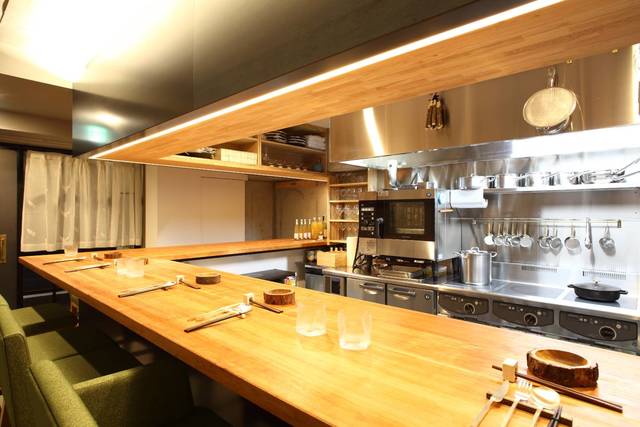
A small, counter-only space near Utsubo Park with a cozy, intimate feel; guests sit right in front of the open kitchen, watching precise French techniques applied to Japanese ingredients under warm lighting for an elegant but relaxed atmosphere.