
The Sunday Times Ireland’s 100 Best Restaurants
Our verdict
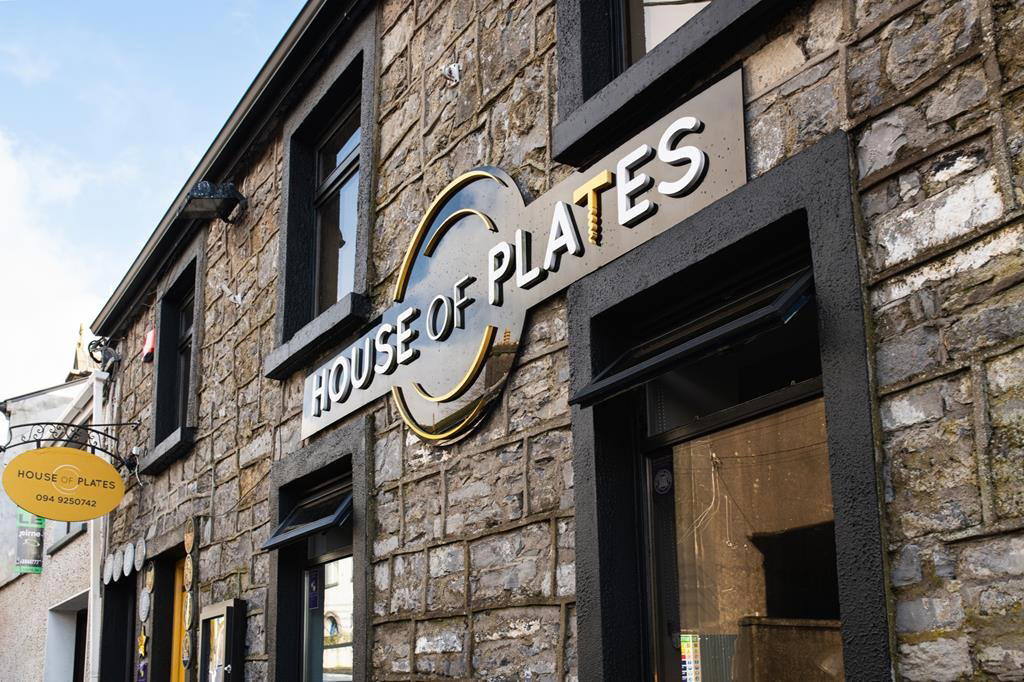
House of Plates on Upper Chapel Street brings an ingredient-driven approach to Castlebar that is rare at any scale in County Mayo. Chef Barry Ralph draws on local producers, foraged ingredients, and a restless curiosity that takes him beyond the kitchen to live-fire workshops and seasonal sourcing. The menu shifts with the land and the larder, making it one of western Ireland's more compelling neighbourhood restaurants.

Pearl is the En Primeur Club membership app, where members save venues, book tables and use the concierge.
The menu
What to order
- Scallops
- Pork belly
- Beef featherblade
- Goats cheese
- Creme brulee
Where Mayo's Larder Meets the Plate
Upper Chapel Street in Castlebar is not a destination dining corridor in the way that Galway's west end or Kinsale's harbour front have become. It is a workaday stretch of a market town that has grown up around agriculture, commerce, and the rhythms of County Mayo life. That context is not incidental to understanding House of Plates, it is the point. The restaurant's cooking is rooted in the land around it: the farms, the bogs, the Atlantic-facing fields that define this corner of Connacht. Walking in, the register is neighbourhood rather than occasion, which is precisely what makes the food on the plate feel more considered, not less.
Ireland's more compelling regional restaurants have spent the past decade making the case that serious, sourcing-led cooking does not require a city postcode. Aniar in Galway made that argument at Michelin level. Chestnut in Ballydehob made it in West Cork. Homestead Cottage in Doolin made it on the Burren coast. House of Plates is making it in Mayo, and doing so with a directness that suits the county's character.
The Source Is the Story
The ingredient provenance at House of Plates is not decorative, it is structural. Andarl Farm pork appears as a composed plate that treats a single producer's animal across multiple preparations simultaneously: sugar pit belly, fillet schnitzel, ham hock, and sausage roll arrive together as a kind of argument for what depth a single, well-raised source can achieve. That kind of plate-building requires a kitchen that respects both the animal and the farmer, and reflects a broader current in Irish cooking where producer relationships determine menu architecture rather than the other way around.
Connemara air-dried lamb with colcannon boxty does something similar, folding a specifically regional ingredient, Connemara lamb carries a flavour profile shaped by Atlantic salt air and heather grazing that differs from inland-reared equivalents, into a preparation that is recognisably Irish without being nostalgic. The colcannon boxty grounds the dish in tradition; the air-dried treatment signals technical confidence. It is the kind of combination that restaurants further up the formal scale, from Liath in Blackrock to Terre in Castlemartyr, have made central to their proposition. At House of Plates, it arrives without ceremony, which is its own kind of statement.
Foraging feeds into the menu's seasonal movement. When wild ingredients are in season around Mayo, hedgerow fruits, coastal plants, woodland herbs, they appear in the kitchen. This is not a garnish strategy. Foraged material in a well-run kitchen functions as a seasonal clock, forcing menu revision and keeping dishes tied to a specific moment in the year rather than a year-round template. The practical result is that two visits six months apart at House of Plates will yield meaningfully different plates.
The Discipline Behind the Creativity
The cooking at House of Plates reflects a kitchen that does not treat its current ability as sufficient. Barry Ralph has been documented travelling to Wexford to participate in live-fire sessions with Smokin' Soul, treating a working break as a skills exercise rather than a rest. That disposition, treating external learning as part of the job, tends to produce menus that stay in motion rather than calcifying around a fixed identity. It also aligns House of Plates with a cohort of Irish chefs who have built reputations through continuous development rather than formal accolades: a peer group that includes the teams behind dede in Baltimore, Bastion in Kinsale, and Campagne in Kilkenny.
Live-fire technique is worth noting in this context because it represents a specific kind of sourcing logic: the method privileges the ingredient, requiring the cook to understand the material well enough to let heat do the work rather than masking or transforming. Chefs who pursue it, from the teams at tasting-menu level in Dublin at Chapter One by Mickael Viljanen to more casual rooms elsewhere, are typically more interested in what the ingredient is than in what technique can make it become. That interest is visible in how House of Plates builds its plates.
Placing House of Plates in the Western Ireland Context
County Mayo has not historically been on the Irish food trail in the way that Cork, Galway, or Kilkenny are discussed. The county's culinary narrative has been shaped more by its agricultural produce, sheep, seafood, bog vegetables, than by destination restaurants. House of Plates is part of a shift in that narrative. It does not require a journey from Dublin or Galway to justify itself; it is a reason to be in Castlebar, which is a different and more significant position for a regional restaurant to occupy.
For comparison: House in Ardmore and Lady Helen in Thomastown have both demonstrated that destination-level cooking in smaller Irish towns draws an audience willing to travel specifically for the table. House of Plates operates at a different register, neighbourhood rather than destination in its physical format, but the sourcing rigour and seasonal discipline it applies to the menu put it in a conversation with that broader Irish regional cooking movement. At a global level, the philosophy echoes the kind of produce-first thinking that defines Le Bernardin in New York City or the tightly sourced tasting formats at Atomix, though House of Plates translates that commitment into an accessible, unfussy room.
Planning a Visit
House of Plates sits on Upper Chapel Street in Garryduff, Castlebar, in the centre of County Mayo. Castlebar is the county town, connected to Galway by the N17 and N84 routes (roughly an hour's drive), and to Dublin via the M4 and N5 (approximately two and a half hours). The town has a train link to Dublin Heuston via Westport, with Castlebar station a short walk from the centre. For anyone building a western Ireland itinerary, the restaurant fits naturally into a route that combines Achill Island, the Greenway trail along Clew Bay, and a broader Mayo coastal circuit. Booking details are best confirmed directly; the restaurant's address is Upper Chapel St, Garryduff, Castlebar, Co. Mayo. For broader planning across the town, our full Castlebar restaurants guide covers the local scene, alongside hotels, bars, wineries, and experiences in Castlebar.
Frequently asked questions
Does House of Plates work for a family meal?
House of Plates is a chef-led kitchen on Upper Chapel Street that centres its menu on composed, seasonal plates, dishes such as the Andarl Farm pork plate and Connemara air-dried lamb with colcannon boxty. The cooking is considered rather than casual, so families with young children who need straightforward options may find the menu format a closer fit for older kids and adults. It reads better as a destination for a family that eats well together than a drop-in for mixed generations.
What should I expect atmosphere-wise at House of Plates?
House of Plates sits on Upper Chapel Street in Garryduff, a working part of Castlebar rather than a polished dining quarter. The cooking is technically driven, Barry Ralph has documented trips to live-fire workshops to sharpen his technique, which gives the room the tone of a serious neighbourhood restaurant rather than a casual local. Expect a focused, ingredient-led environment where the food carries the room.
What kind of recognition has House of Plates received?
House of Plates has received recognition including: You might reckon that Barry Ralph knows all he needs to know about food and cooking, given that his Castlebar restaurant, House of Plates, is a sure-fire success. But Ralph is not that kind of dude, so at the first chance he gets he heads o….
What do regulars order at House of Plates?
The Andarl Farm pork plate, composed of sugar pit belly, fillet schnitzel, ham hock, and sausage roll, is the dish most associated with the kitchen's approach, treating a single producer's animal across four preparations on one plate. Connemara air-dried lamb with colcannon boxty also draws on the county's own larder and reflects Ralph's foraging-led, seasonally rotating menu. Both dishes illustrate the kitchen's method: regional sourcing worked into technically assembled plates.
What's House of Plates's location?
House of Plates is located at Upper Chapel St, Garryduff, Castlebar, Co. Mayo, Ireland, Castlebar.
What's the best way to book House of Plates?
Phone and website details for House of Plates are not currently listed in public directories, so checking directly via social media channels or Castlebar local listings is the practical route. Given that Barry Ralph runs a kitchen with documented demand in a county town where comparable cooking is scarce, booking ahead rather than walking in is the safer approach.
Comparable Spots, Quickly
| Venue | Cuisine | Price | Awards | Notes |
|---|---|---|---|---|
| House of PlatesThis venue (the venue you are viewing) | Contemporary Irish | $50–100 | The Sunday Times Ireland’s 100 Best Restaurants | Not listed |
| Patrick Guilbaud | Modern French Fine Dining | $150–200 | 2 Michelin Stars · La Liste Top Restaurants | Irish - French, Modern French |
| Aniar | Modern Irish Terroir Tasting Menu | $150–200 | 1 Michelin Star · La Liste Top Restaurants | Modern Irish, Modern Cuisine |
| Bastion | Progressive American, Modern Cuisine | Not listed | Michelin 1 Star | Not listed |
| LIGИUM | Modern Wood-Fired Fine Dining | $100–150 | 1 Michelin Star · The Best Chef One Knife | Creative |
| Host | Nordic, Modern Cuisine | Not listed | Not listed | Not listed |
Recognition history
Dated appearances from independent guides and award organizations, with the underlying list record or original source where available.
The Sunday Times Ireland’s 100 Best Restaurants
The Sunday Times
Continue exploring
More in Castlebar
Restaurants in Castlebar
All restaurants in Castlebar →
Details
- Cozy
- Modern
- Rustic
- Date Night
- Special Occasion
- Family
- Open Kitchen
- Extensive Wine List
- Local Sourcing
- A La Carte
- Vegetarian Friendly
- Vegan Options
- Gluten Free Options
Current opening hours
- Monday
- Closed
- Tuesday
- Closed
- Wednesday
- Closed
- Thursday
- 5–9 PM
- Friday
- 5–9 PM
- Saturday
- 5–9 PM
- Sunday
- 11 AM–8 PM
Hours can change for holidays and private events. Hours as of .
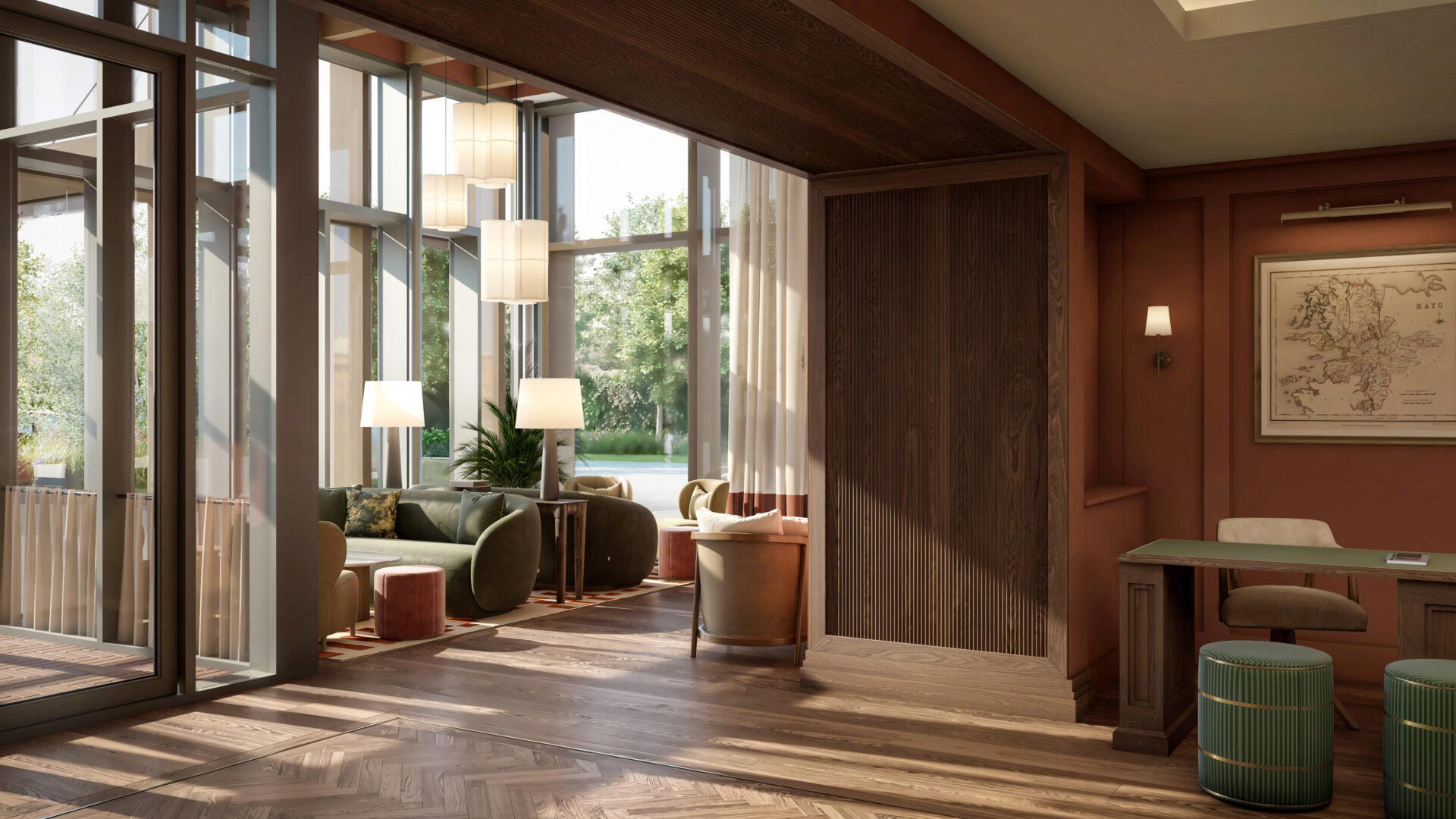
Relaxed and modern rustic industrial atmosphere with exposed stone, local art murals, warm lighting from filament bulbs and jam jars, creating a cozy yet sophisticated dining environment.