
Tabelog 100 #75
Our verdict
House of Flavors is a small cake-and-cafe salon in Kamakurayama, selected for Tabelog 100 Sweets EAST 2023 and known for a tightly edited tea-salon format. The appeal is less about breadth than discipline: cheesecake or chocolate cake with Darjeeling or coffee, plus whole-cake takeaway for travelers treating Kamakura as a sweets stop rather than only a temple-and-sea day trip.

Pearl is the En Primeur Club membership app, where members save venues, book tables and use the concierge.
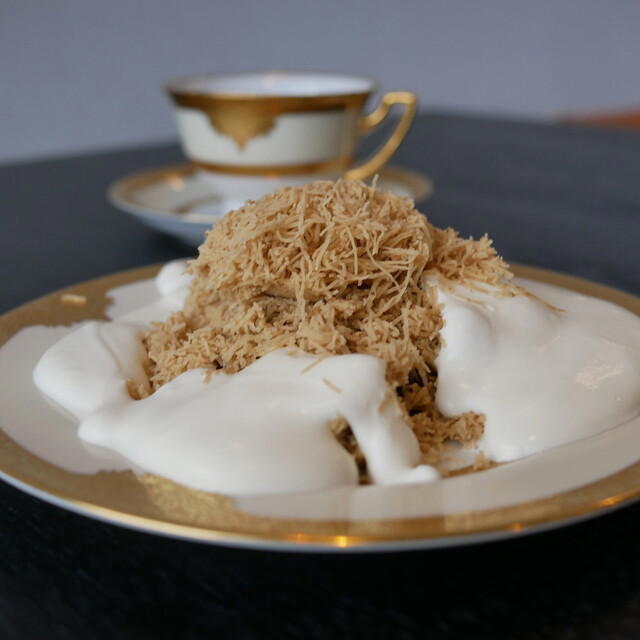
The menu
What to order
- Baked cheesecake
- Chocolate cake
Approaching Kamakura shifts the rhythm of Kamakura dining. The beach crowds and station-area snack traffic fall away in favor of a quieter side of the city where dessert can feel closer to an appointment than an afterthought. In that setting, House of Flavors belongs to a cake-and-cafe tradition that values restraint: a compact mood, a focused identity, and a slower tempo than the busiest cafe circuit.
Kamakura’s food identity is often read through seafood bowls, temple-adjacent tea, curry houses, and old coffee shops, but its sweets culture carries its own seriousness. The city has long rewarded specialists: bakeries, cake rooms, and cafes that function less as casual pit stops than as destinations within a day’s itinerary. House of Flavors sits in that specialist lane, with Tabelog 100 Sweets EAST 2023 recognition placing it among eastern Japan’s better-documented dessert addresses rather than the broader pool of general cafes.
A Kamakura sweets salon built around focus
The format is the editorial point. Rather than presenting itself as a sprawling all-purpose cafe, House of Flavors reads as a focused cake-and-cafe address. That kind of compression matters in Japan’s premium sweets culture, where a smaller choice set often signals confidence in repetition and consistency. It also changes the way a visitor should read the room: this is not the cafe to approach as a catch-all meal stop. It is a sweets-focused address where the appeal is intentionally narrow.
Cake has a particular place in Japan’s confectionery tradition. Japanese cake shops often treat cream, chocolate, sponge, and related formats with attention to texture, slice structure, and tea compatibility. House of Flavors works within that broad lineage, while its cafe identity gives it another role: part sweets stop, part planned pause for people who build dessert into a Kamakura weekend rather than leaving it to chance.
That distinction separates it from many Kamakura day-trip sweets counters. Around the city center, dessert often behaves as street food or a queue-driven supplement to temple routes. In Kamakura, the mood here is more intentional. Comparison within the city is useful: Roastbeef Kamakurayama speaks to a destination-restaurant image, while Sango Sho Honten and Moana Makai Sango Sho sit in another dining lane. House of Flavors occupies a different space, where the visit is reduced to cake, cafe rhythm, and time.
Why recognition matters in a city crowded with cafes
Tabelog’s Hyakumeiten sweets lists are not Michelin, and they should not be read as a star system. Their value is different: they identify durable public enthusiasm around specialist categories. For a Kamakura cake-and-cafe address, selection for Tabelog 100 Sweets EAST 2023 is a meaningful trust signal because the category is dense. Eastern Japan has a deep field of patisserie, kissaten, dessert salons, and takeout cake shops, and Kamakura receives enough tourism volume to make casual popularity easy and sustained specialist recognition harder.
The focused format also frames the experience. A cake cafe naturally resists the churn of larger, all-purpose rooms. That scale changes expectations: lingering can be part of the appeal, but the format is not built around breadth or spectacle. The real draw remains the discipline of the category rather than amenities around it, and the listed Tabelog score of 3.65 gives readers a useful benchmark without turning the visit into a ranking exercise.
For travelers mapping a full Kamakura day, the restaurant belongs with slower, purpose-led stops rather than station-adjacent grazing. Readers building a wider itinerary can compare it with other Kamakura dining rooms, cafes, and sweets specialists, or with allowed local reference points such as Restaurant Michel Nakajima, Roastbeef Kamakurayama, Sango Sho Honten, Moana Makai Sango Sho, and -Grilled beef Sukiyaki- KAMAKURA TANUKIAN 鎌倉 たぬき庵.
How to place it within a Japan dessert itinerary
The strongest case for House of Flavors is cultural rather than encyclopedic. It shows a side of Japanese sweets culture that prizes editing over abundance. A visitor expecting a broad cafe menu may find the format severe; a traveler interested in cake-and-cafe specialists will understand the logic quickly. The focused cake-and-cafe structure and Kamakura setting combine into a specific kind of stop: quiet, planned, and more adult than performative.
That makes it a useful counterpoint to the way dessert often appears in travel planning. In larger Japanese cities, sweets can be folded into department-store basements, hotel lounges, and high-turnover cafe districts. Kamakura’s version is more dispersed: old coffee culture, beach-town informality, temple-route snacks, and small specialists all coexist within a compact city. House of Flavors belongs to the specialist group, and its value is clearest when treated as a destination inside the day rather than a fallback after lunch.
For readers linking Kamakura to a longer Japan or trans-Pacific food route, the contrast can be instructive. The category discipline here sits apart from the energies of larger urban dining rooms, neighborhood cafes, specialist counters, and destination bars elsewhere. The common thread is not cuisine type, but editorial clarity: each rewards a traveler who chooses a specific format instead of asking one address to do everything.
Frequently asked questions
Can I bring kids to House of Flavors?
House of Flavors is a cake cafe in Kamakura, so it suits a quiet, focused stop more than a long, free-form sit-down. Families should plan around the dessert-led format and keep the visit simple.
What's the overall feel of House of Flavors?
House of Flavors reads as a pared-back dessert stop rather than a bustling all-purpose cafe. The emphasis is on cake and cafe service, with a restrained format that suits visitors looking for a planned sweets break in Kamakura.
What price level is House of Flavors?
Pricing at House of Flavors is listed as JPY 2,000 - JPY 2,999.
When can I go to House of Flavors?
Check current opening details before going, as this Kamakura cake cafe is best treated as a planned stop rather than an improvised backup.
Where is House of Flavors located?
Kamakura.
What makes House of Flavors worth seeking out?
Its Tabelog 100 Sweets EAST 2023 selection gives it clear third-party credibility, and the format is restrained for a cake cafe in Kamakura. The listing category is Cake and Cafe, with a published Tabelog score of 3.65.
Price and Recognition
Nearby venues at a similar price tier for orientation.
| Venue | Cuisine | Price | Awards | Notes |
|---|---|---|---|---|
| House of FlavorsThis venue (the venue you are viewing) | High-end Western-style cake shop & cafe | $50–100 | Tabelog 100 #75 | Not listed |
| イザ | Modern Italian with Local Japanese Seafood | $100–150 | Tabelog 100 #27 | Kamakura, Modern Italian with Local Japanese Seafood |
| Mi Casa | Modern Spanish in a Kamakura kominka | $50–100 | Tabelog 100 #46 | Kamakura, Modern Spanish in a Kamakura kominka |
| Salmanje de Yoshino | French restaurant in Kamakura | $100–150 | Tabelog 100 #86 | Kamakura, French restaurant in Kamakura |
| Iwata Coffee Ten | Not listed | $10–20 | Tabelog 100 | Kamakura, Traditional Japanese kissaten & pancake cafe |
| Cafe Vivement Dimanche | Kamakura, Specialty coffee & café sweets | $10–20 | Tabelog 100 #4 | Not listed |
Recognition history
Dated appearances from independent guides and award organizations, with the underlying list record or original source where available.
Tabelog 100 #75 · No. 75
Tabelog · Tabelog 100 - Sweets - EAST - 2023
Continue exploring
More in Kamakura
Restaurants in Kamakura
All restaurants in Kamakura →


Bars in Kamakura
Browse all →


Details
- Scenic
- Elegant
- Quiet
- Classic
- Intimate
- Special Occasion
- Date Night
- Solo
- Celebration
- Casual Hangout
- Panoramic View
- Design Destination
- Standalone
- Local Sourcing
- Waterfront
- A La Carte
- Set Menu
- Coffee
- Tea
Current opening hours
- Monday
- Closed
- Tuesday
- Closed
- Wednesday
- Closed
- Thursday
- Closed
- Friday
- Closed
- Saturday
- 11 AM–5 PM
- Sunday
- 11 AM–5 PM
Hours can change for holidays and private events. Last verified .
A serene, almost salon-like atmosphere with large windows and glass walls bringing in natural light and distant sea views, a small number of seats, and a refined, classic cake-shop feel focused on quiet enjoyment of meticulously crafted Western sweets.