Hofstube Deimann

1 Michelin Star
Our verdict
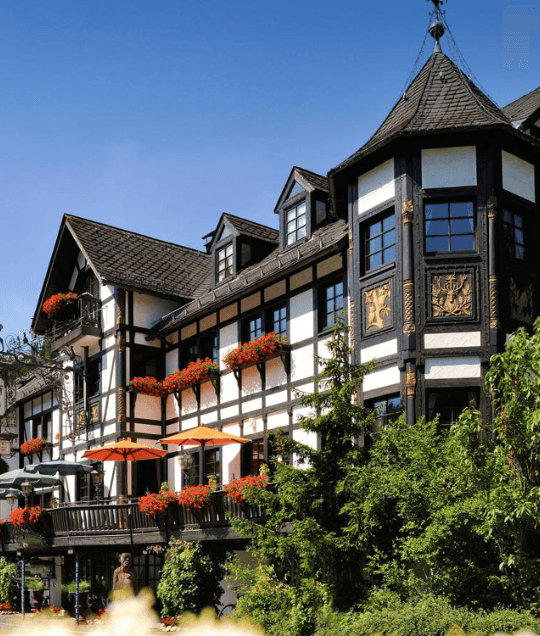
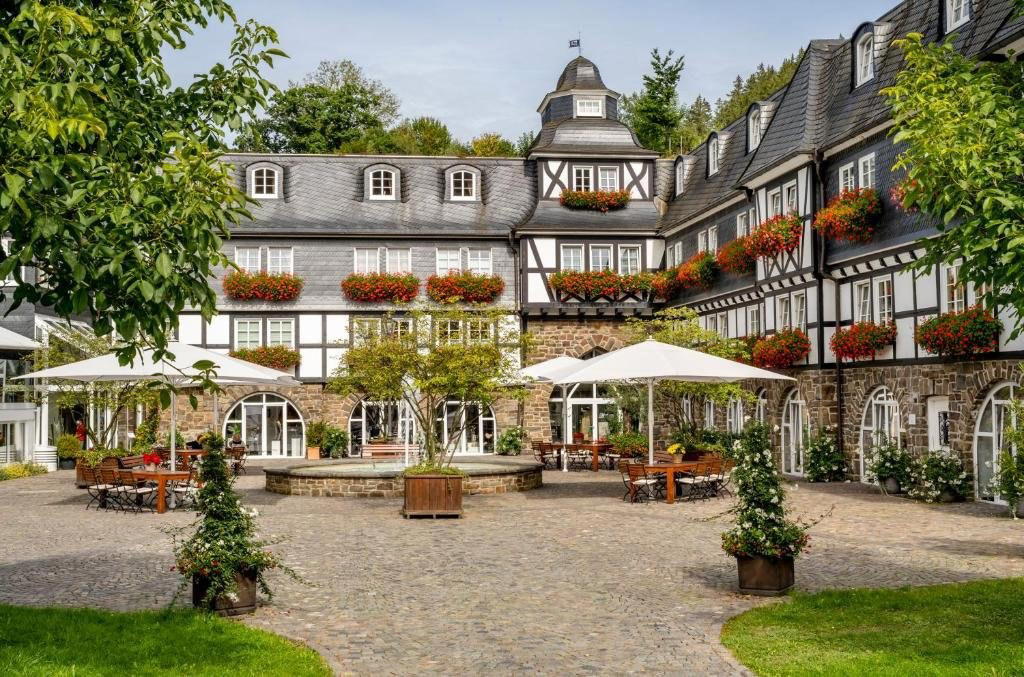
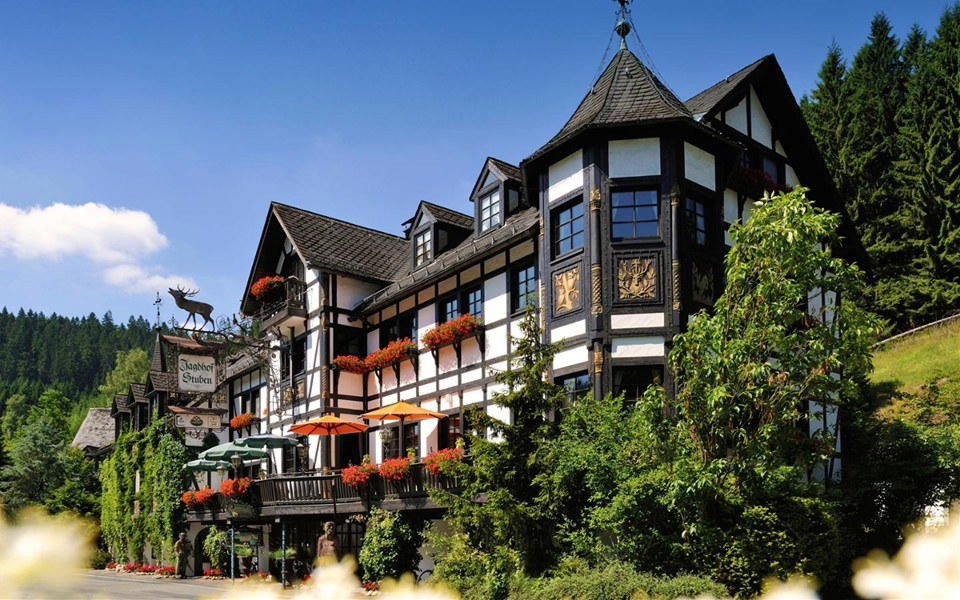
Hofstube Deimann holds a Michelin star in the Sauerland uplands of the German Rothaargebirge, operating within Hotel Deimann in Schmallenberg. The restaurant sits at the serious end of the Sauerland dining scene, drawing guests from across North Rhine-Westphalia and beyond.

Pearl is the En Primeur Club membership app, where members save venues, book tables and use the concierge.
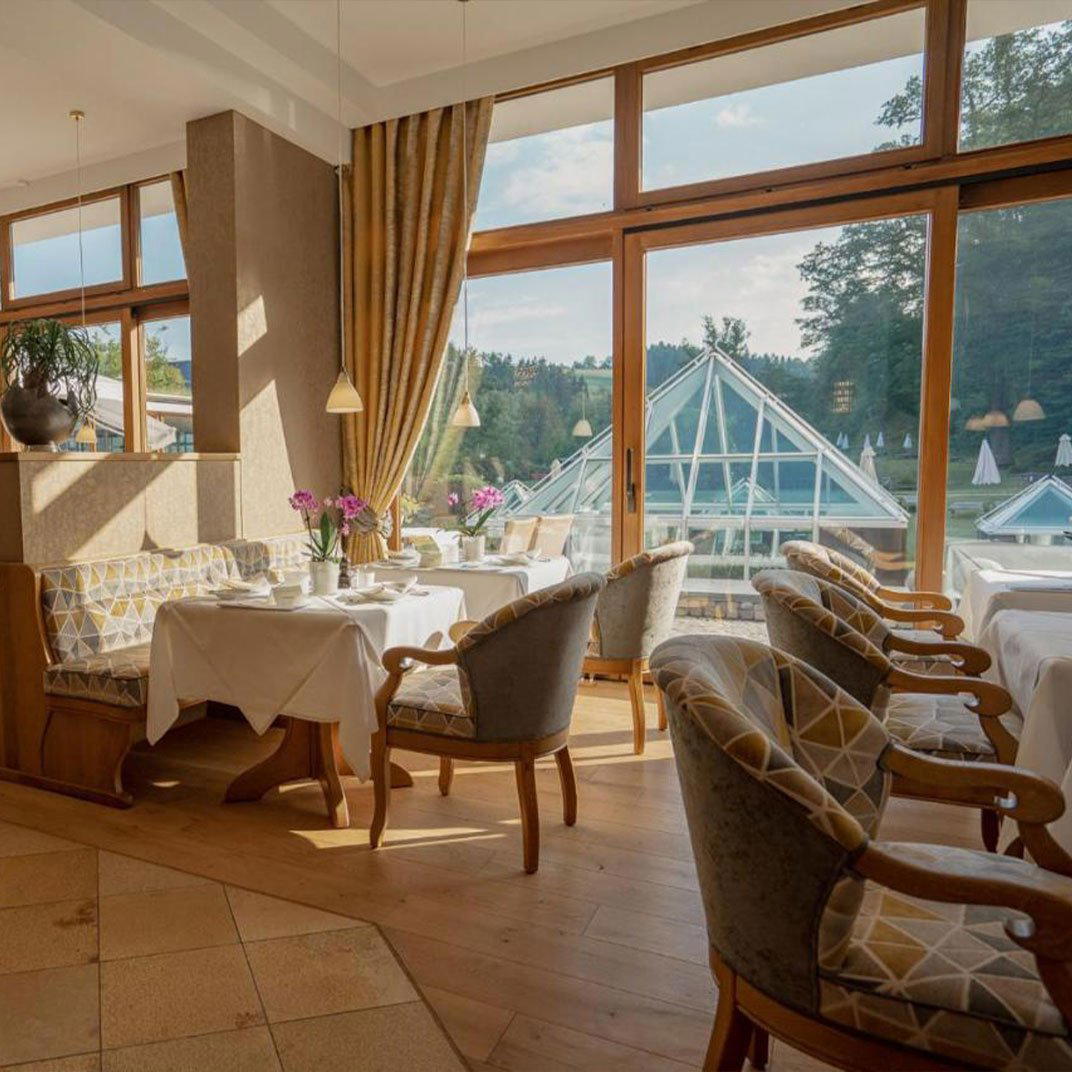
Fine Dining in the German Uplands: Where Sauerland Terrain Shapes the Plate
Schmallenberg sits in the Rothaargebirge, a stretch of forested upland in North Rhine-Westphalia that most international travellers drive past on the way somewhere else. That geographic circumstance matters for the food. Restaurants in this kind of terrain, remote, agricultural, surrounded by pasture and forest, either settle into the comfortable regionalism of hearty Westphalian cooking or make a different argument: that the raw materials available in isolation are precisely what justify a serious kitchen. Hofstube Deimann, positioned within Hotel Deimann on the Alte Handelsstraße, belongs to the second category. The kitchen's Michelin star, retained from 2024 into 2025, signals a level of consistency and technical commitment that places it outside the usual expectations for this corner of Germany.
Within the wider German fine dining circuit, where Aqua in Wolfsburg and Schwarzwaldstube in Baiersbronn operate at the three-star level, Hofstube Deimann occupies the single-star register alongside restaurants like JAN in Munich and ES:SENZ in Grassau. For the Sauerland specifically, having a starred table at all is notable: the area's most recognised food tradition is rooted in rustic country cooking, and the presence of a kitchen operating at €€€€ with Michelin endorsement represents a distinct break from that norm.
The Sauerland Ingredient Argument
The editorial case for ingredient-led cooking in rural Germany is not a recent invention. The Schwarzwald, the Allgäu, and the Eifel have all produced serious kitchens that anchored their identity in proximity to raw material: game from managed forests, dairy from Alpine or hill pastures, freshwater fish from clean river systems. The Sauerland, with its beech and spruce woodland, its upland cattle grazing, and its relative distance from urban supply chains, offers a version of the same argument. Kitchens that take this seriously tend to work with a shorter, more seasonal ingredient rotation than urban restaurants can sustain, and the trade-off is intensity of sourcing relationship rather than breadth of pantry.
Chef Felix Weber heads the Hofstube kitchen within this framework. The modern cuisine designation covers a wide range of approaches in German fine dining, from the Japanese and Italian-inflected creativity at Vendôme in Bergisch Gladbach to the dessert-forward format at CODA Dessert Dining in Berlin, but in a rural Sauerland setting, the most coherent expression of that label tends to be grounded in what the immediate region produces. That means seasonal rhythm drives the menu rather than a fixed signature repertoire. The result is cooking that reads differently in April than it does in October, with the surrounding woodland and pasture land providing both the mood and the primary ingredients.
The Hotel Setting and What It Means for the Room
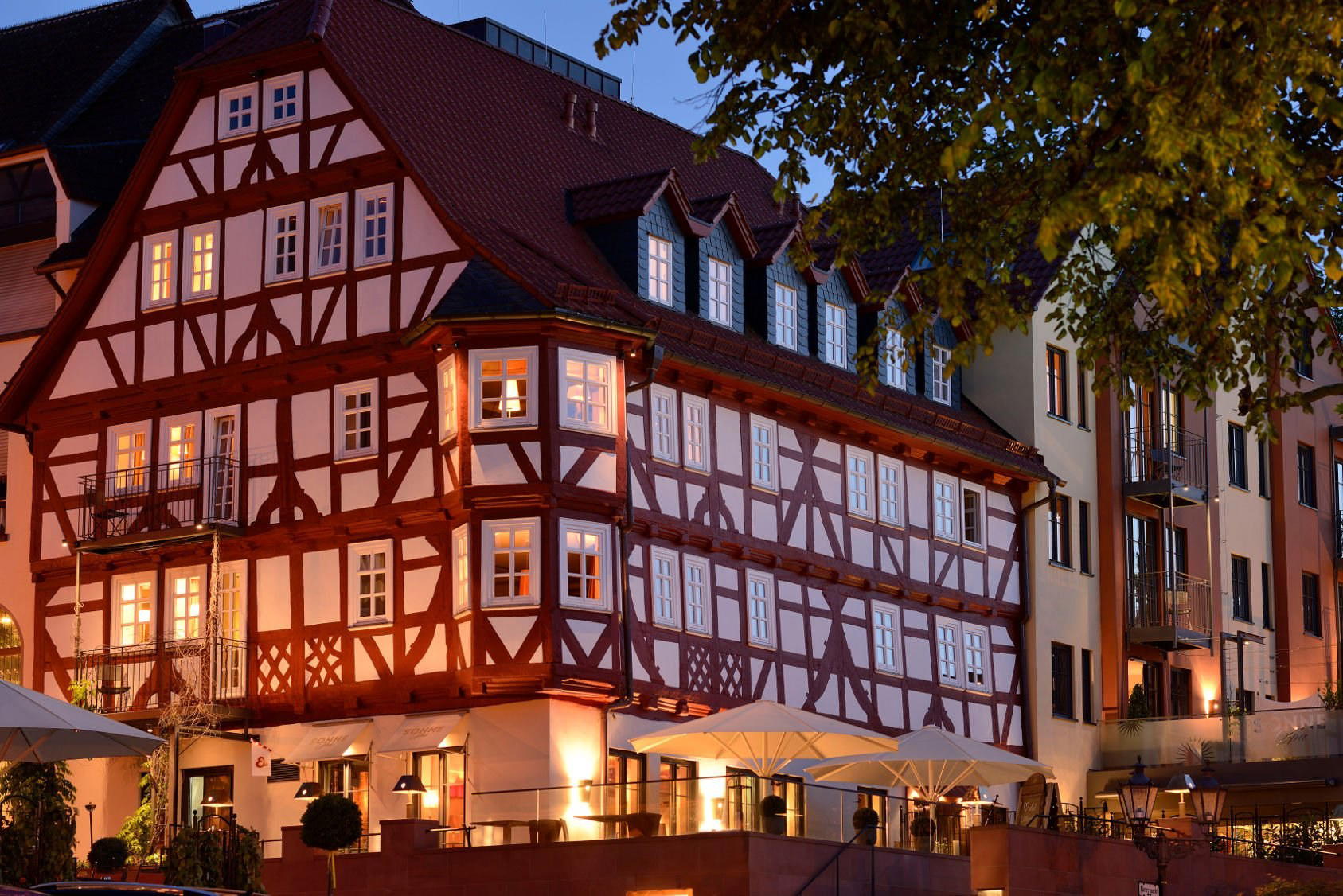
Hotel Deimann is a long-established property in Schmallenberg, and the Hofstube operates as its principal fine dining expression. Restaurant dining within hotel settings in Germany carries a particular dynamic: the kitchen serves both house guests eating across multiple nights and destination diners travelling specifically for the table. That dual audience often pushes hotel restaurants toward a more considered, quieter atmosphere than standalone city restaurants, with pacing and service structured for a longer evening rather than a compressed urban sitting. At the €€€€ price tier, the expectation is a full sequence of courses with wine, and the setting, within a hotel in upland Westphalia, reinforces that unhurried register.
For comparison, similar hotel-based starred dining in rural Germany, such as Waldhotel Sonnora in Dreis or Schanz in Piesport, demonstrates that the format works well when the property itself is treated as context rather than backdrop: the landscape outside, the quietness of the location, and the pace of a non-urban evening all feed into the experience of sitting at a table that asks you to slow down. Hofstube Deimann occupies that same register in the Sauerland.
How Schmallenberg Positions Itself in the Regional Food Scene
Schmallenberg's dining scene is anchored by traditional Sauerland hospitality at one end and, at the other, by the Hofstube. The gap between those two poles is considerable. A short drive from the hotel, Gasthof Schütte represents the area's regional cuisine tradition, straightforwardly rooted in Westphalian cooking. The coexistence of both formats in the same small town is characteristic of how German food culture operates outside major cities: the local gasthaus serves the community through decades of consistent cooking, while a starred hotel kitchen pulls from further afield, building a different kind of destination argument. Neither format undercuts the other; they operate for distinct audiences at distinct price points and levels of occasion.
For visitors building a trip around the Sauerland or the wider Bergisches Land and Rothaargebirge area, the practical question is whether to base in Schmallenberg for a multi-day stay. Our full Schmallenberg hotels guide covers the options, and our full Schmallenberg restaurants guide situates Hofstube Deimann within the broader local table. For those interested in what else the area offers, our Schmallenberg bars guide, wineries guide, and experiences guide cover the full range.
German Starred Dining at the Single-Star Level: What the Tier Represents
A single Michelin star in Germany in 2025 covers a wide range of formats and price points, but at the €€€€ level, the leading bracket of the guide's pricing system, it signals a kitchen operating with serious ingredient investment, skilled technique, and the kind of service infrastructure that a rural hotel demands to retain recognition year on year. The continuous star retention from 2024 to 2025 confirms that Weber's kitchen is not peaking once; it is producing at a consistent level across inspection cycles. That continuity matters more to a practical travel decision than a single year's award.
Internationally, the single-star-plus-hotel-rural-setting combination appears in contexts that share the same underlying logic: Frantzén in Stockholm and FZN by Björn Frantzén in Dubai demonstrate how chef-led identity can anchor both urban flagship and international outpost formats. The Hofstube operates on a different scale, but the underlying argument, that a kitchen's sustained quality creates a reason to travel to a location, holds across those different contexts. For Restaurant Haerlin in Hamburg or Victor's Fine Dining by Christian Bau in Perl, the destination logic operates at two and three stars; for Hofstube Deimann, it operates at one star in a location that rewards the detour specifically because it is not a city.
Planning a Visit
Hofstube Deimann is located at Hotel Deimann, Alte Handelsstraße 5, 57392 Schmallenberg. The price tier of €€€€ positions this as a special-occasion or destination table rather than a casual dinner. Google diner ratings sit at 4.8 from 27 reviews. Given the rural location, driving is the practical access method; Schmallenberg sits roughly equidistant from Dortmund, Siegen, and Paderborn. Booking in advance is advisable for any starred table at this price tier in a hotel context, where covers are limited and demand from both house guests and destination visitors competes for the same seats. Specific booking methods, hours, and seasonal availability should be confirmed directly with the hotel.
Frequently asked questions
Is Hofstube Deimann good for families?
At the €€€€ price tier with Michelin recognition, Hofstube Deimann is structured for adult fine dining occasions. Schmallenberg as a destination offers plenty of family-appropriate activity in the surrounding Sauerland, but the Hofstube itself is better suited to the kind of extended evening dinner that works for adults rather than a family meal with young children. Guests travelling with families might consider the broader dining options covered in our full Schmallenberg restaurants guide, which spans the full range of the area's eating options.
How would you describe the vibe at Hofstube Deimann?
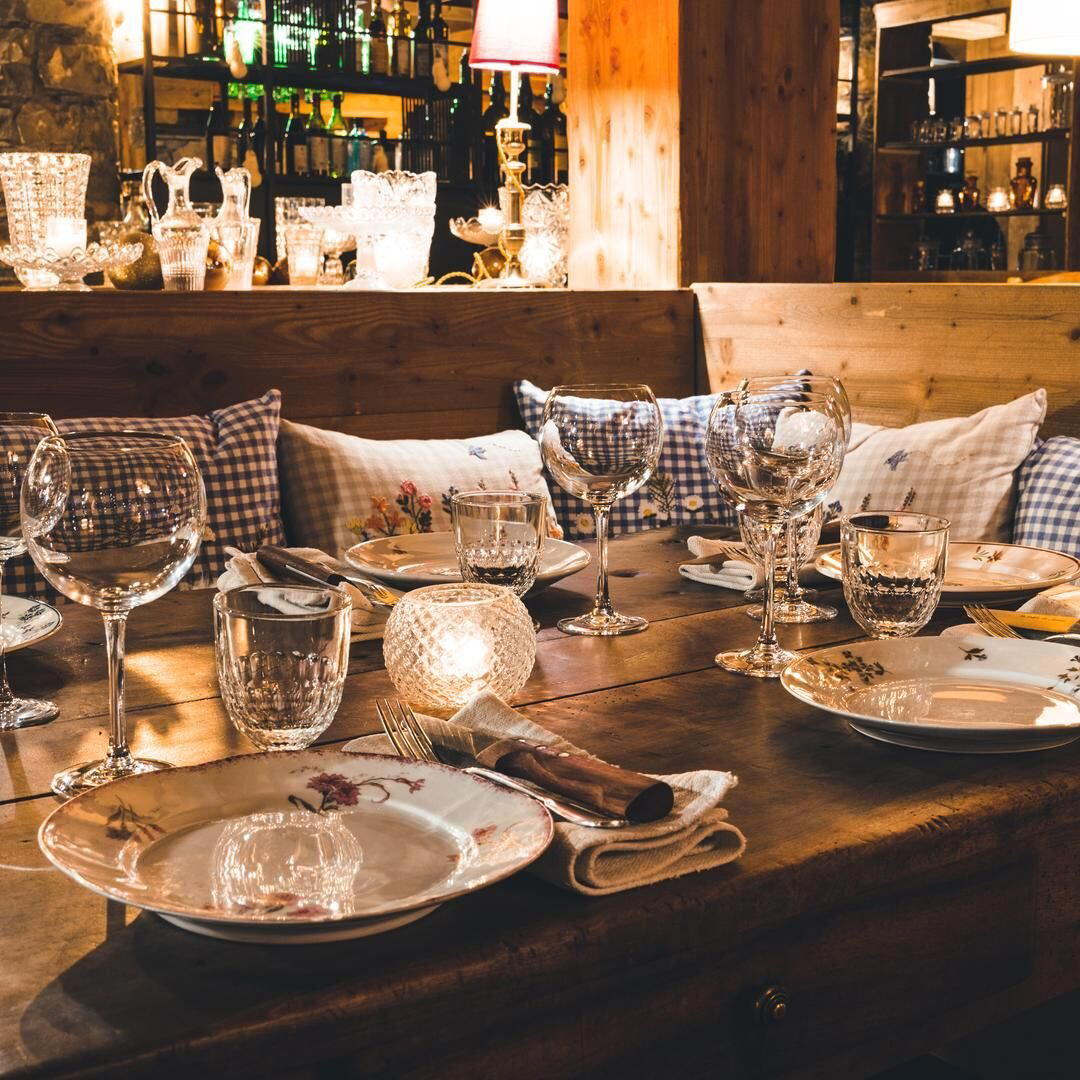
The atmosphere sits in the quieter, unhurried register that hotel fine dining in rural Germany typically produces. Schmallenberg is not a city, and the Rothaargebirge backdrop creates conditions for a longer, more deliberate evening than an urban restaurant allows. At the €€€€ level with Michelin recognition held across consecutive years, the room attracts diners who have made a conscious decision to be there, which sets the tone. Think of it as serious dining in a calm, non-performative setting rather than the energy of a high-volume city room.
What should I eat at Hofstube Deimann?
Under Chef Felix Weber, the kitchen operates in the modern cuisine register, which in a Sauerland context most coherently means seasonal tasting menus shaped by local and regional ingredients. At this price tier and with a Michelin star held from 2024 into 2025, the expected format is a multi-course sequence rather than à la carte choices. Specific current menu details and seasonal dishes should be confirmed with the restaurant directly, as the programme will shift with the calendar.
Cost and Credentials
| Venue | Cuisine | Price | Awards | Notes |
|---|---|---|---|---|
| Hofstube DeimannThis venue (the venue you are viewing) | Modern German Fine Dining | $150–200 | 1 Michelin Star | Not listed |
| Schwarzwaldstube | Modern French Fine Dining | $150–200 | 3 Michelin Stars · World's 50 Best #47 | French, Classic French |
| Aqua | Not listed | Not listed | Michelin 3 Star | Contemporary German, Italian/Japanese, Creative |
| CODA Dessert Dining | Dessert-Inspired Fine Dining | $200–300 | 2 Michelin Stars · World's 50 Best #79 | Creative |
| Tantris | Modern French, French Contemporary | Not listed | Michelin 2 Star | Not listed |
| Vendôme | Modern German Haute Cuisine | $200–300 | 2 Michelin Stars · World's 50 Best #47 | Modern European, Creative |
Recognition history
Dated appearances from independent guides and award organizations, with the underlying list record or original source where available.
Michelin 1 Star
Michelin
Full recognition history (3 entries)
Michelin 1 Star
Michelin
Michelin 1 Star
Michelin
Continue exploring
More in Schmallenberg
Hofstube Deimann
The wine
- Wine program
- Deep wine list
- Extensive wine list
- Sommelier-led
Details
- Elegant
- Cozy
- Sophisticated
- Special Occasion
- Date Night
- Celebration
- Open Kitchen
- Hotel Restaurant
- Historic Building
- Private Dining
- Extensive Wine List
- Sommelier Led
- Tasting Menu
- Set Menu
- Wine Pairing
- Vegetarian Friendly
- Gluten Free Options
Current opening hours
- Monday
- Closed
- Tuesday
- Closed
- Wednesday
- 7–10:30 PM
- Thursday
- 7–10:30 PM
- Friday
- 7–10:30 PM
- Saturday
- 7–10:30 PM
- Sunday
- Closed
Hours can change for holidays and private events. Hours as of .
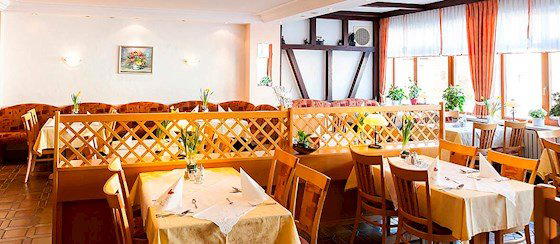
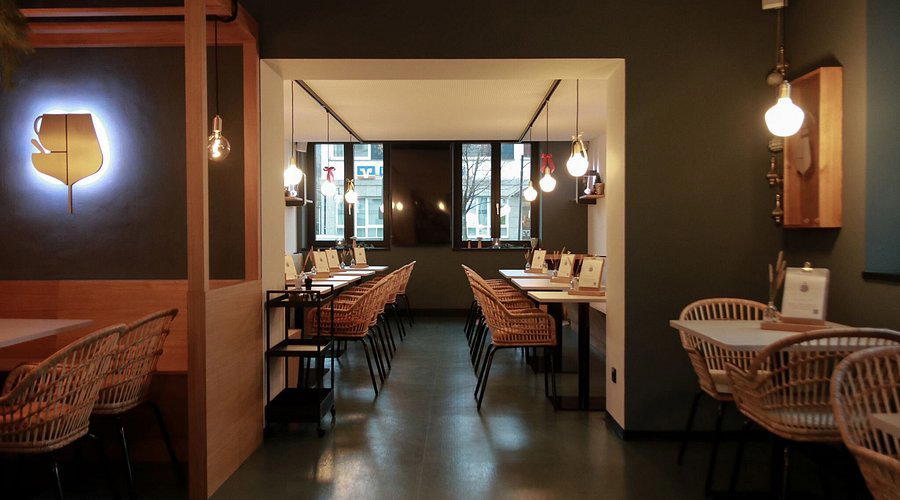
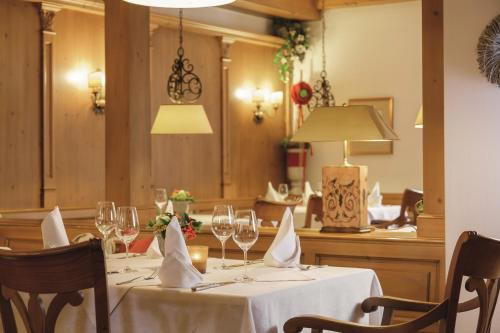
Chic upscale interior centered around an open kitchen, offering an elegant and intimate atmosphere with professional service.