
Michelin Plate
Our verdict
Hispania brings Catalan and Spanish cooking to central Brussels with a menu that spans tapas, traditional rice dishes, and more contemporary plates, all oriented toward punchy, assertive flavour. Lunch and dinner service runs Wednesday through Sunday at Rue Bodenbroek 2.

Pearl is the En Primeur Club membership app, where members save venues, book tables and use the concierge.
The menu
What to order
- Iberian pork meatballs
- Iberian ham croquettes
- Squid ink rice
- Segovia suckling pig
Spanish Regionalism in a Brussels Dining Room
The stretch of Brussels around Rue Bodenbroek sits within reach of the Sablon district, a neighbourhood whose antique dealers and chocolate houses have long attracted a crowd that pays attention to what it eats. Against that backdrop, Hispania occupies a particular position: a Spanish and Catalan kitchen operating in a city where the dominant fine-dining conversation runs through French-Belgian tradition. Places like Comme chez Soi and La Villa Lorraine by Yves Mattagne anchor that conversation at the leading end; Hispania is doing something structurally different, importing Iberian reference points rather than building from the Belgian or French larder.
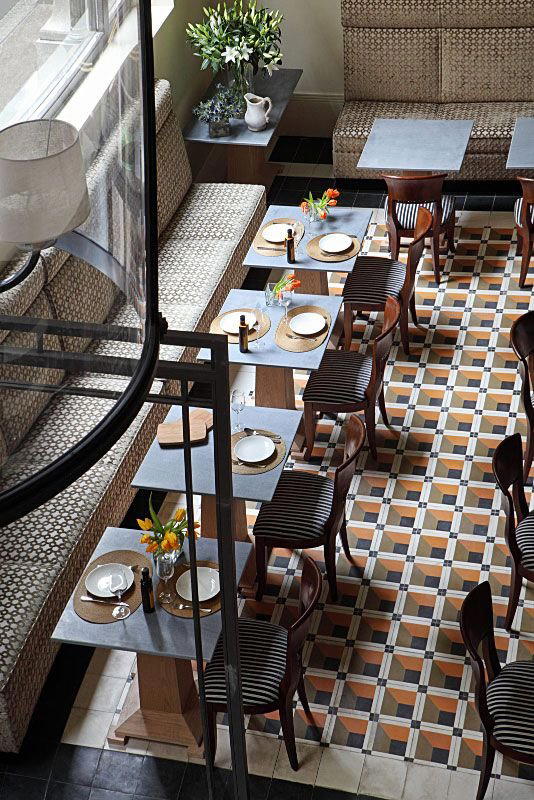
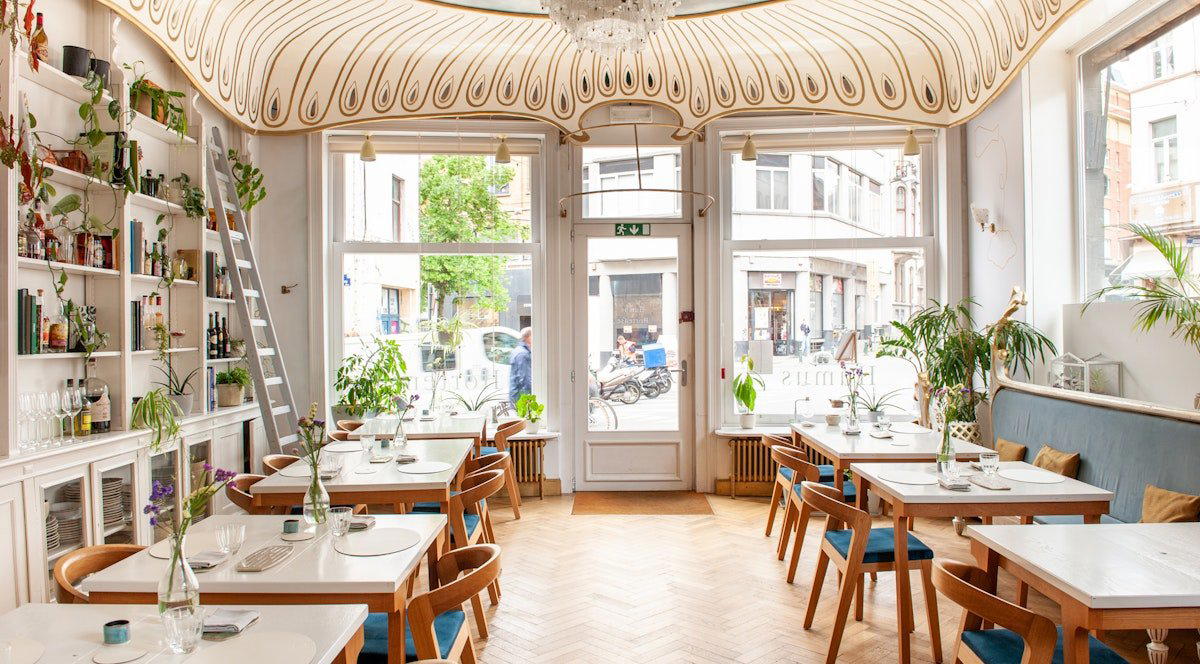
The room reads as smart and contemporary without the formality that the city's higher-price-point addresses tend to project. That registers immediately: the atmosphere is grounded rather than ceremonial, which matches the register of Spanish cooking at its most honest, a cuisine that has always been more interested in ingredient clarity and regional character than in tableside theatre.
How the Menu Is Built
Architecture of Hispania's menu is where the editorial argument sits. Rather than committing to a single format, either a tapas bar or a full tasting-menu restaurant, the kitchen holds both registers open at once. Tapas appear alongside traditional rice dishes and more fully composed modern plates, which means a table can assemble a meal according to appetite and intention rather than being locked into a predetermined sequence.
This structure reflects a broader shift in how serious Spanish restaurants have been positioning themselves outside Spain over the past decade. The either/or logic of tapas-bar versus fine-dining room has softened; the more interesting operators now build menus that let the kitchen demonstrate range without forcing the diner into a single mode. At Hispania, that range extends from the smaller, shareable format of tapas through to dishes with the kind of composition and ingredient weight that read as main courses.
The flavour orientation is stated plainly in the Michelin assessment: big-boned and punchy. That is a specific editorial position in a city where refinement and precision tend to be the default critical vocabulary. Hispania's kitchen is not interested in subtlety as an end in itself. The Galician veal preparation that Michelin's inspectors single out, cooked rare, served with foie gras and a potato and truffle espuma, illustrates the logic well: luxury ingredients used to amplify intensity rather than to soften or decorate it. The espuma format, associated with the modernist Spanish kitchen that emerged from Catalonia in the early 2000s, is here deployed in service of a richer flavour statement, not as a demonstration of technique for its own sake.
The rice dishes anchor the traditional register. Rice cookery is one of the most regionally specific and technically demanding traditions in the Spanish repertoire, and its presence on a Brussels menu signals a kitchen that is serious about the depth of that tradition rather than offering a Spain-adjacent approximation. Done correctly, the paella and related preparations require an understanding of socarrat, heat management, and stock reduction that is difficult to shortcut. Their inclusion alongside tapas and more modern plates creates a menu with genuine vertical range.
The Michelin Signal and What It Places
A Michelin Plate recognition in 2025 positions Hispania in a specific bracket within Brussels dining. The Plate designation indicates a kitchen that Michelin's inspectors consider worth attention, cooking that is good, consistent, and worth a visit, without the additional layers of ceremony and price compression that come with star-level expectations. In practical terms, that places Hispania at a €€€ price point, below the €€€€ addresses like Comme chez Soi or senzanome that carry starred recognition, and above the brasserie tier represented by places like Aux Armes de Bruxelles.
That middle bracket is, arguably, where the most interesting eating in Brussels happens. The city's dining scene has developed a coherent identity at the creative and contemporary end, Barge and Eliane represent the organic and creative directions within that, and Hispania occupies its own distinct lane within it, as the address where Spanish regional cooking is taken seriously at the Plate level.
The connection to Casa Gerardo, the Michelin-starred restaurant in Prendes, Asturias, run by Marcos Morán, functions as a credential that positions the kitchen inside a specific lineage. Asturian cooking is one of Spain's most ingredient-driven regional traditions, built on seafood, dairy, and mountain produce, and its influence reinforces the flavour-first orientation that characterises what Hispania does.
Brussels in the Belgian Dining Picture
It is worth placing Brussels dining alongside the wider Belgian restaurant scene to understand what Hispania is working within and against. Belgium's most-discussed fine-dining addresses tend to cluster outside the capital: Hof van Cleve in Kruishoutem, Boury in Roeselare, Zilte in Antwerp, and coastal addresses like Willem Hiele in Oudenburg, Bartholomeus in Heist, and Castor in Beveren have each built strong reputations on local and seasonal produce. Brussels, by contrast, has its own identity as a European capital dining city: more international in reference point, more varied in format, and more likely to sustain a restaurant like Hispania that imports a fully formed regional cuisine rather than building from Belgian terroir.
The comparison with high-profile international restaurants operating away from their home country is instructive. Restaurants like Le Bernardin in New York or Atomix, also in New York, demonstrate what it looks like when a cuisine travels with rigour and a clear point of view. Hispania operates in that same category of intent, at a different price tier and scale, but with a comparable commitment to keeping the source material legible.
Planning a Visit
Hispania is located at Rue Bodenbroek 2, 1000 Brussels. The kitchen runs lunch service from 1 to 4 pm and dinner from 8 pm to midnight, Wednesday through Saturday; on Sunday, lunch only runs from 1 to 4 pm. The restaurant is closed on Monday and Tuesday. At the €€€ price point, a meal here sits below the city's starred addresses while remaining in the considered-dining bracket. For a fuller picture of where to eat, drink, and stay while in the city, the EP Club Brussels restaurants guide, Brussels hotels guide, Brussels bars guide, Brussels wineries guide, and Brussels experiences guide cover the city across categories. For context within the broader Brussels fine-dining tier, Bozar Restaurant represents the Belgian contemporary direction, while Comme chez Soi anchors the classic French-Belgian tradition.
What Should I Eat at Hispania?
The Michelin inspectors specifically flag the Galician veal, cooked rare, with foie gras and a truffle and potato espuma, as a dish that stays with you, which makes it the most credentialled starting point on the menu. Beyond that, the menu's architecture suggests an approach: open with tapas to establish the Spanish flavour register, then anchor the meal with one of the traditional rice dishes, which represent the kitchen's most technically specific commitment to regional cooking. The more modern compositions sit alongside rather than replacing the traditional plates, so ordering across both registers gives the fullest account of what the kitchen is doing. The accent throughout is on assertive, direct flavour rather than delicacy, which means this is not a kitchen leading approached with conservative ordering.
Frequently asked questions
Is Hispania Michelin-listed?
Hispania has received recognition including: Michelin Plate (2025); Hispania is smart and contemporary, but down to earth, like the Spanish cooking it honours. Marcos Morán of the Michelin star restaurant, Casa Gerardo, in Prendes, Spain, continues to roll out a varied menu that will ….
What should I eat at Hispania?
The Michelin inspectors single out the Galician veal, served rare with foie gras and a truffle and potato espuma, as the dish that stays in memory longest. Beyond that flagship plate, the menu spans tapas alongside traditional rice dishes and more contemporary creations, so ordering across formats is how the kitchen is designed to be experienced. The through-line across all of it is what the inspectors describe as big-boned, punchy flavour rather than restrained plating-led cooking.
Recognition, Side-by-Side
A short peer table to compare basics side-by-side.
| Venue | Cuisine | Price | Awards | Notes |
|---|---|---|---|---|
| HispaniaThis venue (the venue you are viewing) | Authentic Spanish Brasserie | $50–100 | Michelin Plate | Not listed |
| Comme chez Soi | Classic French Fine Dining | $200–300 | 1 Michelin Star · World's 50 Best #49 | French - Belgian, Classic Cuisine |
| La Villa Lorraine by Yves Mattagne | Modern French Fine Dining | $200–300 | Michelin Plate · La Liste Top Restaurants | Modern Cuisine |
| senzanome | Modern Italian Fine Dining | $150–200 | Michelin Plate | Modern Italian, Italian |
| Au Vieux Saint Martin | Traditional Belgian Brasserie | $30–50 | Michelin Plate | French Bistro, Belgian |
| Aux Armes de Bruxelles | Traditional Belgian Brasserie | $50–100 | Michelin Plate | Brasserie, Belgian |
Recognition history
Dated appearances from independent guides and award organizations, with the underlying list record or original source where available.
Michelin Plate
Michelin
Full recognition history (3 entries)
Michelin Plate
Michelin
Michelin Plate
Michelin
Continue exploring
More in Brussels
Restaurants in Brussels
All restaurants in Brussels →
Bars in Brussels
All bars in Brussels →
Hotels in Brussels
All hotels in Brussels →
Wineries in Brussels
Browse all →
Details
- Elegant
- Sophisticated
- Cozy
- Classic
- Date Night
- Business Dinner
- Group Dining
- Special Occasion
- Private Dining
- Extensive Wine List
- A La Carte
- Small Plates
- Spanish Wines
- Vegetarian Friendly
- Vegan Options
- Gluten Free Options
Current opening hours
- Monday
- Closed
- Tuesday
- 12–2 PM, 6:30–9:30 PM
- Wednesday
- 12–2 PM, 6:30–9:30 PM
- Thursday
- 12–2 PM, 6:30–9:30 PM
- Friday
- 12–2 PM, 6:30–10 PM
- Saturday
- 12–2 PM, 6:30–10 PM
- Sunday
- Closed
Hours can change for holidays and private events. Hours as of .
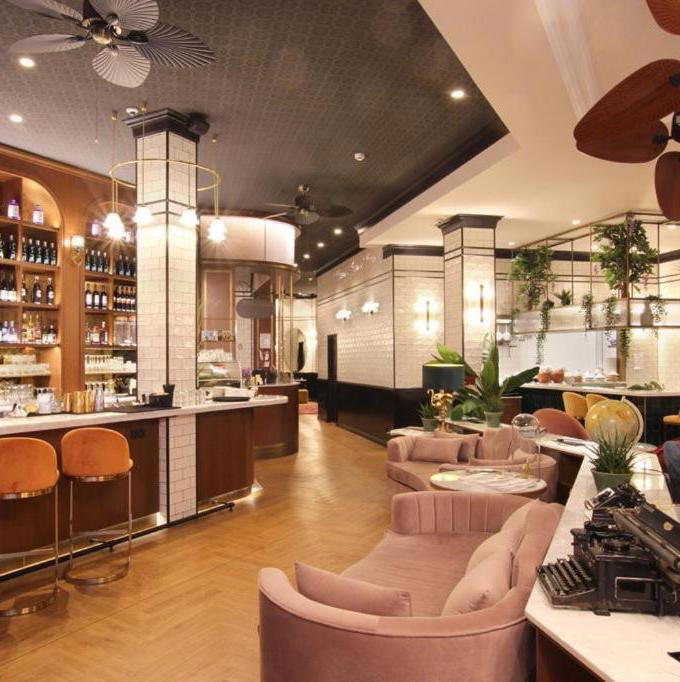
Smart and contemporary with golden bar, velvet seating, antiques, mirrors, and tile designs; warm, chic, and down-to-earth atmosphere praised for comfort and elegance.