
Tabelog 100 #70
Our verdict
Hao Hao places Chinese cooking inside a quieter Nishigotanda rhythm rather than the Ginza-Aoyama luxury circuit. Its Tabelog Chinese TOKYO “Tabelog 100” selections in 2023, 2024, and 2026, compact 18-seat scale, and cash-only setup point to a focused local address with serious demand signals rather than a spectacle-led dining room.

Pearl is the En Primeur Club membership app, where members save venues, book tables and use the concierge.
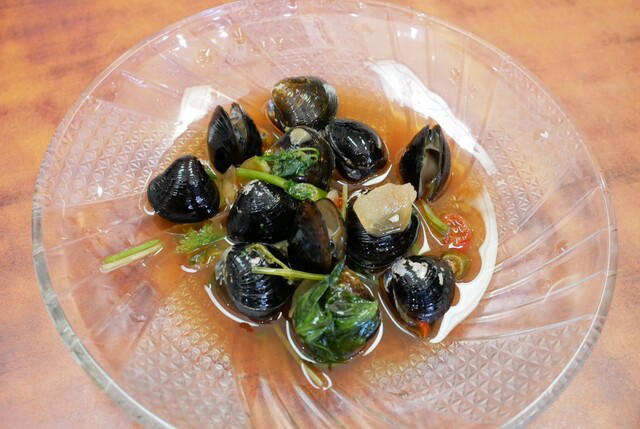
The menu
What to order
- Taiwanese-style soy pudding desserts
- Vegan minced pork rice
- Soupless noodles
- Savory soy milk soup
- Tofu pudding
Tokyo changes the tempo before the meal begins. The city has a practical grain away from the most obvious luxury circuits: apartment blocks, small offices, neighborhood counters, and restaurants that serve regulars as much as destination diners. In that setting, Chinese dining reads differently from hotel dining rooms and glossy central-Tokyo tasting menus. Hao Hao belongs to the more compact Tokyo tradition, where scale, repeat recognition, and local placement carry the argument.
Tokyo gives Chinese cooking a lower-volume frame
Tokyo’s Chinese restaurants split across several registers: formal banquet rooms, regional specialists, hotel tables, casual gyoza-and-noodle addresses, and small independent rooms with the discipline of serious kitchens but the footprint of a neighborhood restaurant. Tokyo is a useful place for the latter. It is connected enough to draw diners who plan around a meal, but broad enough to strip away ceremony when the room calls for something more direct.
That matters because the restaurant’s signals are not built around theatrical format. The public details point instead to compression: a Chinese category, a listed phone number, and published lunch and dinner budget bands. In Tokyo terms, those details describe a focused operation rather than a grand dining room. The experience is likely to be shaped by proximity and pacing, not by a long procession of staged flourishes.
The recognition is the clearest quality marker. Hao Hao was selected for Tabelog Chinese TOKYO in 2026 and carries a Tabelog score of 3.77. Tabelog’s Hyakumeiten lists matter in Japan because they often capture the restaurants that local diners rate seriously, including places outside the international-awards spotlight. For a traveler, that makes the address a different kind of Tokyo reference point: not a trophy reservation by global shorthand, but a local credibility play within Chinese cooking.
The comparison is Tokyo, not only the obvious luxury circuit
The surrounding dining field sharpens the point. Comparison addresses such as ARALIYA LANKA Gotanda honten, Curry no Mise Udon, Meat Yazawa Gotanda honten, Age Fuku, and Iwasawa help place Hao Hao among restaurants that reward more granular Tokyo planning. That context is useful intelligence. This is not simply another neighborhood meal; it occupies a deliberate tier in a city where practical dining and occasion-led restaurants often sit closer together than visitors expect.
Tokyo rewards this kind of positioning. The city’s restaurant culture is not only concentrated in prestige districts; it depends on specialist rooms embedded in residential or commuter areas. A Chinese restaurant in Tokyo with Tabelog recognition speaks to that pattern. The draw is the friction between modest urban setting and serious local validation, a familiar Tokyo equation for diners willing to leave the obvious circuit.
There is no chef biography or named signature dish to hang the story on, and that absence should not be forced into romance. The available facts make a stronger case through format and recognition. A restaurant with this category, published budget, and local validation asks to be judged against other focused Tokyo independents rather than against large-scale hotel Chinese dining. The decision is less about spectacle and more about whether the trip fits the way a traveler wants to read the city.
How to place it within a Tokyo dining itinerary
Hao Hao works well as a counterweight to the city’s better-publicized restaurant genres. Pairing it with sushi, yakitori, curry, or bar-led nights gives a clearer sense of how Tokyo distributes quality across neighborhoods and formats. Readers building a broader map can start with Our full Tokyo restaurants guide, then compare adjacent dining moods through other Tokyo dining rooms, casual counters, curry specialists, cafes, and neighborhood restaurants.
For planning beyond the meal, Tokyo’s hospitality and nightlife layers change the day around it. Our full Tokyo hotels guide, Our full Tokyo bars guide, Our full Tokyo wineries guide, and Our full Tokyo experiences guide help separate a restaurant-led itinerary from a hotel-led one. The wider Japan and overseas archive also shows how narrow-format dining travels across contexts, from regional dining rooms and cafes in Japan to compact specialist counters abroad.
The practical read is simple: treat the restaurant as a planned stop, not a casual add-on. Its recognition, Chinese category, and published budget bands all favor preparation. The stronger editorial reason to go is place. Tokyo puts Chinese cooking into settings where neighborhood utility and destination dining overlap, and that overlap is often where the city becomes clearer.
Frequently asked questions
What should I budget for a meal at Hao Hao?
Pricing at Hao Hao is listed as Dinner: JPY 20,000 - JPY 29,999; Lunch: JPY 15,000 - JPY 19,999.
What are the opening hours for Hao Hao?
Opening hours for Hao Hao are not specified in the provided venue details.
Where is Hao Hao located?
Tokyo.
What makes Hao Hao worth seeking out?
Hao Hao carries Tabelog Hyakumeiten recognition for Chinese dining in Tokyo for 2026, with a listed Tabelog score of 3.77. The frame is focused rather than grand, making it a useful stop for diners who want to understand how Tokyo distributes quality beyond the most obvious luxury circuits.
Compact Comparison
Side-by-side context: comparable cuisine and price.
| Venue | Cuisine | Price | Awards | Notes |
|---|---|---|---|---|
| Hao HaoThis venue (the venue you are viewing) | Vegan Hong Kong & Taiwanese Chinese | $10–20 | Tabelog 100 #70 | Not listed |
| Iwasawa | Edo-style Omakase Sushi | $200–300 | Tabelog 100 #14 | Not listed |
| ARALIYA LANKA Gotanda honten | Not listed | Not listed | Tabelog 100 #90 | JPY 2,000 - JPY 2,999 JPY 1,000 - JPY 1,999 |
| Curry no Mise Udon | Japanese Curry House | $10–20 | Tabelog 100 #53 | JPY 1,000 - JPY 1,999 JPY 1,000 - JPY 1,999 |
| Meat Yazawa Gotanda honten | Wagyu Steakhouse | $30–50 | Tabelog 100 #24 | JPY 4,000 - JPY 4,999 JPY 2,000 - JPY 2,999 |
| Age Fuku | Specialist Tonkatsu Restaurant | $30–50 | Tabelog 100 #33 | JPY 3,000 - JPY 3,999 JPY 2,000 - JPY 2,999 |
Recognition history
Dated appearances from independent guides and award organizations, with the underlying list record or original source where available.
Tabelog 100 #70 · No. 70
Tabelog · Tabelog 100 - Chinese cuisine - TOKYO - 2026
Continue exploring
More in Tokyo
Restaurants in Tokyo
All restaurants in Tokyo →









Details
- Cozy
- Casual Hangout
- Family
- Solo
- After Work
- Group Dining
- Standalone
- Terrace
- A La Carte
- Tea
- Coffee
- Vegan Options
- Vegetarian Friendly
Current opening hours
- Monday
- 9 AM–2 PM
- Tuesday
- 9 AM–2 PM
- Wednesday
- 9 AM–2 PM
- Thursday
- 9 AM–2 PM
- Friday
- 9 AM–2 PM
- Saturday
- Closed
- Sunday
- Closed
Hours can change for holidays and private events. Hours as of .
Casual and bright café-style space inside the Reload complex with simple, modern decor, a relaxed neighborhood feel, and a mix of indoor and outdoor seating that creates a cozy but lively atmosphere during the day.