Hama Sushi
On Windward Avenue, steps from the Venice boardwalk, Hama Sushi occupies a stretch of Los Angeles's most reliably eccentric shoreline. In a neighbourhood that has cycled through counterculture, gentrification, and back again, the address itself is an editorial statement. For Venice, California residents and visitors seeking Japanese dining without crossing into Santa Monica or West Hollywood, it remains a consistent local reference point.
Pearl is the En Primeur Club membership app — saves, bookings, and concierge access live there. Same editors, same standards.
- Address
- 213 Windward Ave, Venice, CA 90291
- Phone
- +13103968783
- Website
- hamasushi.com
- Directions
- Get directions
 Saves & bookings on Pearl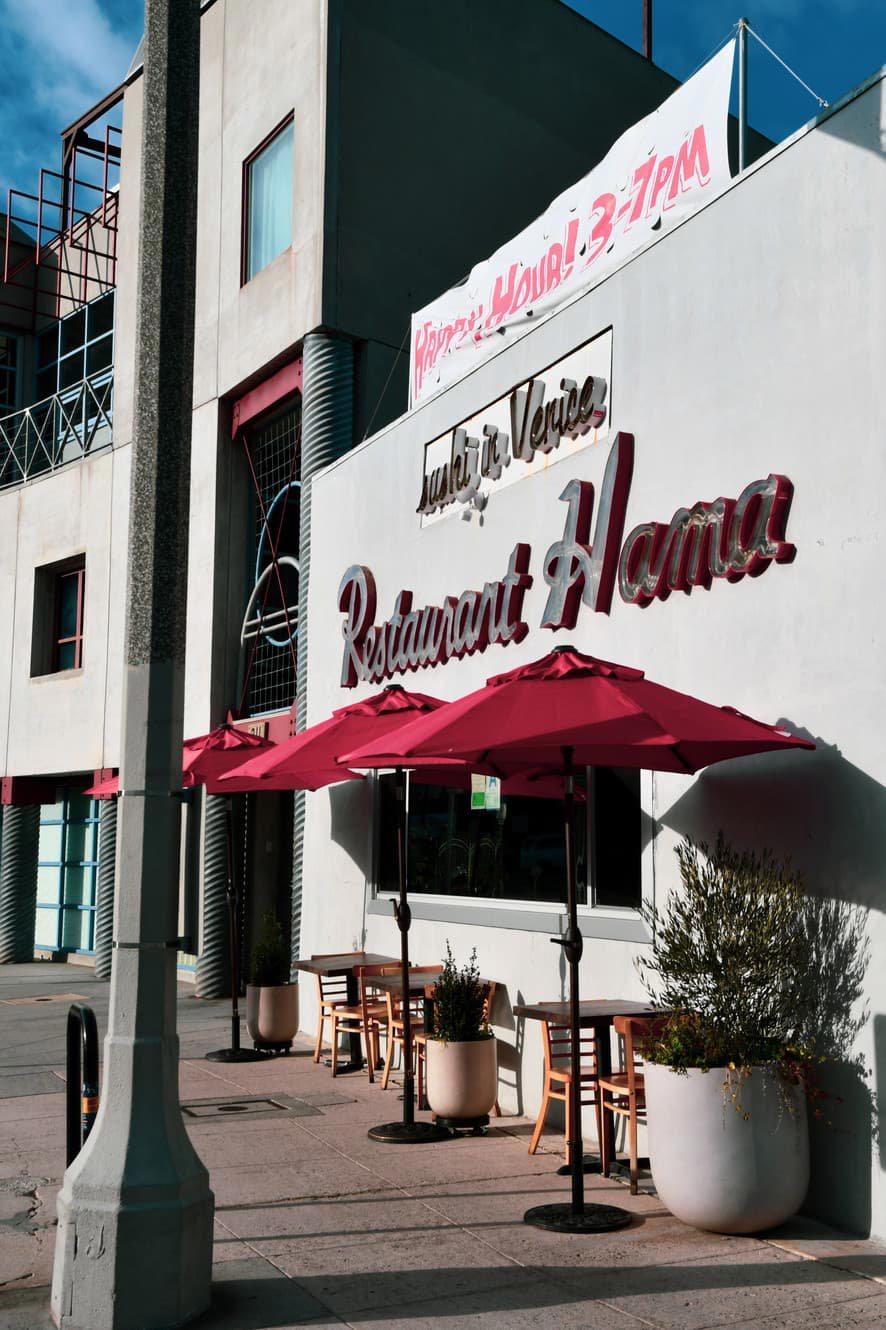
Windward Avenue and What It Means to Eat Here
Venice, California has never settled into a single identity, and Windward Avenue captures that tension more honestly than most streets in Los Angeles. The boardwalk crowd, the mural walls, the remnants of the original canals development, all of it converges within a few blocks of 213 Windward Ave, where Hama Sushi holds its address. That location is not incidental to the experience. In a city where Japanese dining tends to cluster in Sawtelle, Little Tokyo, or the more polished corridors of West Hollywood, a sushi counter operating on Venice's main drag occupies a genuinely different register, neighbourhood institution rather than destination restaurant.
That distinction matters in Los Angeles, where the geography of dining is often the clearest signal about what a meal will cost, who it is for, and what assumptions the kitchen makes about its audience. Hama Sushi sits inside the Venice ecosystem rather than outside it looking in, which shapes everything from the likely crowd at the counter to the way the room functions on a weekday versus a weekend. The boardwalk proximity brings foot traffic that a Brentwood or Culver City address would not; the neighbourhood's longstanding artistic and counterculture associations have historically supported the kind of unpretentious, technically sound Japanese cooking that does not require a tasting menu format to justify itself.
The Venice Sushi Equation
Los Angeles is, by any serious measure, among the more consequential Japanese dining cities outside Japan itself. The infrastructure is deep: fish markets with direct Pacific Rim sourcing, Japanese-American communities with multigenerational hospitality ties, and a restaurant culture that has absorbed Japanese technique across multiple price tiers. What this means for a Venice address is that the competitive context is unusually demanding. The westside alone contains counters ranging from casual rolls-and-beer spots to reservation-only omakase rooms pricing at several hundred dollars per head.
Hama Sushi's Windward Avenue location places it in the middle tier of that geography, not the tourist-facing boardwalk kiosk end, and not the appointment-only fine dining end either. Venues at this level in Los Angeles tend to succeed on the quality of their fish sourcing, the consistency of their rice, and the reliability of service over a long operating period. In a city where restaurants open and close on compressed cycles, longevity on a specific block carries its own form of credibility. For context on how the higher end of LA's Japanese dining spectrum operates, the omakase model at that level shares some DNA with what drives national-tier programs like Atomix in New York City, where sourcing transparency and counter discipline define the format.
The Neighbourhood Does Part of the Work
Venice's dining scene in 2024 operates differently than it did a decade ago. Rents have risen sharply along the corridors closest to Abbot Kinney and the beach, and a number of long-running neighbourhood spots have been displaced or converted into higher-margin formats. What this has done, paradoxically, is increase the cultural weight carried by addresses that have maintained continuity. A restaurant that has held its position on Windward Avenue through multiple cycles of Venice's reinvention is making an implicit argument about what the neighbourhood is, versus what developers and new openings suggest it should become.
For the visitor whose itinerary is based in Santa Monica or West Hollywood, Venice adds approximately fifteen to twenty minutes of driving time but a materially different street-level context. The meal arrives with the ambient texture of the boardwalk nearby, the Muscle Beach infrastructure a few blocks south, and the murals on the Windward colonnades as a backdrop for the walk in. That environmental framing is part of what distinguishes a Venice dining experience from one in a more sanitised LA neighbourhood. Visitors with interest in Los Angeles's broader culinary range might cross-reference against nationally recognised programs further afield: Providence in Los Angeles represents the white-tablecloth seafood benchmark for the city, while The French Laundry in Napa or Single Thread Farm in Healdsburg anchor stronger examples from Northern California's tasting-menu register for comparison.
How It Fits the Westside Pattern
Japanese dining in the Venice-Santa Monica corridor follows a recognisable pattern: the strongest counters tend to be owner-operated, with sourcing relationships built over years rather than negotiated through broadline distributors. The category rewards consistency and penalises variability, a single off night on fish quality is more visible in sushi than in most other formats, because the cooking does less to mediate what the product delivers. Venues that survive at this address level in this city tend to have resolved that equation in a durable way.
For those mapping a broader Los Angeles itinerary, it is worth noting how the westside Japanese category compares to the city's other serious dining clusters. The Italian-leaning rooms in Venice proper are a different proposition entirely: Local in Venice operates at the contemporary Italian end, and for those travelling between Italian and Japanese reference points within the same trip, that contrast is worth planning around. Internationally, the structural comparison point for sushi counters operating in beach-adjacent, culturally dense neighbourhoods spans cities well beyond LA, from Hong Kong's dining density illustrated by 8 1/2 Otto e Mezzo Bombana to the tasting-menu ambitions tracked by programs like Alinea in Chicago and Lazy Bear in San Francisco.
Planning Your Visit
Windward Avenue is accessible from Lincoln Boulevard heading west, with street parking concentrated along the surrounding grid and paid lots within a short walk. The boardwalk proximity makes weekends notably busier than weekdays, and the late afternoon to early evening window on weekends draws both local residents and day-visitors from across the westside. Those planning a tighter itinerary around the Venice-Santa Monica corridor should account for that foot traffic pattern when timing a reservation or walk-in. Hama Sushi is open Mon: 5-9 PM; Tue: Closed; Wed: 5-9 PM; Thu: 5-9 PM; Fri: 5-9:30 PM; Sat: 5-9:30 PM; Sun: 5-9 PM, and reservations are recommended. For a broader map of how the restaurant fits within the Venice dining picture alongside Italian-leaning and contemporary options, see our full Venice restaurants guide.
Compact Comparison
Comparable venues nearby, for context on price, style, and recognition.
| Venue | Cuisine | Price |
|---|---|---|
| Hama SushiThis venue — the venue you are viewing | Not listed | $$ |
| Kassi Venice Beach | Venice Beach, Greek-Californian Rooftop | $$ |
| RVR | Venice, Modern California Izakaya | $$$ |
| Gran Blanco | Venice, Modern Japanese Izakaya | $$ |
| Greenleaf Gourmet Chopshop | Venice, Healthy American Fast-Casual | $$ |
| Sidewalk Cafe | Venice, Classic American Beach Cafe | $$ |
Continue exploring
More in Venice
Restaurants in Venice
Browse all →
Bars in Venice
Browse all →
Hotels in Venice
Browse all →
Wineries in Venice
Browse all →
At a Glance
- Lively
- Casual
- Well Known
- Casual Hangout
- Date Night
- Standalone
- Sake Program
- Sustainable Seafood
- Street Scene
Current opening hours
- Monday
- 5–9 PM
- Tuesday
- Closed
- Wednesday
- 5–9 PM
- Thursday
- 5–9 PM
- Friday
- 5–9:30 PM
- Saturday
- 5–9:30 PM
- Sunday
- 5–9 PM
Hours can change for holidays and private events. Last verified .