On Rue Thiers, Gustavo occupies a corner of Grenoble's dining scene that rewards those who seek out ingredient-led cooking over spectacle. The address places it within easy reach of the city centre, while its position in Grenoble's mid-tier restaurant conversation suggests a kitchen focused on produce rather than performance. A practical starting point for anyone exploring what the Dauphiné region brings to the table.
Pearl is the En Primeur Club membership app — saves, bookings, and concierge access live there. Same editors, same standards.
- Address
- 11 Rue Thiers, 38000 Grenoble, France
- Phone
- +33438866716
- Website
- gustavovegan.fr
- Directions
- Get directions
 Saves & bookings on Pearl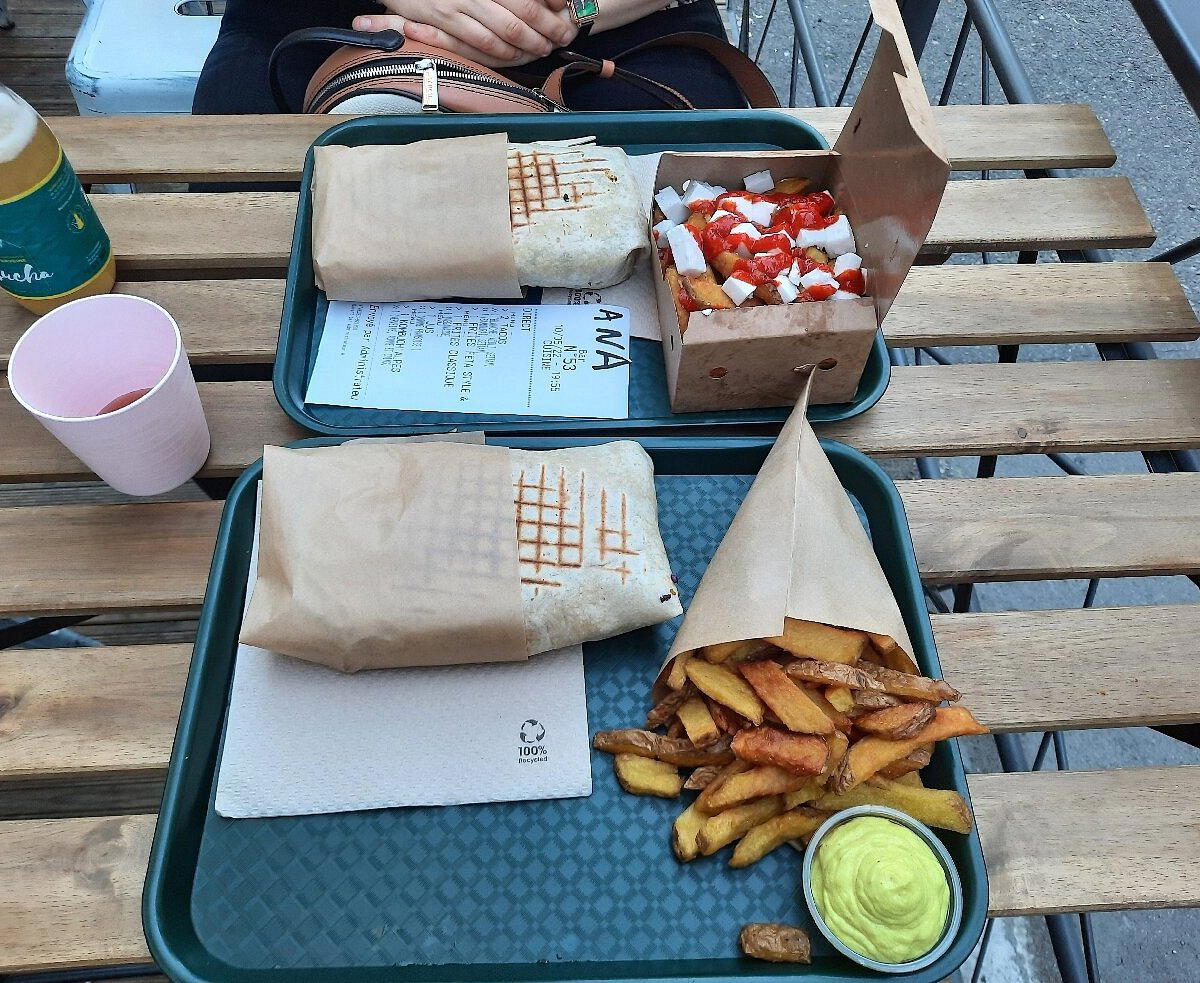
Gustavo is a vegan fast food restaurant serving vebab in Grenoble, France. In a city that sits at the confluence of the Isère and Drac rivers, hemmed in by the Vercors, Chartreuse, and Belledonne massifs, the question of where food comes from is never abstract. The mountains and plateaux around Grenoble supply walnuts from the Grenoble AOP, cheeses from the Chartreuse valleys, lamb from the high pastures, and river fish from local waterways. Gustavo, at 11 Rue Thiers, sits inside that geography.
Grenoble's Ingredient Tradition and Where Gustavo Fits
Among French provincial cities, Grenoble occupies an unusual position. It is not a gastronomic capital in the way Lyon is, nor does it carry the coastal produce advantages of Marseille, where AM par Alexandre Mazzia has built a three-Michelin-star argument around Mediterranean sourcing. Instead, Grenoble's culinary identity is shaped by altitude and season in ways that most French cities are not. The Vercors plateau, directly to the west, produces lamb that grazes on wild herbs at elevations above 1,000 metres. The Chartreuse to the north contributes dairy and fungi with a specificity that changes by valley. This is terrain that rewards kitchens willing to track the season closely rather than rely on standardised supply.
In that context, some Grenoble restaurants position themselves around what the surrounding region actually produces at a given moment. Le Fantin Latour, the city's most decorated address, has long operated at the premium end of that sourcing argument. Brasserie Chavant anchors the traditional end, with a menu that reads as a register of Dauphiné staples. Gustavo on Rue Thiers enters a mid-field where the sourcing question becomes most interesting: what does a kitchen at this tier do with the same regional larder?
The Address and What the Rue Thiers Location Signals
Physically, 11 Rue Thiers places Gustavo in a part of Grenoble that is neither the tourist-facing centre nor the residential periphery. Streets at this distance from the Place Grenette tend to attract a local clientele that returns regularly rather than drops in on impulse. In cities like Grenoble, where the student and research population is substantial (the city's universities and scientific institutions make it one of France's more intellectually dense provincial centres), a restaurant at this kind of address often serves a repeat audience with specific expectations around value and quality of sourcing. That audience tends to be less tolerant of shortfall than a tourist-heavy room.
For comparison within Grenoble's current restaurant set, venues like Camillo, Et Si, and Au Clair de Lune occupy overlapping tiers in the city's mid-range dining conversation, each working through a slightly different lens on regional produce and contemporary French technique. Gustavo's position on Rue Thiers puts it in dialogue with that group rather than competing directly with the higher-spend tables at the city's leading end.
Ingredient Sourcing in the Dauphiné: Why It Matters Here
The Dauphiné is one of the few French regions where the altitude differential within a short radius produces genuinely distinct ingredient categories. Noix de Grenoble, the AOP walnut that takes the city's name, has been cultivated in the valleys south and west of the city since the medieval period; the designation covers specific varieties grown at specific elevations and harvested at a defined moment in autumn. Cheese from the Chartreuse massif, particularly the tommes and raclette-style cheeses produced in small-scale operations north of the city, carry a flavour profile shaped by high-altitude pasture grasses that no lowland operation can replicate. River fish from the Isère system, including omble chevalier (Arctic char), appear on serious Grenoble menus as a regional signature in a way that has no equivalent in landlocked cities without comparable river systems.
French kitchens working in this tradition have a strong regional precedent. Flocons de Sel in Megève has built a three-Michelin-star programme explicitly around mountain-sourced ingredients at altitude. Bras in Laguiole has spent decades articulating the Aubrac plateau through its kitchen. These are reference points for what rigorous sourcing looks like at the highest level of French regional cooking. The question for any Grenoble restaurant operating below that ceiling is how much of that sourcing discipline it carries into a more accessible format.
Grenoble in the Wider French Restaurant Context
To calibrate expectations, it helps to see where Grenoble sits in the national picture. France's most sourcing-obsessed restaurants, from Mirazur in Menton to Troisgros in Ouches, have made ingredient provenance a central editorial argument, one that critics and the Michelin guide now read as a marker of seriousness. Auberge de l'Ill in Illhaeusern and Au Crocodile in Strasbourg represent the Alsatian tradition of hyper-local sourcing translated into classical technique. In Paris, Alléno Paris au Pavillon Ledoyen and Assiette Champenoise in Reims operate at the far end of the investment and ambition scale. Grenoble, and by extension an address like Gustavo, works in a register that is materially different: closer to the source, lower in overhead, and serving a city whose relationship with its surrounding terrain is practical rather than aspirational.
For readers building a broader French itinerary, the contrast with restaurants like Paul Bocuse's Auberge du Pont de Collonges near Lyon is instructive. Lyon's tradition is one of abundance and richness; the Dauphiné's is more austere, shaped by altitude and shorter growing seasons. A restaurant on Rue Thiers is working with that regional character as its baseline.
At-a-Glance Comparison
Comparable venues nearby, for context on price, style, and recognition.
| Venue | Cuisine | Price | Notes |
|---|---|---|---|
| GustavoThis venue — the venue you are viewing | Vegan Fast Food (Vebab) | $ | Not listed |
| Restaurant Katmandou | Authentic Nepali & Tibetan | $$ | Centre Grenoble |
| Restaurant il Salentino | Authentic Puglian Italian | $$ | Centre-ville (Downtown Grenoble) |
| Numéro21 | Traditional Ukrainian | $$ | Centre-ville (Downtown Grenoble) |
| Le Beccaria | French Fusion Bistro | $$ | Hyper-Centre |
| LULU | Bistronomie | $$ | Centre-ville |
Continue exploring
More in Grenoble
Restaurants in Grenoble
Browse all →
Bars in Grenoble
Browse all →
Hotels in Grenoble
Browse all →

At a Glance
- Casual
- Cozy
- Casual Hangout
- Solo
- Standalone
- Local Sourcing
- Organic
Current opening hours
- Monday
- 11:30 AM–2:30 PM, 7–10 PM
- Tuesday
- 11:30 AM–2:30 PM, 7–10 PM
- Wednesday
- Closed
- Thursday
- Closed
- Friday
- Closed
- Saturday
- Closed
- Sunday
- Closed
Hours can change for holidays and private events. Last verified .
A small, casual vegan fast-food spot with limited tables and a simple, relaxed atmosphere.