Gurkha Nepalese & Indian Restaurant
Our verdict
Gurkha Nepalese & Indian Restaurant occupies a first-floor room above Kaizen on Byron Street, Victoria Road, and represents Swindon's foothold in a dining tradition that extends from the Kathmandu Valley to the curry houses of the British high street. The kitchen draws on both Nepalese and Indian culinary lineages, placing it in a distinct bracket from straightforward subcontinental restaurants. For a town with a compact but genuinely varied independent dining scene, it merits attention.

Pearl is the En Primeur Club membership app — saves, bookings, and concierge access live there. Same editors, same standards.
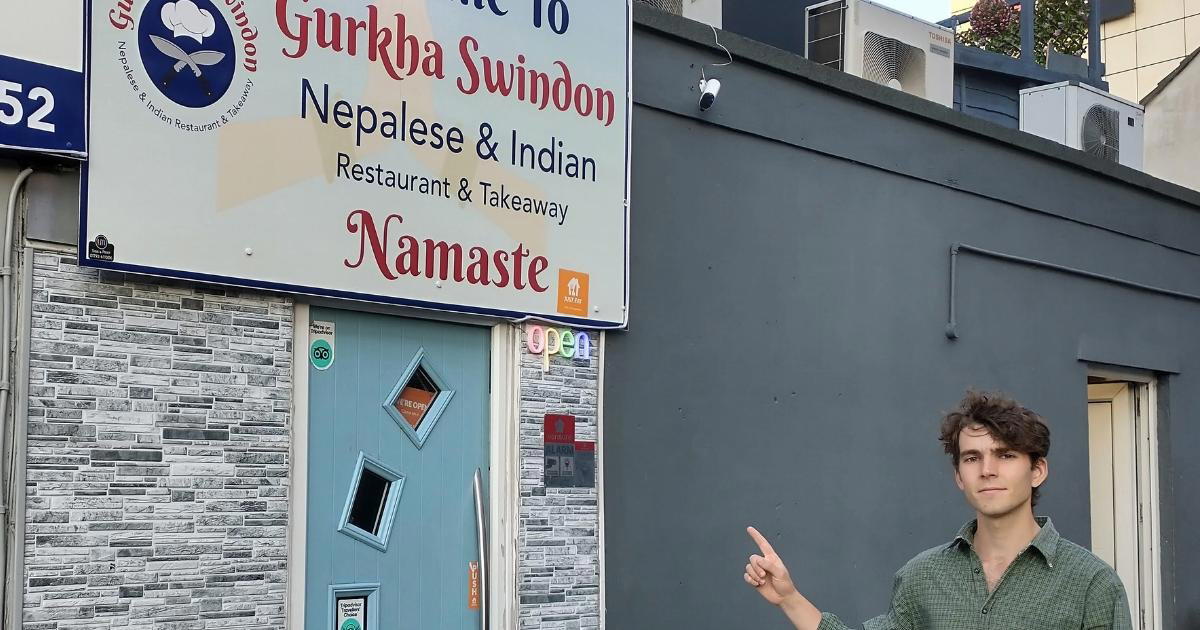
A First-Floor Room and Two Culinary Traditions
The geography matters here before anything else. Gurkha Nepalese & Indian Restaurant sits above Kaizen on Byron Street, accessed via a side-road entrance off Victoria Road in central Swindon. The approach is practical rather than theatrical: a staircase leading to a first-floor dining room, away from the ground-level foot traffic that most of Swindon's independents rely on for passing trade. That physical separation is not incidental. First-floor restaurants in British market towns occupy a particular niche — they depend on intention rather than impulse, which tends to self-select a clientele that already knows what it wants.
The dual identity of the kitchen, Nepalese and Indian cooking under one roof, is more substantive than the pairing might first suggest. These are related but distinct traditions, and restaurants that attempt to serve both honestly are doing something more demanding than the standard British-Indian format. The Nepalese culinary tradition carries its own grammar: different spice weightings, a stronger emphasis on fermented ingredients and mountain-region staples, and preparation techniques that diverge considerably from the North Indian cooking most British diners encounter as the default. The presence of Nepalese dishes alongside Indian ones is the primary editorial fact about this kitchen.
What the Nepalese Tradition Actually Involves
Understanding why the Nepalese dimension matters requires some context about where that food comes from and how it reaches a British dining room. Nepal sits between India and Tibet, and its cuisine reflects that geography: lentil-based dal bhat is the national staple, momos (steamed or fried dumplings) function as street food and restaurant fare alike, and the spicing tends toward fresh herbs and less cream-heavy construction than the Mughal-influenced sauces that dominate mainstream British-Indian menus. The meat sourcing traditions in Nepal lean heavily on goat and buffalo, with chicken and lamb used differently than in comparable Indian preparations.
When a restaurant in a place like Swindon commits to presenting this cuisine alongside Indian cooking, it is making a sourcing and preparation argument that goes beyond menu variety. Authentic Nepalese flavour profiles require specific dried spices, fermented mustard greens (gundruk), and in some cases timur pepper, a Sichuan-adjacent spice native to Himalayan regions. Whether those ingredients arrive through specialist UK importers or are approximated from accessible alternatives is something only kitchen proximity can confirm — but the commitment to the dual identity sets the terms for how to read the menu.
Swindon's independent restaurant scene includes a spread of European and South American options. The town's dining breadth stretches from Greek Olive and La Strada Restaurant through to Rios Brazil. Within that spread, a restaurant holding the Nepalese-Indian position occupies ground that no other venue in the immediate area appears to claim. That is not a guarantee of quality, but it is an honest reason to pay attention.
The Ingredient Question in British-Nepalese Cooking
One of the harder editorial questions about any British restaurant serving Nepalese food is provenance. The UK has a well-established supply chain for subcontinental spices, and cities like Birmingham and London host specialist importers who supply everything from Kashmiri chilli to Nepali timur. For a restaurant in Swindon, the route to authentic ingredients likely runs through those same urban wholesale networks or via online suppliers who have made genuinely regional spices accessible across the country in the past decade. The practical consequence is that a committed kitchen in Swindon can source much of what it needs, even if geographic distance from Kathmandu is not the obstacle it once was.
The more revealing test is whether the kitchen distinguishes its Nepalese dishes at a preparation level. Dal bhat served with proper gundruk and achar (fermented pickle) carries a different flavour logic than a curry-house lentil dish dressed to match. Momo dough, when made correctly, has a specific chew and thinness that reveals whether the kitchen is working from the technique or approximating it. These are details that a first visit either confirms or challenges, and they are the right questions to bring to this particular restaurant.
Swindon in Context
Swindon does not sit in the orbit of UK fine dining in the way that a town like Bray does, home to the Waterside Inn, or a city like Oxford, where Le Manoir aux Quat'Saisons has anchored destination dining for decades. The reference points for serious UK restaurant ambition extend further: CORE by Clare Smyth in London, L'Enclume in Cartmel, Moor Hall in Aughton, Gidleigh Park in Chagford, Hand and Flowers in Marlow, hide and fox in Saltwood, Midsummer House in Cambridge, Opheem in Birmingham, Restaurant Andrew Fairlie in Auchterarder, and Restaurant Sat Bains in Nottingham. None of that is the frame for Gurkha, and it should not be. What matters in Swindon is whether a restaurant is doing something with genuine culinary logic rather than category-filling, and the Nepalese-Indian combination here suggests an operator with at least a specific point of view.
For comparison internationally, Korean-American fine dining has demonstrated what happens when immigrant culinary traditions are taken seriously at a technical level: Atomix in New York City showed the Korean tasting-menu format could earn two Michelin stars. Serious French technique anchors Le Bernardin in New York City at the very leading of its category. Closer to home, Opheem in Birmingham has shown what Indian cooking looks like when treated as fine-dining subject matter. These comparisons are not meant to position Gurkha alongside those rooms, but to illustrate that taking a non-European culinary tradition seriously at any price point is the right orientation, and it is one the Gurkha kitchen appears to be attempting.
Planning a Visit
The restaurant is on the first floor above Kaizen, with entrance via the side road off Victoria Road, Swindon SN1 3DF. The layout and access make this a destination visit rather than a drop-in, so it is worth confirming availability before arriving. No dress code information is available, and Swindon's independent restaurant culture is generally casual. For a broader picture of what the town's dining scene offers, the full Swindon restaurants guide covers the full spread of independents across the centre.
Frequently asked questions
What's Gurkha Nepalese & Indian Restaurant's location?
Gurkha Nepalese & Indian Restaurant is located at First Floor, ENTRANCE AT SIDE ROAD, 188-189, Above Kaizen, Byron St, Victoria Rd, Swindon SN1 3DF, United Kingdom, Swindon.
How does the Nepalese menu at Gurkha Swindon differ from a standard Indian restaurant?
Nepalese cuisine draws on a distinct ingredient set and cooking logic shaped by altitude, trade routes through Tibet and India, and a reliance on fermented vegetables, lentils, and spice combinations that differ from Punjabi or Mughal-derived Indian cooking. A restaurant in Swindon presenting both traditions in one menu gives diners access to dishes, such as sel roti or kwati, that rarely appear on menus outside UK cities with established Nepalese communities. That dual kitchen, operating from a first-floor room on Byron Street, is what separates Gurkha from the majority of Indian restaurants in the SN1 postcode.
What dish is Gurkha Nepalese & Indian Restaurant famous for?
The restaurant draws on two distinct culinary traditions: Nepalese cooking, which distinguishes it from the broader Indian restaurant scene in Swindon, and Indian cuisine. Nepalese dishes such as dal bhat, momos, and gundruk represent a tradition with limited representation across UK high streets, which makes that side of the menu the more notable draw. The Indian side covers more familiar ground for the area.
What's the best way to book Gurkha Nepalese & Indian Restaurant?
The restaurant is located on the first floor above Kaizen, accessed via the side road off Victoria Road, Swindon SN1 3DF, so visiting in person to enquire about reservations is a practical option if online contact details are unavailable.
What makes Gurkha Nepalese & Indian Restaurant worth seeking out?
In Swindon, a city without significant representation in UK fine dining coverage, a restaurant offering a dedicated Nepalese menu alongside Indian cooking fills a gap that most of its neighbours do not. The Nepalese culinary tradition is geographically and technically distinct from North or South Indian cooking, and restaurants that present both in a single room, at a first-floor venue on Byron Street, are not common in towns of this size.
Can Gurkha Nepalese & Indian Restaurant accommodate dietary restrictions?
Nepalese and Indian culinary traditions both include a significant body of vegetarian and pulse-based dishes, and lentil preparations are a structural part of Nepalese cooking rather than an afterthought.
Is eating at Gurkha Nepalese & Indian Restaurant worth the cost?
As a point of context, independent Nepalese and Indian restaurants operating in Swindon generally sit in the accessible mid-range, and the first-floor, side-road-access setup on Byron Street is not indicative of a premium-priced operation. Value is best assessed against what the Nepalese portion of the menu offers, which is less common in this part of the UK.
Comparison Snapshot
Comparable venues nearby, for context on price, style, and recognition.
| Venue | Cuisine | Price | Notes |
|---|---|---|---|
| Gurkha Nepalese & Indian RestaurantThis venue — the venue you are viewing | Nepalese & Indian | $20–30 | Not listed |
| Rios Brazil | Authentic Brazilian Churrascaria Rodízio | $30–50 | Swindon Town Centre |
| Greek Olive | Authentic Greek Mediterranean | $20–30 | Central Swindon South |
| La Strada Restaurant | Authentic Italian | $20–30 | Broad Hinton |
| Social Dhaba | Modern Indian (North Indian & Punjabi) | $30–50 | Hatch End |
| Chilis South Indian & Asian Restaurant | South Indian & Indo-Chinese | $20–30 | The Village |
Continue exploring
More in Swindon
Restaurants in Swindon
All restaurants in Swindon →
Bars in Swindon
Browse all →
Hotels in Swindon
Browse all →
Wineries in Swindon
Browse all →
Details
- Cozy
- Family
- Group Dining
- Casual Hangout
- A La Carte
- Vegetarian Friendly
- Vegan Options
Current opening hours
- Monday
- 12–10 PM
- Tuesday
- Closed
- Wednesday
- 1:30–10:30 PM
- Thursday
- 2:30–10:30 PM
- Friday
- 12–10:30 PM
- Saturday
- 12–10:30 PM
- Sunday
- 12–10 PM
Hours can change for holidays and private events. Last verified .
Warm and relaxed atmosphere with friendly service and pleasant aromas, praised for its cozy low-profile address vibe.