
Tabelog 100 #26
Our verdict
Grill F belongs to Tokyo’s yoshoku tradition, the Japanese reading of Western cooking that rewards regularity, comfort, and craft over spectacle. Its Tabelog 100 Yoshoku EAST 2025 selection, counter seating, and Gotanda setting place it in a category where planning matters less like fine dining and more like knowing how small, high-demand city restaurants actually work.

Pearl is the En Primeur Club membership app, where members save venues, book tables and use the concierge.
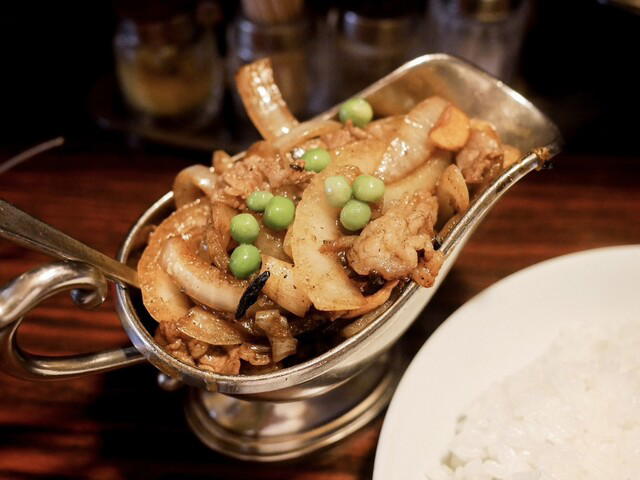
The menu
What to order
- Hamburg steak with house demi-glace
- Katsu dishes with demi-glace
- Retro yoshoku lunch sets
Tokyo is not only theatrical dining. Across the city, it tightens into office exits, commuter routes, small drinking rooms, curry counters, yakiniku addresses, and old-style dining rooms that survive because repeat customers know what they are for. Grill F fits that grammar: a yoshoku room where the appeal is not ceremony, but the particular Tokyo pleasure of Western-derived cooking absorbed into everyday Japanese restaurant culture.
Yoshoku is often misunderstood by visitors as nostalgia food, when it is more accurately a parallel cuisine with its own standards. The category takes European and American ideas, then rebuilds them around rice, sauces, restrained portions, lunch traffic, and a habit of practical comfort. A serious yoshoku address is judged less by novelty than by consistency: the sauce work, the pacing, the room’s ability to handle regulars, and the confidence to remain unfashionable while Tokyo cycles through louder dining trends.
Tokyo yoshoku, not ceremony
Tokyo’s dining hierarchy can over-reward scarcity theatre, but yoshoku operates by another logic. The strongest rooms in the category often sit outside luxury corridors, trade in familiar dishes rather than tasting menus, and build loyalty through repetition. Grill F’s selection for Tabelog 100 Yoshoku EAST 2025 gives it a useful public marker inside that tradition, especially because the award category is specific: Japanese-style Western cuisine, not generic European dining.
That specificity matters. A traveller comparing Tokyo restaurants by international fine-dining signals may miss why a yoshoku specialist deserves attention. This is not the same decision as an omakase counter or a French dégustation. It is closer to choosing a Tokyo institution where the format, price tier, and audience say as much as the plate. In the city, that makes sense. Tokyo has long rewarded restaurants that serve office workers, locals, and food-focused diners without turning every meal into an event.
The comparison set sharpens the point. Hot Spoon Gotanda ten and Oniyanma Gotanda honten sit in the everyday quick-meal bracket, built for speed and turnover. Nichinan and Sumibi Yakiniku Horumon Maruha occupy a richer evening register, with dinner pacing that places them in a different social rhythm. Grill F lands in its own practical lane: more deliberate than a quick-meal counter, less defined by a meat-led night out. That middle category is where much of Tokyo’s useful dining intelligence lives.
The booking question is a format question
For restaurants like this, the planning issue is not luxury access. It is friction. Tokyo has many respected rooms where the visitor’s challenge is understanding format before arrival: whether the restaurant is built for walk-ins, regulars, groups, or a short meal window. Grill F’s appeal sits in that practical zone. The experience reads closer to a city dining room than a destination restaurant built around long-table choreography.
That distinction changes how to think about the meal. The value of a yoshoku address is often strongest when expectations are calibrated: go for the category, not for a chef-driven performance. The public recognition helps identify the restaurant as part of a vetted yoshoku conversation, but the better lens is cultural. Tokyo keeps these rooms because they solve a specific dining need: Western-influenced cooking treated as Japanese daily craft, served with enough seriousness to reward attention and enough informality to remain usable.
Grill F should also be read against the wider city rather than isolated as a single stop. Travellers building a Tokyo food map might pair this kind of address with yakitori, curry, seafood, and bar-led evenings rather than stacking only high-formality reservations. For that broader spread, Tokyo dining rooms provide category contrasts across the city.
How it fits a wider Japan itinerary
A strong Tokyo dining plan needs range. Yoshoku gives that plan texture because it sits between Western influence and Japanese restaurant discipline, a useful counterweight to sushi counters, ramen stops, izakaya meals, and tasting-menu evenings. The practical reader’s move is to treat Grill F as a category anchor: a way to understand how Tokyo domestic dining absorbs outside forms without turning them into foreign food.
That category reading also travels well across Japan. A diner tracing comfort-led or specialist cooking beyond Tokyo can compare the impulse with other Japanese dining rooms that translate comfort, speed, craft, and local habit in different ways.
The verdict is practical rather than romantic: this is a Tokyo yoshoku choice for diners who care about category fluency. Its Tabelog 100 Yoshoku EAST 2025 recognition supplies the trust signal; Tokyo supplies the context; the format supplies the reason to plan with care. For a broader trans-Pacific comparison in Japanese-leaning casual dining, other cities show how different dining economies translate Japanese food habits into their own local forms.
Frequently asked questions
Is Grill F formal or casual?
It reads as casual rather than formal. The price band sits at JPY 1,000–JPY 1,999 for lunch and JPY 3,000–JPY 3,999 for dinner, which keeps it in an accessible yoshoku bracket for Tokyo.
Is Grill F expensive?
Pricing at Grill F is listed as JPY 3,000 - JPY 3,999 for dinner and JPY 1,000 - JPY 1,999 for lunch.
What are Grill F's hours?
Check directly with Grill F for current opening hours before visiting.
What's the standout thing about Grill F?
Its most notable credential is the Tabelog 100 Yoshoku EAST 2025 selection. Add the Tokyo context and the lunch-to-dinner pricing, and Grill F looks like a local reference point for Japanese-style western cooking rather than a destination built on ceremony.
Cuisine and Awards Snapshot
Comparable venues for context, by category and price tier.
| Venue | Cuisine | Price | Awards | Notes |
|---|---|---|---|---|
| Grill FThis venue (the venue you are viewing) | Classic Yoshoku (Japanese Western-style) Grill | $10–20 | Tabelog 100 #26 | Not listed |
| Chuka Soba Waka TOKYO | Modern Tokyo ramen & tsukemen | $10–20 | Tabelog 100 #78 | Shinagawa |
| Taishu Sakaba Souya | Traditional Japanese standing bar (taishu sakaba) | $30–50 | Tabelog 100 #48 | Minato |
| Imagawayaki Kashiwaya | Traditional imagawayaki & Japanese sweets stand | $1–10 | Tabelog 100 #96 | Setagaya |
| Japanese Supaisu Curry Karisshu | Japanese Spice Curry | $1–10 | Tabelog 100 #40 | Chūō |
| Kagawa Ippuku Kanda ten | Sanuki udon & curry udon | $10–20 | Tabelog 100 #45 | Chiyoda |
Recognition history
Dated appearances from independent guides and award organizations, with the underlying list record or original source where available.
Tabelog 100 #26 · No. 26
Tabelog · Tabelog 100 - Yoshoku - EAST - 2025
Continue exploring
More in Tokyo
Restaurants in Tokyo
All restaurants in Tokyo →


Bars in Tokyo
All bars in Tokyo →




Details
- Classic
- Cozy
- Well Known
- Solo
- Family
- Casual Hangout
- After Work
- Group Dining
- Historic Building
- Standalone
- Street Scene
- A La Carte
Current opening hours
- Monday
- 11 AM–2 PM, 5–8 PM
- Tuesday
- 11 AM–2 PM, 5–8 PM
- Wednesday
- 11 AM–2 PM, 5–8 PM
- Thursday
- 11 AM–2 PM, 5–8 PM
- Friday
- 11 AM–2 PM, 5–8 PM
- Saturday
- 11 AM–2 PM, 5–8 PM
- Sunday
- Closed
Hours can change for holidays and private events. Hours as of .
Warm and nostalgic yoshoku restaurant with a retro Showa interior, wood accents and counter, relaxed seating, and the feel of a hidden neighborhood classic near Gotanda Station.