
Tabelog 100 #56
Our verdict
Grandir Ensemble gives Kamakura’s sweets scene a compact, craft-led counterpoint to temple-town snacking and beach-day cafés. The appeal is not scale but discipline: a cake specialist with four seats, take-out service, repeat Tabelog Sweets EAST 100 selections, and a Yuigahama position that suits a precise pastry stop rather than a long dining room performance.

Pearl is the En Primeur Club membership app, where members save venues, book tables and use the concierge.
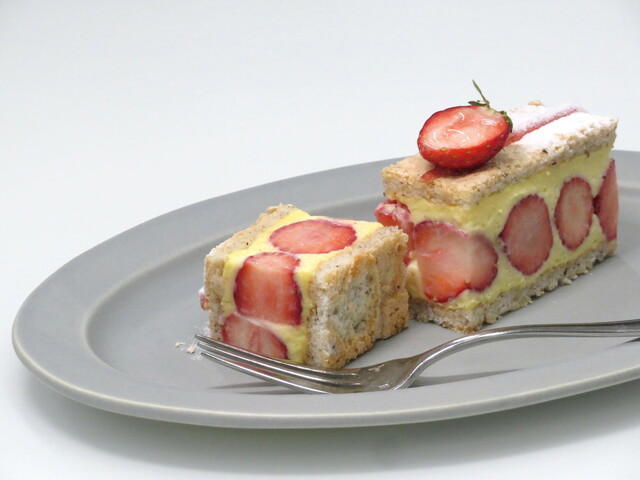
Kamakura changes register quickly: visitor traffic thins and gathers, local train rhythms take over, and the city’s food culture becomes less ceremonial than a sequence of exact stops between station, sea, and city streets. Grandir Ensemble belongs to the city’s cake category, where the decision is often less about a long meal than about choosing a focused sweets stop within a wider Kamakura day.
Kamakura is often read through soba, shirasu bowls, café culture, and bakery queues, but its sweets scene follows another logic. It rewards focused specialists. Grandir Ensemble sits in that lane: a sweets address rather than a full-meal restaurant. For travellers mapping the city through food, it is less a destination meal than a calibrated stop in a day shaped by walking, train hops, and coastal weather.
Why Kamakura's cake culture suits a small-format specialist
Japanese cake shops often draw on patisserie technique, but strong local examples do not need to behave like formal salons. They adapt to local cadence: smaller decisions, seasonal preferences, gifting habits, and the practical pace of a day out. Kamakura intensifies that pattern because its dining day is fragmented. Visitors move between temples, cafés, beaches, and station-side shopping rather than settling into one neighbourhood for hours.
Grandir Ensemble fits that rhythm as a cake-focused Kamakura stop. The appeal is not a long restaurant arc but a precise sweets pause, which separates it from broader Kamakura coffeehouse culture, where the draw can be as much the sit-down ritual as the food or drink.
In Japanese cake culture, the competitive edge often comes from seasonality, texture, finish, and sweetness calibrated for local expectations. A Kamakura cake specialist must read both tourism flow and repeat local customers: visitors may want a clear reason to stop, residents judge consistency, and gift buyers care about polish and reliability.
The Tabelog Hyakumeiten recognition provided for 2023 places Grandir Ensemble inside a recognized sweets context rather than a purely local Kamakura list. Its 2023 Tabelog score is 3.72, useful in a category where small shops can be hard to assess from ambience alone. Awards do not guarantee any cake will match a traveller’s taste, but the listing gives a concrete signal of standing, the currency that matters for patisserie.
The useful comparison is bakery, café, or full meal
In Kamakura, the question is rarely simply where to eat dessert. It is what role sweets play in the day. A bread-focused stop like KIBIYA Bakery Honten answers another need: breakfast, picnic supplies, or something to carry onto a train. A cake-focused address answers a narrower question: where precision matters more than bulk.
At the other end of the city’s dining scale, restaurants such as Kamakura Waku and Salmanje de Yoshino make the meal the anchor of the day. Grandir Ensemble operates in a lower-cost sweets bracket, with lunch and dinner budgets listed at JPY 1,000 - JPY 1,999, so it works better as an insertion point: after lunch, before the train, or when the afternoon does not need another full café session. It suits travellers wanting one serious cake address without turning the day into a restaurant itinerary.
Within EP Club’s Kamakura map, it also defines the city’s range. Other small-format local dining gives another view of the city; everyday neighbourhood eating points toward a more casual register; bakery and sweets stops broaden the conversation beyond formal meals. Together, these addresses show a city where the casual end is not an afterthought; it is often where the more revealing food happens.
How to fold it into a Kamakura day
The practical case is simple: this cake-focused stop in Kamakura can work without reorganizing a full itinerary. Treat it as a focused sweets stop rather than the centrepiece of the day, and build it around the same walking and rail logic that makes Kamakura easier to explore in small moves.
Families and solo diners can both use the format well because the price band stays in the everyday sweets range, but the shop’s specialist nature calls for a quick, tidy visit rather than a sprawling break. The safest expectation is straightforward: make a cake decision, enjoy the pause, then return to the city’s broader rhythm.
For contrast across Japan and beyond, EP Club’s wider restaurant index includes dining rooms, cafés, bakeries, bars, and specialist counters in other cities.
Grandir Ensemble works best as a precision stop inside a city that rewards grazing. Its 2023 Tabelog Hyakumeiten recognition gives it credibility beyond neighbourhood convenience, while the cake-focused format keeps expectations properly scaled. Do not treat it like a grand dessert salon. Treat it as Kamakura cake culture in its useful form: focused, carefully judged, and built for the city’s pace.
Frequently asked questions
What's the price range at Grandir Ensemble?
Pricing at Grandir Ensemble is listed as JPY 1,000 - JPY 1,999, with both lunch and dinner budgets in that range.
When is Grandir Ensemble open?
Check Grandir Ensemble's official channels for current opening hours before visiting.
What part of town is Grandir Ensemble in?
Grandir Ensemble is located in Kamakura.
A Quick Peer Check
Comparable venues by cuisine and price in the same metro.
| Venue | Cuisine | Price | Awards | Notes |
|---|---|---|---|---|
| Grandir EnsembleThis venue (the venue you are viewing) | French-style patisserie & café | $1–10 | Tabelog 100 #56 | Not listed |
| Coquelicot Crepe Ten | Crepe & dessert stand | $1–10 | Tabelog 100 #53 | Kamakura |
| Mon Peche Mignon | French-style bakery & café | $10–20 | Tabelog 100 #71 | Kamakura |
| La for e t et la table | Bakery Cafe | $10–20 | Tabelog 100 #11 | Kamakura |
| Cafe Vivement Dimanche | Specialty coffee & café sweets | $10–20 | Tabelog 100 #4 | Kamakura |
| mbs 46.7 | Artisanal Bread & Sandwich Bakery | $1–10 | Tabelog 100 #76 | Kamakura |
Recognition history
Dated appearances from independent guides and award organizations, with the underlying list record or original source where available.
Tabelog 100 #56 · No. 56
Tabelog · Tabelog 100 - Sweets - EAST - 2023
Continue exploring
More in Kamakura
Restaurants in Kamakura
All restaurants in Kamakura →


Bars in Kamakura
Browse all →



Details
- Cozy
- Quiet
- Classic
- Intimate
- Solo
- Casual Hangout
- Family
- After Work
- Standalone
- Design Destination
- A La Carte
- Counter Dining
- Coffee
- Tea
Current opening hours
- Monday
- Closed
- Tuesday
- Closed
- Wednesday
- 10:30 AM–7 PM
- Thursday
- 10:30 AM–7 PM
- Friday
- 10:30 AM–7 PM
- Saturday
- 10 AM–7 PM
- Sunday
- 10 AM–6:30 PM
Hours can change for holidays and private events. Last verified .
Calm, homey café-patisserie atmosphere with a small display of elegant cakes, relaxed background noise, and friendly, personal service that makes it feel like a local low-profile address rather than a busy tourist spot.