Our verdict
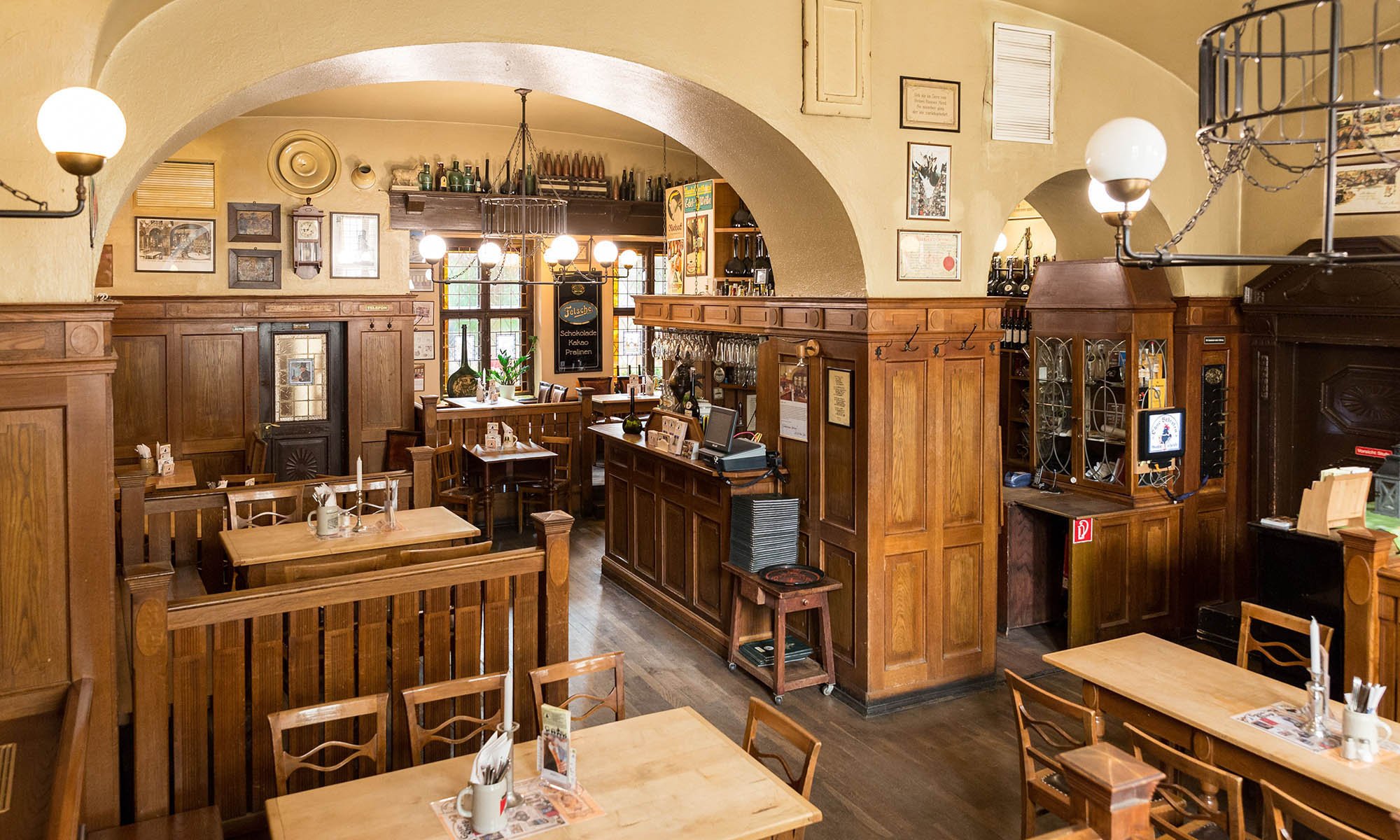
Gosenschenke »Ohne Bedenken« on Menckestraße is Leipzig's reference point for the city's native Gose brewing tradition, a sour, lightly salted wheat beer that survived near-extinction and was revived here in the late twentieth century. The setting reads like a working tavern that has earned its patina rather than curated it, and the food follows the same logic: rooted in Saxon pub culture, unpretentious, and calibrated to the beer.

Pearl is the En Primeur Club membership app — saves, bookings, and concierge access live there. Same editors, same standards.
- Address
- Menckestraße 5, 04155 Leipzig, Germany
- Phone
- +493415662360
- Hours
- Mon–Tue ClosedWed–Fri 4–11 PMSat 12–11 PMSun 12–10 PM
- Website
- gosenschenke.de
- Directions
- Get directions
- Booking
- Book on the venue's website
The menu
What to order
- Gose beer
- Schweinshaxe
- Bratwurst
- Gose-Häppchen
- Warm potato salad
Where Leipzig's Brewing Identity Has a Fixed Address
There is a particular kind of institution that cities like Leipzig produce: not a restaurant in the contemporary sense, but a place that functions as a social document. Gosenschenke »Ohne Bedenken« on Menckestraße sits in that category. The name translates loosely as “without hesitation,” and the building carries a confidence that matches it. Approaching from the street, the exterior signals a certain era of German civic life: solid, unpretentious, built for regular use rather than occasion. Inside, the rooms have the specific weight of a place that has absorbed decades of conversation, and the atmosphere does not try to compensate for that with design intervention.
This matters for a particular reason. Gosenschenke »Ohne Bedenken« is the most publicly associated address in Leipzig with the revival of Gose, the city's indigenous beer style. Gose is a top-fermented wheat beer brewed with coriander and salt, with a lactic sourness that separates it from the Bavarian styles that dominate Germany's beer export identity. The style had been essentially extinct through much of the mid-twentieth century, and its rehabilitation in Leipzig is one of the more instructive stories in European brewing history: a regional product that survived in a single location in Goslar, nearly disappeared entirely, and was deliberately reintroduced in Leipzig in the 1980s. Gosenschenke »Ohne Bedenken« became a primary site of that reintroduction, and its continued operation gives the style a physical home that matters to anyone trying to understand what Leipzig's drinking culture actually is, as distinct from what Germany's national brewing reputation suggests it should be.
The Beer as the Editorial Point
Germany's beer identity in international markets is overwhelmingly Bavarian: lagers, Märzen, Hefeweizen. The country's northern and central regions have their own distinct traditions, and Gose sits among the more interesting of them precisely because it aligns with contemporary palates that have arrived at sour and saison styles through craft brewing rather than historical continuity. The irony is that Leipzig's local beer had the kind of flavor profile that modern drinkers now seek out globally, but it was nearly lost while those preferences were being discovered elsewhere.
At Gosenschenke »Ohne Bedenken«, Gose is served in the traditional tall, slim glass, and it arrives with the light, bracing character that the style requires: wheat-forward on the base, with the salt present as texture rather than flavor, and the lactic note sitting at the back of the finish rather than leading the experience. This is not a brewery tap where the house beer rotates. The focus is specific, and that specificity is what makes the place useful as a reference point. Leipzig's more contemporary dining addresses, including Kuultivo and Stadtpfeiffer, operate in a different register entirely; Gosenschenke »Ohne Bedenken« is the counterargument to the idea that a city's food and drink identity is leading read through its fine dining tier. See our full Leipzig restaurants guide for the broader picture.
Food in the Context of the Drink
The kitchen at a Gosenschenke operates in the tradition of German pub food: the plate exists to accompany the beer, not the reverse. Saxon tavern cooking draws from the same central European larder that defines this part of Germany: pork in various preparations, potatoes treated seriously, pickled vegetables as a structural element rather than a garnish, and a general preference for substance over subtlety. The food at this kind of establishment is calibrated for a session rather than a special occasion, which means portions tend toward the generous and the menu leans on dishes that hold up over time rather than ones that need to arrive at a precise moment.
This is a different discipline from what the kitchen at 997 Sushi Restaurant or Addis Café exercises, and the comparison is useful precisely because it illustrates how Leipzig's restaurant scene spans a wide range of intentions. The tavern register is not lesser; it operates to different criteria.
Leipzig's Drinking Scene in the Wider German Frame
German dining destinations tend to cluster recognition around a handful of addresses. The country's Michelin constellation runs through kitchens like Aqua in Wolfsburg, Schwarzwaldstube in Baiersbronn, Vendôme in Bergisch Gladbach, and Waldhotel Sonnora in Dreis. Leipzig itself has produced serious fine dining in the form of Alfa Restaurant and others. But the city's drinking culture, and its relationship to its own brewing heritage, is a separate and arguably more distinctive story. Gose is the reason Leipzig appears in European brewing history at all, and Gosenschenke »Ohne Bedenken« is the address most associated with keeping that chapter open.
For context on how seriously German fine dining takes its beverage programs more broadly, the wine-driven experiences at Schanz in Piesport and Restaurant Haerlin in Hamburg represent the high end of cellar curation. At the other end of the spectrum, places like Gosenschenke »Ohne Bedenken« demonstrate that beverage identity does not require a sommelier program to be coherent. The Gose list here is not deep in the way that Victor’s Fine Dining by Christian Bau or ES:SENZ in Grassau maintains a cellar, but it is coherent in a different and more specific way: every beer on the list belongs to the same regional argument.
International comparison points sharpen the point. The kind of single-focus beverage identity that defines Gosenschenke »Ohne Bedenken« has analogues in fermentation-focused bars in cities like Berlin, where CODA Dessert Dining pursues a comparably specific conceptual discipline, or at the far end of the spectrum, in the genre precision of a Le Bernardin or Atomix in New York. The principle is the same: specialization as the editorial statement. JAN in Munich operates on a similar commitment to a defined point of view.
Planning a Visit
Gosenschenke »Ohne Bedenken« is on Menckestraße 5, in the Gohlis district north of Leipzig's city centre. The neighbourhood has a residential character distinct from the Innenstadt, and reaching the address from the main rail hub takes around fifteen to twenty minutes by tram. The practical reality of this kind of establishment is that it functions leading visited without a tight schedule: the format rewards time, and arriving with an agenda calibrated to a different kind of restaurant will work against the experience.
Frequently Asked Questions
- What do regulars order at Gosenschenke »Ohne Bedenken«? The house Gose is the consistent anchor of any visit, served in the traditional slim glass and representative of the Leipzig style that the venue helped revive. Food orders tend to follow the Saxon pub tradition: substantial plates built around pork and regional staples.
- Do they take walk-ins at Gosenschenke »Ohne Bedenken«? The tavern format is historically walk-in friendly, consistent with the Gosenschenke tradition across Germany. That said, Leipzig has grown in popularity as a city-break destination in recent years, and weekend evenings can fill. If you are planning a visit as a group, reaching out ahead makes sense. No formal booking platform is confirmed in available data.
- What is the signature at Gosenschenke »Ohne Bedenken«? The signature is the Gose itself, the sour, salted, coriander-seasoned wheat beer that is indigenous to this part of Germany and was reintroduced in Leipzig in the 1980s. The venue's association with that revival is its primary credential, and the beer is what the address is known for in the wider European brewing conversation.
- How does Gosenschenke »Ohne Bedenken« handle allergies? No formal allergen policy is confirmed in available data. The kitchen follows a traditional Saxon pub register, which involves wheat, pork, and dairy prominently. Leipzig's broader dining scene, including addresses like Addis Café, offers more documented dietary flexibility.
- Is Gosenschenke »Ohne Bedenken« the oldest Gose tavern in Leipzig? The venue is among the most historically associated addresses with the Gose revival in Leipzig, which began in earnest in the 1980s after the style had been largely absent from the city for decades. Whether it holds a formal claim to “oldest” in continuous operation requires verification with the venue directly. What is documented is its role in re-establishing Gose as a living style rather than a historical footnote in Leipzig’s brewing culture.
Frequently asked questions
What part of town is Gosenschenke »Ohne Bedenken« in?
Gosenschenke »Ohne Bedenken« is located at Menckestraße 5, 04155 Leipzig, Germany, Leipzig.
Is Gosenschenke »Ohne Bedenken« the right place to try Leipzig-style Gose for the first time?
Ohne Bedenken on Menckestraße 5 in Gohlis is the address most directly associated with Leipzig's Gose tradition in the city itself — a style with documented regional roots that was revived in part through venues like this one. For a first encounter with authentic Leipzig Gose in its original tavern context, rather than through a craft-bar interpretation, this is the reference point. The Gohlis location, away from the tourist centre, means the clientele skews local.
What do regulars order at Gosenschenke »Ohne Bedenken«?
The Gose — Leipzig's tart, lightly salted wheat beer — is the anchor order at Ohne Bedenken, and it is what the house is built around. Saxon pub food accompanies the beer in the traditional sequence: the plate follows the glass, not the other way around. Regulars treat the food as a complement to the drinking programme, not as a destination in itself.
Do they take walk-ins at Gosenschenke »Ohne Bedenken«?
Ohne Bedenken operates in the tradition of a German Gosenschenke, where walk-in culture is part of the format. The venue is at Menckestraße 5 in the Gohlis district north of Leipzig's city centre. For larger groups or specific sittings, contacting the venue directly in advance is advisable, though no booking policy is published.
What's the signature at Gosenschenke »Ohne Bedenken«?
The signature is Gose, the sour, salt-accented wheat beer that Leipzig produced for centuries before nearly disappearing in the mid-twentieth century. Ohne Bedenken is one of the addresses credited with keeping the style in continuous service when it had largely vanished from German taps. The beer is the reason to come; everything else on the menu exists in relation to it.
How does Gosenschenke »Ohne Bedenken« handle allergies?
No allergy or dietary information is published for Ohne Bedenken, and the kitchen follows the Saxon tavern tradition where the menu is compact and ingredient-driven. Guests with specific dietary requirements should contact the venue at Menckestraße 5, Leipzig before visiting to confirm what can be accommodated.
Fast Comparison
Comparable venues nearby, for context on price, style, and recognition.
| Venue | Cuisine | Price | Awards | Notes |
|---|---|---|---|---|
| Gosenschenke »Ohne Bedenken«This venue — the venue you are viewing | Traditional Saxon German & Gose Beer Tavern | $20–30 | Not listed | Not listed |
| Gaststätte »Am Kanal« | Traditional German Gaststätte | $10–20 | Not listed | Lindenau |
| Café Luise | German Café | $10–20 | Not listed | Zentrum-West |
| Gaststätte Kollektiv | Traditional East German Ostalgie | $20–30 | Not listed | Südvorstadt |
| Naumanns Gaststube | Traditional German Gaststube | $20–30 | Not listed | Lindenau |
| Gasthaus Helmut | Modern German Regional Gasthaus | $30–50 | Michelin Plate · Star Wine List | Gohlis-Süd |
Continue exploring
More in Leipzig
Restaurants in Leipzig
Browse all →
Bars in Leipzig
Browse all →
Hotels in Leipzig
Browse all →
Wineries in Leipzig
Browse all →
Details
- Rustic
- Well Known
- Lively
- Classic
- Casual Hangout
- Group Dining
- After Work
- Celebration
- Historic Building
- Beer Garden
- Terrace
- Open Kitchen
- Beer Program
- Craft Cocktails
- Local Sourcing
- Garden
- A La Carte
- Buffet
- Family Style
- Gose Beer
- Pils
- Dark Beer
- Wine
- Vegetarian Friendly
- Gluten Free Options
Current opening hours
- Monday
- Closed
- Tuesday
- Closed
- Wednesday
- 4–11 PM
- Thursday
- 4–11 PM
- Friday
- 4–11 PM
- Saturday
- 12–11 PM
- Sunday
- 12–10 PM
Hours can change for holidays and private events. Last verified .
Historic half-timbered establishment with 1920s charm, featuring warm lighting and a welcoming atmosphere enhanced by lush outdoor beer garden seating.