Gordon's


Michelin Plate · AA Rosettes 3 Rosettes
Our verdict
A family-run modern restaurant in the Angus village of Inverkeilor, Gordon's has held the Michelin Plate consecutively through 2024 and 2025, with cooking that draws directly from the Scottish larder. Garry Watson works alone in the kitchen while Maria Watson runs the dining room, and five on-site bedrooms make it a natural base for exploring the Angus coast.

Pearl is the En Primeur Club membership app, where members save venues, book tables and use the concierge.
Scotland's Larder, Expressed from a Village Kitchen
Angus has always sat slightly outside Scotland's culinary conversation, overshadowed by Edinburgh's restaurant density and the romantic pull of the Highlands. Yet the farming and fishing land between the Tay estuary and Montrose has quietly sustained some of the most productive sourcing territory in the country: lamb raised on coastal grassland, seasonal fungi from surrounding woodland, and North Sea catches moving through nearby Arbroath. Gordon's, on the main road through Inverkeilor, is the restaurant that has most consistently put this geography on the plate over decades of operation.
The approach here belongs to a wider pattern seen at destination restaurants in rural Britain, places like L'Enclume in Cartmel and hide and fox in Saltwood, where geographic specificity is the editorial line of the menu rather than an incidental detail. At Gordon's, that specificity manifests in dishes such as local lamb with seasonal girolles, a combination that only makes sense when both ingredients come from within a short radius and are timed to align in the same brief window. This is not farm-to-table as a branding exercise. It is the natural output of a kitchen cooking what the surrounding land produces, when it produces it.
The Room and the Dynamic Inside It
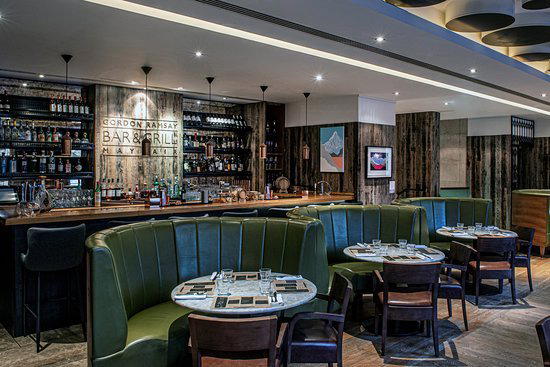
Walking into Gordon's from the main road in Inverkeilor, the gap between the village's scale and what is served inside it takes a moment to process. The décor carries a modern sensibility, clean lines, considered rather than fussy, that places it closer to the aesthetic register of a small urban restaurant than a country inn. There is nothing of the chintz-heavy Scottish dining room here. The room is modest in size, which means the number of covers is limited and the pace of service deliberate.
Maria Watson handles front-of-house, which establishes a particular tone. Restaurants where family members run different sides of the operation often have a coherence that hired teams take longer to develop, the communication between kitchen and dining room functions differently when it is also domestic. For a table in the evening, the rhythm of service reflects that; nothing is rushed, but nothing stalls either.
This structure, with Garry Watson alone in the kitchen and Maria managing the room, also explains some of the restaurant's constraints. Capacity is finite, and the kitchen's output is calibrated to what one person can execute with precision. That is a deliberate discipline. It also means that walk-ins are unlikely to be accommodated and that planning ahead is advisable, particularly for anyone combining dinner with an overnight stay in one of the five bedrooms on site.
Where the Sourcing Argument Is Made at the Plate
Scottish produce occupies a complicated position in British fine dining. At the upper end of the price spectrum, restaurants like Restaurant Andrew Fairlie in Auchterarder and CORE by Clare Smyth in London draw heavily on Scottish ingredients, Highland game, west coast shellfish, aged beef from Aberdeenshire, and both operate at ££££ price points with multiple Michelin stars. Gordon's, recognised with the Michelin Plate in both 2024 and 2025, sits in a different tier at £££, where the sourcing argument has to be made through technical cooking rather than the luxury of extreme rarity or prestige suppliers.
The technically accomplished, colourful cooking that Michelin's notes reference is the mechanism that makes that argument. When seasonal girolles arrive alongside local lamb, the preparation and plating have to do enough work to demonstrate that the provenance is the point, not a coincidence of geography. The Michelin Plate, awarded consistently over at least two consecutive years, indicates that the kitchen is meeting that standard with regularity rather than on occasional exceptional nights.
The wine list, described as interesting rather than encyclopaedic, suggests a similar approach: selective, considered, and probably more focused on matching what the kitchen is doing than on covering every major region for its own sake. For a restaurant of this size and price tier operating outside a major city, maintaining a list that earns a specific editorial note from Michelin inspectors is a signal worth reading.
The Broader Pattern: Rural Destination Dining in Britain
Gordon's belongs to a category of British restaurant that is genuinely difficult to sustain. Rural destination dining requires the surrounding area to hold enough appeal to justify travel, the accommodation component to function properly, and the kitchen to perform at a level that makes the journey worthwhile. Many try this combination and fail at one of the three. The presence of five bedrooms at Gordon's solves the logistical problem of evening dining in a village with no immediate transport options. The Angus coast, Lunan Bay, and the Red Castle ruins provide the contextual draw. The consecutive Michelin Plate awards address the kitchen's portion of the bargain.
The comparison set for this type of operation in Britain runs to places like Gidleigh Park in Chagford and Moor Hall in Aughton, restaurants where accommodation and dining are integrated and where the rural setting is part of the proposition rather than a limitation. Gordon's operates at a substantially more accessible price point and with far fewer keys, which changes the experience in character but not in underlying logic.
For readers exploring what Angus and the wider Tayside area offer at table, Gordon's is the obvious anchor point. Those building a longer visit can consult our full Inverkeilor restaurants guide, our Inverkeilor hotels guide, the bars guide, and the experiences guide for wider orientation. The wineries guide for Inverkeilor covers any producers in the area worth noting alongside the meal.
Planning a Visit
Gordon's sits at 34 Main Road in Inverkeilor, a village on the A92 corridor between Arbroath and Montrose in Angus, DD11 5RN. The £££ price positioning places it meaningfully below the ££££ tier occupied by starred city destinations such as Midsummer House in Cambridge or Opheem in Birmingham, and it operates closer in spirit to the accessible end of the destination-dining category. Five bedrooms make an overnight stay the sensible approach for anyone travelling from Edinburgh, Dundee, or further afield, both for the practicality of not driving after dinner and for the opportunity to take the surrounding coast and farmland at a slower pace. Given the kitchen's structure and the modest capacity of the room, advance booking is the only realistic approach. Current hours and reservation contact are best confirmed directly through the restaurant.
Frequently asked questions
Is Gordon's more mid-range or high-end?
Pricing at Gordon's is listed as £££.
How It Stacks Up
| Venue | Cuisine | Price | Awards | Notes |
|---|---|---|---|---|
| Gordon'sThis venue (the venue you are viewing) | Modern Scottish Fine Dining | $100–150 | Michelin Plate · AA Rosettes 3 Rosettes | Not listed |
| The Ledbury | Modern British Fine Dining | $300–500 | 3 Michelin Stars · World's 50 Best #42 | Modern European, Modern Cuisine |
| Sketch, The Lecture Room and Library | Modern French Fine Dining | $200–300 | 3 Michelin Stars · World's 50 Best #18 | Modern French |
| CORE by Clare Smyth | Modern British Fine Dining | $150–200 | 3 Michelin Stars · World's 50 Best #97 | Modern British |
| Restaurant Gordon Ramsay | French Fine Dining | $200–300 | 3 Michelin Stars · World's 50 Best #13 | Contemporary European, French |
| Dinner by Heston Blumenthal | Modern British, Traditional British | Not listed | Michelin 2 Star | Not listed |
Recognition history
Dated appearances from independent guides and award organizations, with the underlying list record or original source where available.
Michelin Plate
Michelin
AA Rosettes 3 Rosettes
AA Rosettes
Full recognition history (4 entries)
Michelin Plate
Michelin
Michelin Plate
Michelin
Continue exploring
More in Inverkeilor
Restaurants in Inverkeilor
All restaurants in Inverkeilor →
Bars in Inverkeilor
Browse all →
Hotels in Inverkeilor
Browse all →
Wineries in Inverkeilor
Browse all →
Details
- Intimate
- Cozy
- Elegant
- Classic
- Special Occasion
- Date Night
- Historic Building
- Extensive Wine List
- Local Sourcing
- Tasting Menu
- Vegetarian Friendly
Current opening hours
- Monday
- Closed
- Tuesday
- Closed
- Wednesday
- 7–10:30 PM
- Thursday
- 7–10:30 PM
- Friday
- 7–10:30 PM
- Saturday
- 7–10:30 PM
- Sunday
- 7–10:30 PM
Hours can change for holidays and private events. Hours as of .
Intimate dining room with log burner on cold days, modern décor, cosy and welcoming atmosphere.