Little Italy Restaurant
Our verdict
A long-standing Italian restaurant on Logies Lane in the heart of St. Andrews, Little Italy occupies a specific niche in a town whose dining scene has tilted sharply toward modern Scottish and seafood-led fine dining. It offers a familiar European alternative for those who want something outside the ££££ tasting-menu circuit that defines the upper end of the St. Andrews restaurant market.

Pearl is the En Primeur Club membership app — saves, bookings, and concierge access live there. Same editors, same standards.
- Address
- 1-3 Logies Ln, St Andrews KY16 9NL, United Kingdom
- Phone
- +44 1334 479299
- Hours
- Mon–Tue 12:30–3:45 PM, 5–10 PMWed 5–10 PMThu–Fri 12:30–3:45 PM, 5–10 PMSat–Sun 1–3:45 PM, 5:30–10 PM
- Website
- littleitalystandrews.com
- Directions
- Get directions
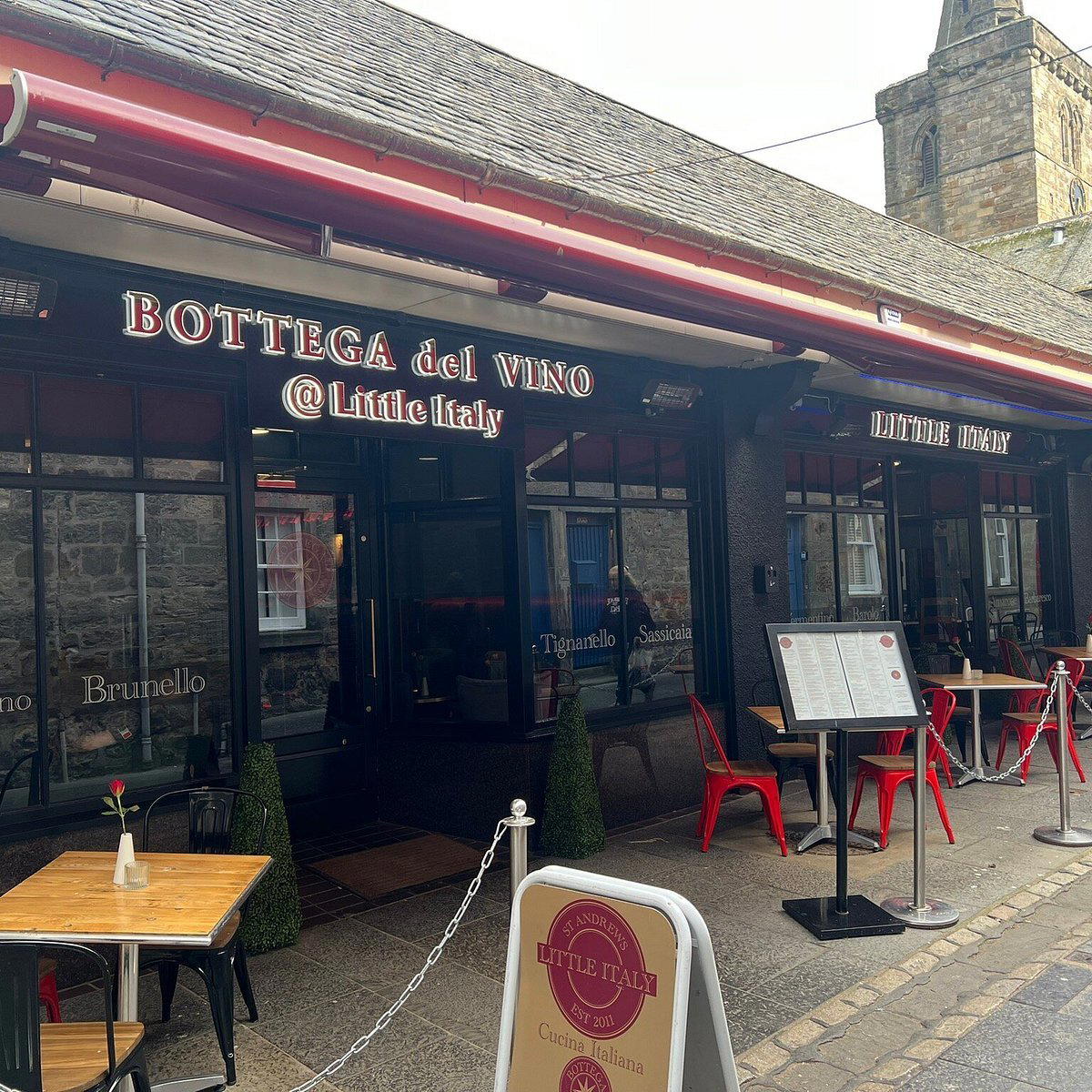
Italian Dining in a Scottish University Town
St. Andrews has a restaurant scene that punches above its size. A town of roughly 17,000 permanent residents, it hosts a cathedral-town density of fine-dining options: modern Scottish tasting menus at Haar (Modern Cuisine), premium seafood at Seafood Ristorante (Seafood), and a broader dining culture shaped by the university calendar, the golf season, and a steady flow of international visitors. Within that context, Italian restaurants occupy a specific and underappreciated position: they sit outside the local-produce-first narrative that drives most editorial attention in Scottish food writing, yet they serve a cuisine with genuine depth and a long European tradition of its own.
Little Italy Restaurant, at 1-3 Logies Lane, sits in one of the town's older residential lanes, removed from the main commercial drag of South Street and Market Street. That physical position matters. Logies Lane is a short, quiet cut that connects two of the town's principal streets without attracting the foot traffic of either. Restaurants on lanes like this in British university towns tend to survive on word of mouth and repeat custom rather than passing trade, which tells you something about the relationship the place has built with its local base over time.
What Italian Cuisine Represents in a Town Like This
Italian food has one of the longest and most documented histories of any transplanted cuisine in Britain. The first wave of Italian immigration to Scotland in the late nineteenth and early twentieth centuries established café culture across Glasgow, Edinburgh, and the smaller towns in between. That history produced fish-and-chip shops, ice cream parlours, and trattorias that became embedded in Scottish social life well before the post-war restaurant boom. In university towns especially, Italian restaurants filled a reliable role: affordable enough for students, comfortable enough for faculty dinners, familiar enough for visiting parents. The cuisine's endurance in these settings has less to do with trend and more to do with structural fit.
St. Andrews is not a cheap town to eat in. The upper tier, represented by places like Haar and Seafood Ristorante, operates at ££££ price points that are justified by ingredient sourcing, kitchen ambition, and, in some cases, international recognition. Italian restaurants at the middle of the market serve a different function entirely: they provide a reliable option for diners who want a full meal with wine at a reasonable outlay, without committing to a multi-course tasting format. That category of dining is less written about but no less important to the overall health of a town's food culture. Compare this to how Italian mid-market restaurants function in similarly sized British cultural towns: in Cartmel, home to L'Enclume in Cartmel, or in Marlow, home to Hand and Flowers in Marlow, the presence of approachable mid-tier options alongside destination-level dining is what makes those towns function as genuine eating destinations rather than single-purpose pilgrimages.
The Lane Setting and What It Signals
Arriving at Little Italy via Logies Lane, the approach is low-key by design. The address is central, within a short walk of the cathedral ruins and the Old Course, but the lane itself operates at a remove from the tourist circuit. This kind of setting in British town-centre dining typically signals one of two things: either a venue that has struggled to secure more prominent premises, or one that has deliberately stayed put because its customer base knows exactly where to find it. The latter is more consistent with a restaurant that has maintained a presence in a competitive small-town market over time.
For visitors using St. Andrews as a base during the golf season or the academic year, Logies Lane is easy enough to locate on foot from the main town centre. Those planning ahead should note that St. Andrews dining at the higher end can require significant booking lead times, particularly during the summer and during major golf events. The mid-market Italian category is generally more accessible on shorter notice, which is itself a practical argument for restaurants like this existing in the ecosystem. For a broader picture of where Little Italy sits within the full dining map, our full St. Andrews restaurants guide maps the town across price points and cuisine types.
How This Fits the St. Andrews Dining Picture
The town's dining scene has developed two distinct tracks over the past decade. One track runs toward the kind of ambition represented by Restaurant Andrew Fairlie in Auchterarder or, at the national level, by benchmark operations such as The Fat Duck in Bray, The Ledbury in London, and Moor Hall in Aughton. That track prizes provenance, technique, and scarcity. The other track is about reliability and accessibility: places where the welcome is consistent, the menu is readable on a weekday evening, and the bill does not require planning. Both tracks matter. A town that only has the former ends up as a destination for a specific kind of diner and loses the everyday texture that makes a food scene liveable rather than merely visitable.
Little Italy operates on Logies Lane as part of that second track. Its cuisine type, specific format, and price positioning are not detailed in public record data available to EP Club at time of writing, which means any specific claims about the menu would be speculative. What can be said is that Italian restaurants in this structural position in British university towns typically run pasta and pizza-centred menus with a selection of secondi, a house wine list, and a format that accommodates both short and longer visits. For verified current menu details, hours, and booking arrangements, contacting the venue directly or checking a current listings source is the right approach.
For those exploring the wider St. Andrews picture, the town also offers hotel options reviewed in our full St. Andrews hotels guide, bar recommendations in our full St. Andrews bars guide, and curated experiences in our full St. Andrews experiences guide. For those interested in wine specifically, our full St. Andrews wineries guide covers that territory. Those coming from outside Scotland who want the full tier of Scottish and UK fine dining as reference points will find useful context in the profiles of Gidleigh Park in Chagford, Le Manoir aux Quat' Saisons, a Belmond Hotel in Great Milton, and international comparisons at Le Bernardin in New York City and Atomix in New York City.
Planning Your Visit
Little Italy Restaurant is at 1-3 Logies Lane, St Andrews KY16 9NL. The lane is a short walk from the town centre and accessible on foot from the main hotel district and the university precinct. The St. Andrews town centre is compact enough that walking between dining options is direct, and for those pairing dinner with drinks or a pre-meal visit to Ondine, the geography keeps options close together.
Frequently asked questions
Where exactly is Little Italy Restaurant?
Little Italy Restaurant is located at 1-3 Logies Ln, St Andrews KY16 9NL, United Kingdom, St. Andrews.
Is Little Italy Restaurant a good option for dinner in St. Andrews during the university term?
St. Andrews operates on two distinct population rhythms: the roughly 17,000 permanent residents and the student body that swells the town during university terms. Restaurants on central lanes like Logies Lane draw from both groups, and Italian cooking at a consistent, unfussy register tends to perform well across that mixed local audience. Booking ahead during term time, particularly on weekends, is the sensible approach given the town's compressed dining geography.
What do people recommend at Little Italy Restaurant?
No dish-level data is publicly documented for Little Italy Restaurant, but the kitchen sits within a St. Andrews dining scene that holds Italian food to a consistent standard shaped by decades of Italian immigration to Scotland. Regulars tend to return to Italian restaurants of this type for pasta and classic secondi rather than experimental menus. For the most current dish recommendations, checking recent visitor reviews ahead of your visit is the most reliable approach.
What's the best way to book Little Italy Restaurant?
Walking in or contacting the restaurant directly via a current local listing is the practical option. St. Andrews restaurants at this address level tend to accept same-day reservations outside of graduation weekends and high summer, when the town's population spikes well above its 17,000 base.
What makes Little Italy Restaurant worth seeking out?
The address on Logies Lane places it within walking distance of the cathedral ruins and the town centre, which matters in a compact town where geography shapes where people eat. St. Andrews has developed a restaurant scene disproportionate to its size, and Italian cooking here occupies a specific, well-rooted niche with a traceable presence in Scottish towns going back over a century. Little Italy sits within that tradition rather than as an outlier to it.
Can Little Italy Restaurant accommodate dietary restrictions?
Italian kitchens of this type typically work with a menu structure that allows some flexibility on pasta and sauce combinations, but confirming requirements directly with the restaurant at 1-3 Logies Lane before visiting is the only reliable way to verify what can be accommodated.
Budget and Context
Comparable venues nearby, for context on price, style, and recognition.
| Venue | Cuisine | Price | Awards | Notes |
|---|---|---|---|---|
| Little Italy RestaurantThis venue — the venue you are viewing | Authentic Italian Pizza & Pasta | $20–30 | Not listed | Not listed |
| Seafood Ristorante | Modern Scottish Seafood with Italian Slant | $50–100 | Michelin Plate · The Good Food Guide GFG Good | St Andrews, Modern Scottish Seafood with Italian Slant |
| Ondine | Scottish Seafood & Oysters | Not listed | Michelin Plate | The Scores, Scottish Seafood & Oysters |
| Haar | Modern Scottish Seafood | $100–150 | Michelin Plate · La Liste Top Restaurants | St. Andrews, Modern Scottish Seafood |
| Eve | Authentic Italian Pasta | $30–50 | Not listed | Old Town, Authentic Italian Pasta |
| Novapizza Vegan Kitchen | Vegan Roman-Style Pizza | $20–30 | Not listed | Stockbridge, Vegan Roman-Style Pizza |
Continue exploring
More in St. Andrews
Restaurants in St. Andrews
Browse all →
Bars in St. Andrews
Browse all →
Hotels in St. Andrews
Browse all →

Wineries in St. Andrews
Browse all →
Details
- Cozy
- Lively
- Classic
- Date Night
- Family
- Celebration
- Standalone
- Extensive Wine List
- A La Carte
- Vegetarian Friendly
- Vegan Options
- Gluten Free Options
Current opening hours
- Monday
- 12:30–3:45 PM, 5–10 PM
- Tuesday
- 12:30–3:45 PM, 5–10 PM
- Wednesday
- 5–10 PM
- Thursday
- 12:30–3:45 PM, 5–10 PM
- Friday
- 12:30–3:45 PM, 5–10 PM
- Saturday
- 1–3:45 PM, 5:30–10 PM
- Sunday
- 1–3:45 PM, 5:30–10 PM
Hours can change for holidays and private events. Last verified .
Cozy interior with lovely Italian touches in decor, warm and welcoming with a lively atmosphere.