Gobi Mongolian Grill
Our verdict
Gobi Mongolian Grill serves Mongolian Grill at 855 Queen St in Southington, with casual service, a lively room, and open-kitchen energy suited to lunch or dinner.

Pearl is the En Primeur Club membership app — saves, bookings, and concierge access live there. Same editors, same standards.
- Address
- 855 Queen St, Southington, CT 06489
- Phone
- (860) 620-0888
- Hours
- Mon–Thu 11 AM–3 PM, 4:30–10 PMFri–Sat 11 AM–10 PMSun 11:30 AM–10 PM
- Website
- gobimongoliangrill.shop
- Directions
- Get directions
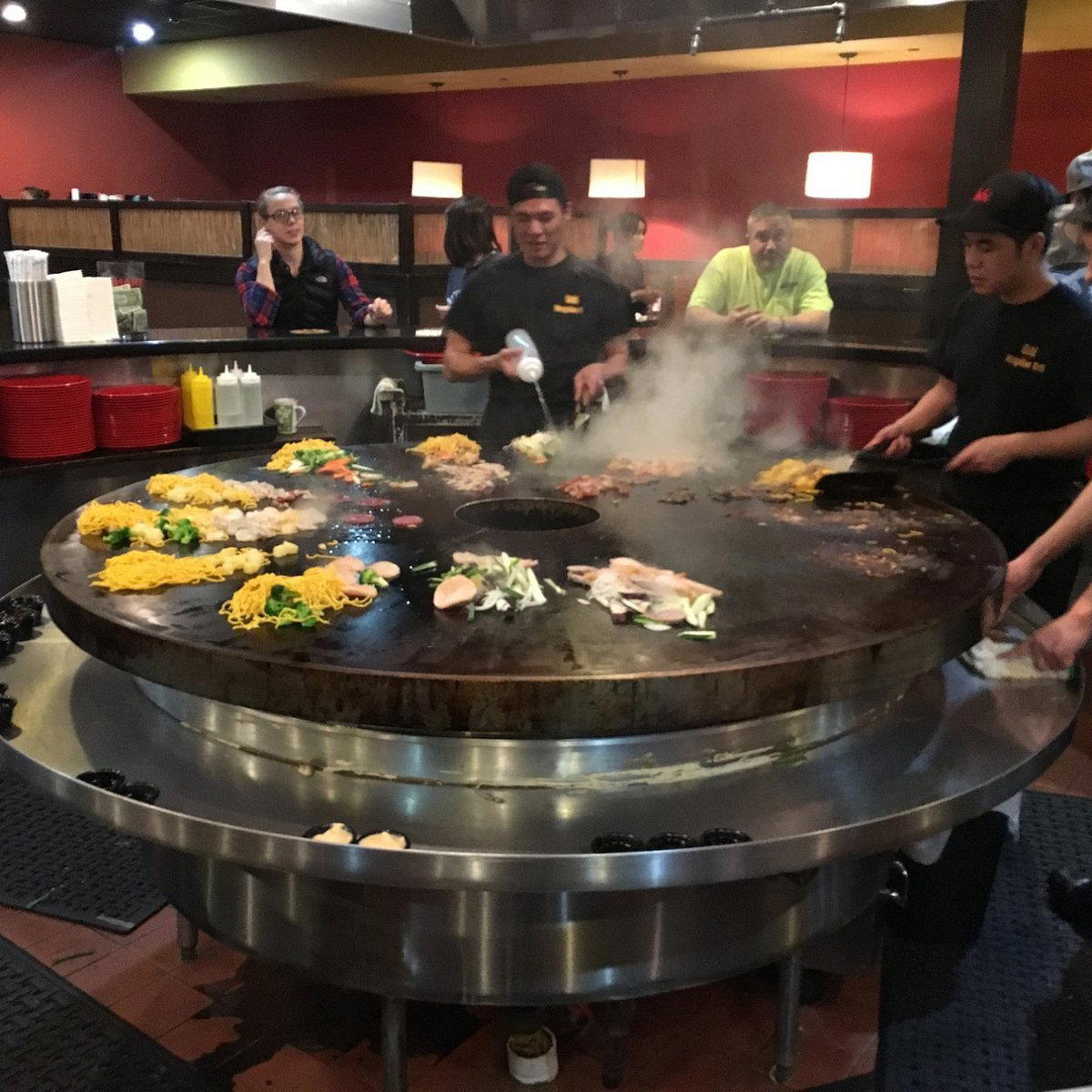
The Mongolian Grill Format and Why It Persists in American Casual Dining
The interactive grill model that defines places like Gobi Mongolian Grill at 855 Queen St in Southington, CT has held its ground in American casual dining for decades, and for reasons that go beyond novelty. The format places sourcing and assembly decisions directly in the diner's hands: you select raw proteins, vegetables, and sauces from a line, hand the bowl to a cook, and watch the combination hit a large circular iron griddle at high heat. What arrives at the table is, in a literal sense, what you chose. That transparency about ingredients, and the direct link between selection and outcome, gives the format a durability that more passive dining experiences sometimes lack.
In Connecticut's smaller cities and towns, this type of interactive casual dining occupies a specific social niche. It works for groups with divergent dietary preferences, for families where some members avoid certain proteins, and for diners who want a degree of control over what goes into a meal. Southington sits along the Route 10 and Queen Street commercial corridor that serves the broader central Connecticut population, and a venue in that location draws from a wide geographic catchment, including Meriden, Cheshire, and Plantsville. For a full picture of where Gobi fits in the local dining picture, our full Southington restaurants guide maps the broader scene.
Ingredient Selection as the Core of the Experience
The ingredient-sourcing angle is worth examining seriously in the context of the Mongolian grill format, because the model is structurally unusual: the diner functions as both the menu and the sous-chef. At most casual restaurants, sourcing decisions are made upstream, invisible to the person eating. Here, the sourcing logic is compressed into the few minutes you spend moving along the ingredient bar. The quality of that bar, which typically includes raw beef, chicken, tofu, shrimp, and a rotating selection of vegetables alongside a wall of sauces from oyster to garlic to black bean, determines the ceiling of what the meal can be.
This is not a format that rewards passive ordering. A diner who loads up indiscriminately on sauces tends to produce a muddy result on the griddle; someone who chooses two or three complementary sauce profiles and matches them to a protein with a shorter cook time gets a more coherent plate. The cook on the grill controls heat and timing, but the architecture of flavor is set before the bowl is handed over. That dynamic makes the ingredient line the actual kitchen in any meaningful sense.
The Mongolian grill tradition, despite its American-casual presentation, draws loosely on the broad Central and East Asian tradition of communal hot cooking, where diners select and cook at the table or in close collaboration with a cook. It is a long way from the precision of, say, Smyth in Chicago or the sourcing depth on display at Blue Hill at Stone Barns in Tarrytown, where ingredient provenance is documented to the farm and sometimes the field. But the underlying instinct, giving the diner proximity to ingredient decisions, connects these formats across a wide price spectrum.
Where Gobi Sits in the Southington Dining Picture
Southington's restaurant scene leans heavily toward American casual, pizza, and family dining formats, with a smaller number of venues occupying the middle tier of cuisine-specific casual dining. The Mongolian grill category in this context functions as destination-casual: people don't stumble into it the way they might a pizza slice or a diner counter. The visit is intentional, usually group-oriented, and tends to skew toward weekend and early-evening timing when group dining traffic is highest in suburban Connecticut markets.
Compared to venues in the same city, Gobi occupies a format category without close local competition. Nataz represents a different register entirely, and the gap between the interactive grill model and the rest of Southington's sit-down dining options is wide enough that Gobi functions largely on its own terms rather than in direct competition with adjacent concepts.
Elsewhere in the country, the ingredient-forward casual model has evolved in more ambitious directions. Single Thread Farm in Healdsburg takes the farm-to-table sourcing logic to a precision level that requires a reservation weeks in advance and a budget well into the four-figure range per person. ITAMAE in Miami uses a similar transparency about ingredient sourcing but through a Nikkei lens with a fixed menu structure. The Mongolian grill format democratizes that sourcing conversation for a broader audience, even if the execution ceiling is necessarily lower.
At the other end of the spectrum, venues like Le Bernardin in New York City, The French Laundry in Napa, Lazy Bear in San Francisco, Addison in San Diego, Providence in Los Angeles, Emeril's in New Orleans, The Inn at Little Washington, Frasca Food and Wine in Boulder, The Wolf's Tailor in Denver, Oyster Oyster in Washington, D.C., Atomix in New York City, and Atelier Moessmer Norbert Niederkofler in Brunico represent tasting-menu formats where sourcing is curated entirely by the kitchen. These venues exist in a different competitive set, but they illustrate the spectrum across which ingredient transparency operates as a value proposition in contemporary dining.
Planning a Visit
Frequently asked questions
Is Gobi Mongolian Grill suitable for children?
The Mongolian grill format is structurally well-suited for younger diners: children pick their own proteins and vegetables from the ingredient bar, which removes the friction of a fixed menu. Located at 855 Queen St on Southington's main commercial strip, the setting is casual rather than formal, and the interactive element tends to hold attention at the table. It fits comfortably within the family dining tier that defines much of Southington's restaurant scene.
What's the overall feel of Gobi Mongolian Grill?
Gobi operates in the American casual dining register, with the Mongolian grill format adding an interactive layer that distinguishes it from standard sit-and-order restaurants. The address on Queen Street places it on Southington's primary commercial corridor, which sets a practical, neighbourhood-restaurant tone rather than a destination-dining one. Expect a relaxed, self-directed meal where the grill station is the focal point.
How does the Mongolian grill model at Gobi differ from a standard stir-fry restaurant in Connecticut?
At a conventional stir-fry restaurant, the kitchen controls ingredient ratios, sauce application, and cook time. At Gobi Mongolian Grill in Southington, the diner selects raw ingredients from a communal bar and hands the assembled bowl to a cook who finishes it on a large circular flat-top grill — making portion size and flavour profile a direct result of each guest's choices. That structural difference places Gobi in a distinct sub-category of casual dining that has relatively few representatives across Connecticut.
What's the must-try dish at Gobi Mongolian Grill?
The format at a Mongolian grill means there is no fixed signature dish: each bowl is assembled by the diner from the ingredient bar, then cooked to order on a large flat-top grill. The choice of sauce combination is typically where regulars develop preferences over repeat visits. No specific house dish is documented for Gobi Mongolian Grill in Southington, so the experience itself — the assembled bowl — is the product.
Where is Gobi Mongolian Grill located?
Gobi Mongolian Grill is located at 855 Queen St, Southington, CT 06489, Southington.
How hard is it to get a table at Gobi Mongolian Grill?
No reservation data or wait-time information is available for Gobi Mongolian Grill at 855 Queen St, Southington CT. Within the American casual dining category, Mongolian grill restaurants of this type typically operate on a walk-in basis rather than an advance booking model. Visiting during off-peak hours on weekdays is a practical approach if avoiding a wait matters.
Comparable Venues
Comparable venues nearby, for context on price, style, and recognition.
| Venue | Cuisine | Price | Notes |
|---|---|---|---|
| Gobi Mongolian GrillThis venue — the venue you are viewing | Mongolian Grill | $20–30 | Not listed |
| Nataz | American Prix Fixe | $30–50 | Downtown Southington |
| Island Cuisine | Authentic Jamaican | Not listed | Farmington Avenue |
| Bizzeria | Dining | Not listed | Washington |
| The Elbow Room | American Comfort Food & Gastropub | $20–30 | West Hartford Center |
| Treva | Northern Italian | $30–50 | West Hartford |
Continue exploring
More in Southington
Restaurants in Southington
Browse all →
Bars in Southington
Browse all →


Details
- Lively
- Casual
- Group Dining
- Family
- Casual Hangout
- Open Kitchen
- Buffet
- A La Carte
- Vegetarian Friendly
- Vegan Options
- Gluten Free Options
Current opening hours
- Monday
- 11 AM–3 PM, 4:30–10 PM
- Tuesday
- 11 AM–3 PM, 4:30–10 PM
- Wednesday
- 11 AM–3 PM, 4:30–10 PM
- Thursday
- 11 AM–3 PM, 4:30–10 PM
- Friday
- 11 AM–10 PM
- Saturday
- 11 AM–10 PM
- Sunday
- 11:30 AM–10 PM
Hours can change for holidays and private events. Last verified .
Casual and bustling atmosphere in a spacious shopping center location with focus on the lively open grill cooking area.