Ginza Bairin

Ginza Bairin brings the precise, unhurried cadence of Japanese tonkatsu dining to Honolulu's Waikiki corridor. Ranked #496 in Opinionated About Dining's Casual North America list for 2025 and earning a 4.3 across nearly 1,900 Google reviews, it occupies the serious end of the city's Japanese casual tier. Open daily for lunch and dinner, it sits on Beach Walk in the heart of the tourist district.
 Discover on Pearl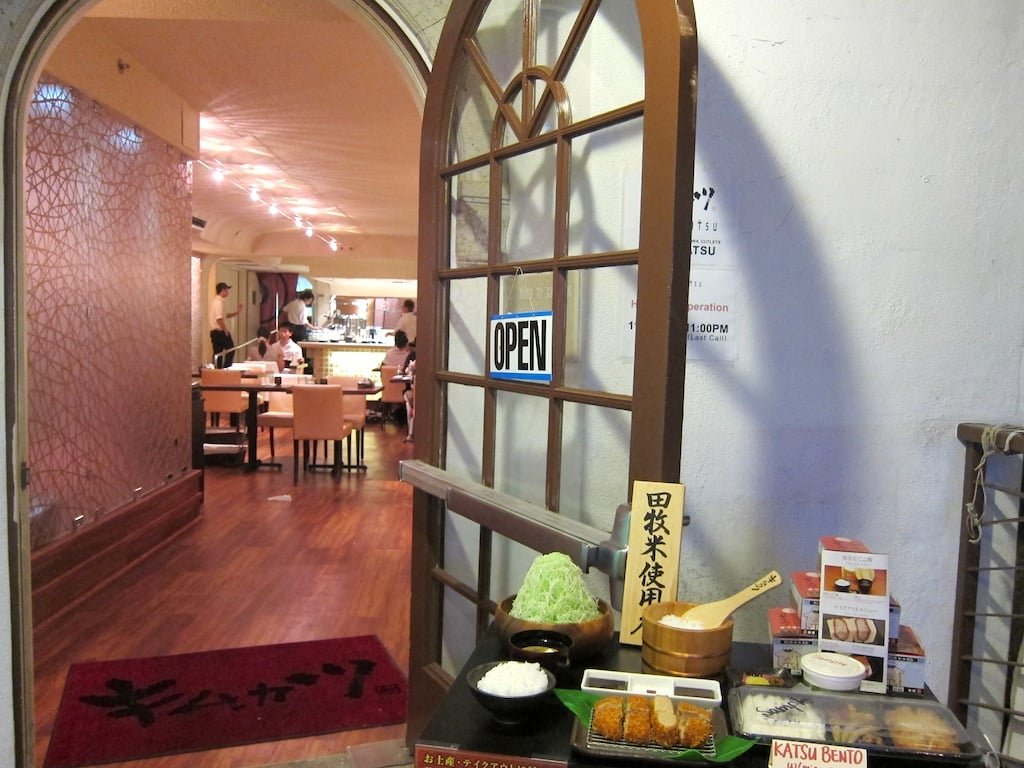
The Discipline Behind the Breading
Japanese casual dining in Honolulu occupies a wide spectrum, from counter-service plate-lunch spots to sit-down izakayas aimed squarely at visiting Japanese tourists. What separates the more serious end of that tier from the rest is rarely theatre or ambition — it is the degree to which a restaurant commits to the rituals of a specific cooking tradition rather than adapting them for speed or broad appeal. Ginza Bairin, on Beach Walk in Waikiki, belongs to that more committed category. Its parent brand traces to a Tokyo tonkatsu institution, and the Honolulu outpost carries that lineage in how the meal is structured and paced rather than in any overt showmanship.
Tonkatsu is a cuisine built on attention to interval: the precise temperature of the oil, the resting of the meat before cutting, the moment the shredded cabbage is refreshed. Restaurants that treat this as a fast-casual proposition tend to compress those intervals into invisibility. Ginza Bairin does not. The format here is sit-down, service-led, and paced to let each course land with some intention behind it. That approach has registered with diners: the restaurant holds a 4.3-star rating across 1,896 Google reviews, a figure that reflects both volume and sustained consistency.
Where It Sits in Honolulu's Japanese Dining Scene
Honolulu's Japanese restaurant scene has always had depth that visitors from the mainland underestimate. The city's historical and cultural ties to Japan mean that Japanese food here is not a niche category competing for attention — it is a staple, with a local audience that has opinions about it. That context shapes the standard a restaurant like Ginza Bairin is judged against. It is not enough to be adequate; the local diner already has comparisons in mind.
Within the Waikiki corridor specifically, Japanese options fragment into different functions: tourist-facing set menus, ramen counters, and a smaller tier of sit-down restaurants with enough pedigree to draw both visitors and residents. Ginza Bairin sits in that third group. Opinionated About Dining, which grades casual restaurants on a detailed survey methodology drawing on frequent-diner expertise, ranked it #496 in its Casual North America list for 2025, an improvement from #606 in 2024 and following a Recommended status in 2023. That three-year trajectory on a list that covers the continent suggests a restaurant consolidating rather than coasting. For a broader view of where Ginza Bairin fits within the city's wider dining scene, the full Honolulu restaurants guide maps the competitive field in detail.
The comparison set for a serious tonkatsu house in Waikiki is not the same as it would be elsewhere in the city. Places like Fujiyama Texas operate in adjacent Japanese territory but with different format logic. Musubi Cafe Iyasume targets the casual grab-and-go end of Hawaiian-Japanese crossover. The more deliberate sit-down context puts Ginza Bairin closer to its own category than to either of those neighbours. For readers also considering the broader Honolulu dining field, Zigu and Fête represent the New American end of Honolulu's serious casual tier, while Arancino at The Kahala anchors the Italian side of the city's destination-dining conversation.
The Structure of a Tonkatsu Meal
The ritual of a Japanese meal is not merely about what arrives on the plate , it is about the sequence, the vessel, and the implicit agreement between kitchen and diner about how time will be spent. Tonkatsu dining, in its traditional form, follows a logic that is almost architectural: the set meal format organises each element into a specific role. Miso soup, shredded cabbage, rice, and pickles each serve structural functions, not decorative ones. They pace the protein. They reset the palate. They give the meal a tempo that mirrors the discipline required to produce the main component well.
Chef Roy Ogasawara leads the kitchen at the Honolulu location, and under his stewardship the restaurant has built its OAD ranking through measured consistency. The discipline embedded in tonkatsu preparation , oil temperature, coating integrity, resting time , is the kind of detail that registers cumulatively across thousands of meals rather than in a single theatrical moment. It is the reason restaurants with this cooking tradition tend to build loyal regulars before they attract critics. Ginza Bairin appears to have done both.
For readers interested in how this approach to Japanese meal structure plays out at the higher end of the form, Myojaku in Tokyo and Azabu Kadowaki in Tokyo demonstrate what the same commitment to ritual and pacing looks like in a kaiseki or formal washoku context. The distance between those formats and a tonkatsu house is considerable, but the underlying philosophy , that the meal has a shape and the cook is responsible for protecting it , is shared. Comparable dedication to meal structure at the fine-dining tier elsewhere in the US can be found at Le Bernardin in New York City, Alinea in Chicago, Lazy Bear in San Francisco, Single Thread Farm in Healdsburg, The French Laundry in Napa, and Emeril's in New Orleans, each operating with a similar conviction that pacing and sequence are as important as the food itself.
Planning Your Visit
Ginza Bairin runs a split-service model, open daily for both lunch and dinner with service from 11 am to 2:15 pm and again from 4 to 9:15 pm. The address is 255 Beach Walk, Honolulu, placing it within easy walking distance of the main Waikiki hotel strip. For visitors also planning around accommodation, the full Honolulu hotels guide covers the range of options in the area. Readers building out a broader Honolulu itinerary can also consult the bars guide, wineries guide, and experiences guide for fuller coverage.
Reputation Context
A short peer table to compare basics side-by-side.
| Venue | Awards | Cuisine | Notes |
|---|---|---|---|
| Ginza Bairin | Opinionated About Dining Casual in North America Ranked #496 (2025); Opinionated… | Japanese | This venue |
| Fête | New American | New American | |
| Arancino at The Kahala | Italian | Italian | |
| Bar Maze | Cocktail Bar-Omakase | Cocktail Bar-Omakase | |
| Fujiyama Texas | Japanese | Japanese | |
| Helena Hawaiian Foods | Hawaiian | Hawaiian |