
Ginshari en belongs to Osaka’s everyday dining register rather than its luxury counter culture: a cafeteria-format room in Sakai-ku with Tabelog 100 Diner 2026 recognition and a tightly priced lunch bracket. Its appeal lies in the Japanese shokudo tradition, where rice, set-meal logic, take-out utility, and local routine carry more weight than ceremony.
Pearl is the En Primeur Club membership app — saves, bookings, and concierge access live there. Same editors, same standards.
- Address
- Japan, 〒590-0945 Osaka, Sakai, Sakai Ward, Ebisunochohigashi, 3 Chome−1−9 オクムラ ビル 1F
- Phone
- +81 80-9755-0477
- Website
- instagram.com
 Saves & bookings on Pearl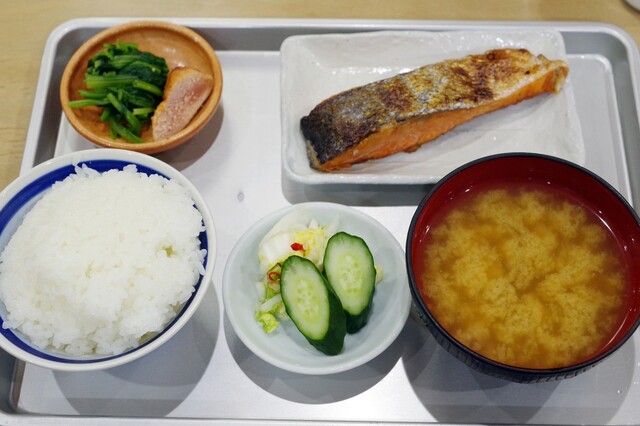
Approaching a small shokudo in Sakai-ku is a different Osaka rhythm from the neon crush of Namba or the department-store dining floors of Umeda. The cues are quieter: a ground-floor room, a practical threshold, and the expectation that the meal will be built around rice, speed, and everyday appetite rather than a long-form tasting sequence. Ginshari en sits in that register, closer to Osaka’s working-lunch grammar than to the city’s reservation-led luxury circuit.
That matters because Osaka’s dining reputation is often exported through spectacle: takoyaki queues, okonomiyaki counters, kushikatsu alleys, and the serious sushi rooms that place the city inside Japan’s national fine-dining conversation. The cafeteria category works by another code. It rewards consistency, portion logic, clear value, and a room that can absorb ordinary schedules. Tabelog’s 2026 Diner 100 selection gives Ginshari en a public signal inside that less theatrical tier, a useful marker for travelers trying to separate routine local dining from generic station food.
Rice-led Osaka dining without the ceremony of the counter
The name points toward ginshari, polished white rice, and that focus places the restaurant within a Japanese set-meal tradition where rice is not a side issue. In shokudo culture, the meal is assembled around a stable center: rice, soup, pickles, grilled or simmered proteins, and seasonal vegetables when the kitchen chooses that direction. The format is not built to flatter the chef’s biography. It is built to make technique disappear into repetition.
This is where the assigned tension between local ingredients and global technique becomes useful. Osaka has absorbed outside methods for centuries, from port-city trade to modern café and bakery culture, but the everyday table remains stubbornly local in structure. A place like 52CHO-ME BAKERY shows the city’s comfort with imported formats; 99 Pizza Napoletana Gourmet and a canto (Italian) make the European side explicit. By contrast, the shokudo idiom keeps the technique domestic: rice handling, heat control, compact service, and an economy of dishes that suits regular use.
Osaka’s casual excellence also sits beside a broader Kansai habit of category specialization. 551 Horai (551蓬莱) is built around a narrow, high-volume comfort-food identity; .cafe reflects the city’s café lane; Ginshari en belongs to the shokudo lane, where the argument is not novelty but execution inside a familiar template. That is a useful distinction for travelers who want Osaka beyond snack tourism.
How Sakai changes the reading of the meal
Sakai is not a decorative footnote to Osaka. Historically tied to trade, craft, and manufacturing, it gives the meal a more residential and local-business context than the city-center dining corridors. The Sakai-ku setting places the restaurant away from the heavy tourist funnel, which changes the expectations at the table. The room does not need to perform Osaka for visitors; it can function as part of a daily circuit.
That position also explains why the Diner 100 recognition is more meaningful than a generic popularity claim. The category is not evaluating luxury in the same way as a sushi counter such as Sushi Oga, nor is it competing with expense-account beef dining like Nankai Grill Higashi ten. It belongs nearer the modest end of the city’s serious food culture, closer in spirit to places where local use and repeatability matter. Yaogen Raikodo Honten, also in Osaka, occupies another low-price local lane, but the restaurant’s cafeteria classification and 2026 selection place it within a clearly defined shokudo conversation.
The result is a useful corrective to the idea that Osaka dining has to be loud to be essential to the city’s character. The region’s food culture has always prized directness, but directness does not mean simplicity. Rice cookery, takeaway service, non-smoking policy, and a tatami-room facility all point to a format designed for practical Japanese dining rather than a staged international audience. Those details make the restaurant easier to understand: this is not a long lunch built around pairing flights or chef narration; it is a compact meal in a local idiom.
Where it fits in an Osaka itinerary
For travelers planning Osaka through categories, the restaurant belongs on the daytime, local-routine side of the map. It pairs naturally with a Sakai detour or a south-Osaka day rather than a night built around cocktail bars or tasting menus. Readers comparing broader city options should use Our full Osaka restaurants guide for dining context, Our full Osaka hotels guide for where to base, Our full Osaka bars guide for evening planning, Our full Osaka wineries guide for wine-led detours, and Our full Osaka experiences guide for cultural scheduling around the meal.
Its strongest use case is not the traveler chasing a trophy counter. It is the traveler who has already eaten the city’s famous street foods and wants to understand how Osaka feeds itself on an ordinary day. The Tabelog 100 Diner 2026 selection, cafeteria format, take-out service, and compact price tier create a clear editorial read: this is a low-ceremony address with enough external recognition to justify the detour, especially for those interested in Japanese rice culture and set-meal discipline.
For wider comparison across Japan and beyond, the same everyday-food lens can be applied to -Grilled beef Sukiyaki- KAMAKURA TANUKIAN 鎌倉 たぬき庵 in Kamakura. 鮪と炭火焼き うお炭 秋葉原店 in Tokyo.know in Kumamoto, (Shoku) Vietnam in Kawasaki, [Curry Senmon Ten] Maruyama Kyoju. in Sapporo, and [ki:] in Kyoto. The category even travels internationally in different forms: Jōdo Saké Bar in Los Angeles and Onigiri Time in Pasadena show how Japanese drinking and rice-based formats read once removed from their domestic setting.
The editorial verdict is restrained but clear. The restaurant is for a traveler who values local dining infrastructure: rice as the anchor, cafeteria pragmatism, daytime utility, and recognition within a Japanese review culture that takes modest categories seriously. In a city often reduced to noise and sauce, that quieter register is exactly the point.
Price Lens
Nearby venues at a similar price tier for orientation.
| Venue | Cuisine | Price |
|---|---|---|
| Ginshari enThis venue — the venue you are viewing | Not listed | $ |
| Menya Joroku Nanba ten | Chūō, Takaida-style ramen counter | $ |
| Menya Fukuhara | Ikuno, Ramen | $ |
| Curry & Nice Katool | Chūō, Japanese spice curry stand | $ |
| Sanukiya Masajiro | Yao City, Sanuki-style Udon and Tempura | $ |
| Sodaisho | Kita, Traditional Shoyu Ramen Shop | $ |
Recognition history
Dated appearances from independent guides and award organizations, with the underlying list record or original source where available.
Tabelog 100 #20 · No. 20
Tabelog · Tabelog 100 - Diner - 2026
Continue exploring
More in Osaka
Restaurants in Osaka
Browse all →




Bars in Osaka
Browse all →




Hotels in Osaka
Browse all →



Wineries in Osaka
Browse all →
At a Glance
- Cozy
- Lively
- Classic
- Solo
- Family
- Casual Hangout
- After Work
- Standalone
Current opening hours
- Monday
- 8 AM–2 PM
- Tuesday
- Closed
- Wednesday
- 8 AM–2 PM
- Thursday
- 8 AM–2 PM
- Friday
- 8 AM–2 PM
- Saturday
- 8 AM–2 PM
- Sunday
- 8 AM–2 PM
Hours can change for holidays and private events. Last verified .
Casual and homey diner-style atmosphere with a tatami area, a lively but relaxed vibe at breakfast, and a focus on the comforting feel of a neighborhood cafeteria serving classic Japanese home-cooking.