
At the edge of the perched village of Ansouis, Garrigue occupies a Provençal house with a terrace shaded by an arbour and a kitchen visible through glass panels. Chef Nicolas Seibold, trained at Ledoyen and La Dame de Pic, builds his menu around direct relationships with fishermen from Le Grau-du-Roi and local market gardeners, producing dishes where the sourcing is as legible as the technique.
Pearl is the En Primeur Club membership app — saves, bookings, and concierge access live there. Same editors, same standards.
- Address
- 69 boulevard des Platanes
- Phone
- +33 4 90 09 90 54
- Website
- garrigue-restaurant.fr
- Directions
- Get directions
 Saves & bookings on Pearl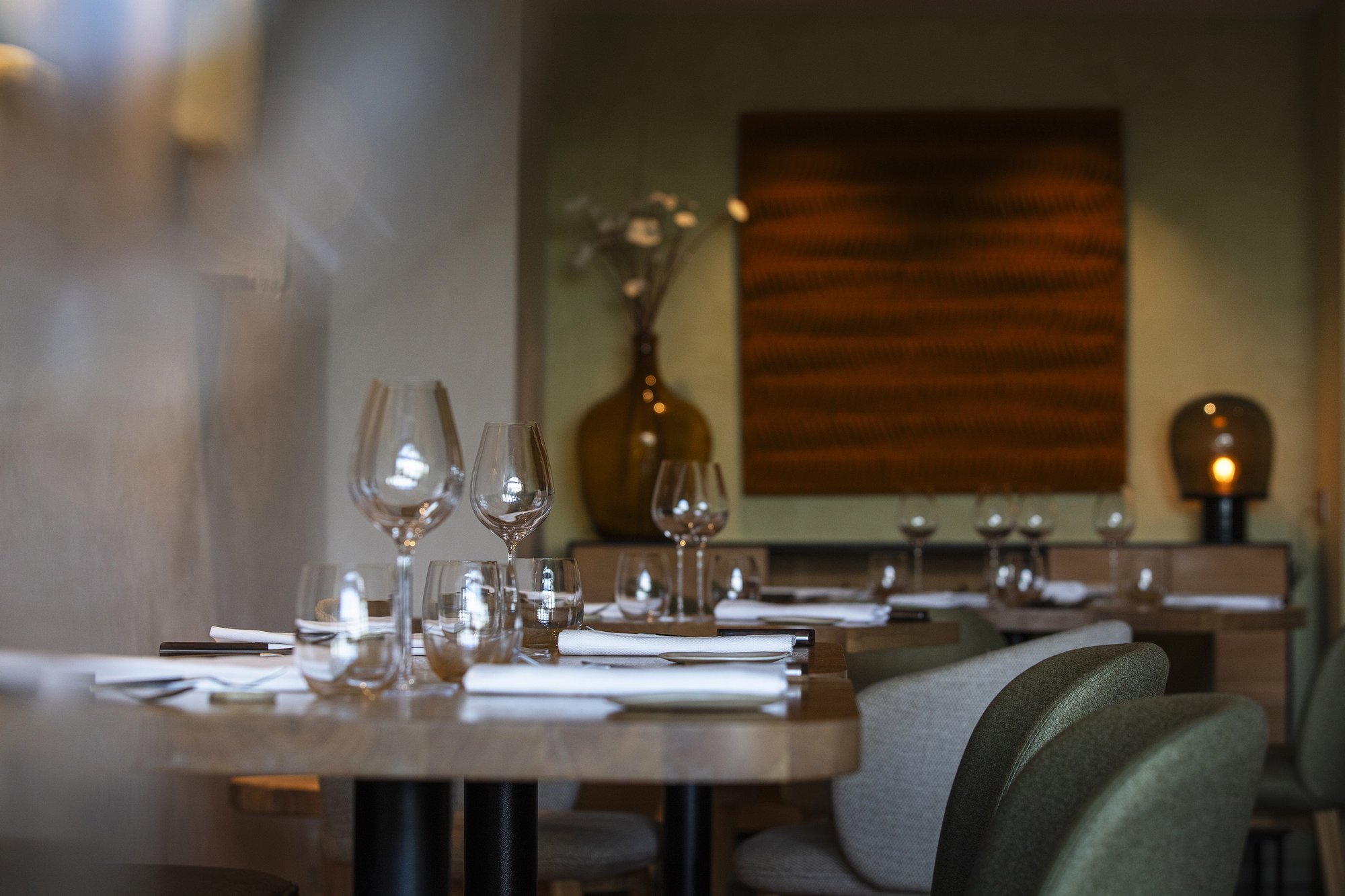
Where Provence's Larder Meets Serious Kitchen Credentials
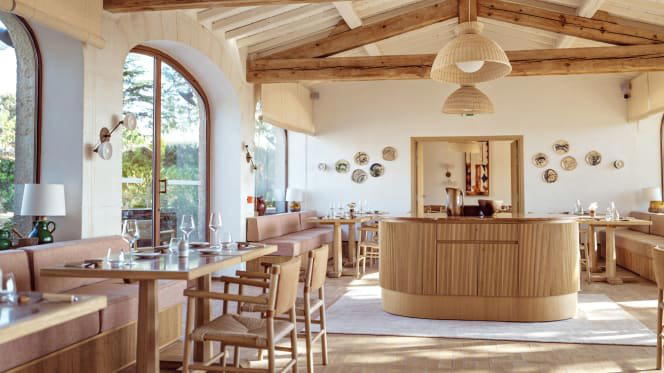
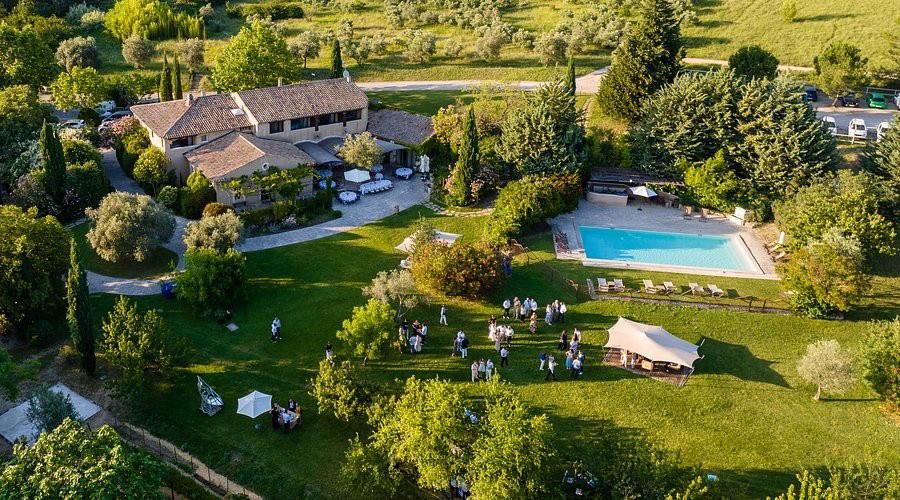
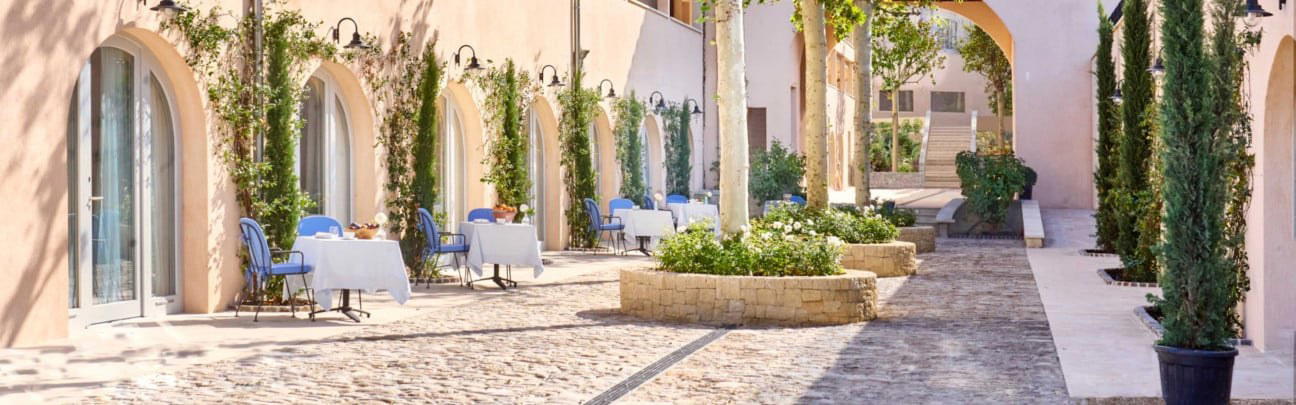
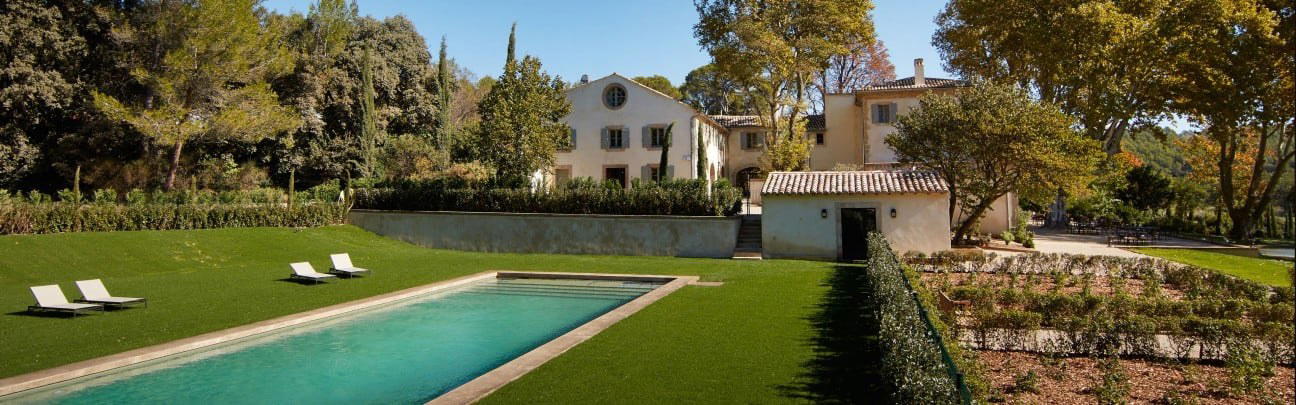
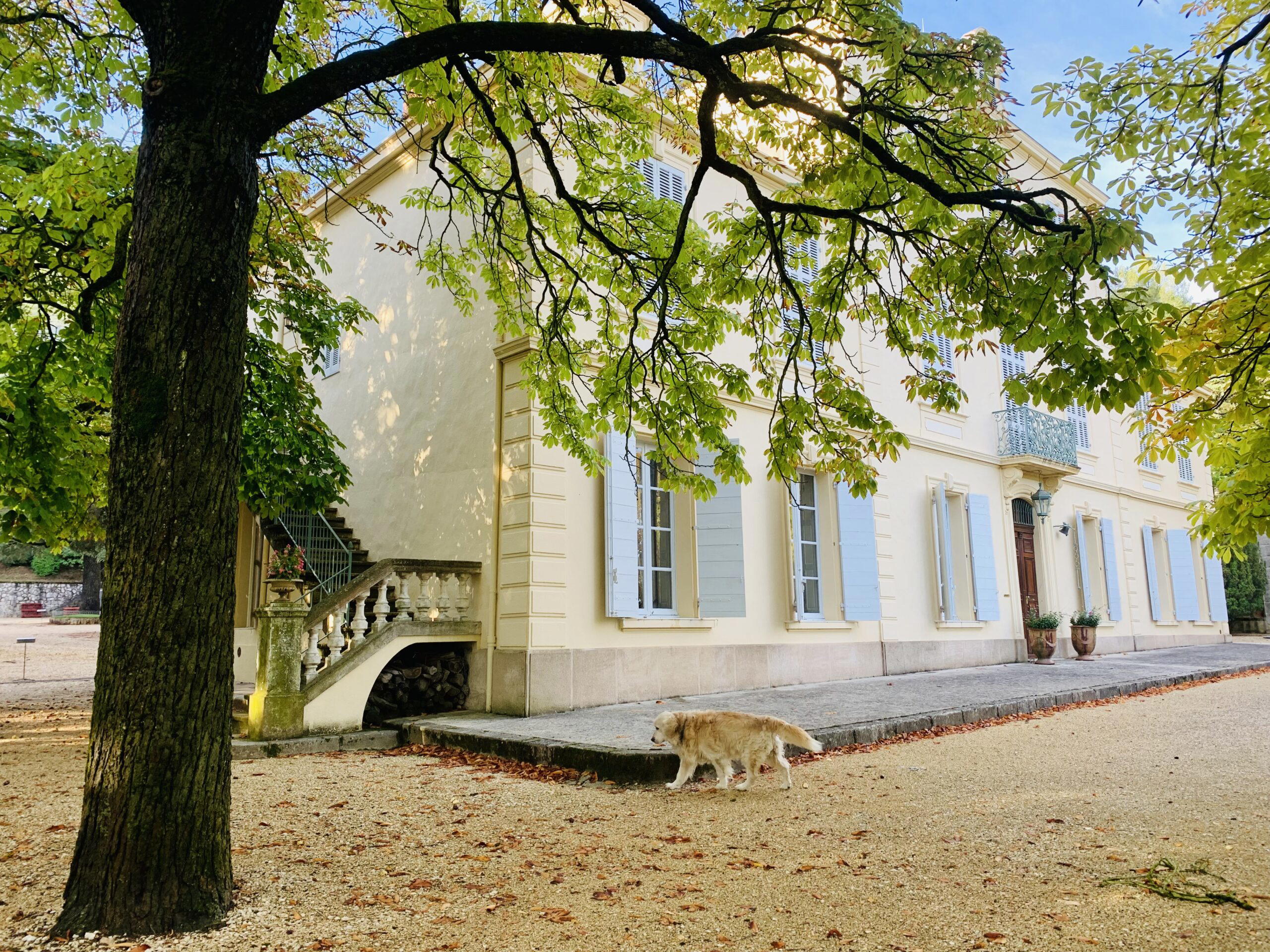
The approach to Garrigue tells you something about the register you're entering. At the edge of Ansouis, one of the Luberon's quieter perched villages, the restaurant occupies a fine Provençal house set back from the boulevard des Platanes. A terrace shaded by an arbour frames the entrance, and inside, the split between a glass-fronted kitchen with a table d'hôte counter on one side and a pastel and olive-green dining room on the other signals a specific kind of seriousness: informal enough in setting, deliberate enough in design to suggest the cooking is the main event.
Ansouis sits well outside that circuit. Chef Nicolas Seibold brings experience from Alléno Paris au Pavillon Ledoyen, La Dame de Pic, and Le Negresco to this village address. Garrigue is one of the more credentialled examples in that pattern.
The Sourcing Logic Behind the Menu
The sourcing framework at Garrigue is specific in a way that most Provençal restaurants only gesture toward. Chef Nicolas Seibold works with fishermen from Le Grau-du-Roi, the small fishing port on the Gard coast roughly 80 kilometres southwest, and with local market gardeners whose produce shapes the seasonal rotation of the menu. That's a two-node supply chain: coast and kitchen garden, with the chef positioned as editor rather than decorator.
Le Grau-du-Roi supplies fish to the kitchen. The port supplies a fish market that operates outside the major wholesale infrastructure of Marseille or the Côte d'Azur, meaning the catch arriving in the Garrigue kitchen is more likely to reflect actual day-to-day availability than a standardised restaurant supply. Garrigue operates with a more accessible price point and without tasting-menu formalism.
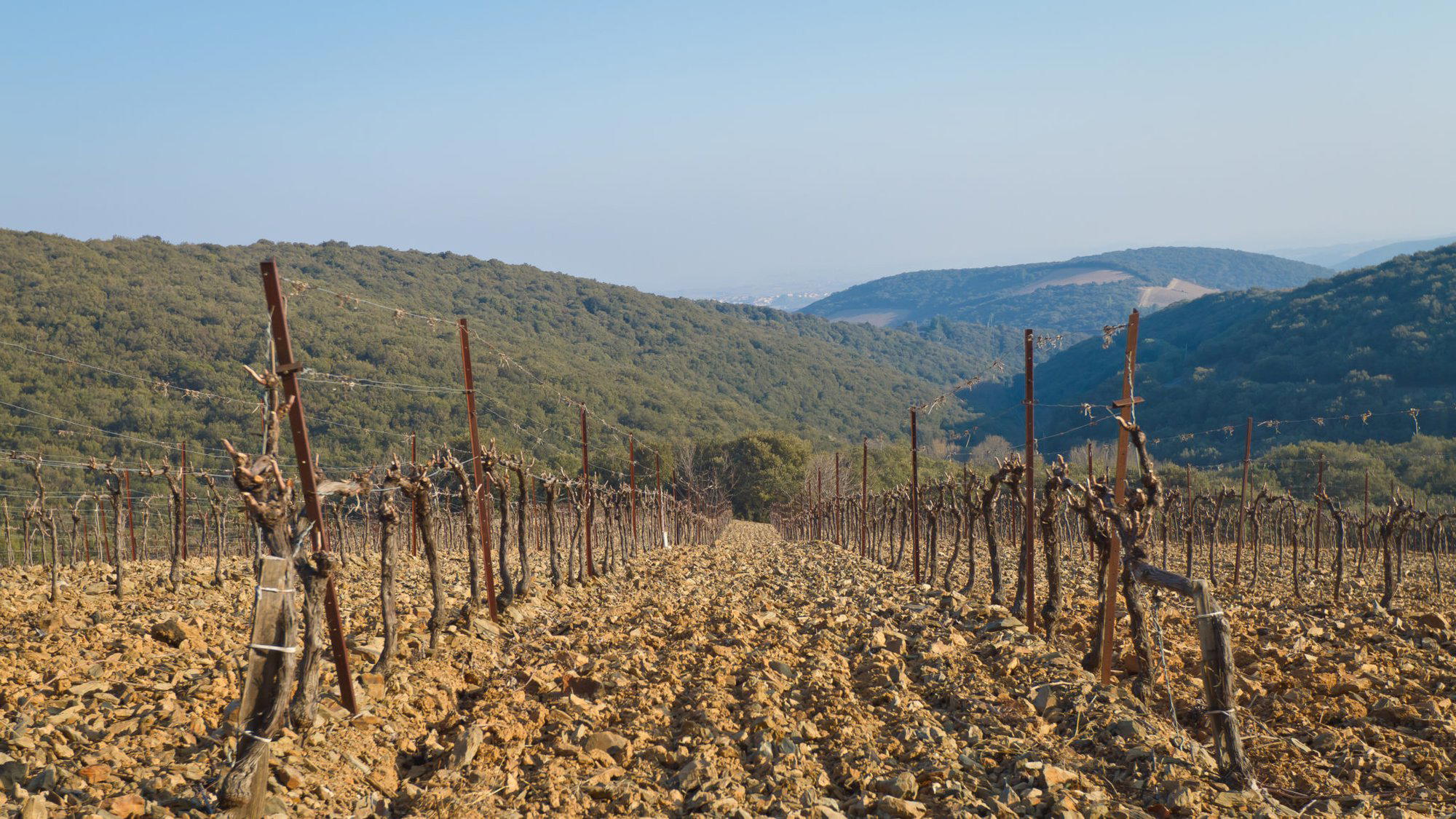
Vegetable sourcing follows a similar logic. The Luberon microclimate supports an extended growing season, and the area around Ansouis has a density of small market producers unusual even by Provençal standards. When a kitchen in this geography commits to local market gardeners rather than regional wholesalers, the practical effect shows up in the specificity of what's on the plate at any given service: the tomato-cucumber-raspberry starter documented in the venue's Michelin write-up isn't an arbitrary combination, it's a summer produce alignment that reflects what was picked within a short radius that week.
Technique and Register
Seibold's kitchen biography spans particularly technically demanding addresses in French fine dining. Ledoyen under Alléno is a three-Michelin-star operation with one of the more rigorous sauce programs in Paris. La Dame de Pic applies a precision-led approach to French classicism. Le Negresco in Nice sits within the grand hotel tradition of the Riviera. What links those kitchens is an emphasis on saucing and reduction as the primary vehicle for intensity, full-bodied jus, sauce construction as the measure of a cook's skill.
At Garrigue, that technical grounding shows up in dishes described as achieving intensity through full-bodied sauces and jus, with subtle texture work alongside. The vanilla and toast dessert points toward a kitchen that treats the pastry course as an exercise in contrast and restraint. That approach connects Garrigue to a broader French tradition of taking the dessert course as seriously as the savoury, a lineage visible at addresses like Bras in Laguiole and Flocons de Sel in Megève, though those are far larger and more starred operations.
Seibold's appearance on Leading Chef, the French television competition that has become a reliable signal of technical ambition if not always of finished restaurant cooking, adds a layer of public profile unusual for a village address of this scale. It adds public profile unusual for a village address of this scale.
Front of house is managed by Clémence Bellemin, whose service style the venue's recognition material describes as warm and attentive. In the format Garrigue operates, where a table d'hôte counter faces the open kitchen, the service relationship is necessarily closer than in a conventional dining room. That proximity is part of the proposition.
Ansouis and Its Place in the Luberon Dining Scene
Ansouis is classified among the Plus Beaux Villages de France, a designation that brings weekend visitors from Aix-en-Provence and the Vaucluse plateau but doesn't automatically generate a high density of serious restaurants. The village's dining options remain limited, which means Garrigue occupies a position of unusual weight within the local scene rather than competing within a crowded tier. The nearest comparable level of cooking ambition in the wider area tends to concentrate around Lourmarin, Bonnieux, and the outskirts of Apt.
For travellers spending time in the Luberon specifically, Garrigue is worth anchoring an evening around in Ansouis.
Those looking to map Garrigue within the broader geography of ambitious French regional cooking might trace a line through the Mediterranean south: AM par Alexandre Mazzia in Marseille sits at the intense, avant-garde end of that spectrum, while the kitchens that shaped Seibold, including Ledoyen, anchor the Parisian classical tradition. Other reference points in serious French regional cooking include Auberge de l'Ill in Illhaeusern, Troisgros in Ouches, Paul Bocuse in Collonges-au-Mont-d'Or, Assiette Champenoise in Reims, and Au Crocodile in Strasbourg. For those drawn to sourcing-driven cooking internationally, Le Bernardin in New York and Emeril's in New Orleans each represent different national traditions built on ingredient integrity.
Planning Your Visit
Garrigue is located at 69 boulevard des Platanes, Ansouis. Booking ahead is advisable, particularly for weekend services in summer. The table d'hôte format facing the kitchen is a specific experience within the room and worth requesting when reserving.
Side-by-Side Snapshot
Comparable venues nearby, for context on price, style, and recognition.
| Venue | Cuisine | Price | Awards | Notes |
|---|---|---|---|---|
| GarrigueThis venue — the venue you are viewing | Modern French Fine Dining | $$$ | Michelin Plate | Not listed |
| La Closerie | Provençal French Fine Dining | $$$ | Michelin 1 Star | Ansouis |
| Sépia | Modern French Mediterranean Bistro | $$$ | Michelin Plate | Saint Victor |
| Les Bords de Mer | Modern French Seafood Bistro | $$$ | Michelin Plate | Le Pharo |
| Philip | Traditional French Provençal | $$$ | Michelin Plate | Fontaine-de-Vaucluse |
| Lauracée | Modern French Mediterranean | $$$ | Michelin Plate | Opera |
Recognition history
Dated appearances from independent guides and award organizations, with the underlying list record or original source where available.
Michelin 1 Star
Michelin
Continue exploring
More in Ansouis
Restaurants in Ansouis
Browse all →
Bars in Ansouis
Browse all →
Hotels in Ansouis
Browse all →

At a Glance
- Elegant
- Cozy
- Rustic
- Intimate
- Date Night
- Special Occasion
- Open Kitchen
- Terrace
- Extensive Wine List
- Farm To Table
- Local Sourcing
Current opening hours
- Monday
- Closed
- Tuesday
- Closed
- Wednesday
- 12:15–1:30 PM, 7:30–8:30 PM
- Thursday
- 12:15–1:30 PM, 7:30–8:30 PM
- Friday
- 12:15–1:30 PM, 7:30–8:30 PM
- Saturday
- 12:15–1:30 PM, 7:30–8:30 PM
- Sunday
- 12:15–1:30 PM
Hours can change for holidays and private events. Last verified .
Cozy dining area in pastel and olive-green tones with table d'hôte facing glass-paned kitchens, plus terrace beneath an arbour.