Garden of Eden
On Virolastraat in central Paramaribo, Garden of Eden occupies a quiet address in a city where Javanese, Creole, Chinese, and Dutch culinary traditions intersect daily. The restaurant represents a strand of Surinamese dining that rewards patient visitors willing to move at the rhythm of the city rather than against it. Paramaribo's dining scene is one of the Caribbean basin's most genuinely plural, and Garden of Eden sits inside that larger story.
 Discover on Pearl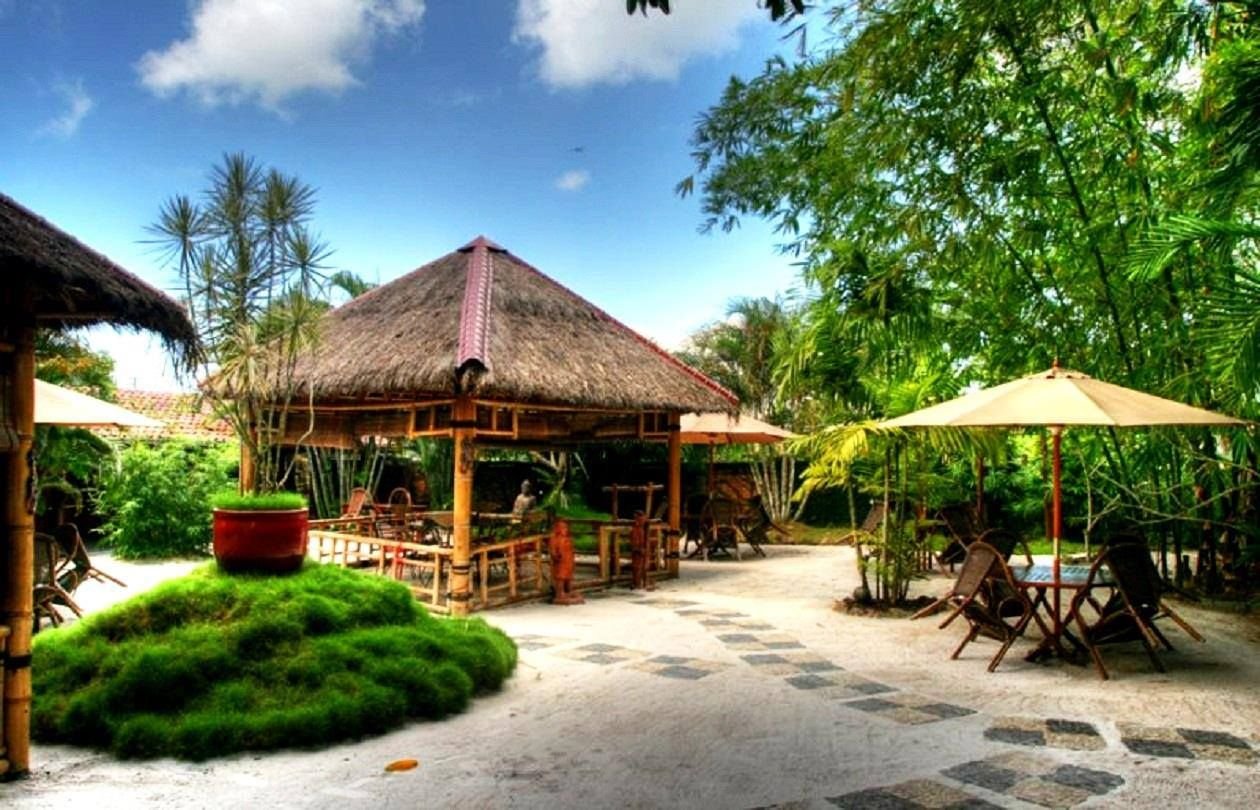
Virolastraat and the Pace of Paramaribo's Table
Arrive on Virolastraat in the early evening and the street moves at a register that most capital cities have long since abandoned. Suriname's capital operates on its own temporal logic: unhurried, layered, and shaped by a culinary inheritance that draws from at least half a dozen distinct traditions without resolving any of them into a single dominant identity. Garden of Eden, at number 61, sits within that context. The address itself is quietly residential by Paramaribo standards, which places the restaurant in the category of spots that function more as neighbourhood anchors than as destination venues engineered for tourist traffic.
That distinction matters when you're thinking about how to approach the meal. Paramaribo's dining ritual across most of its established restaurants follows a pattern of unhurried arrival, long tables shared with extended family groups, and a sequencing of dishes that rarely adheres to the Western convention of sharp divisions between courses. The city's culinary plurality, inherited from waves of indentured labourers, enslaved Africans, Dutch colonisers, and Chinese traders, means that on any given street you might encounter roti with Javanese-spiced filling beside a plate of pom, the Creole-Jewish casserole of grated tayer root and salted chicken that has become one of Suriname's most distinctive dishes. Garden of Eden sits within this broader pattern of cross-cultural cooking that defines the capital.
The shortlist, unlocked.
Hard-to-book tables, cellar releases, and concierge-planned trips.
Get Exclusive Access →What the Surinamese Table Teaches You About Patience
The dining customs of Paramaribo are, in many respects, an argument against the idea that a meal needs to be efficient. Across the city's mid-range and neighbourhood restaurants, the expectation is that you will stay, that the food will arrive when it arrives, and that conversation is as much the point as the plate. This stands in deliberate contrast to the paced tasting formats you might encounter at places like Atomix in New York City or the structured ritual of Lazy Bear in San Francisco, where the kitchen's sequence governs the evening with near-theatrical precision. In Paramaribo, the guest governs the pace, and restaurants on streets like Virolastraat are built around that assumption.
The practical consequence for a visitor is that arriving with an agenda works against you. The better approach is to treat the meal as a series of arrivals rather than a single destination: a cold Parbo beer while the kitchen finds its rhythm, followed by whatever the day's market determined was worth cooking. Surinamese menus in this tier of restaurant change frequently, tracking local ingredient availability rather than a fixed printed card. That improves the odds that what reaches the table is fresh, even if it makes the experience harder to preview from a distance.
Paramaribo's Culinary Position in the Wider Region
Suriname's capital is rarely the first city named when Caribbean or South American food culture is discussed, and that gap between the city's actual culinary depth and its international profile is one of the more interesting structural facts about eating here. The city's food scene has developed largely outside the international recognition circuits that generate Michelin stars or World's 50 Best placements, the kinds of credentials that define the peer sets of restaurants like Le Bernardin in New York City, Dal Pescatore in Runate, or Uliassi in Senigallia. Paramaribo's restaurants compete on entirely different terms: cultural authenticity, neighbourhood loyalty, and the sheer density of culinary traditions condensed into a small city of fewer than 300,000 people.
That compression is the point. Where a restaurant in Alba like Piazza Duomo expresses a single regional tradition refined over centuries, or Reale in Castel di Sangro interrogates Italian ingredient provenance through a modernist lens, Paramaribo's neighbourhood restaurants tend to express the collision of multiple traditions simultaneously. The city's cooking is syncretic by default, not by design, and that makes it harder to categorise but more genuinely plural than almost anywhere else in the hemisphere.
For visitors arriving from cities with highly organised dining cultures, the adjustment required is partly conceptual. Surinamese neighbourhood restaurants like Garden of Eden are not scaled-down versions of formal dining; they are operating within a different set of values entirely. The neighbourhood restaurant in Paramaribo plays a social role closer to the French bistro or the Italian trattoria, where regulars are known by name and the menu is a living document shaped by the market that morning, rather than a statement of culinary identity fixed in print.
Placing Garden of Eden in Context
Within Paramaribo's dining options, it is worth understanding the city's rough segmentation before making a reservation decision. The capital splits broadly between tourist-facing restaurants clustered near the UNESCO-listed historic inner city, and neighbourhood establishments scattered across residential streets where the clientele is predominantly local. Virolastraat falls into the latter geography. This places Garden of Eden in a peer set that includes spots like Eetcafe de Gadri and Lee's Korean, both of which serve a predominantly local clientele and operate with the informality that neighbourhood loyalty tends to produce. Chi Min represents another strand of the city's Chinese-Surinamese dining tradition, a lineage that runs deep in Paramaribo given the historical presence of Chinese communities in Suriname from the mid-nineteenth century onward.
For a fuller mapping of where Garden of Eden sits relative to the city's other options, the EP Club Paramaribo restaurants guide provides comparative context across the capital's full range of dining formats and price points.
Planning Your Visit
Paramaribo does not operate on the advance-booking timelines of the formal dining tier in Europe or North America. Restaurants like Waterside Inn in Bray, Atelier Moessmer Norbert Niederkofler in Brunico, or Quique Dacosta in Dénia require weeks or months of lead time as a structural feature of their format. Neighbourhood restaurants in Paramaribo generally do not. The city's dining culture assumes a degree of spontaneity that formal tasting-menu restaurants explicitly rule out. That said, confirming opening hours before arrival is sensible practice, particularly outside peak tourist periods. Garden of Eden's address, Virolastraat 61, is reachable from the historic centre without difficulty, and the walk or short taxi ride is itself a useful orientation to the residential fabric of the city away from its waterfront.
Timing within the day matters more than advance booking. The midday meal is the cultural anchor of Surinamese dining rather than the evening service, and the widest range of dishes tends to be available before 2pm. Evening visitors should arrive with a more open expectation of what will be on offer. Dress code, as across most of Paramaribo's neighbourhood dining tier, is casual. The city's heat makes formality impractical, and the social register of these restaurants reinforces that informality rather than working against it.
The shortlist, unlocked.
Hard-to-book tables, cellar releases, and concierge-planned trips.
Get Exclusive Access →Frequently Asked Questions
Cuisine Lens
A compact peer snapshot based on similar venues we track.
| Venue | Cuisine | Awards | Notes |
|---|---|---|---|
| Garden of Eden | This venue | ||
| Chi Min | |||
| Eetcafe de Gadri | |||
| Lee's Korean |
Need a table?
Our members enjoy priority alerts and concierge-led booking support for the world's most difficult tables.
Get Exclusive AccessThe shortlist, unlocked.
Hard-to-book tables, cellar releases, and concierge-planned trips.
Get Exclusive Access →