Gai by Darren Chin (Taman Tun Dr Ismail)


Michelin Plate · Star Wine List
Our verdict
Gai brings northern Thai cooking to Taman Tun Dr Ismail through the same family-sourced ingredient philosophy that runs across Darren Chin's restaurant group. Awarded a Michelin Plate in both 2024 and 2025, the restaurant centres on shared plates, free-range chicken grilled over charcoal, and a tom saeb oxtail stew that draws on cross-border sourcing from Malaysia and Thailand. Priced at mid-range, it sits at an accessible point in KL's Thai dining tier.

Pearl is the En Primeur Club membership app — saves, bookings, and concierge access live there. Same editors, same standards.
- Address
- 26A, Lorong Datuk Sulaiman 1, Taman Tun Dr Ismail, 60000 Kuala Lumpur, Wilayah Persekutuan Kuala Lumpur, Malaysia
- Phone
- +60 3-7732 4406
- Hours
- Mon ClosedTue–Sun 12–3 PM, 5:30–10 PM
- Website
- gai-kl.com
- Directions
- Get directions
The menu
What to order
- Fried Gai
- Tender Braised Beef Khao Soi
- Pad Krapow Gai
- Thai Wagyu Beef Krapao
- Gai Yang
Northern Thai in a KL Suburb: What Gai Represents
Taman Tun Dr Ismail sits at the western edge of Kuala Lumpur's residential belt, a neighbourhood where serious cooking more often means a hawker stall or a mid-range Malaysian kitchen than a destination dining room. That context matters when assessing Gai, the Thai-focused venture from the family behind DC. by Darren Chin, because the restaurant is doing something editorially interesting: it applies the ingredient sourcing rigour of a fine dining group to a cuisine format — northern Thai shared plates — that has traditionally lived outside those supply chains in KL.
Northern Thai cooking in Kuala Lumpur occupies a specific and underserved tier. The city has abundant central and southern Thai options at street and casual price points, but the herbal, charcoal-forward, ferment-led register of the north sits between formats. It is too textured for fast-casual and too informal for the tasting menu rooms. Gai positions itself exactly in that gap, with a mid-range price point ($$) and a Michelin Plate recognition held across consecutive years (2024 and 2025) that signals kitchen consistency rather than flash.
For context on where this fits in KL's broader table, compare it to the Chin group's own flagship. DC. by Darren Chin holds a Michelin star and operates at the $$$$ tier with a French Contemporary format. Gai runs at $$, serves Thai food designed for groups, and earns a Plate rather than a star, a different ambition, executed within the same sourcing infrastructure. That relationship is the interesting editorial fact: a fine dining group's quality controls applied to a cuisine designed for communal tables and shared bowls.
The Ingredient Logic Behind the Menu
The editorial angle at Gai is leading understood through the cross-border sourcing model. Ingredients are drawn from both Malaysia and Thailand, a supply chain that makes geographical sense given the two countries share a land border and a set of overlapping agricultural zones. Galangal, lemongrass, kaffir lime, and dried chilies travel well across that border; fresh herbs and some proteins are sourced locally in Malaysia. The result is a menu where the flavour register is authentically northern Thai but the raw material is regionally composite.
This kind of dual-sourcing is more common than it appears in Southeast Asian restaurant kitchens, but it is rarely made explicit as a menu principle. At Gai, it is the structural logic of the whole operation. The free-range chicken, the dish that gives the restaurant its name, since gai is simply Thai for chicken, is grilled over charcoal using a family recipe, producing the kind of surface char and interior moisture retention that comes from both breed quality and technique. The sourcing of free-range birds rather than commercial poultry is a deliberate cost decision at a mid-range price point, which is where the fine dining group infrastructure becomes relevant to a casual format.
The tom saeb oxtail stew attributed to Papa Suwit is the dish most cited as a reference point for the kitchen's northern Thai credentials. Tom saeb is a Isan and northern Thai broth style, spicy, sour, intensely herbed, that is less well-known internationally than tom yum but operates in a similar aromatic register with more pronounced fermented and dried spice notes. At Gai, the version uses oxtail, a cut that requires long, attentive cooking to render correctly into a broth. This is not a dish that survives shortcuts, which makes it a useful trust signal for the kitchen's discipline.
Seafood options including flower crab extend the menu beyond the chicken focus and provide a higher price-point option within the shared format. Flower crab is a premium local ingredient in both Malaysia and Thailand, and its inclusion points to the restaurant's willingness to move up the ingredient register without shifting the overall price tier.
Where Gai Sits in the Regional Thai Dining Conversation
KL's Thai dining scene draws obvious comparison to Bangkok, where the upper tier of the category has fractured into several distinct approaches. Nahm represents the historical-research approach to Thai cooking; Samrub Samrub Thai and Aksorn work from archive and tradition; AKKEE operates in a more focused specialist format. Outside Southeast Asia, Boo Raan in Knokke shows how northern Thai registers travel when transplanted into a European context.
Gai is not attempting the archival seriousness of those Bangkok rooms. Its ambition is to bring northern Thai flavours to a KL residential neighbourhood at a price point that allows regular return visits, backed by ingredient sourcing that keeps the cooking honest. The consecutive Michelin Plate recognition across 2024 and 2025 suggests that the guide agrees: this is a kitchen doing what it says it does at a consistent standard.
For KL diners who want to track how the city's restaurants are placing local sourcing at the centre of their identity, it is worth reading alongside Dewakan and Beta, both of which are doing the same work at higher price tiers and in a Malaysian cuisine framework. Malai and Molina extend the picture into other cuisine categories at similar or higher price points. Gai's contribution to that conversation is proving that the local-ingredient logic holds at a mid-range, group-dining format, not only in the tasting menu rooms.
The Group Format and How to Approach It
Shared plates at northern Thai tables are not optional styling; they are the structural logic of the cuisine. Dishes like tom saeb and whole grilled chicken are calibrated for distribution across a group, and ordering a single portion of either misrepresents what the kitchen is producing. The restaurant embodies what the Chin family describes as a spirit of family dining, which in practical terms means that tables of four or more will extract significantly more from the menu than solo diners or couples ordering conservatively.
At a $$ price point in KL's current market, Gai sits in a tier where the cost of a shared meal for a group remains accessible relative to the sourcing quality on the plate. The Michelin Plate recognition, which the guide awards for kitchens demonstrating good cooking at any price level, reinforces that the value ratio holds.
The address in TTDI (Taman Tun Dr Ismail) at 26A, Lorong Datuk Sulaiman 1 places the restaurant in a commercial strip that draws from both the surrounding residential neighbourhood and from Damansara and Bangsar, all reachable within twenty minutes during off-peak hours. For visitors staying in central KL, it functions as a destination meal in a suburb rather than a walk-in option, and planning accordingly is sensible.
For the broader picture of eating and staying in the city, see our full Kuala Lumpur restaurants guide, our full Kuala Lumpur hotels guide, and our full Kuala Lumpur bars guide. If you are extending a Malaysia trip beyond the capital, the dining scenes in George Town at Auntie Gaik Lean's Old School Eatery, in Seberang Perai at Bee See Heong, and in Langkawi at The Planters at The Danna each offer distinct regional registers worth the travel. Our full Kuala Lumpur wineries guide and our full Kuala Lumpur experiences guide cover the rest of the city's premium circuit.
Frequently asked questions
Does Gai by Darren Chin (Taman Tun Dr Ismail) have a Michelin star or similar recognition?
Gai by Darren Chin (Taman Tun Dr Ismail) has received recognition including: The fourth venture of chef Darren Chin focuses on Thai cuisine with the assistance of his wife, Nana, and their family. Using top quality ingredients carefully souced from Malaysia and Thailand, these...; Gai (Thai for chicken) delivers tas….
What's the signature dish at Gai by Darren Chin (Taman Tun Dr Ismail)?
Two dishes define the menu. The free-range chicken — the restaurant's namesake, gai being Thai for chicken — is grilled over charcoal using a family recipe from Darren Chin's wife Nana's side. Papa Suwit's tom saeb oxtail stew, a spicy-sour broth built around mixed vegetables and herbs, is the other dish regularly cited by regulars. Both are built for sharing.
Is Gai by Darren Chin (Taman Tun Dr Ismail) more mid-range or high-end?
Pricing at Gai by Darren Chin (Taman Tun Dr Ismail) is listed as $$.
Where do I go for Gai by Darren Chin (Taman Tun Dr Ismail)?
Gai by Darren Chin (Taman Tun Dr Ismail) is located at 26A, Lorong Datuk Sulaiman 1, Taman Tun Dr Ismail, 60000 Kuala Lumpur, Wilayah Persekutuan Kuala Lumpur, Malaysia, Kuala Lumpur.
What's the best way to book Gai by Darren Chin (Taman Tun Dr Ismail)?
No phone number or website is currently listed for the restaurant. Gai is part of the Darren Chin group, which operates multiple KL venues, so checking the group's social media channels or Instagram presence is the most practical route to securing a table. Walk-ins may be possible given the neighbourhood setting, but group visits benefit from advance coordination.
What's Gai by Darren Chin (Taman Tun Dr Ismail) best at?
The kitchen holds two consecutive Michelin Plate recognitions (2024 and 2025) for northern Thai cooking, which sets it apart from the Bangkok-inflected central Thai restaurants that dominate KL's mid-market. The cross-border sourcing model — drawing ingredients from both Malaysia and Thailand — underpins dishes that sit in the charcoal, herbed-broth, and ferment-forward register of Chiang Mai-style cooking. At a mid-range price point ($$), it delivers a format that rewards groups ordering across the full menu.
Nearby-ish Comparables
| Venue | Cuisine | Price | Awards | Notes |
|---|---|---|---|---|
| Gai by Darren Chin (Taman Tun Dr Ismail)This venue — the venue you are viewing | Modern Northern Thai Lanna Cuisine | $30–50 | Michelin Plate · Star Wine List | Not listed |
| Dewakan | Modern Malaysian Fine Dining | $150–200 | 2 Michelin Stars · World's 50 Best #62 | Malaysian |
| Beta | Modern Malaysian Fine Dining | $100–150 | 1 Michelin Star · La Liste Top Restaurants | Malaysian |
| Molina | Avant-Garde European Fine Dining | $150–200 | 1 Michelin Star | Innovative |
| DC. by Darren Chin | French Contemporary Fine Dining | Not listed | 1 Michelin Star · La Liste Top Restaurants | French Contemporary |
| Ah Hei Bak Kut Teh | Traditional Herbal Bak Kut Teh | $10–20 | Michelin Bib Gourmand | Malaysian |
Recognition history
Dated appearances from independent guides and award organizations, with the underlying list record or original source where available.
Michelin Plate
Michelin
Star Wine List
Star Wine List
Full recognition history (4 entries)
Michelin Plate
Michelin
Michelin Plate
Michelin
Continue exploring
More in Kuala Lumpur
Restaurants in Kuala Lumpur
Browse all →
Bars in Kuala Lumpur
Browse all →
Details
- Sophisticated
- Cozy
- Elegant
- Intimate
- Date Night
- Family
- Celebration
- Special Occasion
- Group Dining
- Open Kitchen
- Standalone
- Craft Cocktails
- Local Sourcing
- A La Carte
- Family Style
- Set Menu
- Thai Iced Tea
- Lemongrass Pandan Cooler
- Halal
- Vegetarian Friendly
Current opening hours
- Monday
- Closed
- Tuesday
- 12–3 PM, 5:30–10 PM
- Wednesday
- 12–3 PM, 5:30–10 PM
- Thursday
- 12–3 PM, 5:30–10 PM
- Friday
- 12–3 PM, 5:30–10 PM
- Saturday
- 12–3 PM, 5:30–10 PM
- Sunday
- 12–3 PM, 5:30–10 PM
Hours can change for holidays and private events. Last verified .
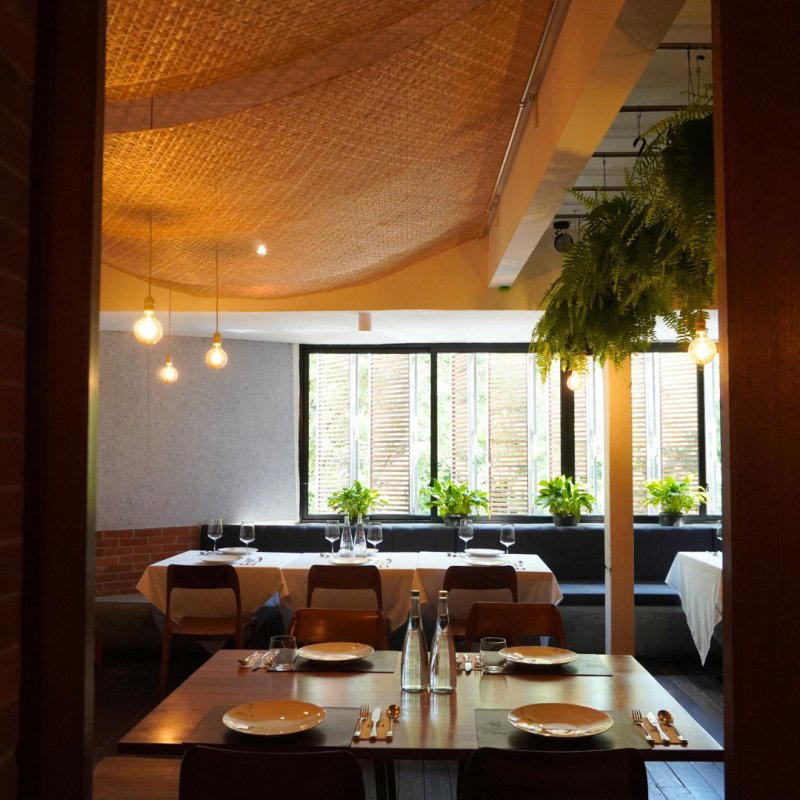
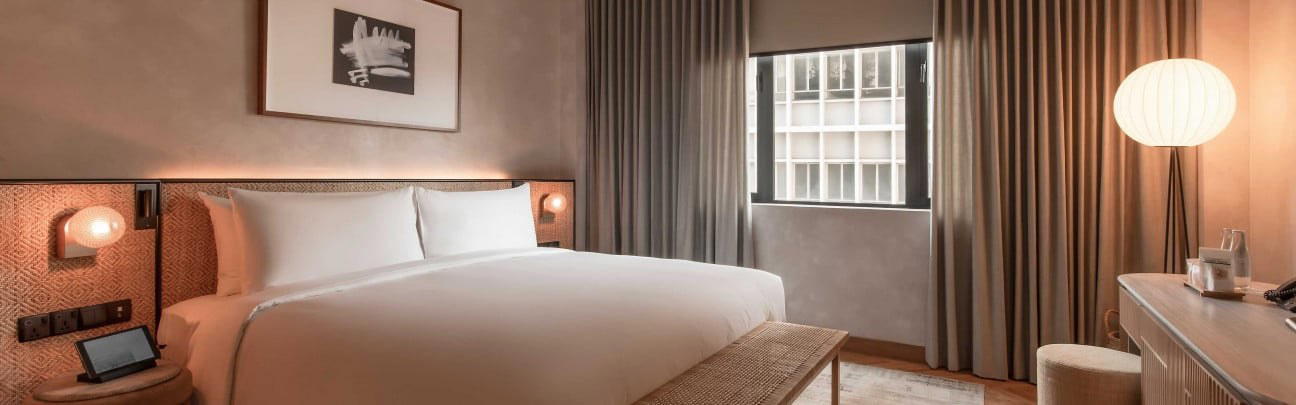
Warm, wabi-sabi inspired lighting with sophisticated charm; air rich with scent of charcoal and fresh Thai herbs creating an intimate yet effortlessly elegant setting.