Frangipani Restaurant
Our verdict
Frangipani Restaurant operates in Nuku'alofa, Tonga's compact capital, where the dining scene is shaped less by culinary fashion than by what the surrounding Pacific provides. For travellers arriving in a city with limited fine-dining infrastructure, it represents one of the more considered options in a market where ingredient provenance and local sourcing carry more weight than chef credentials or award tallies.

Pearl is the En Primeur Club membership app — saves, bookings, and concierge access live there. Same editors, same standards.
- Address
- Nuku Alofa, Tonga
- Directions
- Get directions
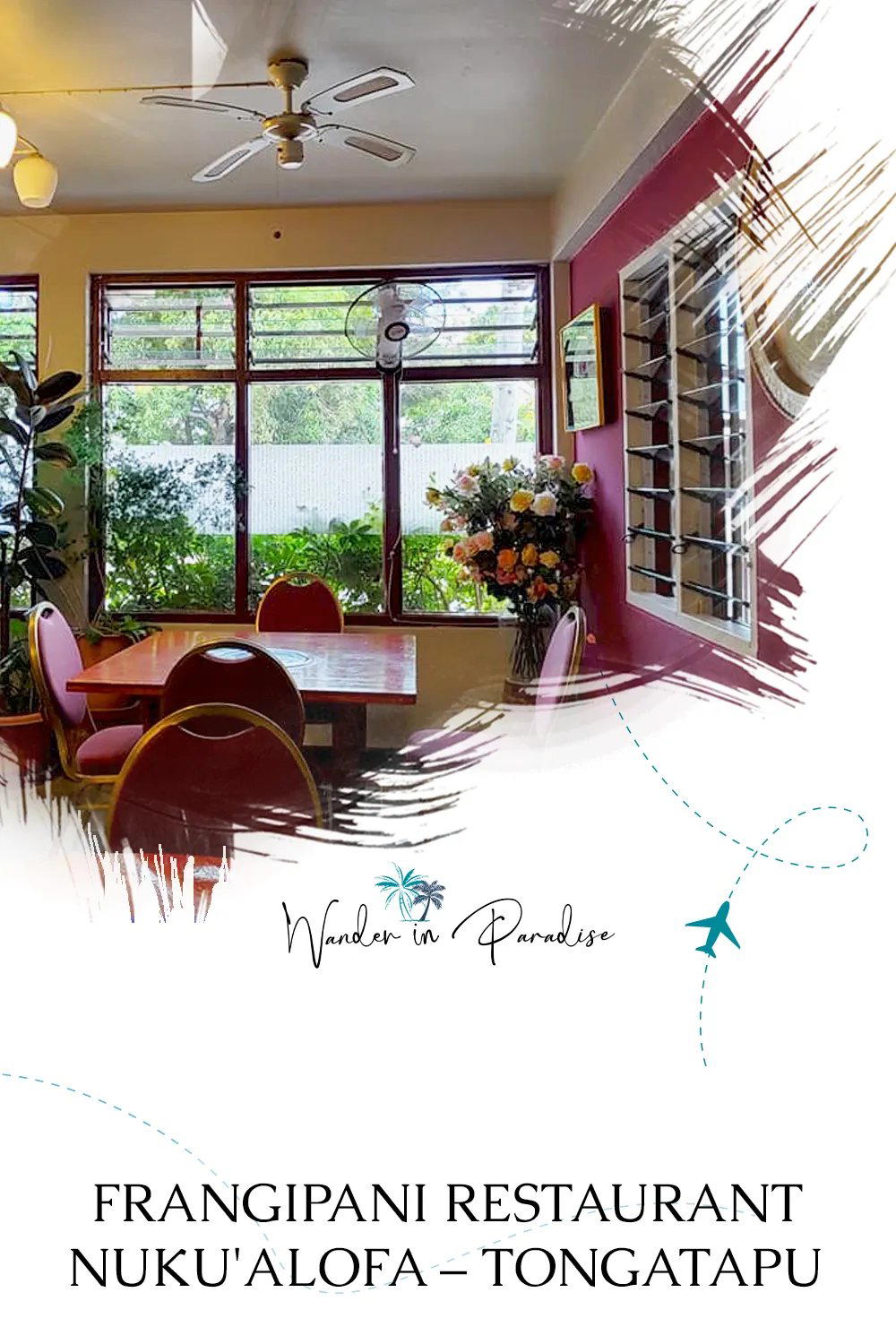
The menu
What to order
- Sashimi
- Bbq meat
- Jigge soup
Eating at the Edge of the Pacific: What Nuku'alofa's Dining Scene Actually Looks Like
Tonga's capital is not a city where restaurant culture develops in isolation from its geography. Nuku'alofa sits on the northern coast of Tongatapu, the main island, surrounded by warm Pacific waters and agricultural land that dictates what ends up on plates far more directly than import logistics or a chef's preference for a particular supplier. In a dining market this size, the distance between the sea and the kitchen table is often measured in hours rather than days, and that compression of supply chain is the defining feature of eating well here. Visitors accustomed to the layered, credentialled restaurant circuits of cities like New York or San Sebastián will find a different logic operating. The question is not which kitchen has the most sophisticated technique but which one handles its raw materials with the most attention.
Frangipani Restaurant sits within that context. In a city where the total number of venues that could be called destination dining is short, it occupies a position that matters more by default than by design. That is not a criticism — it is an accurate description of how small-market hospitality works. The same dynamic applies in remote European towns and island capitals across the Pacific Rim: a small number of restaurants carry the weight of representing a place's food culture to outside visitors, and ingredient sourcing is the clearest expression of whether they take that responsibility seriously.
The Source Logic of Pacific Island Cooking
Pacific cuisine at its most coherent is an argument about geography. The fishing grounds around Tonga produce tuna, mahi-mahi, snapper, and crayfish that move through markets and direct supplier relationships into restaurant kitchens. Root vegetables — taro, cassava, sweet potato, are cultivated on Tongatapu and form the starch foundation of traditional Tongan eating. Coconut in multiple forms (cream, flesh, oil) threads through both sweet and savoury preparations. These are not exotic ingredients for a Tongan kitchen; they are the baseline.
What distinguishes a restaurant that takes sourcing seriously in this environment is not access, almost every kitchen on the island can reach the same markets, but selection and timing. The decision to work with the day's catch rather than a standing frozen order, to source taro from a specific grower rather than a wholesale distributor, to use fresh coconut rather than packaged product: these choices accumulate into a measurable difference at the table. For reference points on how seriously ingredient provenance can shape a kitchen's identity, operations like Atelier Moessmer Norbert Niederkofler in Brunico and Uliassi in Senigallia show how coastal and mountain ingredient logic can anchor a kitchen's entire identity when applied with discipline.
The Physical Setting and What It Communicates
Nuku'alofa's built environment is low-rise, heat-soaked, and oriented toward the waterfront. The city does not have the density that produces the kind of restaurant cluster found in capitals ten times its size, so dining venues tend to stand independently rather than in competitive proximity to one another. Approaching a restaurant in this context means arriving through a quieter urban grain, streets without the noise signals that mark dining districts in larger cities. The atmosphere inside any venue of this type tends to reflect the pace of the city itself: unhurried, with natural ventilation or open-air elements that keep the room connected to the surrounding climate rather than sealed against it.
For travellers whose reference points are tightly air-conditioned dining rooms in Singapore or the engineered ambience of a Michelin-tracked kitchen in Europe, the register here is different. The experience is defined by what the Pacific genuinely provides rather than what hospitality designers have constructed around it. That distinction carries its own value, particularly for visitors who have already eaten along the benchmark end of the spectrum, at counters like Le Bernardin in New York City or Waterside Inn in Bray, and arrive in Nuku'alofa looking for something that is not performing sophistication but simply expressing a place.
The restaurant options available to visitors in Nuku'alofa are limited enough that comparison within the city matters as much as comparison against international benchmarks. The Leading Restaurant And Lounge represents another option within the local market, and the choice between venues here is less about cuisine category, the overlap in Pacific and international cooking is high across the city, than about format, setting, and service consistency.
For the broader Nuku'alofa dining picture, including neighbourhood-level context and updated venue recommendations, our full Nuku'alofa restaurants guide covers the range of options available in the capital.
Planning a Visit: Practical Orientation
Tonga operates on a single time zone with limited seasonal variation in temperature, so timing a visit is less about season than about island events, the Heilala Festival in July brings higher visitor volumes to Nuku'alofa and places additional pressure on accommodation and dining. Booking ahead for any sit-down restaurant during that period is advisable. Outside of festival periods, Nuku'alofa restaurants generally operate at a pace that allows for walk-in dining, though confirming current hours directly is prudent given that small-market venues adjust their schedules without the kind of public notice that larger city restaurants maintain through digital channels. Contact details and current operating hours are leading verified through hotel concierge or local tourism resources, as the venue's own online presence is limited. Currency is the Tongan Pa'anga; international cards are accepted at some venues but cash remains the more reliable option across the city.
Travellers connecting through Fiji or Auckland on their way to Tonga and calibrating expectations against the dining options they encountered in those transit cities should adjust their frame of reference accordingly. Nuku'alofa is not competing with Auckland's restaurant scene, and the value of eating there is not comparable on those terms. The interest is specific to place, the Pacific ingredients, the unhurried pace, the directness of the supply chain, and that specificity is what makes it worth seeking out. Kitchens like HAJIME in Osaka, Piazza Duomo in Alba, Reale in Castel di Sangro, Jordnær in Gentofte, Atomix in New York City, Lazy Bear in San Francisco, Emeril's in New Orleans, Quique Dacosta in Dénia, Quattro Passi in Marina del Cantone, Dal Pescatore in Runate, Le Calandre in Rubano, and Arzak in San Sebastián demonstrate how deeply a kitchen can commit to the logic of a specific place and ingredient set. In Nuku'alofa, the same logic applies at a different scale, but the underlying principle holds.
Frequently asked questions
Would Frangipani Restaurant be comfortable with kids?
Nuku'alofa's dining scene is small and informal by international standards, and restaurants in the city generally accommodate families without dedicated children's programmes. Frangipani's setting in Tonga's low-key capital means the pace is relaxed rather than high-pressure. For specific seating arrangements or menu flexibility for children, check the venue's official channels before visiting.
What is the atmosphere like at Frangipani Restaurant?
Frangipani sits within Nuku'alofa, a waterfront city that is low-rise, heat-soaked, and oriented toward the Pacific rather than toward urban density. Restaurants in this setting tend toward an open, unhurried character shaped by the geography as much as by interior design. Expect a pace that reflects island time rather than metropolitan service rhythms.
Is Frangipani Restaurant a good option for dining in Nuku'alofa on a first visit to Tonga?
For a first-time visitor to Tonga's capital, it represents a practical and locally grounded starting point for understanding how Pacific island cooking translates to a sit-down setting. Reservations are advisable given the constrained dining options across Tongatapu.
What's the must-try dish at Frangipani Restaurant?
The waters around Tongatapu produce tuna, mahi-mahi, snapper, and crayfish, and Pacific island kitchens in Nuku'alofa typically build their strongest plates around whatever came off the boat that day. Any preparation centred on local reef fish or crayfish will reflect the source logic that makes Pacific coastal cooking coherent. For the current menu, check directly with the restaurant, as availability shifts with the catch.
Comparable Spots, Quickly
| Venue | Cuisine | Price |
|---|---|---|
| Frangipani RestaurantThis venue — the venue you are viewing | Korean | $10–20 |
| The Top Restaurant And Lounge | International Rooftop Dining | $20–30 |
Continue exploring
More in Nuku Alofa
Restaurants in Nuku Alofa
Browse all →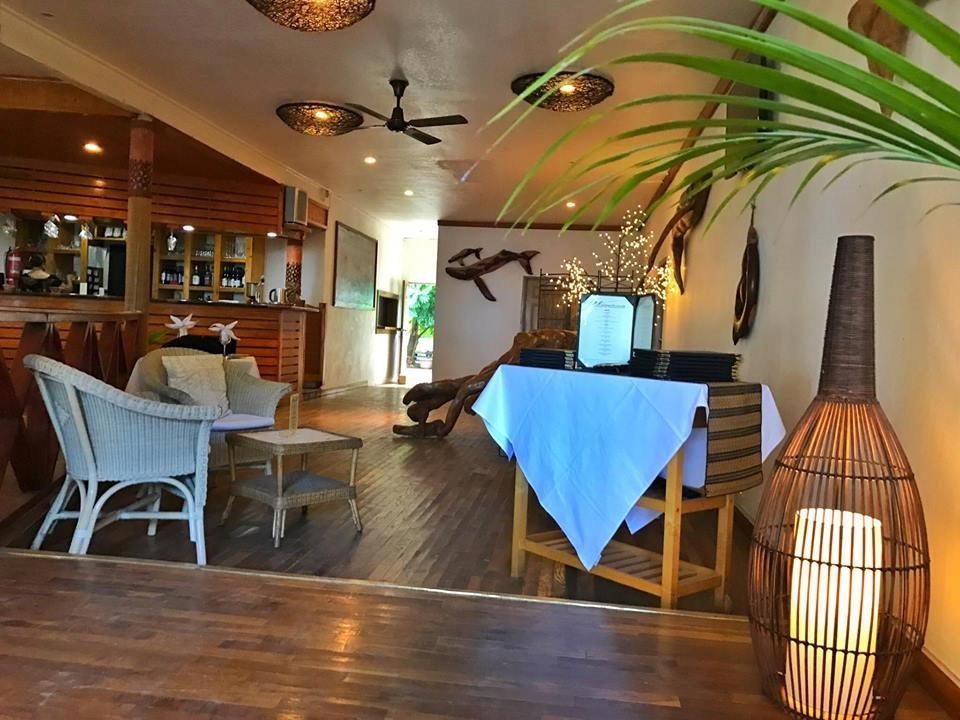
Details
- Cozy
- Lively
- Casual Hangout
- Group Dining
- A La Carte
- Vegetarian Friendly
- Vegan Options
- Gluten Free Options
Relaxed casual atmosphere with warm hospitality and lively urban energy.