Frangipaani

Michelin Plate
Our verdict
A Michelin Plate-recognised Indian restaurant in Bukit Damansara, Frangipaani has been running since 2019 from its mezzanine perch at The Republik. The kitchen delivers traditional Indian cooking adjusted for local palates, with the tandoor and the raan dum biriyani among the standout reasons to visit.

Pearl is the En Primeur Club membership app — saves, bookings, and concierge access live there. Same editors, same standards.
- Address
- The Republik, Lot No.M.03, Mezzanine Floor, Jalan Medan Setia 1, Bukit Damansara, 50490 Kuala Lumpur, Malaysia
- Phone
- +60 19-340 5211
- Hours
- Mon–Thu 11:30 AM–3 PM, 6–11 PMFri–Sun 11:30 AM–3:30 PM, 6–11:30 PM
- Website
- theolivetreegroup.com
- Directions
- Get directions
The menu
What to order
- Raan Dum Biriyani
- Mangalorean Prawn Ghee Roast
- Butter Chicken Stracciatella
Warm Wood, Tan Leather, and the Smell of the Tandoor
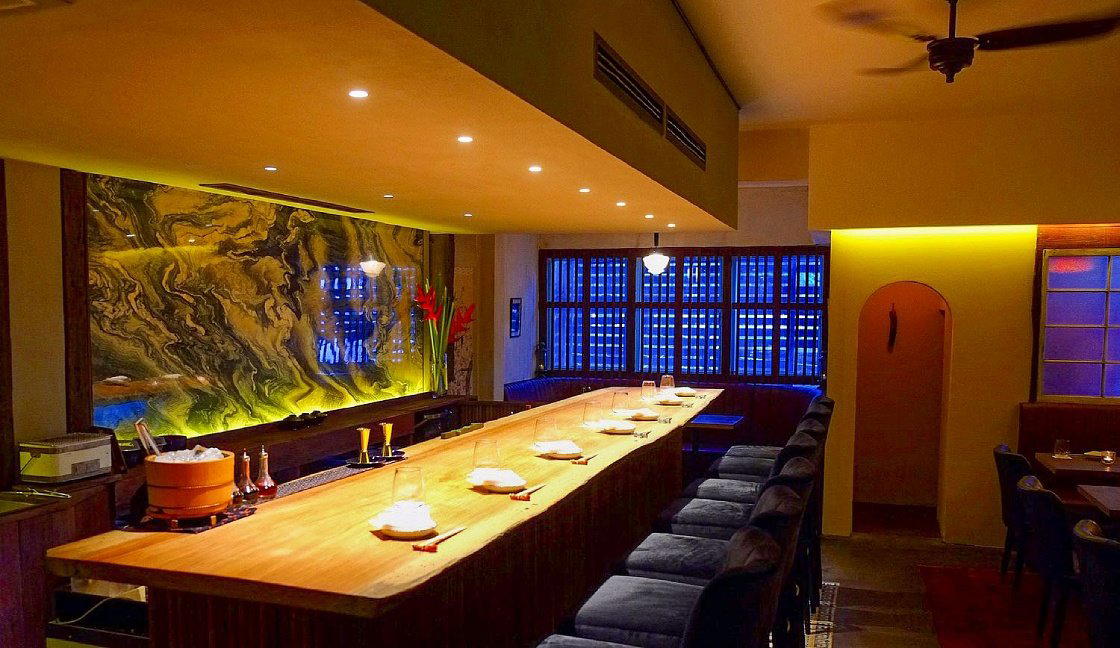
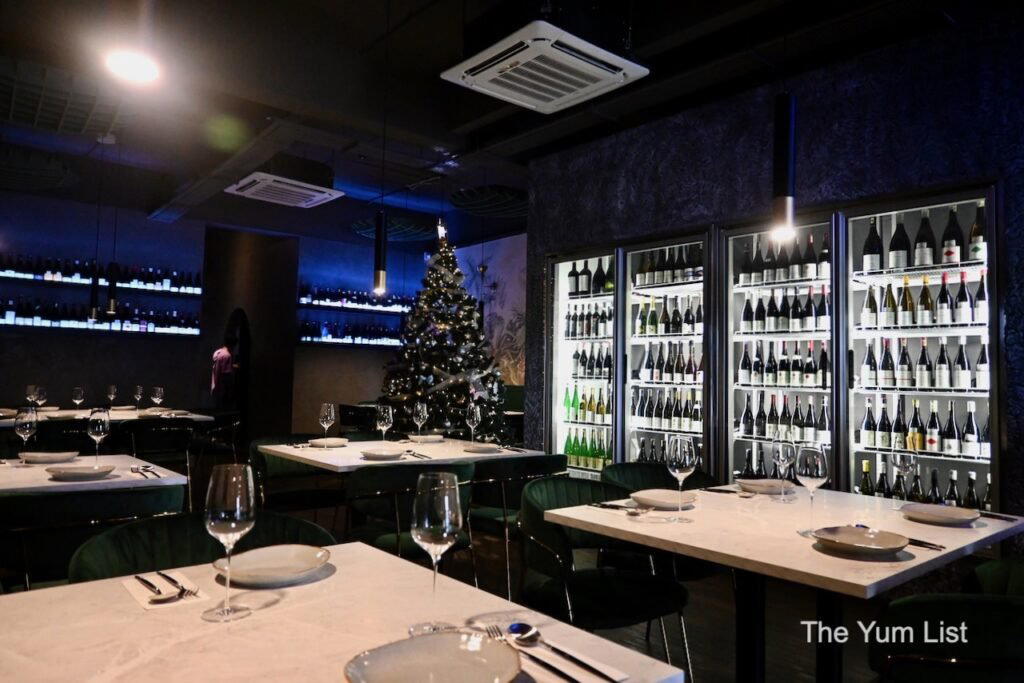
The mezzanine level of The Republik in Bukit Damansara is not an obvious address for serious Indian cooking. The commercial complex sits on Jalan Medan Setia 1, a stretch better known for after-work drinks than subcontinental cuisine. But walk up to Frangipaani and the interior recalibrates expectations: warm wood panelling, tan leather seating, and a softly lit dining room that reads more like a considered restaurant than a mall-level curry house. The terrace beyond the main room adds another dimension, a quieter corner suited to longer, more relaxed meals. The physical environment communicates something about the kitchen's ambitions before the food arrives.
Where Frangipaani Sits in Kuala Lumpur's Indian Dining Scene
Indian food in Kuala Lumpur operates across a wide range of price points and registers. At one end, banana-leaf lunches and mamak counters handle the everyday volume. At the other, more recent arrivals have pushed the cuisine toward fine-dining formats with multi-course tasting menus and wine pairings. Frangipaani occupies the middle ground, priced at the $$ bracket, where the expectation is traditional cooking done with care rather than theatrical reinvention.
That positioning places it in a different conversation from the city's higher-spend Indian addresses, including Qureshi or Passage Thru India, and from the newer wave of concept-driven Indian restaurants such as Jwala and Kayra or the coastal-inflected Coast by Kayra. At Frangipaani, the point is not innovation for its own sake. It is the delivery of recognisable Indian dishes, adjusted at the edges to suit the local palate, executed with enough consistency to earn Michelin Plate recognition in both 2024 and 2025. That consecutive recognition is the relevant signal: it marks the kitchen as meeting a defined standard of quality without implying the genre-shifting ambition of a starred house.
For a broader view of how Frangipaani fits within the city's overall restaurant scene, see [our full Kuala Lumpur restaurants guide]().
How the Meal Tends to Move
The meal at Frangipaani has a logical progression that benefits from being followed rather than improvised. The kitchen's strengths are front-loaded and then build through the tandoor section before arriving at the table's centrepiece.
Starting with the vegetarian samosa chaat is the sensible call. Chaat is a category of Indian street food built on textural contrast and layered seasoning: the crunch of the pastry shell against cooling yoghurt, the acidity of tamarind, and the heat of green chutney. It functions well as an opening course because it primes the palate for spice without overwhelming it, and it signals whether the kitchen is calibrating its seasoning with precision or simply pushing heat as a shortcut.
The tandoor section that follows is where Frangipaani's kitchen team demonstrates its range. Tandoori cooking requires specific knowledge of heat management, marinade composition, and timing; a clay oven cooking at several hundred degrees leaves little room for correction. The tandoori specialities here have drawn consistent notice, and they represent the kind of cooking that is straightforwardly difficult to replicate at home, which justifies their place on a restaurant menu.
The meal's principal statement is the raan dum biriyani, a whole lamb leg slow-cooked inside basmati rice using the dum method, where the pot is sealed and the ingredients steam together over a low flame. It is a dish that requires advance preparation and is sized for sharing across a table. In the context of the meal's arc, it lands as the natural conclusion: heavy, aromatic, built for a group rather than a solo diner. Ordering it for two or more makes the most sense both economically and practically, since a whole lamb leg demands shared attention.
The Kitchen's Approach to Local Tastes
One characteristic worth understanding at Frangipaani is the kitchen's stated adjustment of traditional recipes to suit local palates. This is not an unusual approach in Kuala Lumpur's Indian restaurant sector, where the dining public is cosmopolitan and the spice tolerance and flavour references of Malaysian diners differ from those of diners in Delhi or Mumbai. The adjustment does not mean the food is diluted; it means the seasoning, heat levels, and sometimes the fat content are calibrated for a specific audience. It is the same negotiation that Indian restaurants in cities like London or Dubai have managed for decades, seen in places like Amaya and Benares in London, or Trèsind Studio and Avatara Restaurant in Dubai, and it generally produces food that reads as Indian to those who know the cuisine while remaining accessible to those encountering it in a new cultural context. Opheem in Birmingham is another reference point for how this local-calibration model works at Michelin recognition level.
Bukit Damansara as a Dining Address
Bukit Damansara carries a different character from the denser restaurant corridors of Bangsar or KLCC. The neighbourhood is primarily residential and upper-middle in character, with its dining scene concentrated in a handful of commercial nodes rather than spread across a walkable strip. The Republik is one of those nodes, and Frangipaani's mezzanine position within it means the restaurant draws a local residential crowd alongside visitors making a deliberate trip.
If you are building a broader Kuala Lumpur itinerary around food, the city's Michelin selection extends well beyond Indian cuisine. [Our full Kuala Lumpur hotels guide](), [bars guide](), [wineries guide](), and experiences guide cover the wider picture. For Malaysian dining elsewhere in the country, Auntie Gaik Lean's Old School Eatery in George Town, Bee See Heong in Seberang Perai, and The Planters at The Danna in Langkawi each offer distinct regional perspectives.
Planning Your Visit
Frangipaani is located on the Mezzanine Floor of The Republik at Jalan Medan Setia 1, Bukit Damansara. The $$ price range means a full meal with shared dishes lands in the mid-spend bracket for Kuala Lumpur, making it accessible without requiring a special-occasion budget. The raan dum biriyani is a sharing dish and worth factoring into the group size when booking.
What People Recommend at Frangipaani
The dishes that appear most consistently in recommendations are the vegetarian samosa chaat and the tandoori specialities as a progression through the earlier courses, with the raan dum biriyani as the table's main event for groups. The samosa chaat works as a standalone starter that showcases the kitchen's handling of street-food-derived technique, while the tandoor dishes demonstrate range before the biriyani closes the meal. Frangipaani has held Michelin Plate recognition in both 2024 and 2025, and carries a, both of which substantiate the kitchen's consistency across its core dishes.
Frequently asked questions
What price level is Frangipaani?
Pricing at Frangipaani is listed as $$.
What's the address for Frangipaani?
Frangipaani is located at The Republik, Lot No.M.03, Mezzanine Floor, Jalan Medan Setia 1, Bukit Damansara, 50490 Kuala Lumpur, Malaysia, Kuala Lumpur.
What kind of recognition has Frangipaani received?
Frangipaani has received recognition including: The softly lit interior, outfitted in warm wood and tan leather, sets a rustic mood, while the terrace is relaxing and cosy. Since 2019, the kitchen team has been delivering tasty traditional cuisine, tweaked to suit local tastebuds. Go for….
What do people recommend at Frangipaani?
The vegetarian samosa chaat and the tandoori specialities are the dishes most consistently flagged by diners, with the samosa chaat working well as an opener before moving into the tandoor section. For groups, the raan dum biriyani — whole lamb leg slow-cooked with basmati rice — is the standout sharing dish. Frangipaani has held the Michelin Plate in both 2024 and 2025, which broadly validates the kitchen's consistency across these core items.
Reputation Context
A compact comparison to help you place this venue among nearby peers.
| Venue | Cuisine | Price | Awards | Notes |
|---|---|---|---|---|
| FrangipaaniThis venue — the venue you are viewing | Contemporary North Indian with Goan influences | Not listed | Michelin Plate | Not listed |
| Dewakan | Modern Malaysian Fine Dining | $150–200 | 2 Michelin Stars · World's 50 Best #62 | Malaysian |
| Beta | Modern Malaysian Fine Dining | $100–150 | 1 Michelin Star · La Liste Top Restaurants | Malaysian |
| Molina | Avant-Garde European Fine Dining | $150–200 | 1 Michelin Star | Innovative |
| DC. by Darren Chin | French Contemporary Fine Dining | Not listed | 1 Michelin Star · La Liste Top Restaurants | French Contemporary |
| Ah Hei Bak Kut Teh | Traditional Herbal Bak Kut Teh | $10–20 | Michelin Bib Gourmand | Malaysian |
Recognition history
Dated appearances from independent guides and award organizations, with the underlying list record or original source where available.
Michelin Plate
Michelin
Full recognition history (3 entries)
Michelin Plate
Michelin
Michelin Plate
Michelin
Continue exploring
More in Kuala Lumpur
Restaurants in Kuala Lumpur
Browse all →
Bars in Kuala Lumpur
Browse all →
Details
- Elegant
- Romantic
- Rustic
- Sophisticated
- Date Night
- Family
- Group Dining
- Special Occasion
- Live Music
- Terrace
- Open Kitchen
- Craft Cocktails
- A La Carte
- Vegetarian Friendly
- Vegan Options
- Halal
Current opening hours
- Monday
- 11:30 AM–3 PM, 6–11 PM
- Tuesday
- 11:30 AM–3 PM, 6–11 PM
- Wednesday
- 11:30 AM–3 PM, 6–11 PM
- Thursday
- 11:30 AM–3 PM, 6–11 PM
- Friday
- 11:30 AM–3:30 PM, 6–11:30 PM
- Saturday
- 11:30 AM–3:30 PM, 6–11:30 PM
- Sunday
- 11:30 AM–3:30 PM, 6–11:30 PM
Hours can change for holidays and private events. Last verified .
Softly lit interior with warm wood, tan leather, and rustic mood; relaxing cosy terrace.