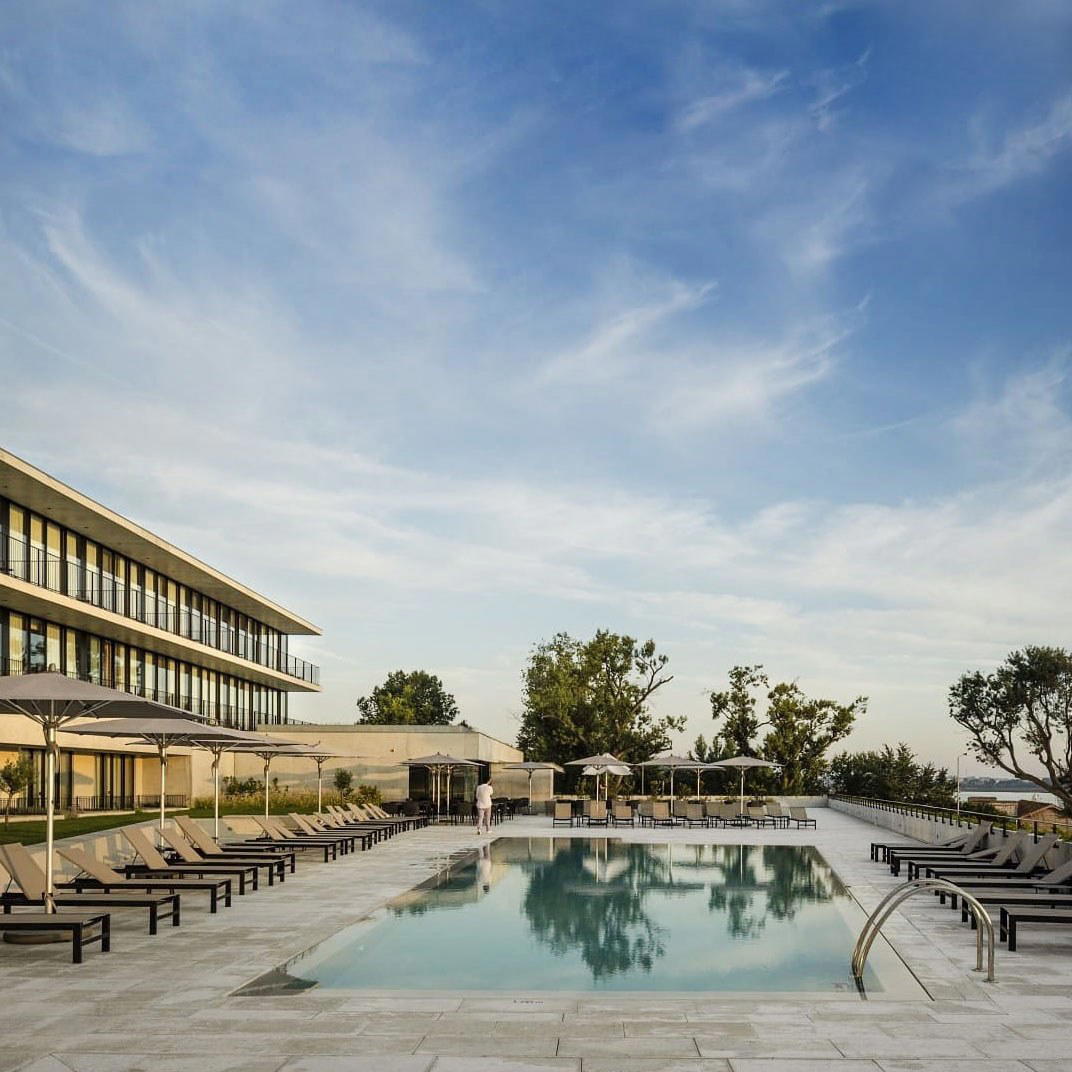
"Forum Aveiro, Aveiro by Bruno Garcia. Forum Aveiro is a shopping center located in the heart of the city, right next to the Ria of Aveiro channels. It is a differentiating shopping center, both for its architecture and for its well-suited integration with the surroundings, full of open spaces with incredible views. It is an ideal place to shop, to have lunch or dinner, to see a movie or just stroll through the green spaces located on the terrace and enjoy the view of the city."
Pearl is the En Primeur Club membership app — saves, bookings, and concierge access live there. Same editors, same standards.
- Address
- R. do Batalhão de Caçadores 10 Store 2.2a, 3810-064 Aveiro, Portugal
- Phone
- +351 234 379 500
- Website
- forumaveiro.com
- Directions
- Get directions
 Saves & bookings on Pearl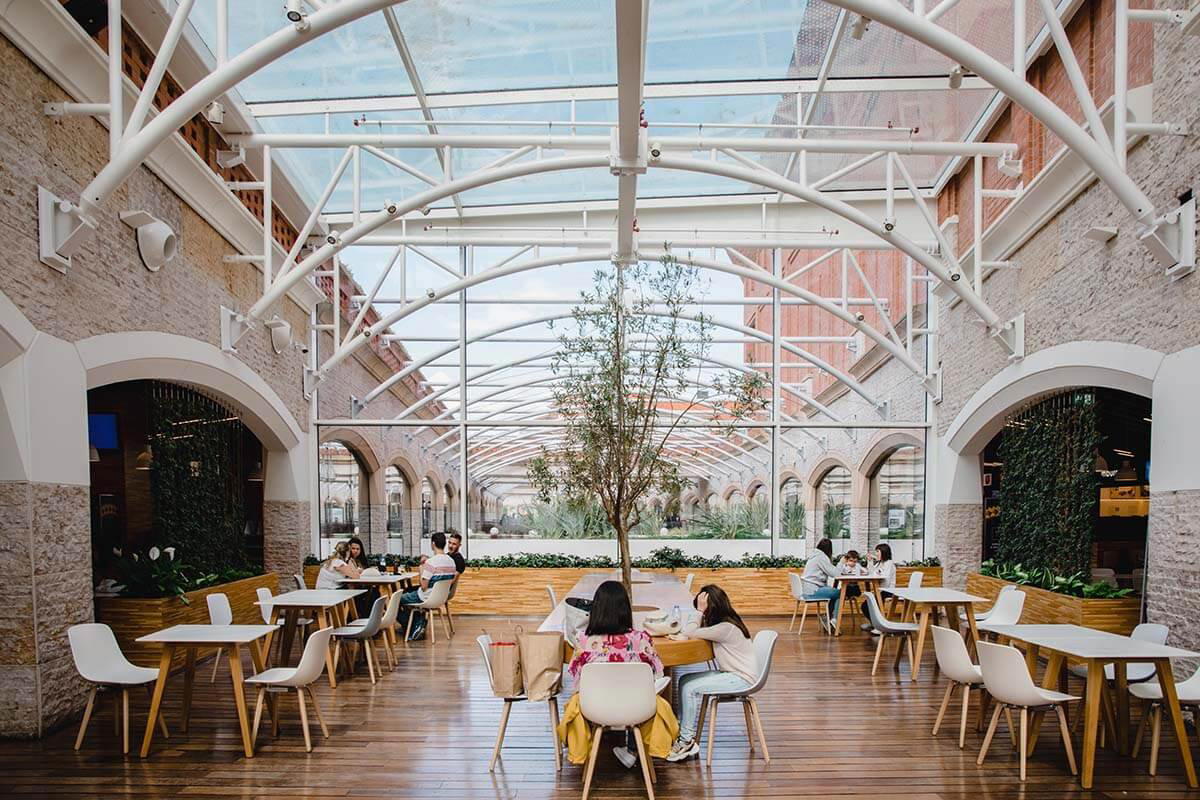
Aveiro's Coastal Pantry and the Restaurants That Work With It
The Ria de Aveiro, the shallow tidal lagoon that defines the city's geography, also defines what ends up on its tables. The lagoon's brackish waters produce distinctive shellfish, the surrounding farmland supplies vegetables at a density rarely found this far north, and the Atlantic coastline within easy reach means fish arrives at restaurants the same day it leaves the water. Any serious kitchen in Aveiro is, whether explicitly or by default, shaped by this proximity. Forum Aveiro is a mall food court in Aveiro, Portugal, at R. do Batalhão de Caçadores 10 Store 2.2a.
Aveiro is a city that most international visitors move through on the way to Porto or Lisbon, which means its restaurant scene has developed primarily for a local and regional audience rather than for tourism. That gives dining here a different character than you find in cities where menus are calibrated for unfamiliar palates. Kitchens in Aveiro tend to cook for people who know what fresh ria clams taste like, who understand the difference between a grilled robalo caught that morning and one that has spent two days in transit. That culinary literacy among the local dining public sets a floor on quality that restaurants at every price point have to meet.
Where Forum Aveiro Sits in the Aveiro Dining Picture
Aveiro's restaurant scene has gradually split between two legible tiers. One is the contemporary, often chef-driven end, where kitchens use regional ingredients as the starting point for more composed, technically considered cooking. Prosa (Contemporary) operates in that register, working at a €€€ price point with a clear contemporary sensibility. Salpoente (Modern Cuisine) occupies a middle tier at €€, applying modern cuisine thinking to the same regional larder. Zeca represents the more direct, less formally positioned end of the spectrum.
Forum Aveiro is a mall food court with a casual dress code and walk-in friendly service. What the address does confirm is central Aveiro placement, which puts it in proximity to the city's main dining corridor and accessible to both the afternoon visitor and the evening local crowd. For a more complete view of how the city's restaurants distribute across styles and price points, the full Aveiro restaurants guide maps the scene in detail.
Ingredient Sourcing as the Frame for Coastal Portuguese Cooking
The sourcing logic of coastal Portuguese cooking is worth understanding before you sit down anywhere in Aveiro. Portugal's restaurant culture has always been ingredient-forward in a way that distinguishes it from more technique-led European traditions. The leading meals here are frequently the simplest in construction: a well-sourced fish, correctly handled, served without interference. This is not a failure of ambition. It reflects a culinary culture that treats quality of raw material as the primary variable, not the secondary one.
That philosophy is visible at the country's most recognised tables. Belcanto in Lisbon applies fine-dining technique to Portuguese ingredients without abandoning their character. Casa de Chá da Boa Nova in Leça da Palmeira has built one of Portugal's most recognised kitchens on Atlantic seafood sourced from the waters immediately in front of the building. Vila Joya in Albufeira and Ocean in Porches represent the Algarve end of the same tradition, where southern produce shapes a different but equally ingredient-anchored repertoire. Further north, Antiqvvm in Porto connects contemporary technique to northern Portuguese ingredients, while The Yeatman in Vila Nova de Gaia pairs regional sourcing with one of the country's most serious wine programs. Across all these addresses, the sourcing logic is consistent: the ingredient comes first.
Aveiro's own version of this is grounded in the ria. Amêijoas à Bulhão Pato, the Portuguese standard of clams with garlic, white wine, and coriander, is a dish that changes completely depending on whether the clams came from the Ria de Aveiro that morning or from a holding tank after several days in transport. Local restaurants operating close to the supply chain can make that dish sing in a way that kitchens further from the source cannot replicate. The same applies to the various preparations of bacalhau, which in the Beira Litoral region carries its own regional inflections distinct from the Lisbon or Porto traditions.
The Wider Portuguese Table for Context
Understanding Forum Aveiro also means understanding where Aveiro sits within the broader geography of Portuguese dining. The country has produced recognised kitchens from the Algarve to Madeira: Il Gallo d'Oro in Funchal represents the island tradition, while Fortaleza do Guincho in Cascais demonstrates how the Atlantic coastline near Lisbon generates its own distinct culinary register. Regional kitchens like Ó Balcão in Santarém and Palatial in Braga show how ingredient sourcing in inland and northern regions differs from the coastal model, and how seriously Portugal's second-tier cities take their own dining cultures. The Algarve scene, with addresses like Al Sud in Lagos and Gusto by Heinz Beck in Almancil, rounds out a national picture in which regional specificity, not homogenised Portuguese cuisine, is the operating principle.
Aveiro occupies a specific niche in this picture: a mid-sized coastal city with genuine access to notable raw materials, a local dining culture that expects those materials to be treated correctly, and a restaurant scene that has not yet been reshaped by the pressures of mass tourism. That combination is rarer in Portugal than it was ten years ago.
For comparison outside Portugal, ingredient sourcing at the level that coastal Portuguese kitchens demonstrate is also the animating logic at places like Le Bernardin in New York City, where the primacy of the fish over technique is a stated commitment, and Lazy Bear in San Francisco, where local sourcing shapes the entire menu architecture.
Planning a Visit
The restaurant is centrally located in Aveiro, accessible on foot from the main canal area that most visitors use as their orientation point. Aveiro itself is forty minutes from Porto by train on the Alfa Pendular service, which makes a day visit or overnight stay from Porto direct. The restaurant is open daily, with hours from 10 AM to 10 PM most days and until 11 PM on Friday and Saturday. The Aveiro restaurants guide provides current logistics for the city's dining scene as a whole.
Quick Comparison
Comparable venues nearby, for context on price, style, and recognition.
| Venue | Cuisine | Price | Awards | Notes |
|---|---|---|---|---|
| Forum AveiroThis venue — the venue you are viewing | Mall Food Court | $$ | Not listed | Not listed |
| Zeca | Traditional Portuguese Seafood | $$ | Not listed | Downtown |
| Salpoente | Modern Portuguese Mediterranean | $$$ | Michelin Plate | Cais de São Roque |
| Prosa | Modern Portuguese Mediterranean | $$$$ | Michelin Plate | Aveiro center |
| Zenith | Modern Brunch & Cocktails Cafe | $$ | Not listed | Vitória |
| Padoca Vegan Restaurant | Vegan Portuguese Bakery Cafe | $$ | Not listed | Vila Nova De Gaia |
Continue exploring
More in Aveiro
Restaurants in Aveiro
Browse all →
Bars in Aveiro
Browse all →
Hotels in Aveiro
Browse all →
At a Glance
- Modern
- Lively
- Casual Hangout
- Family
- Open Kitchen
- Street Scene
Current opening hours
- Monday
- 10 AM–10 PM
- Tuesday
- 10 AM–10 PM
- Wednesday
- 10 AM–10 PM
- Thursday
- 10 AM–10 PM
- Friday
- 10 AM–11 PM
- Saturday
- 10 AM–11 PM
- Sunday
- 10 AM–10 PM
Hours can change for holidays and private events. Last verified .
Bright and contemporary with open-air sections, planted trees, and a welcoming, bustling atmosphere.