Flor de Noche
On the malecón in San José del Cabo, Flor de Noche occupies the point where Baja California Sur's coastal pantry meets continental kitchen technique. The address places it inside the Fonatur corridor, a stretch that has steadily attracted more serious cooking as the town's dining scene matures beyond resort-adjacent predictability. It sits in a tier of San José restaurants where the editorial question is no longer whether the ingredients are fresh, but what the kitchen does with them.
Pearl is the En Primeur Club membership app — saves, bookings, and concierge access live there. Same editors, same standards.
- Address
- Fonatur, Paseo Malecón s/n Lote 11 Col, 23400 San José del Cabo, B.C.S., Mexico
- Phone
- +526241635100
- Website
- opentable.com
- Directions
- Get directions
 Saves & bookings on Pearl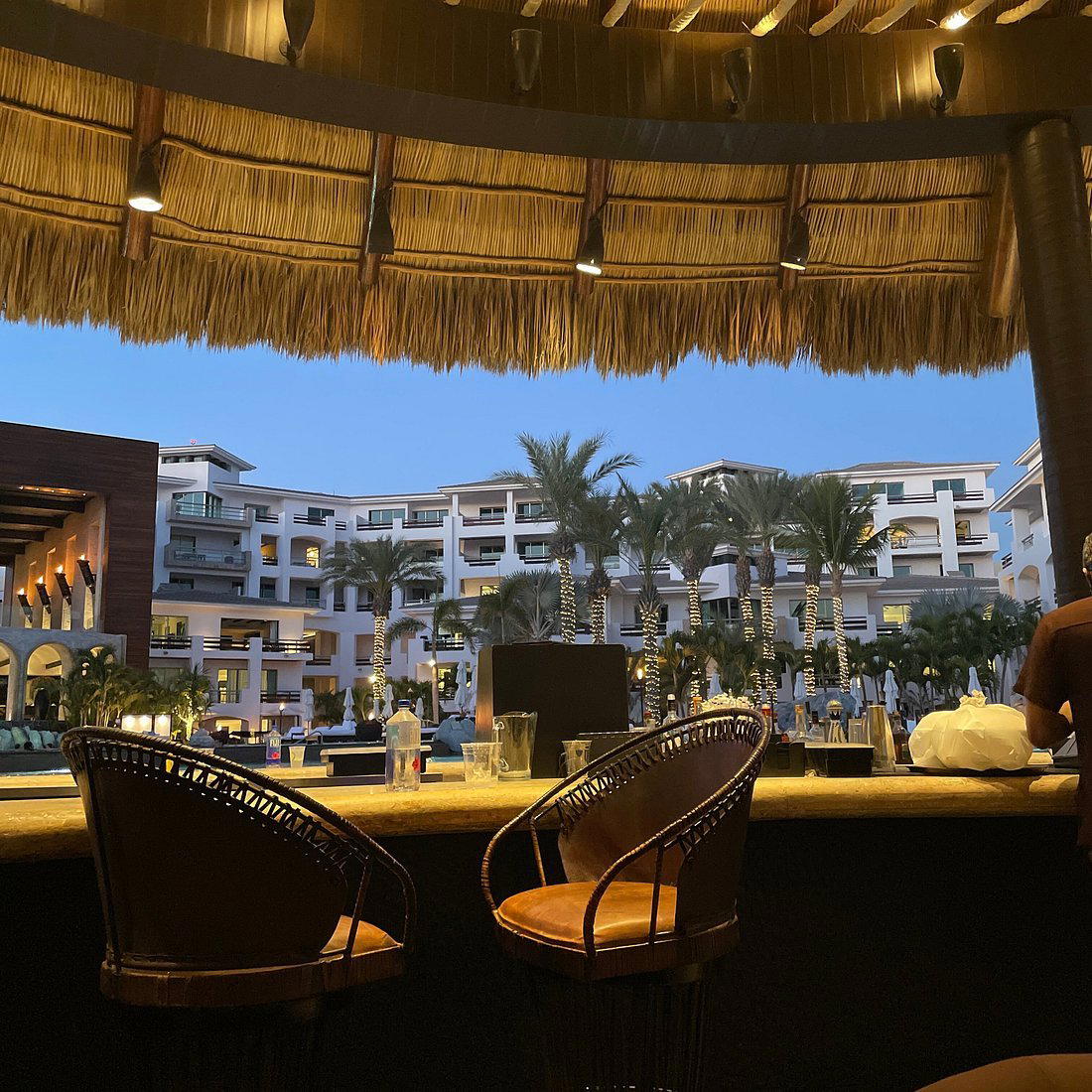
Where the Baja Pantry Meets the Trained Kitchen
San José del Cabo's dining scene has undergone a slow but legible shift over the past decade. The resort-adjacent formula — frozen margaritas, imported proteins, generic tableside guacamole — still exists, but it now competes with a younger tier of restaurants that take Baja California Sur's larder seriously. The peninsula is an unusual proposition for a kitchen: Pacific and Sea of Cortez fisheries within reach, a distinct desert-and-coast agriculture, agave spirits with serious regional identity, and a climate that produces ingredients that don't travel well precisely because they're so good fresh. Flor de Noche sits on the Fonatur malecón corridor at Paseo Malecón s/n Lote 11, a stretch that has attracted progressively more considered cooking as the town's culinary identity sharpens.
The context matters because it explains what kind of restaurant Flor de Noche is competing against. In a city that includes Awacate, Casero Restaurant, and Bistro by Sebastien Agnes, the bar for ingredient sourcing and technical ambition is higher than it was even five years ago. San José is no longer simply a gentler alternative to Cabo San Lucas nightlife; it has developed a dining identity that warrants comparison with Mexico's more established food cities, at least in terms of directional intent.
The Malecón Setting at Dusk
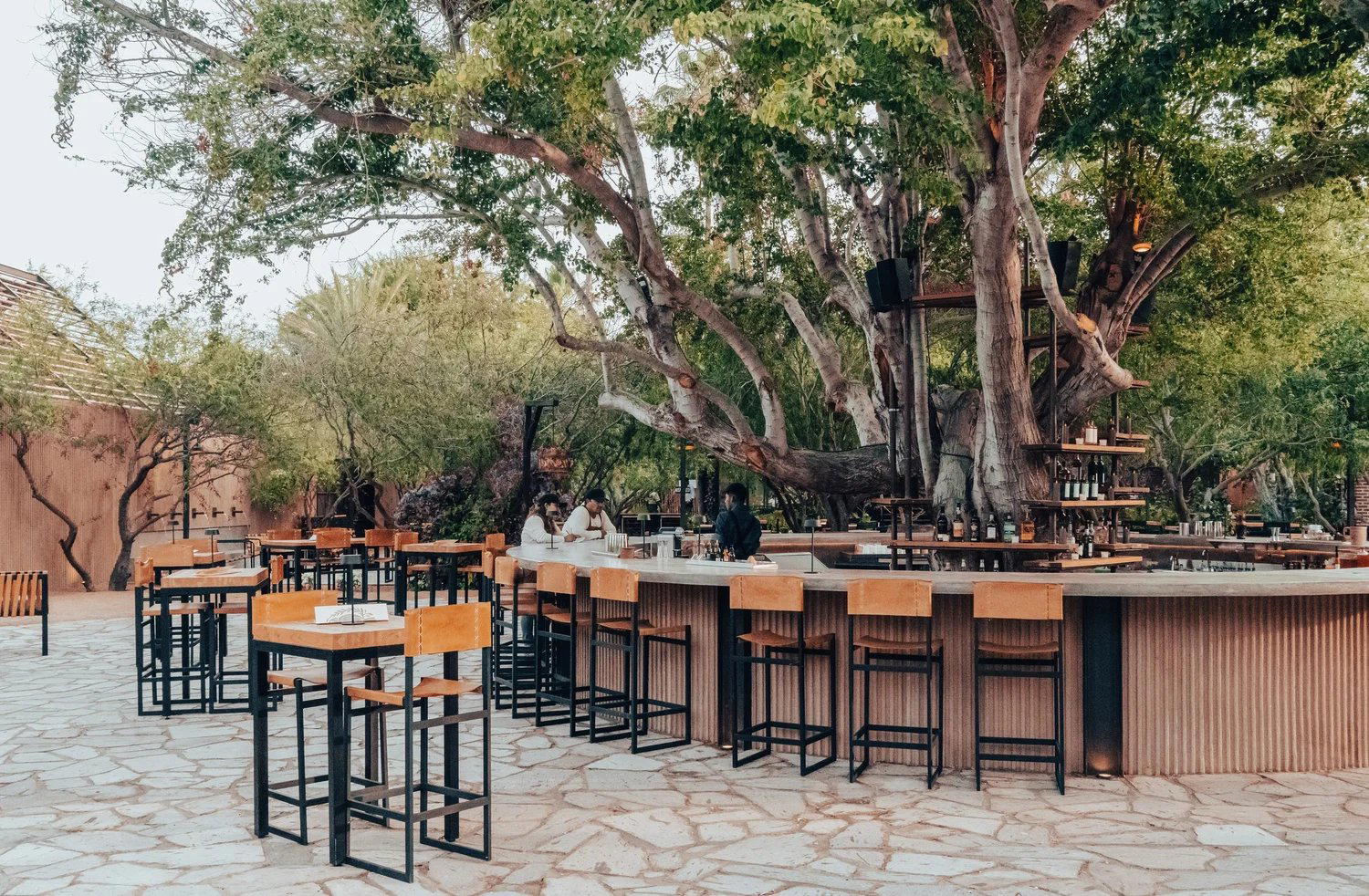
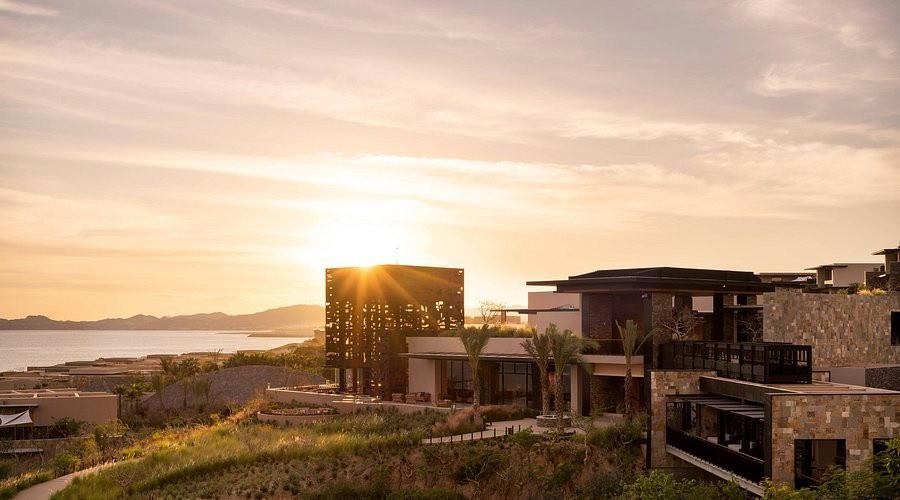
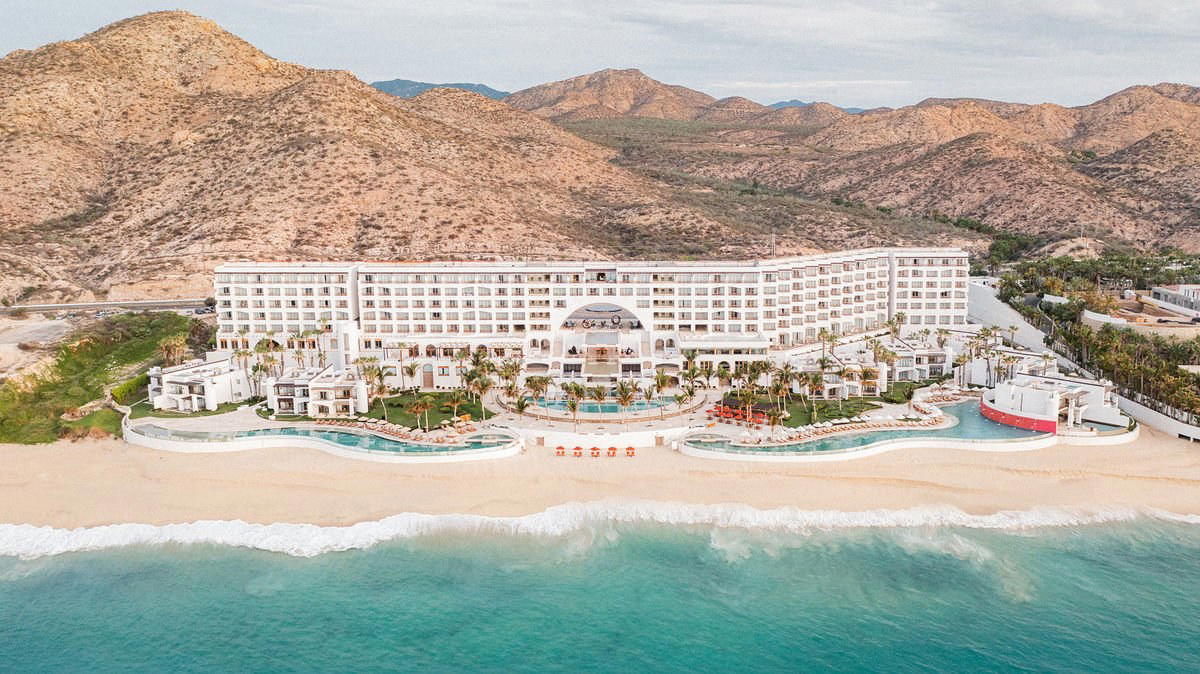
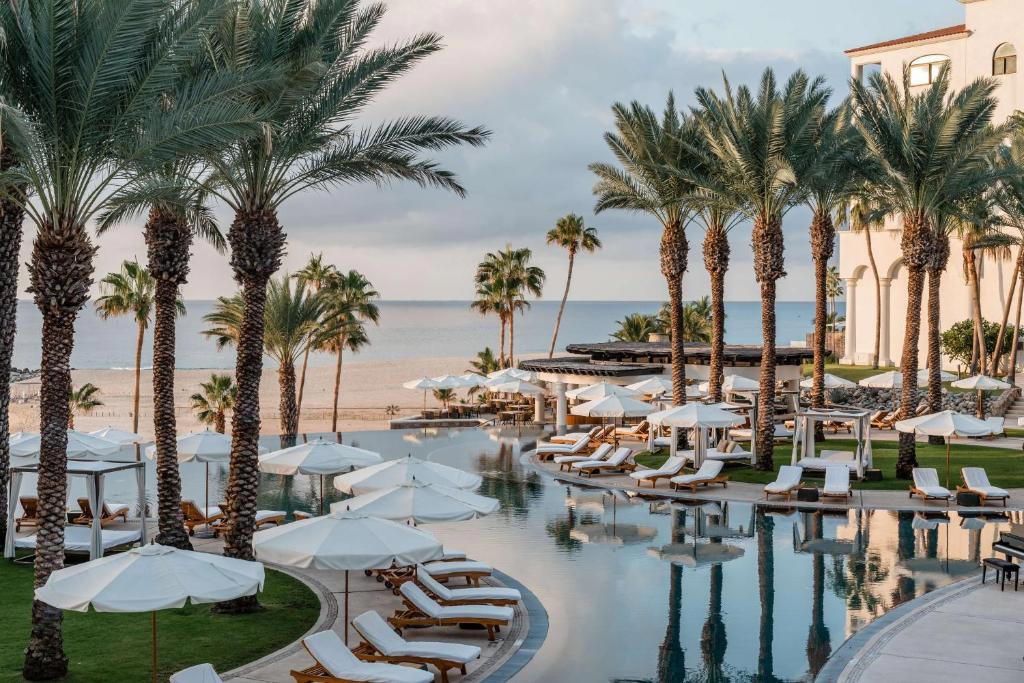
The name, Flor de Noche, flower of the night, signals something about timing. The malecón frontage comes into its own after the midday heat breaks, when the light over the estuary shifts toward copper and the onshore breeze arrives. This is when the coastal evening eating culture of Baja, unhurried, drink-anchored, oriented toward the water, operates at full effect. The physical environment on this stretch of the Fonatur development prioritises the view and the air movement, which in a desert coastal town is not a minor consideration. Visitors planning around this should note that early evening tables on the malecón carry a different character than lunch seatings: the temperature, the light, and the pace all change.
San José's calendar also matters for planning. The October-to-May window represents the most comfortable conditions, with stable temperatures and low humidity. The summer months bring heat and the possibility of late-season tropical weather systems, which thin out some of the visitor crowd but make outdoor-oriented dining less predictable. Restaurants along the malecón operate with this seasonal rhythm in mind, and the town's restaurant scene is generally more animated from November through April when the critical mass of travelers and returning seasonal residents peaks.
Local Ingredients, Continental Discipline
Across Mexico's more ambitious restaurant tier, the operating logic has shifted toward a specific tension: indigenous products handled with technique acquired elsewhere. This is the editorial frame that explains kitchens from Pujol in Mexico City to Animalón in Valle de Guadalupe, from Le Chique in Puerto Morelos to KOLI Cocina de Origen in Monterrey. The regional products change; the underlying argument about what Mexican cooking can do with trained hands does not. Levadura de Olla in Oaxaca applies it to heirloom corn and mole tradition. Lunario in El Porvenir and Olivea Farm to Table in Ensenada apply it to Baja wine country produce.
In Los Cabos, the dominant local ingredient is the sea. The Sea of Cortez has been called one of the world's most biodiverse bodies of water, which translates in kitchen terms to a rotating cast of fish and shellfish that reward kitchens willing to work seasonally rather than locking in a fixed menu around imported proteins. Restaurants that operate inside this logic, working with what the local fisheries bring in, sit in a different category from those importing premium proteins to serve to international visitors expecting familiar references. The former approach requires more kitchen discipline and more communication with guests about what's available; the latter is more predictable but less interesting.
This is where the intersection of global technique and local sourcing becomes an editorial claim, not just a marketing one. Techniques associated with European fine dining, precise temperature control, reduction-based sauces, careful mise en place, applied to a Cortez fish or a Baja-grown chili produce results that neither tradition generates alone. The comparable conversation is happening at restaurants like HA' in Playa del Carmen, Pangea in San Pedro Garza Garcia, and Alcalde in Guadalajara, the same structural question, different regional pantries.
How Flor de Noche Fits the San José Scene
Within San José's current restaurant tier, Flor de Noche occupies the malecón address that positions it alongside the town's more scenically driven dining options, which in this context is not a secondary credential. Location on the water-adjacent promenade in a coastal desert town functions as a form of editorial placement: it attracts a table that came to be in Baja, not one that came despite it. Compare this to Barbacoa De Vicky, which operates on the tradition-forward end of the local dining spectrum, or Chambao Los Cabos, which works a different register of the same coastal setting. The San José scene has enough range now that each address occupies a legible position. See our full San Jose Del Cabo restaurants guide for the broader map of where the town's dining is heading.
For visitors placing San José's restaurant ambition in a wider frame, the relevant comparison set extends beyond Mexico. Coastal fine dining that depends on ultra-local seafood and continental technique is the same structural conversation happening at Le Bernardin in New York City or the more produce-driven format of Lazy Bear in San Francisco, the specifics of the pantry differ, but the logic of treating a regional ingredient as the editorial subject of the plate is the same.
Planning a Visit
The Fonatur malecón address at Paseo Malecón s/n Lote 11 is accessible from the centro histórico by a short drive or taxi ride; the malecón strip is not within easy walking distance of San José's main gallery and art district for most visitors. Given the current absence of published booking contacts, the most reliable approach is to present in person earlier in the day to confirm availability for an evening seating, which is standard practice for malecón-strip restaurants in San José that operate on a first-come or limited-reservation basis. The November-to-April season represents the period when the restaurant operates at full capacity alongside the town's wider tourist and resident population; visiting outside that window may mean a more relaxed room but with the trade-offs that come with lower-season operation.
Continue exploring
More in San José del Cabo
Restaurants in San José del Cabo
Browse all →
Bars in San José del Cabo
Browse all →

At a Glance
- Elegant
- Romantic
- Scenic
- Date Night
- Special Occasion
- Family
- Open Kitchen
- Craft Cocktails
Current opening hours
- Monday
- 7 AM–11 PM
- Tuesday
- 7 AM–11 PM
- Wednesday
- 7 AM–11 PM
- Thursday
- 7 AM–11 PM
- Friday
- 7 AM–11 PM
- Saturday
- 7 AM–11 PM
- Sunday
- 7 AM–11 PM
Hours can change for holidays and private events. Last verified .
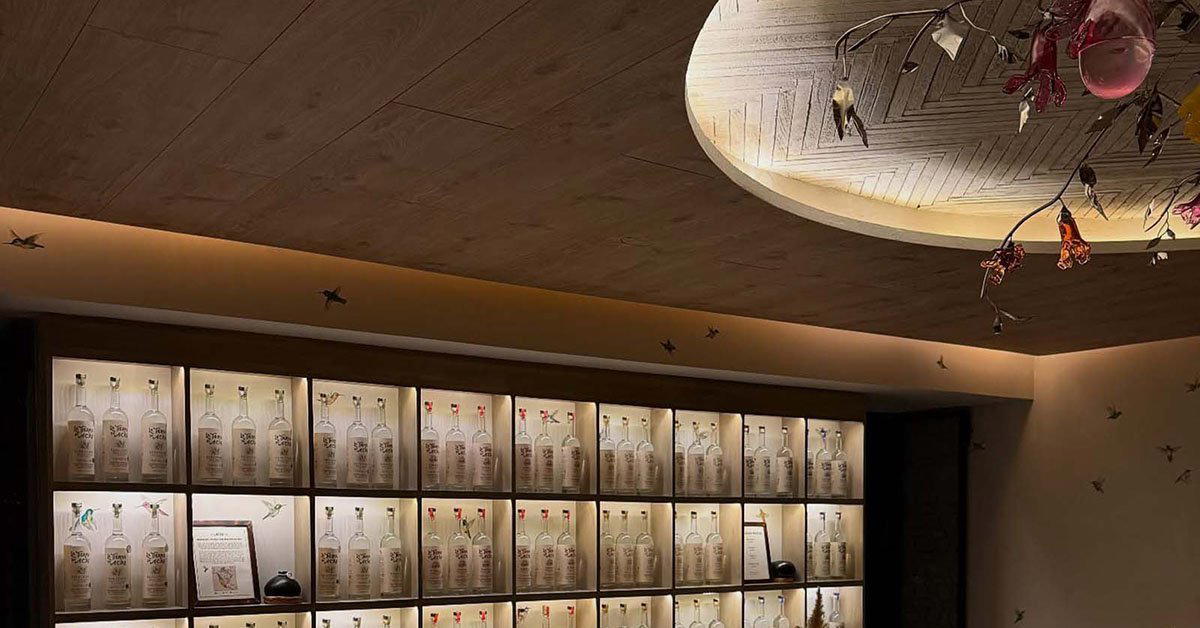
Sleek black tables on black marble with glass walls, low lighting, elegant atmosphere, and open to the street feeling enhanced by art pieces.
Know Before You Go
- Getting there
- Fonatur, Paseo Malecón s/n Lote 11 Col, 23400 San José del Cabo, B.C.S., Mexico