Our verdict
Flammans Skafferi sits in Storlien, a small Swedish mountain village on the Norwegian border where the surrounding terrain shapes what ends up on the plate. The kitchen draws from a landscape defined by cold-weather produce, foraged ingredients, and Scandinavian preservation traditions. For travellers heading into Jämtland's high country, it represents a grounded stop on a circuit defined more by terrain than by urban restaurant culture.

Pearl is the En Primeur Club membership app, where members save venues, book tables and use the concierge.
The menu
What to order
- Elk sausage pizza
- Sourdough pizza Jämtland style
Where the Mountain Determines the Menu
Storlien sits at roughly 580 metres above sea level on Sweden's northwestern frontier with Norway, a position that dictates its food culture as directly as any chef's training. The village is small enough that its restaurants function less as destinations competing with each other and more as extensions of the surrounding terrain. In mountain communities at this latitude, ingredient sourcing is not a marketing choice but a structural reality: growing seasons are short, supply chains from urban centres are long, and the pantry is largely what the landscape provides. Flammans Skafferi, addressed at Vintergatan 46, sits inside that logic.
Across Sweden's more remote dining destinations, a consistent pattern has emerged over the past decade. Kitchens operating far from Stockholm's supply infrastructure have developed sourcing disciplines that urban counterparts sometimes perform as aesthetic choices. Fäviken in Kall, before its closure, made the argument for radical locality with international force. What remains in Jämtland's dining culture after that chapter is a quieter, less theatrical version of the same premise: cook what the region actually produces, in ways the season actually permits.
Storlien's Position in Sweden's Regional Dining Map
Sweden's premium restaurant conversation concentrates predictably around Stockholm and, increasingly, around a handful of regional properties that have attracted critical attention. Frantzén in Stockholm operates at the country's leading recognition tier. Elsewhere, properties like VYN in Simrishamn and Vollmers in Malmö have positioned southern Sweden on the serious-dining circuit. Further west, PM & Vänner in Växjö holds its ground in a mid-sized city context. Northwestern Sweden, by contrast, does not generate the same volume of editorial attention, which means venues in this part of the country operate under different expectations and serve a different primary audience: skiers, hikers, cross-country travellers, and those passing through rather than those flying in specifically to eat.
That context matters when placing Flammans Skafferi. It is not competing against Signum in Mölnlycke or ÄNG in Tvååker for the same diner. The comparison that applies here is less about culinary ambition tier and more about how a kitchen in this position responds to its actual conditions.
Ingredient Sourcing in a Mountain Border Village
The broader Nordic kitchen movement has done significant work in articulating why sourcing geography matters, not as philosophy but as flavour logic. Cold climates produce ingredients with particular characteristics: root vegetables developed under frost, game that forages on specific vegetation, fish from lakes and rivers with distinct mineral profiles. Preservation methods shaped by long winters, including curing, smoking, fermenting, and pickling, carry their own depth that fresh-only cooking cannot replicate.
Storlien's position near the Norwegian border and within reach of Jämtland's lakes, forests, and high-altitude grazing land places any kitchen there in proximity to ingredients that define northern Scandinavian cooking at its most specific. Wild game, freshwater fish, lingonberries, cloudberries, birch, and juniper are not abstract references here; they are what the surrounding land actually produces. Kitchens in communities like this one either engage with those materials or import from distant supply chains. The character of the result differs substantially depending on which approach is taken.
For travellers who have spent time at more explicitly sourcing-focused Swedish tables, including Knystaforsen in Rydöbruk or Archipelago of Gothenburg in Styrsö, the underlying logic at a mountain village kitchen should feel familiar, even if the execution register differs. The sourcing argument in Storlien is not made through tasting menus with liner notes; it is made through proximity and necessity.
How Storlien Fits a Broader Sweden Itinerary
Travellers working through Sweden's regional dining circuit, from Hoze in Gothenburg to Claesgatan 8 in Malmo to Bistro Jarlen in Halmstad and Sydkustens at Pillehill in Skivarp, will find that the northwestern mountain corridor operates at a different pace and with different priorities. Access to Storlien from Östersund runs along the E14, roughly 75 kilometres to the west. The village is also a stop on the train line connecting Östersund with Trondheim in Norway, making it accessible without a car for those travelling the trans-Scandinavian rail route.
Seasonally, the area sees two distinct peaks: winter, driven by skiing at the nearby Storlien-Björnrike resort and cross-country skiing into the Norwegian hills, and summer, when hiking and the open fell landscape attract a quieter visitor population. Kitchens in communities like this tend to adjust their rhythm to those cycles, which is worth factoring into any planning. The experience of eating here in February differs considerably from what a July visit would involve, not necessarily in quality but in atmosphere, available ingredients, and the character of the clientele around you.
For Sweden itinerary planning at the premium end, our full Storlien restaurants guide covers the broader local context. Internationally, the comparison format that this type of destination most closely resembles, a kitchen embedded in remote terrain and shaped by that terrain's limitations, appears at properties like Lazy Bear in San Francisco or, in a very different register, Le Bernardin in New York City, though those examples sit at the opposite end of the formality and urbanity spectrum. The point of comparison is not prestige but the relationship between place and plate. At Kitchenette Ågatan 3 in Örebro and at Ribersborgs open-air bath in Slottsstaden, Swedish dining takes forms shaped by very different urban and coastal environments. Storlien's version of that conversation is defined by altitude, border geography, and the practical realities of a small community kitchen.
Planning a Visit
Flammans Skafferi is located at Vintergatan 46, 837 99 Storlien. Given the limited publicly available data on current hours, booking methods, and pricing, direct contact with the venue before visiting is the practical approach for confirming operational details, particularly outside peak ski season when smaller establishments in mountain villages sometimes adjust their schedules significantly. Storlien is leading approached with a degree of planning flexibility that urban restaurant visits rarely require.
Frequently asked questions
Would Flammans Skafferi be comfortable with kids?
Storlien is a small mountain village in Jämtland, and its dining settings lean informal rather than ceremonial. A kitchen operating at Vintergatan 46 in a community of this scale is unlikely to enforce the kind of atmosphere that makes families feel out of place.
Is Flammans Skafferi formal or casual?
Storlien sits at 580 metres on Sweden's northwestern edge, and nothing about that context suggests a white-tablecloth register. Flammans Skafferi, addressed at Vintergatan 46, operates in a village where the food culture is shaped by altitude, season, and proximity to the Norwegian border rather than by formal dining conventions. Dress accordingly, the mountain sets the tone.
Is Flammans Skafferi a good base stop for travellers crossing between Sweden and Norway at Storlien?
Storlien is the last Swedish settlement before the E14 crosses into Norway at Meråker, making Vintergatan 46 a natural pause point for cross-border travellers. The village's position in Jämtland means kitchens here have historically drawn from both Swedish inland and Norwegian coastal supply lines. For anyone transiting the frontier rather than making a dedicated detour, Storlien's compact dining options, Flammans Skafferi among them, are as practical as they are regionally grounded.
What do people recommend at Flammans Skafferi?
Without a documented menu, the strongest frame is geography: Storlien kitchens in Jämtland work with what the surrounding terrain and cross-border trade actually deliver, reindeer, game, foraged ingredients, and Norwegian coastal fish moving east across the frontier. Dishes rooted in that sourcing logic are typically what local diners return for in villages of this kind.
In Context: Similar Options
| Venue | Cuisine | Price | Awards | Notes |
|---|---|---|---|---|
| Flammans SkafferiThis venue (the venue you are viewing) | Swedish Local Foraged Cuisine | Not listed | Not listed | Not listed |
| Operakällaren | Modern Scandinavian Fine Dining | $150–200 | 1 Michelin Star · World's 50 Best #27 | Swedish, Modern Cuisine |
| VYN | Modern Scandinavian Fine Dining | $300–500 | 2 Michelin Stars · World's 50 Best #47 | New Nordic, Creative |
| Vollmers | Modern New Nordic with Scanian Terroir | $150–200 | 2 Michelin Stars · La Liste Top Restaurants | New Nordic, Contemporary |
| AIRA | Modern Nordic Seasonal Tasting Menu | $200–300 | 2 Michelin Stars · La Liste Top Restaurants | Modern European, Modern Cuisine |
| PM & Vänner | Modern Småland Regional Cuisine | $150–200 | 1 Michelin Star · La Liste Top Restaurants | Nordic, Creative |
Details
- Cozy
- Rustic
- Quiet
- Intimate
- Scenic
- Date Night
- Special Occasion
- Casual Hangout
- Standalone
- Local Sourcing
- Farm To Table
- Mountain
- A La Carte
- Tasting Menu
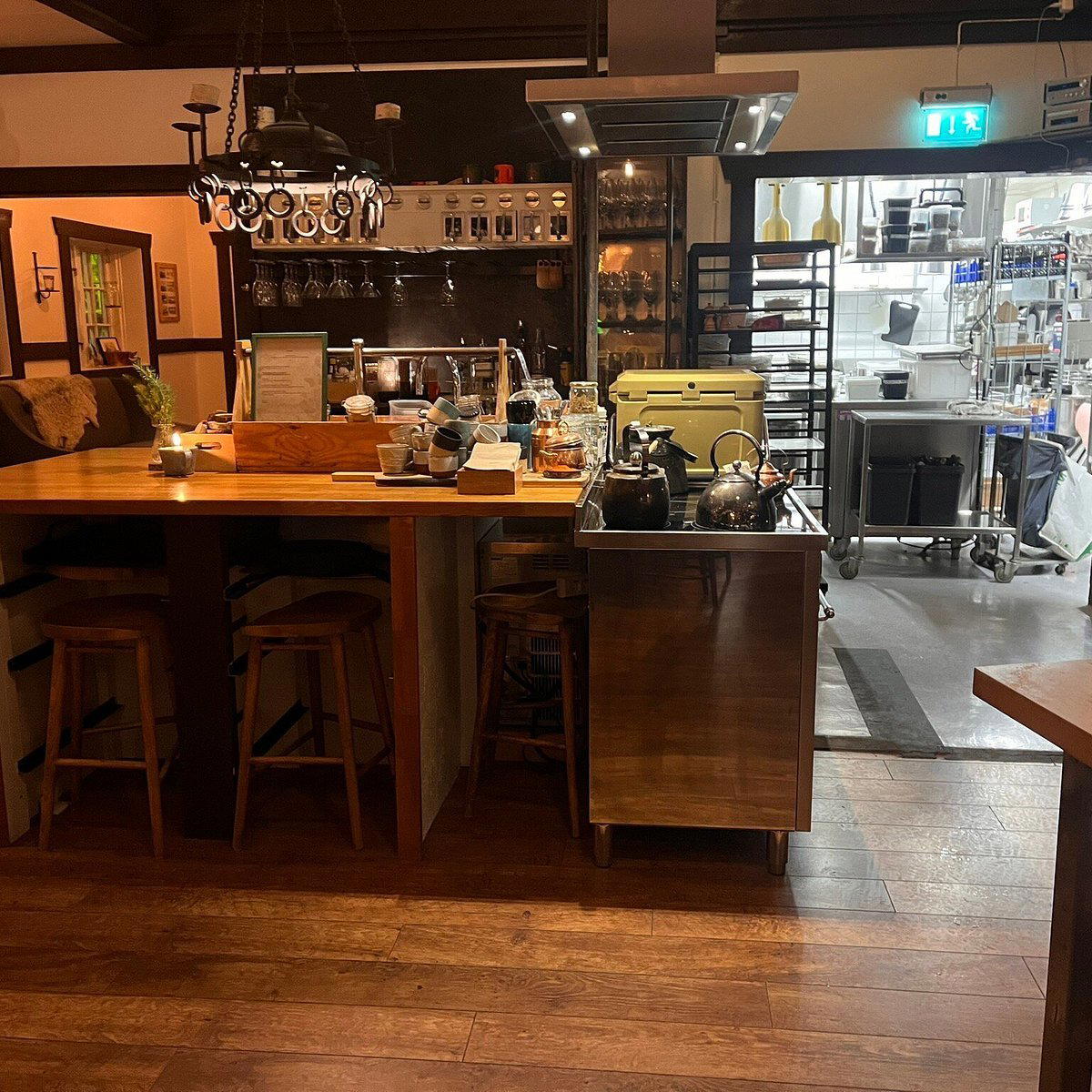
Quiet, cozy and rustic, with an intimate mountain-village feel and a strong focus on local craft and seasonal ingredients.