Grythyttans Gästgivaregård


Star Wine List · White Guide Sweden Restaurants - Recommended
Our verdict
Grythyttans Gästgivaregård has served travellers since 1641, making it one of Sweden's longest-running inns. Set in the small Bergslagen village of Grythyttan, it has grown from a horse-changing post into a destination in its own right, drawing visitors who arrive specifically for the table rather than passing through. The kitchen's connection to local Swedish produce and the inn's deep sense of place make it a reference point for understanding Swedish hospitality at its most rooted.

Pearl is the En Primeur Club membership app, where members save venues, book tables and use the concierge.
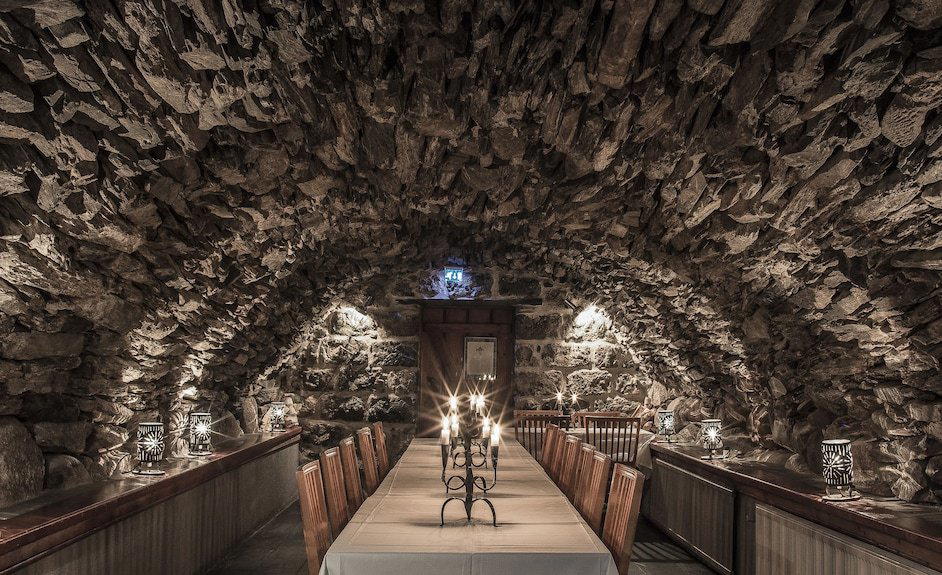
Where the Road Ends and the Table Begins
Approaching Grythyttan along the forest roads of Bergslagen, the village arrives almost without warning: a cluster of timber buildings, a church, and at the heart of it all, an inn that has been receiving guests since 1641. At that time, Grythyttans Gästgivaregård functioned as a relay station on a newly built country road, a place where postal riders exchanged horses and travellers rested before continuing north or south. The function was purely logistical. What the inn has become, nearly four centuries later, is something quite different: a destination that people drive to from Stockholm, Gothenburg, and beyond, arriving not out of necessity but out of intention.
That shift from waypoint to destination is worth understanding, because it says something about how Swedish rural hospitality has developed. While the country's highest-profile restaurant addresses cluster in major cities, Frantzén in Stockholm operating at the top of the urban fine dining tier, and Vollmers in Malmö anchoring the south, a parallel tradition of destination dining has taken root in the countryside. Grythyttans Gästgivaregård belongs to that tradition, and in many respects helped define it in Sweden. Inns of this kind operate on a different logic than city restaurants: the journey is part of the experience, and the kitchen's connection to its immediate surroundings is the central argument for making the trip.
Bergslagen on the Plate
The Bergslagen region, historically known for its iron mining and forest industries, offers a specific larder: wild game from dense spruce and pine forests, freshwater fish from the area's lakes, foraged mushrooms and berries across a long late-summer season, and root vegetables grown in short, intense growing periods. Swedish cuisine at this latitude has always been shaped by preservation and resourcefulness, pickling, smoking, drying, fermenting, and a kitchen rooted in this region has access to ingredients that carry genuine seasonal pressure.
This is the context in which Grythyttans Gästgivaregård's kitchen should be read. Ingredient sourcing in Swedish rural cooking is not a marketing position; it is a practical condition. What the surrounding landscape produces in a given season is largely what appears on the table. That discipline, which has been formalised under the New Nordic banner at restaurants like VYN in Simrishamn and ÄNG in Tvååker, has older roots in inns like this one, where the relationship between kitchen and countryside was never aspirational, it was simply the way things worked.
The broader Swedish restaurant scene has increasingly recognised the value of this regional rootedness. Knystaforsen in Rydöbruk and Signum in Mölnlycke represent kitchens that place local provenance at the centre of their identity. PM & Vänner in Växjö and Hotell Borgholm in Borgholm do similar work in their respective regions. What Grythyttans Gästgivaregård adds to that picture is continuity: the relationship between this inn and its surrounding countryside is not a recent repositioning but a fact of its existence across multiple centuries.
The Inn Format in Swedish Context
The Swedish gästgiveri, the licensed inn with obligations to feed and house travellers, is a legal and cultural institution that predates modern hospitality concepts by centuries. Grythyttans Gästgivaregård received its original licence in 1641, which places it among the earliest operating establishments in Sweden. That kind of institutional longevity is rare anywhere; in a small village in central Sweden, it is remarkable in the most literal sense of the word.
Inns of this type traditionally combined accommodation, a dining room, and a social function for the local community. The format persists at Grythyttans Gästgivaregård, which operates as both a place to stay and a place to eat, drawing visitors who combine the two. For guests arriving from Stockholm, a roughly two-and-a-half hour drive through Bergslagen forest, staying the night makes obvious practical sense and changes the character of the visit from a meal to something more immersive. Booking well ahead is advisable, particularly during the warmer months when the surrounding landscape is at its most accessible. For accommodation and broader planning in the village, our full Grythyttan hotels guide covers the options in the area.
Where Grythyttans Gästgivaregård Sits in the Swedish Scene
Sweden's top-tier restaurant addresses are concentrated in Stockholm, Malmö, and Gothenburg, and operate at a price point and formality level that positions them against international peers. Grythyttans Gästgivaregård occupies a different tier and a different competitive set: destination country inns with genuine historical depth, kitchens oriented toward regional sourcing, and an atmosphere that city restaurants cannot replicate regardless of how carefully they are designed.
The comparison group is smaller and less internationally publicised than the urban fine dining tier. Places like 28+ in Gothenburg, Fyr in Halmstad, and JH Matbar in Ystad each occupy regional positions with their own logic. What distinguishes Grythyttans Gästgivaregård within this set is age and the particular character of Bergslagen as a food-producing region. This is not a restaurant that happens to be in the countryside; it is a place that the countryside produced and has sustained for nearly four hundred years.
For travellers familiar with European country inn dining at comparable addresses, think rural Burgundy or the English Cotswolds, the frame of reference translates reasonably well, though the Swedish version is less formal and more connected to working landscape than to estate agriculture. The mood is closer to a serious local institution than to a showcase property.
Planning the Visit
Grythyttan is a small village in Örebro County, and reaching it requires a car or a planned connection through Hällefors or Kopparberg. The inn's address at Prästgatan 2 places it at the centre of the village, within walking distance of the church and the handful of other historic buildings that constitute Grythyttan's core. Because the village has limited other evening options, the inn functions as the social anchor of any visit. Arriving on a Friday evening and leaving Sunday morning is a workable pattern for guests coming from the major cities.
For those exploring the wider area before or after a meal, our full Grythyttan experiences guide covers what the region offers beyond the table. Grythyttan also has a small but coherent food and drink culture relative to its size; our full Grythyttan restaurants guide, bars guide, and wineries guide provide additional context for planning a full stay. Hours and current booking arrangements are best confirmed directly with the inn, as seasonal patterns at properties of this kind can shift year to year.
The case for making the trip is direct in the way that the leading country dining arguments usually are: you cannot get this combination of place, history, and regional produce anywhere else. For the Swedish restaurant scene at large, and for the tradition of destination dining away from the major cities, Grythyttans Gästgivaregård represents a reference point. For a wider view of how Swedish kitchens outside Stockholm are approaching regional sourcing and contemporary cooking, Emeril's in New Orleans and Le Bernardin in New York City offer instructive international contrasts in how a kitchen's relationship with its source ingredients shapes a room's entire identity.
Frequently asked questions
Does Grythyttans Gästgivaregård work for a family meal?
The inn has operated as a community anchor in Grythyttan since its 1641 founding, serving local residents and travelling guests alike, which points toward a format comfortable with mixed-age groups. That said, the village setting and destination character mean it draws a deliberate visitor rather than a casual drop-in crowd. Confirm current booking options and any menu constraints directly with the inn before planning a group visit.
What's the overall feel of Grythyttans Gästgivaregård?
Age and location do most of the work here. A timber-era building licensed in 1641 on a postal road through Bergslagen's iron-country forests carries a weight that no recent renovation could manufacture. The village of Grythyttan is small enough that reaching the inn on Prästgatan 2 is itself a deliberate act, which shapes the atmosphere before you walk through the door.
What distinctions does Grythyttans Gästgivaregård have?
Grythyttans Gästgivaregård has received recognition including: Back in 1641, this inn was primarily a spot where postal riders swapped horses and travelers along the newly built country road could rest and grab a bite to eat. Nowadays, it has become a destination....
What's the must-try dish at Grythyttans Gästgivaregård?
Specific dishes should be confirmed at the time of booking, as a kitchen drawing from the Bergslagen region will rotate its menu with the seasons. The larder here is shaped by dense spruce and pine forest, which historically means wild game as a recurring anchor of the table. Ask about current preparations when you reserve.
Quick Comparison
Comparable venues nearby, for context on price, style, and recognition.
| Venue | Cuisine | Price | Awards | Notes |
|---|---|---|---|---|
| Grythyttans GästgivaregårdThis venue (the venue you are viewing) | Swedish Fine Dining | Not listed | Star Wine List · White Guide Sweden Restaurants - Recommended | Not listed |
| Forshems Gästgivaregård | Swedish Local Cuisine | Not listed | White Guide Sweden Restaurants - Fine Level | Hallekis |
| Lagerqvist | Classic Swedish Grill & Cocktails | $20–30 | Star Wine List | Gamla Staden |
| TorgEtt | Modern Swedish Fine Dining | $50–100 | White Guide Sweden Restaurants - Fine Level | Vemdalsskalet |
| Broms - Restaurang & Bar | Modern Swedish Bistro | Not listed | Not listed | Östermalm |
| Fryksås Hotell & Gestgifveri | Swedish Fine Dining with Local Ingredients | $50–100 | Star Wine List | Fryksås |
Recognition history
Dated appearances from independent guides and award organizations, with the underlying list record or original source where available.
Star Wine List
Star Wine List
White Guide Sweden Restaurants - Recommended
White Guide
Continue exploring
More in Grythyttan
Restaurants in Grythyttan
All restaurants in Grythyttan →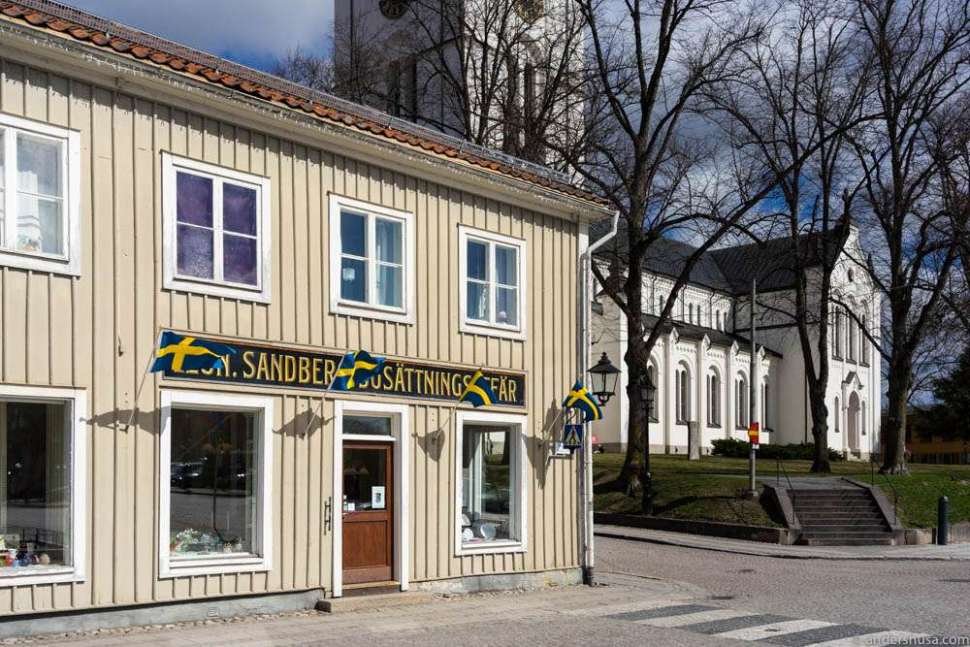
Details
- Rustic
- Cozy
- Classic
- Historic
- Scenic
- Special Occasion
- Date Night
- Historic Building
- Garden
- Private Dining
- Extensive Wine List
- Garden
- A La Carte
- Tasting Menu
- Vegetarian Friendly
- Vegan Options
- Gluten Free Options
Current opening hours
- Monday
- 12–11 PM
- Tuesday
- 8 AM–11 PM
- Wednesday
- 8 AM–11 PM
- Thursday
- 8 AM–11 PM
- Friday
- 8 AM–12 AM
- Saturday
- 8 AM–12 AM
- Sunday
- 8 AM–12 PM
Hours can change for holidays and private events. Last verified .
Cozy parlors and historic rooms with relaxing, old-world Scandinavian charm and serene garden views.