Fisherton Mill Gallery Café
Our verdict
Fisherton Mill Gallery Café occupies a converted Victorian mill on Fisherton Street, where Salisbury's arts community and casual diners share the same tables beneath gallery walls. The café format sits in a local, independent tier that prioritises setting and ingredient provenance over fine-dining formality. For visitors to the city, it offers a grounded, unhurried alternative to the cathedral-adjacent tourist circuit.

Pearl is the En Primeur Club membership app — saves, bookings, and concierge access live there. Same editors, same standards.
- Address
- Fisherton Mill, 108 Fisherton St, Salisbury SP2 7QY, United Kingdom
- Phone
- +441722500200
- Hours
- Mon–Fri 9:30 AM–5 PMSat 9:30 AM–5:30 PMSun Closed
- Website
- fishertonmill.co.uk
- Directions
- Get directions
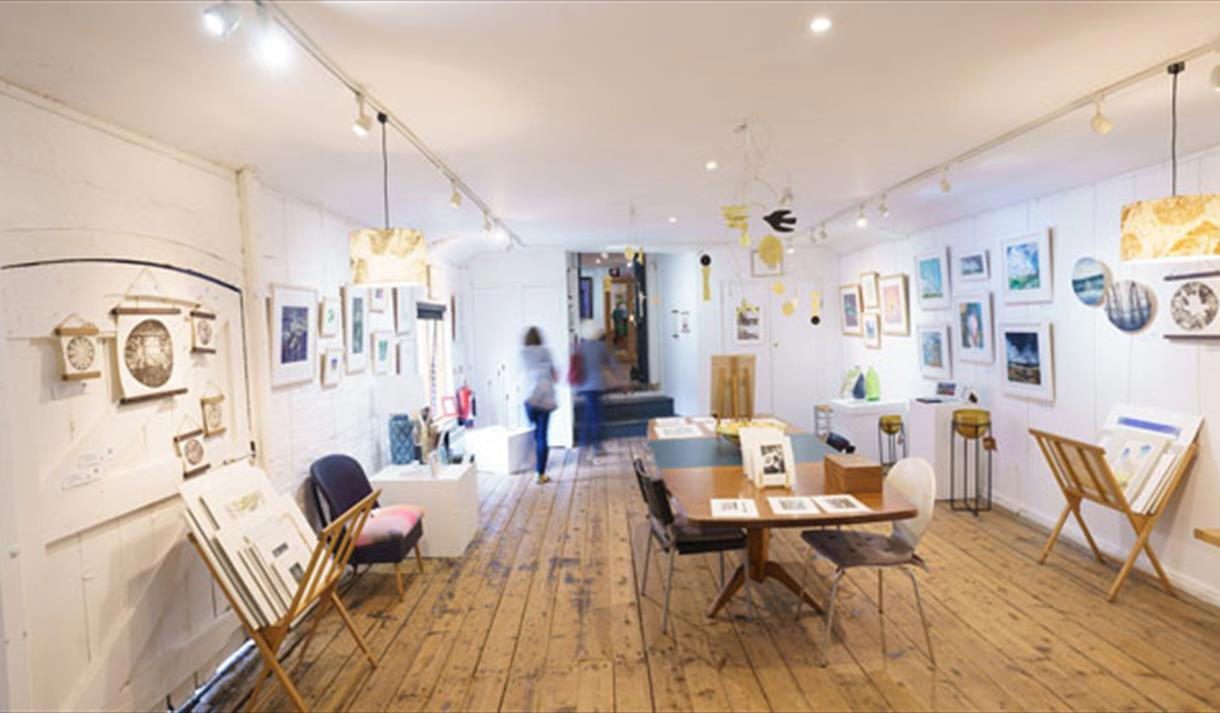
A Mill Building Repurposed for the City's Creative Quarter
Salisbury's dining scene divides roughly between the cathedral-adjacent tourist trade and a smaller, locally-rooted tier of independent cafés and restaurants that serve the city's residents first and visitors second. Fisherton Mill Gallery Café belongs firmly to the latter. Housed inside a converted Victorian mill on Fisherton Street, the space carries the physical evidence of its industrial past: high ceilings, heavy timber, and the kind of natural light that only wide-windowed mill buildings tend to generate. Arriving on Fisherton Street, the building announces itself through scale rather than signage, the mill's brick mass sitting in contrast to the Georgian streetscape that dominates much of central Salisbury.
The gallery function is not decorative dressing. Fisherton Mill operates as a working gallery and arts venue, and the café exists within that framework. Tables share floor space with exhibition work, which means the room changes character as shows rotate. For diners, this produces something that conventional restaurant design rarely achieves: a genuinely different visual environment across visits, and a reason to return that has nothing to do with menu updates.
Ingredient Sourcing and the Wiltshire Provenance Tradition
Wiltshire sits at the centre of one of England's most productive agricultural belts. The county's chalk downland produces lamb of genuine regional character; its river valleys support dairy operations that supply much of the South West. For any café operating in this geography, the sourcing question is less about ambition and more about whether the kitchen is paying attention to what surrounds it.
The café format, as a category, has historically struggled to translate provenance into something diners can identify on the plate. The challenge is partly economic: provenance-led ingredient purchasing adds cost that a café price point absorbs poorly. The independent cafés in smaller English cities that have resolved this tension tend to do so by keeping menus short, seasonal, and built around a small number of trusted local suppliers rather than attempting the broad sourcing networks that larger restaurant operations maintain.
Fisherton Mill's positioning within Salisbury's independent dining tier places it in a peer group where ingredient sourcing is increasingly a differentiator. Across the UK, the café-within-a-cultural-venue format has produced some of the more interesting provenance-led menus in the mid-market tier, precisely because the venues attract a visitor who is already predisposed to care about local character. The café at a gallery or arts space is visited for context, not merely for calories, and that visitor disposition tends to reward kitchens that commit to regional identity on the plate.
This regional conversation around sourcing plays out very differently at the formal restaurant level. Operations such as L'Enclume in Cartmel and Moor Hall in Aughton have made hyper-local ingredient networks a central part of their identity and pricing. At the other end of the spectrum, Gidleigh Park in Chagford draws on Devon's dairy and game supply in ways that are structurally similar, even within a luxury country house format. The café tier cannot replicate that depth of supplier investment, but the underlying geography of the South West and Wiltshire means the raw material is there for kitchens that choose to use it.
Where Fisherton Mill Sits in Salisbury's Dining Geography
Salisbury lacks the concentration of destination restaurants that comparable cathedral cities such as Winchester or Canterbury have developed. That gap has left the independent café and bistro tier doing more of the dining work for both locals and visitors than would be the case in a city with stronger fine-dining representation. For visitors arriving from London by rail, a journey of roughly 90 minutes from Waterloo, the choice of where to eat outside the immediate cathedral precinct is limited enough that places like Fisherton Mill carry real weight as practical options.
The Fisherton Street location places the café in a neighbourhood that has developed as Salisbury's independent arts and retail corridor, distinct from the Market Square tourism cluster and the chain restaurant presence on most of the city's main pedestrian routes. This separation from the tourist circuit is, in practical terms, the most reliable signal that a Salisbury venue is serving residents rather than passing trade, and it shapes both the pace of service and the character of the room.
For visitors who want to understand the full range of what British provincial dining has produced at its most serious, the contrast with benchmark operations is instructive. Waterside Inn in Bray, CORE by Clare Smyth in London, and Le Manoir aux Quat' Saisons in Great Milton represent one end of that range. Fisherton Mill operates at the other, where the value is relational and contextual rather than technical and formal. Neither end of the range makes the other redundant. See our full Salisbury restaurants guide for how the city's options map across price points and formats.
For those tracking how mid-market British dining is evolving beyond metropolitan centres, comparison points such as Artichoke in Amersham, hide and fox in Saltwood, and Midsummer House in Cambridge show the range of what provincial settings can sustain when the local market supports it. Operations such as Restaurant Sat Bains in Nottingham, Opheem in Birmingham, Ynyshir Hall in Machynlleth, Restaurant Andrew Fairlie in Auchterarder, The Glenturret Lalique in Crieff, Hand and Flowers in Marlow, and international reference points like Le Bernardin in New York City and Lazy Bear in San Francisco illustrate how differently the same commitment to sourcing and seasonal cooking can be packaged across formats and price tiers.
Planning a Visit
Fisherton Mill is on Fisherton Street, a walkable ten to twelve minutes from Salisbury railway station and roughly the same distance from the cathedral on foot. The gallery-café format suggests daytime visiting hours aligned with gallery programming, though specific hours should be confirmed directly with the venue before visiting, as they are not published in a consistent public format at the time of writing. The café suits a relaxed pace rather than a time-pressured lunch, given both the scale of the building and the gallery content that rewards unhurried attention.
Frequently asked questions
Does Fisherton Mill Gallery Café work for a family meal?
The gallery café format at 108 Fisherton Street lends itself to relaxed, unhurried visits, which suits families reasonably well. The mill building's generous interior proportions give the space more breathing room than a typical high-street café. That said, the gallery setting means the environment rewards some quiet appreciation of the artwork on display, so it works better for older children than for very young ones.
How would you describe the vibe at Fisherton Mill Gallery Café?
It occupies a converted mill building on Fisherton Street, and that industrial heritage shapes the atmosphere more than any deliberate design brief could. Expect exposed structure, good natural light, and the low-level hum of a venue that functions simultaneously as a working gallery and a place to eat. It sits closer to the locally-rooted independent tier of Salisbury's café scene than to anything aimed at the cathedral tourist trade.
Is Fisherton Mill Gallery Café a good place to visit before or after seeing an exhibition in Salisbury?
It is, in practical terms, the most integrated option in the city: the café sits inside Fisherton Mill at 108 Fisherton Street, which operates as a gallery, so the exhibition and the meal occupy the same building. That removes the usual trade-off between dining and culture. The site is a ten to twelve minute walk from Salisbury railway station, making it a workable anchor for a day trip structured around the arts.
What should I order at Fisherton Mill Gallery Café?
Wiltshire's agricultural belt — chalk downland lamb, local dairy, seasonal produce from the surrounding county — has historically shaped what cafés in this part of England put on their menus, and Fisherton Mill draws on that same provenance tradition. Specific current menu items are best confirmed directly with the café before visiting, as daytime menus in gallery spaces tend to rotate with the seasons and available suppliers.
Quick Comparison
| Venue | Cuisine | Price | Awards | Notes |
|---|---|---|---|---|
| Fisherton Mill Gallery CaféThis venue — the venue you are viewing | Modern British Café | $20–30 | Not listed | Not listed |
| CORE by Clare Smyth | Modern British Fine Dining | $150–200 | 3 Michelin Stars · World's 50 Best #97 | Modern British |
| Restaurant Gordon Ramsay | French Fine Dining | $200–300 | 3 Michelin Stars · World's 50 Best #13 | Contemporary European, French |
| Sketch, The Lecture Room and Library | Modern French Fine Dining | $200–300 | 3 Michelin Stars · World's 50 Best #18 | Modern French |
| The Ledbury | Modern British Fine Dining | $300–500 | 3 Michelin Stars · World's 50 Best #42 | Modern European, Modern Cuisine |
| Dinner by Heston Blumenthal | Historic British Fine Dining | $200–300 | 2 Michelin Stars · World's 50 Best #45 | Modern British, Traditional British |
Continue exploring
More in Salisbury
Restaurants in Salisbury
Browse all →
Bars in Salisbury
Browse all →
Hotels in Salisbury
Browse all →
Wineries in Salisbury
Browse all →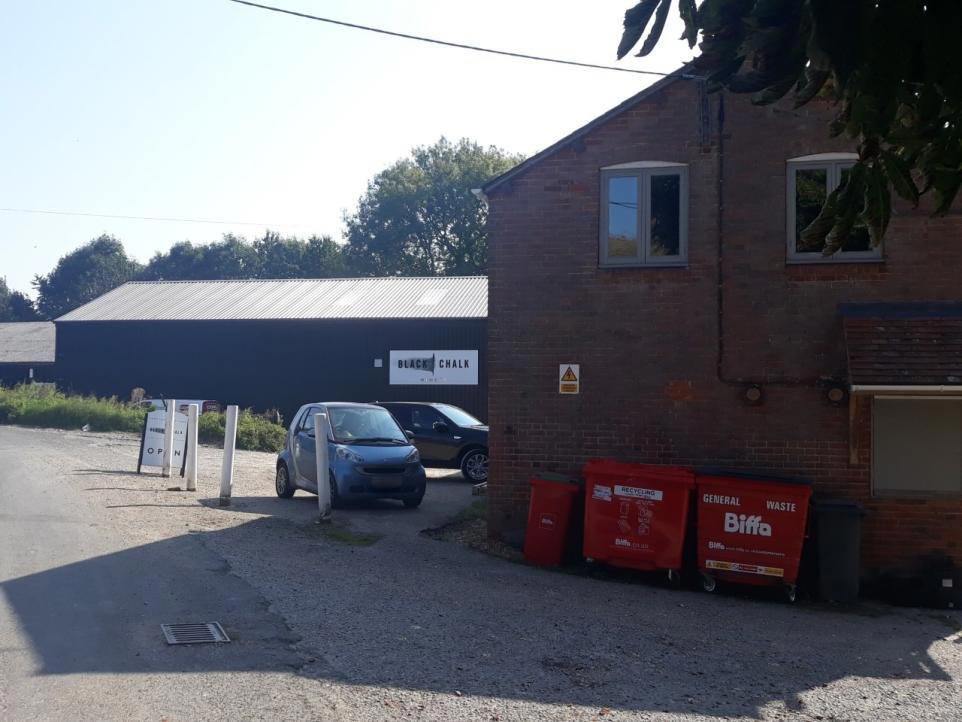

Details
- Cozy
- Rustic
- Whimsical
- Casual Hangout
- Brunch
- Family
- Courtyard
- Historic Building
- Craft Cocktails
- Local Sourcing
- A La Carte
- Vegetarian Friendly
- Vegan Options
- Gluten Free Options
Current opening hours
- Monday
- 9:30 AM–5 PM
- Tuesday
- 9:30 AM–5 PM
- Wednesday
- 9:30 AM–5 PM
- Thursday
- 9:30 AM–5 PM
- Friday
- 9:30 AM–5 PM
- Saturday
- 9:30 AM–5:30 PM
- Sunday
- Closed
Hours can change for holidays and private events. Last verified .
Airy, spacious, and atmospheric with indoor seating and sunny sheltered courtyard, busy yet relaxed.