Fiorella's Jack Stack Barbecue
Our verdict
Few Kansas City barbecue institutions carry the institutional weight of Jack Stack, which has grown from a single Smokestack location in the 1970s into a multi-site operation without losing its grip on the wood-smoke fundamentals that define the city's pit tradition. The Freight House location at 101 W 22nd Street places it at the edge of the Crossroads Arts District, where the crowd runs from after-work regulars to out-of-town visitors arriving specifically for the ribs.

Pearl is the En Primeur Club membership app — saves, bookings, and concierge access live there. Same editors, same standards.
- Address
- 101 W 22nd St #300, Kansas City, MO 64108, United States
- Phone
- (816) 472-7427
- Website
- jackstackbbq.com
- Directions
- Get directions
- Booking
- Book on OpenTable
The menu
What to order
- Beef burnt ends
- Pork spare ribs
- Hickory pit beans
Where Kansas City Smoke Meets Institutional Memory
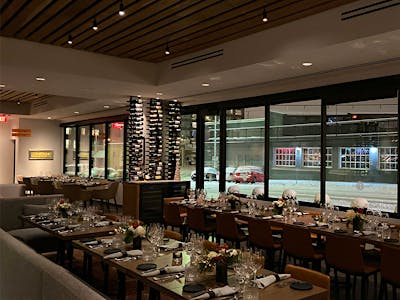
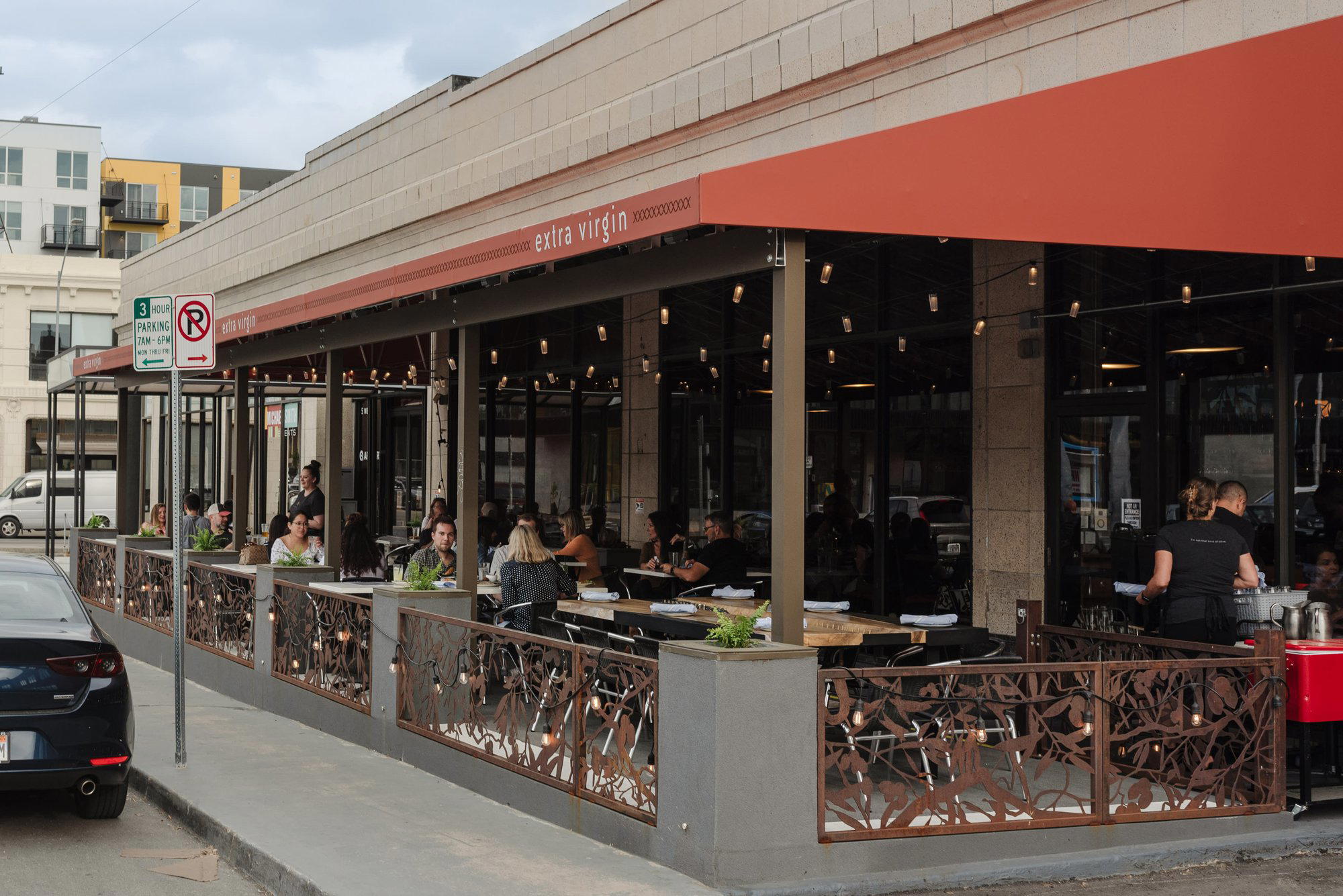
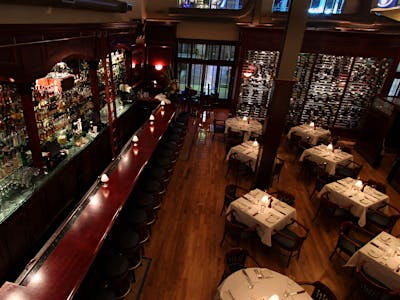
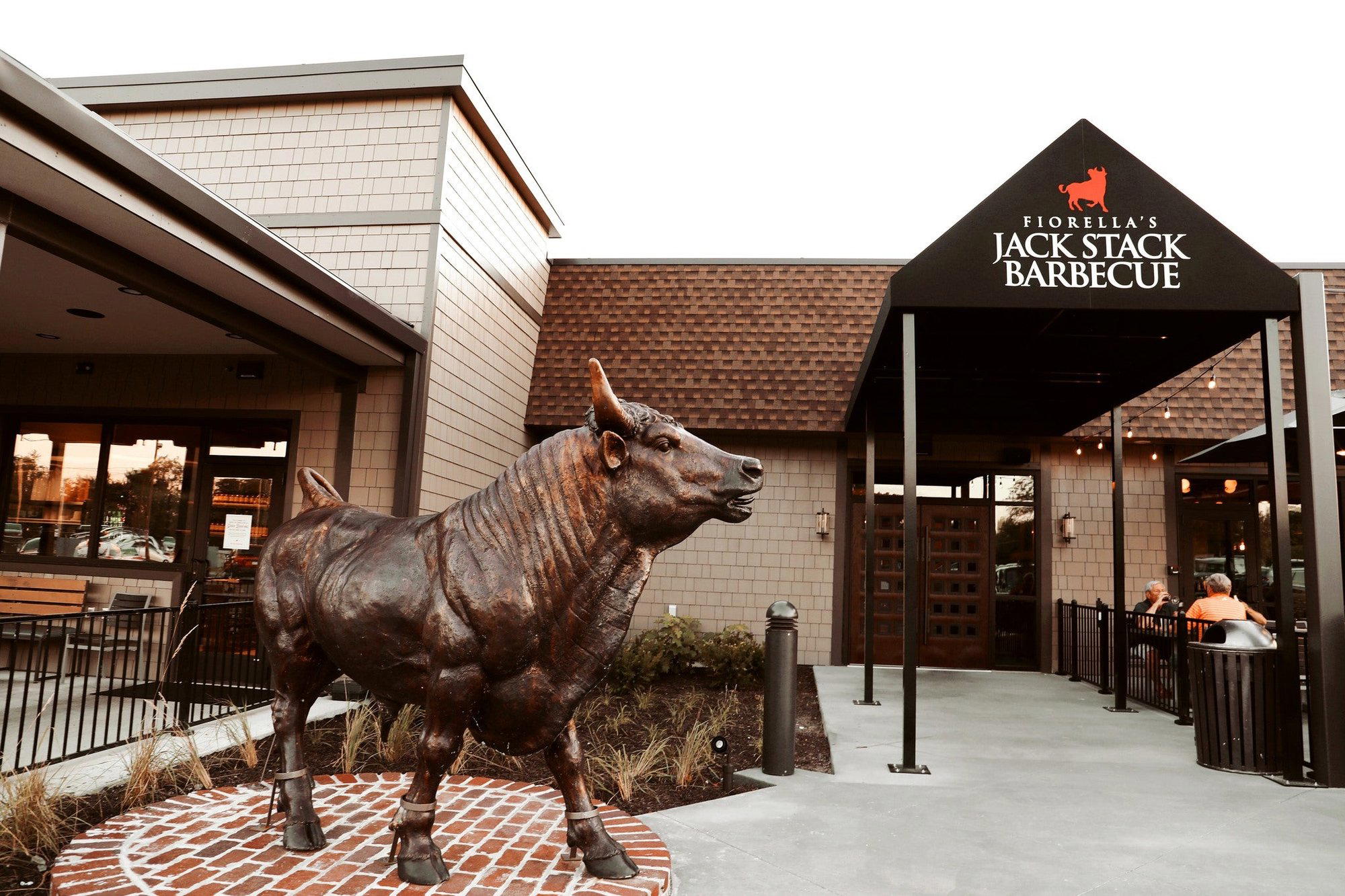
Walk toward the Freight House building on a weekend evening and the smell arrives before the sign does. That's not marketing — it's physics. Kansas City barbecue relies on long, low wood-smoke cooking, and the aromatic byproduct of that process has a way of orienting you toward a destination before you've consciously decided to move. The Jack Stack operation at 101 W 22nd Street, situated in a converted rail freight building at the southern edge of the Crossroads Arts District, carries all the physical markers of a place that has been in the business long enough to stop trying to impress anyone: the worn-in warmth of a dining room built around function rather than atmosphere design, a crowd that skews local during the week and broadens significantly on weekends, and a smoke presence that is structural rather than decorative.
In a city where barbecue carries genuine civic weight — not the performative kind attached to food tourism, but the kind embedded in neighborhood identity and generational loyalty, Jack Stack occupies a particular position. It is neither the austere, no-frills counter experience nor the upscale reinterpretation. It sits in the middle tier of the Kansas City barbecue hierarchy: full-service, family-oriented, historically rooted, and large enough to handle volume without becoming anonymous.
From Smokestack to Jack Stack: A Fifty-Year Arc
The evolution of what is now Fiorella's Jack Stack Barbecue is, in many ways, a study in how regional barbecue institutions survive contact with scale. The original Smokestack Barbecue, operated by the Fiorella family, dates to the 1970s in the Martin City neighborhood on Kansas City's south side. That location built a reputation on slow-smoked meats and the kind of consistency that brings the same families back across decades. The rebrand to Jack Stack came later, as the operation expanded beyond its founding site, a move that carried real risk, since Kansas City barbecue loyalties are not easily transferred and any perceived dilution of quality reads as betrayal in this market.
What is notable about the expansion model is that it did not follow the franchise playbook common to regional barbecue brands that achieved national visibility in the 1990s and 2000s. Jack Stack remained family-controlled and Kansas City-focused, adding locations within the metro area rather than chasing a national footprint. The Freight House location, which brought the brand into the Crossroads corridor, was a meaningful signal: it placed a historically south-side institution into a neighborhood that had shifted from industrial to arts-and-dining over the preceding two decades, capturing a different demographic without abandoning the format that defined it.
That format discipline matters when you compare Jack Stack's trajectory to peers in the Kansas City barbecue category. Arthur Bryant's Barbeque, the east-side institution with a different lineage and a famously austere service model, has also expanded but maintained a stripped-back character that reads more as continuity than evolution. Jack Stack's path involved more deliberate repositioning, adding a wine list, operating in a full-service model, and targeting a dining-out occasion rather than a takeout run, without abandoning the pit tradition that gives it legitimacy.
The Barbecue Tradition at Play
Kansas City barbecue is defined by a few technical commitments: wood smoke (historically hickory and fruit woods), long cooking times, a wide cut repertoire that goes beyond brisket-centric Texas models, and a tomato-based, sweetened sauce that is applied at the table rather than cooked in. The sauce is almost always available on the side, and the quality of the meat is supposed to stand without it, though in practice, the sauce is rarely ignored.
Jack Stack's menu reflects the breadth that distinguishes Kansas City barbecue from its regional cousins. Burnt ends, the caramelized cubed remnants of the brisket point, hold a specific place in the Kansas City canon, they are not a byproduct here, as they were historically at many pits, but a featured item, sold separately and in quantity. Crown Prime Beef Ribs, a cut associated with Jack Stack specifically, represent the kind of product differentiation that a multi-decade operation develops when it has enough volume to source and prepare cuts that smaller pits cannot sustain economically. The side program, cheesy corn bake, pit beans, fries, follows the full-service model rather than the spartan-counter tradition.
For visitors building a Kansas City barbecue itinerary, Jack Stack and Arthur Bryant's represent different registers of the same tradition. They are not competitors for the same customer on the same visit so much as complementary data points about how the city's barbecue identity has evolved across different lineages and ownership philosophies. The broader Kansas City dining scene, which includes destinations like Affäre, Aixois, and Antler Room, has expanded well beyond its barbecue identity, but Jack Stack remains a useful anchor for understanding what the city's food culture was built on. For a fuller picture of where to eat across the city, our full Kansas City restaurants guide covers the range from pit stops to tasting menus.
It is worth placing that tradition in a national context without inflating it. Kansas City barbecue operates in a different register from the tasting-menu institutions that draw destination diners to cities like New York, San Francisco, or Napa, places associated with restaurants like Le Bernardin, Lazy Bear, or The French Laundry. But the barbecue tradition carries its own form of culinary authority, one built on technique, time, and regional specificity rather than innovation cycles. Jack Stack's durability across fifty years is evidence of execution rather than reinvention.
Planning Your Visit
The Freight House location at 101 W 22nd Street puts Jack Stack within walking distance of the Crossroads Arts District's gallery cluster and a short drive from the Power and Light District. Weekend evenings draw the longest waits; weekday lunch and early dinner tend to move more quickly, particularly for groups of two to four. The full-service format means a sit-down experience with table service, which distinguishes it operationally from the counter-service model at spots like Beer Kitchen nearby. Reservations are accepted and worth using for groups, particularly on Friday and Saturday nights when the dining room fills from multiple directions, local regulars, event overflow from the arts district, and visitors on barbecue-focused itineraries.
Frequently asked questions
Where is Fiorella's Jack Stack Barbecue in Kansas City?
Fiorella's Jack Stack Barbecue is located at 101 W 22nd St, Kansas City, MO 64108, Kansas City.
How does Fiorella's Jack Stack Barbecue fit into the broader Kansas City barbecue scene?
Kansas City supports one of North America's most concentrated barbecue cultures, with dozens of operating pits across the metro — but few have operated under continuous family ownership across five decades the way Jack Stack has. The Freight House location at 101 W 22nd Street also gives it a physical anchor in the Crossroads, the city's most visited cultural district, which separates it from competitors operating in lower-profile locations.
What's the best thing to order at Fiorella's Jack Stack Barbecue?
Kansas City barbecue tradition runs wide rather than narrow — Jack Stack's menu reflects that, covering beef, pork, and poultry across long-smoked preparations. The Freight House location at 101 W 22nd St is the flagship, so the full range of the menu is available there. Given the kitchen's hickory-and-fruit-wood heritage, cuts that carry smoke longest, such as brisket and burnt ends, tend to showcase the method most directly.
What's the best way to book Fiorella's Jack Stack Barbecue?
Jack Stack accepts reservations and walk-ins at the Freight House location, 101 W 22nd Street, Kansas City. For weekend evenings in particular, booking ahead is the practical approach, as the dining room draws both locals and visitors to the Crossroads district. Check the restaurant's official website or a third-party reservation platform for current availability.
What's the defining dish or idea at Fiorella's Jack Stack Barbecue?
The defining idea is Kansas City's characteristically broad cut repertoire, held together by wood smoke and low-and-slow cooking times rather than a single signature protein. Where Texas leans on brisket and the Carolinas on pork shoulder, Kansas City tradition spans the whole animal — and Jack Stack has been working within that tradition for roughly fifty years. The smoke is the constant; the menu is deliberately wide.
How does Fiorella's Jack Stack Barbecue handle allergies?
check the venue's official channels at the Freight House, 101 W 22nd Street, Kansas City, before your visit to discuss specific dietary requirements. Staff at the counter can typically advise on preparation methods and sauce ingredients.
Is Fiorella's Jack Stack Barbecue worth it?
For anyone serious about Kansas City barbecue as a regional tradition rather than a trend, the Freight House location represents roughly five decades of continuous practice in one address. The Crossroads Arts District placement makes it a logical anchor for a longer evening in the neighbourhood. Whether it clears the bar depends on what you're benchmarking: as a Kansas City institution with documented longevity, the case for visiting is straightforward.
Compact Comparison
| Venue | Cuisine | Price | Awards | Notes |
|---|---|---|---|---|
| Fiorella's Jack Stack BarbecueThis venue — the venue you are viewing | Kansas City Barbecue | $30–50 | Not listed | Not listed |
| Joe’s (formerly Oklahoma Joe’s) | Kansas City Barbecue | $20–30 | Not listed | Barbecue |
| Antler Room | Modern New American Small Plates | Not listed | Not listed | United States |
| LC’s | Kansas City BBQ | $10–20 | Not listed | Barbecue |
| KC Turkey Leggman | Turkey-Leg Barbecue | $10–20 | New York Times America's Best Restaurants | Barbecue |
| CORVINO | Modern American Fine Dining | Not listed | Not listed | Not listed |