In the small Lower Saxon town of Lüchow, Field Gourmetrestaurant occupies a specific position: a fine-dining address in a region where such ambition is rarely attempted. The address on Bergstraße 6 signals a deliberate choice to plant serious cooking in agricultural country, where proximity to the Wendland's farming and foraging landscape shapes what ends up on the plate.
Pearl is the En Primeur Club membership app — saves, bookings, and concierge access live there. Same editors, same standards.
- Address
- Bergstraße 6, 29439 Lüchow, Germany
- Phone
- +4949584197760
- Website
- hotel-katerberg.de
 Saves & bookings on Pearl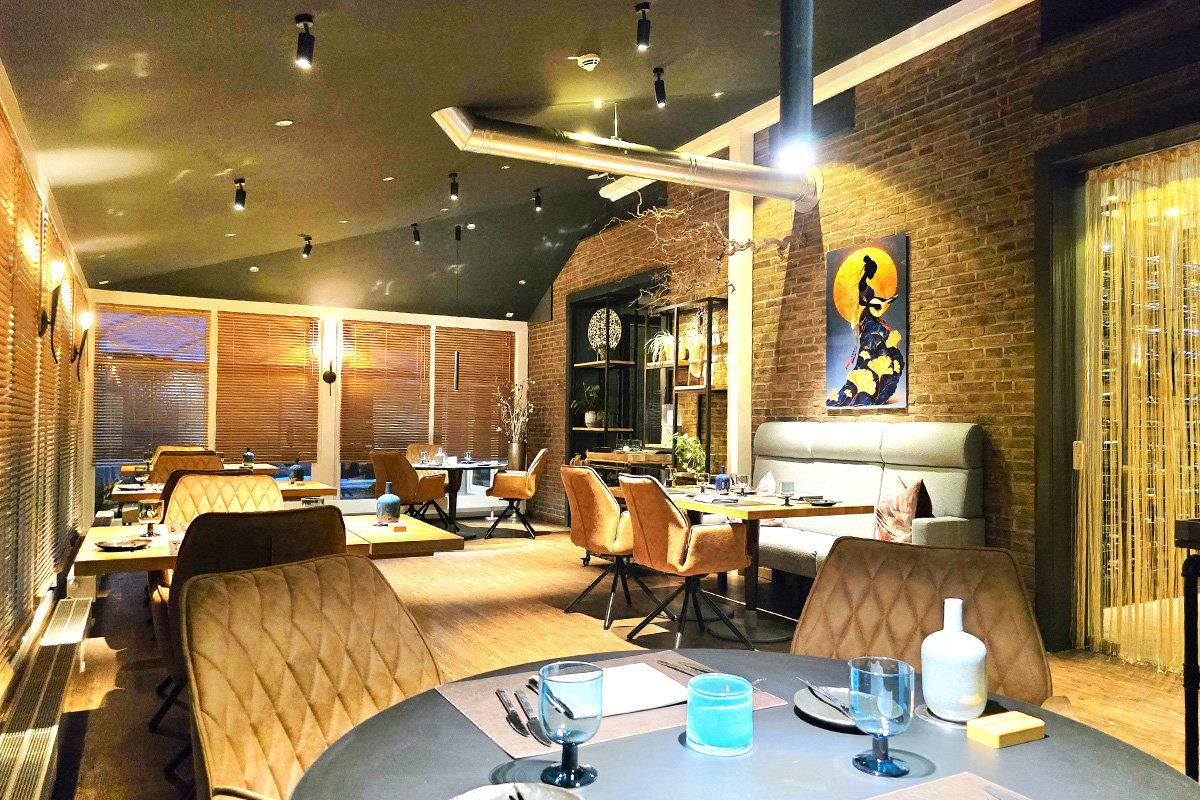
Fine Dining in Agricultural Country
Germany's most decorated restaurant tables tend to cluster in familiar postcodes: the Black Forest, the Rhine valley, the edges of Munich or Hamburg. Field Gourmetrestaurant is a modern Mediterranean fine dining restaurant in Lüchow, Germany. Lüchow sits outside that circuit entirely. The town of roughly 8,000 people in the Wendland region of Lower Saxony is more readily associated with organic farming movements and the flat, quiet Elbe floodplains than with tasting menus. That geographical remove is precisely what gives Field Gourmetrestaurant its context. A serious kitchen operating in a small market town is not working against its surroundings, it is, in most interpretations of this format, drawing directly from them.
The Wendland has a documented history as one of Germany's more active regions for ecological and organic agriculture, a reputation that predates the current fashion for provenance-led menus by several decades. Restaurants that set up in towns like Lüchow are, whether by design or circumstance, inheriting a supply chain that metropolitan kitchens often spend considerable effort and money to replicate. That structural advantage, short distances between field and kitchen, is the defining condition for any serious cooking here.
What the Address Implies About the Sourcing
The name Field Gourmetrestaurant is not decorative. In a region where the gap between producer and plate is measured in kilometers rather than supply-chain intermediaries, the framing points toward an ingredient-first approach that is harder to fake in a small town than in a city. Urban fine dining has spent the last decade constructing elaborate sourcing narratives; a kitchen in Lüchow is living inside one by default.
Wendland's agricultural character runs to both conventional farming and a significant concentration of biodynamic and organic producers, a legacy of the environmental activism the region attracted from the 1970s onward. For a kitchen drawing on local supply, this means access to produce grown under standards that would carry premium positioning in larger markets. The editorial question for any restaurant in this position is not whether the ingredients are good, in Wendland, the structural conditions favor them, but whether the cooking has the confidence to let sourcing lead rather than bury it under technique.
German fine dining nationally has moved in two directions over the past fifteen years. One strand follows the international template: multi-component tasting menus with classical French architecture and elaborate plating, the kind of work represented at the higher end by addresses like Schwarzwaldstube in Baiersbronn or Vendôme in Bergisch Gladbach. The other strand has moved toward regional identity, where the sourcing geography becomes the menu's organizing principle rather than its footnote. Kitchens like Jante in Hanover have made that second approach legible to a broader audience. A restaurant named Field, operating in the Wendland, sits logically in that second conversation.
The Town as Context, Not Obstacle
Small-town fine dining in Germany carries a distinct dynamic that differs from the destination-restaurant model of rural France or the culinary-tourism circuit of Napa. In Germany, serious restaurants in smaller markets tend to serve a local professional and farming class alongside occasional visiting diners, rather than relying primarily on destination traffic. This shapes everything from format to pacing. The room at Bergstraße 6 is likely calibrated for that local relationship: a pace and register that fits a midweek dinner for regular guests rather than a performance designed for a one-time visitor.
That is not a limitation. Some of Germany's more compelling dining experiences sit outside the major cities precisely because they are not performing for approval. The comparison set for a restaurant like this is not Aqua in Wolfsburg or Restaurant Haerlin in Hamburg in terms of format or scale. It is the broader category of regionally rooted German kitchens that have found a working model between bistro informality and metropolitan fine dining, places where the ingredient sourcing carries more editorial weight than the room's design or the wine list's length.
Internationally, the analogy exists in formats like Lazy Bear in San Francisco, where communal sensibility and sourcing specificity define the offer rather than classical service architecture. In the European context, the thread connects to how kitchens in agricultural regions from Alsace to Jutland have repositioned local supply as a culinary argument rather than a constraint.
Germany's Regional Fine Dining Circuit
Placing Lüchow within Germany's broader fine dining geography requires acknowledging how dispersed that geography is. The country's Michelin-recognized restaurants spread across small towns and rural addresses to a degree unusual in Europe. Waldhotel Sonnora in Dreis, Schanz in Piesport, and ES:SENZ in Grassau all operate at high levels from addresses that would not appear on a metropolitan dining map. The pattern suggests that German fine dining has a structural comfort with geographic decentralization that its French or Italian equivalents do not share to the same degree.
For the visiting diner, this means the trip to Lüchow is not anomalous within the German dining context. It fits a pattern in which serious cooking appears in unexpected postcodes, supported by regional producers and a local clientele that values the presence of an ambitious kitchen in their town. The nearest reference points at the level of regional ambition, GästeHaus Klaus Erfort in Saarbrücken, Bagatelle in Trier, confirm that the model works outside city centers when the kitchen has clarity about what it is doing and why.
Planning a Visit
Lüchow is accessible by train from Hamburg, with the journey running roughly two hours via Lüneburg. The town has limited hotel options, so visitors combining the restaurant with a broader Wendland trip typically arrange accommodation in advance; the region attracts cycling and nature tourism that fills smaller guesthouses during warmer months, particularly from late spring through early autumn when the agricultural calendar is most active and local produce is at its fullest range. Bergstraße 6 is a central address within the town's compact core, manageable on foot from most local accommodation. Contact the restaurant directly for current reservation details and menu format before visiting.
How It Stacks Up
Comparable venues nearby, for context on price, style, and recognition.
| Venue | Cuisine | Price | Notes |
|---|---|---|---|
| Field GourmetrestaurantThis venue — the venue you are viewing | Modern Mediterranean Fine Dining | $$$$ | Not listed |
| Teller | Mediterranean Farm-to-Table | $$$$ | Prenzlauer Berg |
| Tim's Restaurant | European-Mediterranean with Northern German Influences | $$$ | Altona-Altstadt |
| MASH Hamburg | American Steakhouse | $$$$ | Altona-Altstadt |
| Courtier – Weissenhaus | Modern European Fine Dining | $$$$ | Wangels |
| JIN GUI Hamburg | Modern Pan-Asian Fusion | $$$$ | Neustadt |
At a Glance
- Elegant
- Sophisticated
- Modern
- Date Night
- Special Occasion
- Business Dinner
- Hotel Restaurant
- Private Dining
- Extensive Wine List
- Beer Program
- Local Sourcing
Current opening hours
- Monday
- Closed
- Tuesday
- Closed
- Wednesday
- 6–10 PM
- Thursday
- 6–10 PM
- Friday
- 6–10 PM
- Saturday
- 6–10 PM
- Sunday
- Closed
Hours can change for holidays and private events. Last verified .
Refined hotel restaurant atmosphere with focus on authentic, pure flavors and high-quality products.