


Michelin Bib Gourmand · Gambero Rosso 3 Spicchi · 50 Top Pizza Asia-Pacific #3
Our verdict
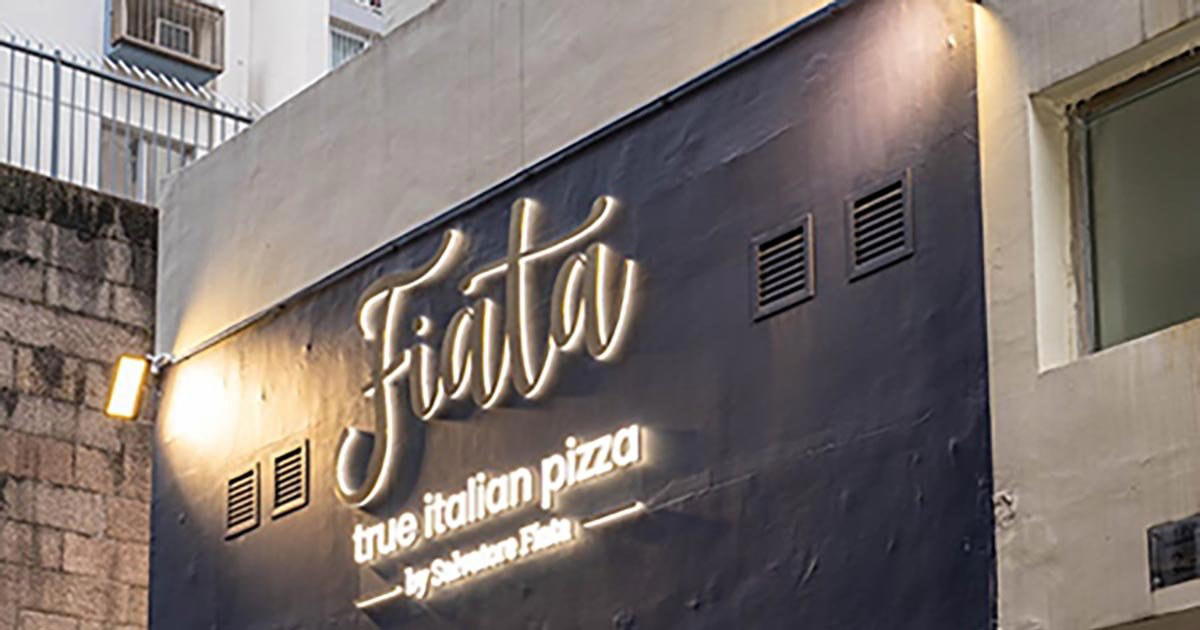
On Staunton Street in Central, Fiata by Salvatore Fiata brings Casertan pizza-making tradition to Hong Kong's dining scene. The menu runs a focused Neapolitan repertoire, from margherita and marinara to provola and diavola, supported by Italian wines and a cocktail list. The room is elegant but unpretentious, and the light, well-executed dough anchors a credible Italian casual offer in a city better known for fine-dining Italian at the upper end.

Pearl is the En Primeur Club membership app, where members save venues, book tables and use the concierge.
The menu
What to order
- A'Salsiccia
- Quattro Formaggi
- Margherita
- Provola e Pepe
- Diavola by Giovanni
Staunton Street and the Case for Serious Pizza in Central
Central Hong Kong's Italian dining conversation tends to gravitate toward the upper floors and tasting menus. 8 1/2 Otto e Mezzo Bombana and Caprice sit at the formal, multi-Michelin end of the city's European dining tier, while venues like Ta Vie and Amber command the innovative and French-leaning registers. What the neighbourhood has historically offered less confidently is Italian food that does not ask you to dress up for it. Fiata by Salvatore Fiata, at 2 Staunton Street in the lower part of SoHo, occupies that gap with a specific, defensible position: Neapolitan pizza with documented Casertan lineage, served in a room that manages to be elegant without demanding ceremony.
The Staunton Street address puts it inside the SoHo grid that runs between Hollywood Road and the Mid-Levels escalator, a stretch where casual-to-mid-range dining has always competed against the gravitational pull of the more formal rooms on both sides. The setting itself, from what the venue signals publicly, reads as polished rather than rustic, with enough warmth in the service approach to read as familiar rather than transactional. That balance between presentable and approachable is harder to achieve than it sounds, particularly in a city where the two ends of the casual-to-formal spectrum are both heavily populated.
The Casertan Claim and What It Actually Means
Caserta, the Campanian town roughly thirty kilometres north of Naples, has become a point of identity for a specific strand of the global pizza-making movement. The Casertan tradition sits adjacent to Neapolitan orthodoxy but carries its own signals: particular attention to dough hydration, fermentation timelines, and a pride of place that connects the product to a specific geographic and artisanal lineage. Fiata by Salvatore Fiata's public positioning is explicit on this point, citing the ongoing pizza makers' movement in Caserta as the intellectual and craft context for what arrives at the table.
In practical terms, that lineage shows up in the dough. The description that emerges from early assessments of the restaurant is consistent: light, well-executed, not the dense or overly bready base that characterises lesser Neapolitan-adjacent offerings in international markets. Hong Kong's humidity and water composition present particular challenges for any transplanted dough-making tradition, and the fact that the result reads as light suggests the fermentation and baking processes have been calibrated for the local environment rather than simply imported wholesale. Globally, this is the central technical challenge that separates credible Neapolitan pizza outside Italy from approximations of it. Restaurants like Le Bernardin in New York City or Alinea in Chicago represent the discipline that comes from transplanting a defined culinary tradition and maintaining its standards in a new context; the same discipline applies at a different register to serious pizza-making in a market as demanding and informed as Hong Kong.
The Menu as a Statement of Restraint
The menu at Fiata does not attempt to be comprehensive. It reads instead as a considered argument for a particular way of eating Italian: begin with a tuna salad or an Italian mixed board, then move into the pizza register with margherita, marinara, parmigiana, and diavola as the core references, alongside variations built on provola and pepper. This is a short list by the standards of Italian restaurants that have expanded their offer to cover multiple regional traditions under one roof. The restraint is a signal, not a limitation. A kitchen that commits to six to eight pizzas and executes them at a high level is making a different claim than one that offers thirty and hedges across all of them.
The parmigiana and diavola speak to a menu that runs from the austere (marinara, with no cheese, is as stripped-back as Neapolitan pizza gets) through to the more assertive heat register of the diavola. The provola-and-pepper variation is a Campanian habit that doesn't travel as frequently as the margherita does, and its presence here reinforces the regional specificity of the offer rather than diluting it toward generic Italian. For a market like Hong Kong, where Italian restaurants tend to negotiate between authenticity and local palatability, the refusal to hedge is noteworthy.
Drinks: Italian Wine and a Cocktail Menu Worth Taking Seriously
Drink selection at Fiata extends well beyond what a pizza-focused room typically carries. Italian wines are the primary register, which aligns with a kitchen committed to regional coherence, but the cocktail menu is described as genuinely interesting rather than perfunctory. A cappuccino is also on offer, which in context reads less as an afterthought and more as a statement that the rituals of Italian café culture have been taken seriously alongside the food program.
In a city where the bar and drinks scene operates at a sophisticated level, with the options mapped in our full Hong Kong bars guide, a restaurant cocktail list that earns a positive mention is earning it against a high local benchmark. Italian wine lists at this level of restaurant in Hong Kong tend to skew toward southern Italian producers, which would complement the Campanian kitchen logic, though the specific selection is not publicly detailed.
Where Fiata Sits in Hong Kong's Broader Italian Conversation
Hong Kong's Italian dining scene is bifurcated in a way that most cities are not. At the formal end, you have Michelin-recognised rooms with long wine lists, tasting formats, and prices that match or exceed comparable addresses in Milan or Rome. At the casual end, you have a mix of neighbourhood trattorias and pizza delivery operations of variable provenance. The middle ground, where a credible, technique-led kitchen serves a focused regional menu without the full ceremony of a fine-dining format, is less densely populated than it should be for a city of Hong Kong's appetite and sophistication.
Fiata occupies that middle tier with specificity on its side. The Casertan lineage is not a generic marketing claim; it connects the restaurant to a documented craft movement that has produced some of the most closely watched pizza makers in Italy and internationally over the past decade. For a broader sense of what the city's Italian and European dining scene looks like across price points and formats, our full Hong Kong restaurants guide maps the range. Estro, the Michelin-recognised Italian wine bar operating at the premium end, and Forum in the Cantonese register, represent the depth of the city's wider dining field that Fiata now participates in from its own corner.
For travellers spending time across the broader region, the approach Fiata represents, of transplanting a precise regional technique and holding to it rather than softening it for a new market, is also visible in a different key at addresses like Aponiente in El Puerto de Santa María or Alléno Paris au Pavillon Ledoyen, where the commitment to a defined culinary logic is what distinguishes the kitchen from its more eclectic peers.
Know Before You Go
- Address: 2 Staunton Street, Central, Hong Kong
- Cuisine: Neapolitan pizza, Casertan tradition
- Format: Casual-elegant; suited to solo diners, couples, and small groups
- Drinks: Italian wines, cocktail menu, cappuccino
- Bookings: Contact the restaurant directly; walk-ins may be possible during off-peak hours
- Also explore: Hong Kong hotels | Hong Kong experiences | Hong Kong wineries
Frequently asked questions
What distinctions does Fiata by Salvatore Fiata have?
Fiata by Salvatore Fiata has received recognition including: Salvatore Fiata's pizzeria proudly claims its Casertan origins thanks to the ongoing pizza makers' movement in the Campanian town. The restaurant is elegant yet at the same time familiar and welcoming. The menu focuses on Neapolitan style, ….
Who runs the kitchen at Fiata by Salvatore Fiata?
The chef associated with Fiata by Salvatore Fiata is Salvatore Fiata.
What's the best thing to order at Fiata by Salvatore Fiata?
The kitchen's attention is concentrated on the pizza, which draws its credentials from the ongoing pizza-makers' movement in Caserta, Campania. The core lineup, margherita, marinara, parmigiana, diavola, and a provola and pepper variation, is where the menu's argument is made. The dough has been consistently noted for its lightness and clean execution, so ordering at least two different pizzas across the table gives a reasonable read on the range.
Where do I go for Fiata by Salvatore Fiata?
Fiata by Salvatore Fiata is located at 2 Staunton St, Central, Hong Kong, Hong Kong.
Should I book Fiata by Salvatore Fiata in advance?
Fiata sits on Staunton Street in Central's SoHo corridor, one of Hong Kong's more active dining stretches where demand at well-regarded rooms tends to outpace walk-in availability, particularly on weekends. Booking ahead is the practical approach. The restaurant can be reached at its address at 2 Staunton St, Central, Hong Kong; check current reservation availability directly.
What do critics highlight about Fiata by Salvatore Fiata?
Assessments of the restaurant converge on three points: the lightness and technical execution of the dough, service that creates genuine comfort rather than formal distance, and the Casertan identity that places Fiata within a specific, traceable strand of the global pizza-making movement rather than a generic Neapolitan positioning. The drink selection, Italian wines plus a cocktail menu, is also noted as more considered than a pizza-focused room would typically carry.
Is Fiata by Salvatore Fiata good for vegetarians?
The core pizza menu includes clear vegetarian options: the margherita and parmigiana are both cheese-based without meat. The Italian mixed board at the starter stage is worth checking on arrival, as compositions vary. The menu is not extensive, so vegetarians eating with non-vegetarians will find the format works without requiring separate ordering strategies.
Where the Accolades Land
| Venue | Cuisine | Price | Awards | Notes |
|---|---|---|---|---|
| Fiata by Salvatore FiataThis venue (the venue you are viewing) | Authentic Neapolitan Pizza | $30–50 | Michelin Bib Gourmand · Gambero Rosso 3 Spicchi | Not listed |
| 8 1/2 Otto e Mezzo Bombana (Hong Kong) | 3 Michelin-Star Italian Fine Dining | $200–300 | 3 Michelin Stars · World's 50 Best #94 | Italian |
| Ta Vie | Modern French-Japanese Fine Dining | $300–500 | 3 Michelin Stars · World's 50 Best #68 | Japanese - French, Innovative |
| Caprice | Contemporary French Fine Dining | $200–300 | 3 Michelin Stars · World's 50 Best #35 | French, French Contemporary |
| Feuille | Modern Vegetable-Forward French | $200–300 | 1 Michelin Star · World's 50 Best #93 | French Contemporary |
| Neighborhood | Modern French with Asian Influences | $50–100 | 1 Michelin Star · World's 50 Best #24 | International, European Contemporary |
Recognition history
Dated appearances from independent guides and award organizations, with the underlying list record or original source where available.
Michelin Bib Gourmand
Michelin
50 Top Pizza Asia-Pacific #3
50 Top Pizza
Gambero Rosso 3 Spicchi
Gambero Rosso
Full recognition history (5 entries)
50 Top Pizza World #16
50 Top Pizza
50 Top Pizza World Best Pizza #18
50 Top Pizza
Continue exploring
More in Hong Kong
Restaurants in Hong Kong
All restaurants in Hong Kong →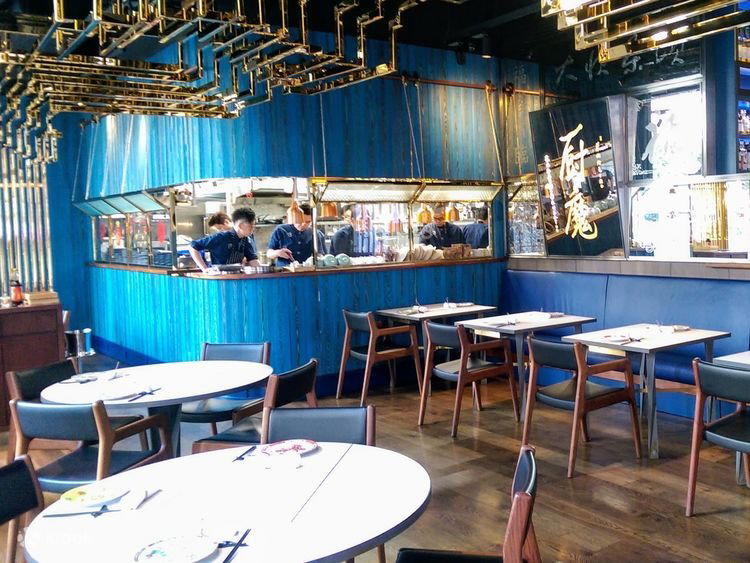
Bars in Hong Kong
All bars in Hong Kong →
Hotels in Hong Kong
All hotels in Hong Kong →


Wineries in Hong Kong
All wineries in Hong Kong →
Details
- Cozy
- Intimate
- Trendy
- Date Night
- Casual Hangout
- Group Dining
- Family
- Open Kitchen
- Terrace
- Craft Cocktails
- Local Sourcing
- A La Carte
- Cocktails
- Wine
- Vegetarian Friendly
Current opening hours
- Monday
- 12–2:30 PM, 6–9:30 PM
- Tuesday
- 12–2:30 PM, 6–9:30 PM
- Wednesday
- 12–2:30 PM, 6–9:30 PM
- Thursday
- 12–2:30 PM, 6–9:30 PM
- Friday
- 12–2:30 PM, 6–9:30 PM
- Saturday
- 12–2:30 PM, 6–9:30 PM
- Sunday
- 12–2:30 PM, 6–9:30 PM
Hours can change for holidays and private events. Hours as of .
Small, intimate, and welcoming space with an open kitchen where diners can watch Chef Fiata work his Moretti oven; described as dark but cozy with a lively atmosphere, especially during peak hours.