Falansai

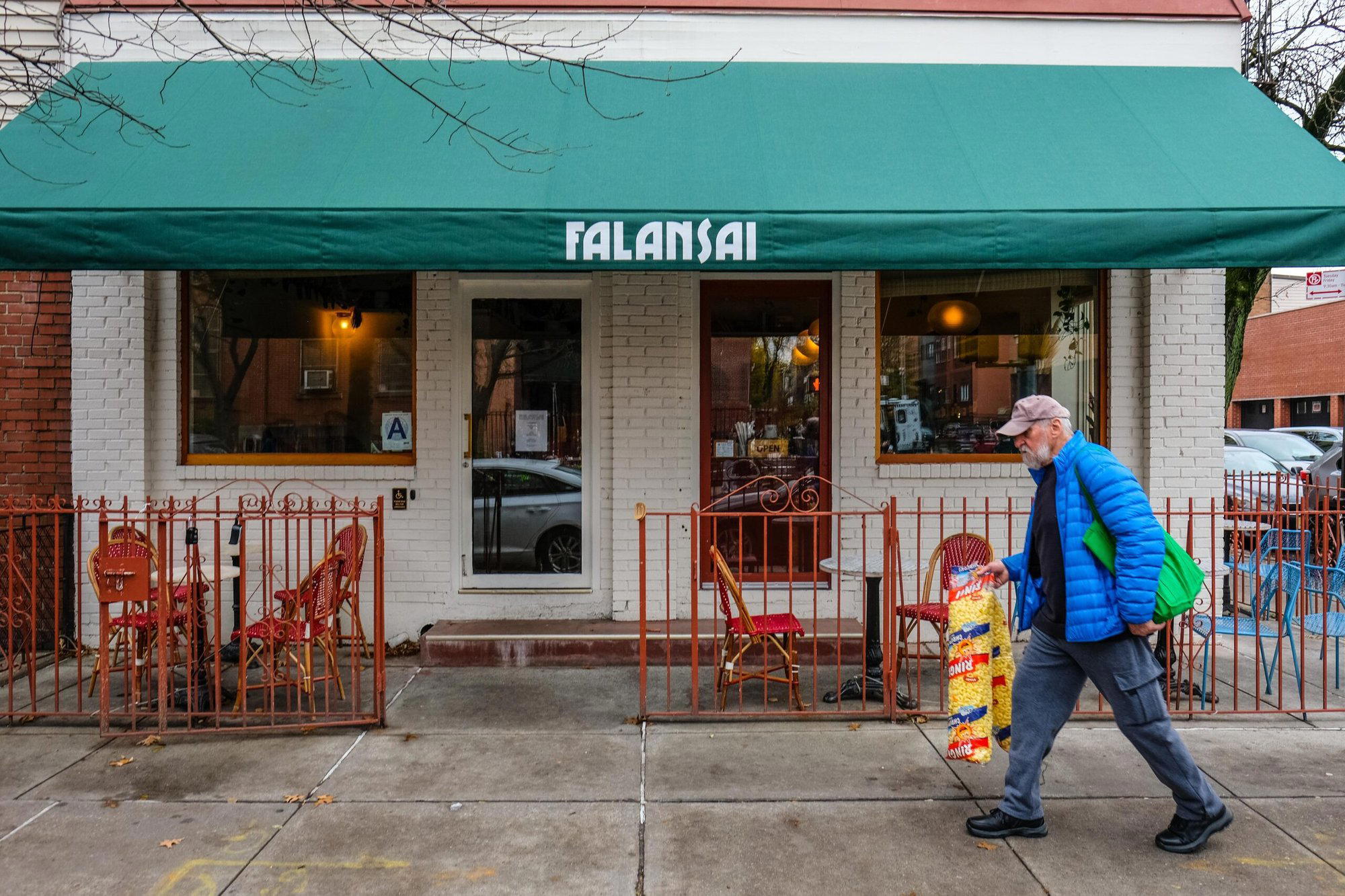
Falansai brings Vietnamese cooking to Greenpoint with a hybrid register that draws on French technique, Chaozhou coastal tradition, and Vietnamese-Mexican crossover. The kitchen sits closer to Saigon's sugar-and-chilli directness than to Hanoi's aromatic restraint, placing it in a small Brooklyn cohort of Southeast Asian restaurants willing to operate on multiple culinary time zones at once. Find it on Norman Avenue at the edge of Williamsburg's northern spillover.
 Discover on Pearl
Pearl is the En Primeur Club membership app — saves, bookings, and concierge access live there. Same editors, same standards.
Where Vietnamese Cooking Splits: The Greenpoint Address That Takes Sides
Vietnamese restaurants in American cities have long been sorted by region of origin, and that sorting matters more than most diners realise. The northern Hanoi register is herb-forward, broth-clear, and built on restraint: pho with its clean, star-anise-threaded stock, bun cha with its measured sweetness, the aromatics doing quiet work. The southern Saigon register runs hotter and louder, palm sugar in the sauces, fresh chilli treated as a seasoning rather than a garnish, caramelised proteins that push toward intensity. Most Vietnamese restaurants in New York pick a lane, consciously or not. Falansai, on Norman Avenue in Greenpoint, operates closer to the southern pole, but its real distinction is the layering it adds: French culinary technique absorbed into the base, Chaozhou coastal influence from the Chinese-Vietnamese community that shaped southern Vietnamese food for generations, and a Vietnamese-Mexican thread that reads as genuinely considered rather than trend-chasing.
Greenpoint is worth understanding as a location choice. The neighbourhood sits at the northern edge of what Brooklyn's food scene became in the 2010s, it absorbed overflow from Williamsburg without replicating it wholesale. The restaurant mix along Norman Avenue and its cross streets runs to the independent and format-fluid: you'll find Bad Cholesterol, a pop-up pizza team operating with the same energy of a kitchen that doesn't need a permanent address to build a following; Barker Cafeteria working the daytime sandwich slot with cafeteria-format discipline; and Border Town anchoring Northern Mexican and tortilleria-focused cooking with the kind of specificity that suggests someone actually cared about provenance. Falansai fits this context: it isn't a legacy restaurant built for a Vietnamese-American community audience, nor is it a midtown tourist play. It is a neighbourhood restaurant in the current Brooklyn sense, technically informed, formally relaxed, and cooking from a specific rather than generic cultural position.
The French-Chaozhou Axis and What It Does to Southern Vietnamese Flavour
The influence of French colonial cooking on Vietnamese cuisine is well documented and sometimes overplayed. The baguette became the bánh mì carrier; butter and pâté entered the southern Vietnamese pantry; certain braising and reduction techniques absorbed into the repertoire. What gets less attention is the Chaozhou (Teochew) contribution: the Chinese-Vietnamese community, concentrated heavily in Saigon's Cholon district, brought a coastal Chinese culinary sensibility that emphasised seafood, clear broths made complex through time rather than spice, and fermented condiments as building blocks rather than afterthoughts. The combination of these two layers onto a Vietnamese base produces something that reads as southern Vietnamese but with more structural depth than the simplified version most American diners know from takeout counters.
Falansai works within that compound tradition. The Vietnamese-Mexican thread is the more surprising addition, and its credibility depends on the kitchen's ability to find genuine intersection rather than superficial fusion. Mexican and Vietnamese cooking share more than is obvious at first: both use fresh herb loads as primary flavour, both work with lime acid as a finishing tool, and both have fermented chilli traditions that operate at different heat levels but with comparable funk. A kitchen that understands those parallels can do something more than novelty. The structural logic of the combination is sound. For useful Brooklyn comparators in the Southeast Asian register, Bong and 6 Restaurant occupy adjacent territory in the borough's Asian dining conversation.
How This Fits the Broader Brooklyn Dining Frame
Brooklyn's food scene has matured past the moment when simply being in Brooklyn was a sufficient editorial angle. The restaurants worth attention now are those with a specific position in their category. For Vietnamese cooking in New York, that category has historically been dominated by Manhattan's Chinatown adjacency and the outer-borough community restaurants in Queens and the Bronx. A Brooklyn Vietnamese kitchen working in the French-Chaozhou-Mexican register is, by definition, operating in a different comparable set than those community anchors, it's in dialogue with the borough's chef-driven independent cohort more than with the legacy ethnic restaurant tradition. That cohort, in Brooklyn and beyond, benchmarks against technically ambitious American restaurants rather than against the price and format of community dining. If you want the broader picture of where this fits in New York's restaurant hierarchy, the gap between a neighbourhood independent like Falansai and destination-tier American restaurants, Le Bernardin at the top of the French-technique register in Manhattan, or tasting-menu institutions like Alinea in Chicago or The French Laundry in Napa, is a different kind of gap than price alone suggests. It's a gap in format ambition. Falansai is not competing with Lazy Bear in San Francisco or Single Thread Farm in Healdsburg on the tasting-menu axis. It is competing on neighbourhood relevance and culinary specificity, which is a legitimate and increasingly valued register.
Internationally, the French-technique-meets-Asian-tradition conversation has been operating at a different scale at places like 8½ Otto e Mezzo Bombana in Hong Kong or Alain Ducasse at Louis XV in Monte Carlo, and while the price points and ambition levels are entirely different, the underlying question, how do classical European structures behave when placed in contact with other culinary traditions, is the same one Falansai is asking at a neighbourhood scale. And Emeril's in New Orleans remains the American reference point for what happens when a French-technique kitchen fully absorbs a regional American flavour identity.
Planning a Visit
Falansai is at 120 Norman Avenue, Brooklyn, NY 11222, in Greenpoint, accessible from the G train at Greenpoint Avenue, roughly a ten-minute walk.
Just the Basics
Comparable venues nearby, for context on price, style, and recognition.
| Venue | Cuisine | Price |
|---|---|---|
| FalansaiThis venue — the venue you are viewing | Bushwick, Vietnamese-Mexican Fusion | $$ |
| Third Time's the Charm | Red Hook, Sourdough Pizza | $$ |
| Grand Street Healing Project | Dining | , |
| Ichiran | Bushwick, Tonkotsu Ramen | $$ |
| Pizza Secret | Park Slope, Authentic Neapolitan Pizza | $$ |
| Theodora | Fort Greene, Modern Mediterranean Grill | $$ |
Continue exploring
More in Brooklyn
Restaurants in Brooklyn
Browse all →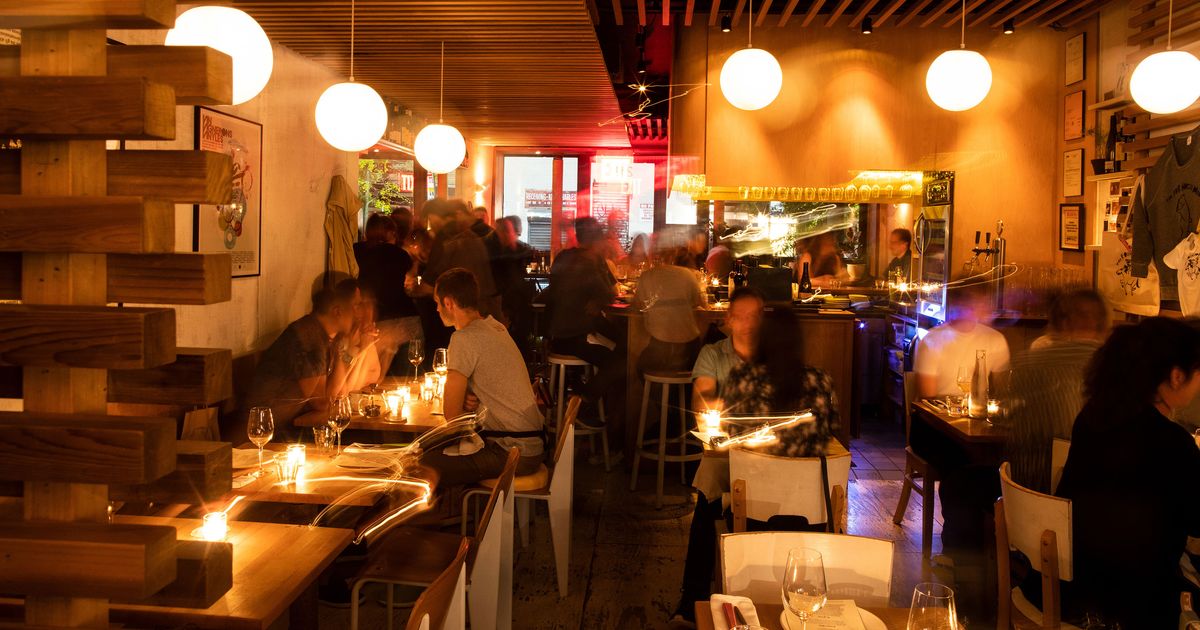
Bars in Brooklyn
Browse all →
Hotels in Brooklyn
Browse all →


At a Glance
- Cozy
- Trendy
- Modern
- Intimate
- Date Night
- Group Dining
- Special Occasion
- Open Kitchen
- Craft Cocktails
- Local Sourcing
Homey-chic living room with white brick walls covered in vinyl records, tree stump coffee tables, monstera plants, and warm lighting creating a cozy, personable atmosphere.