Our verdict
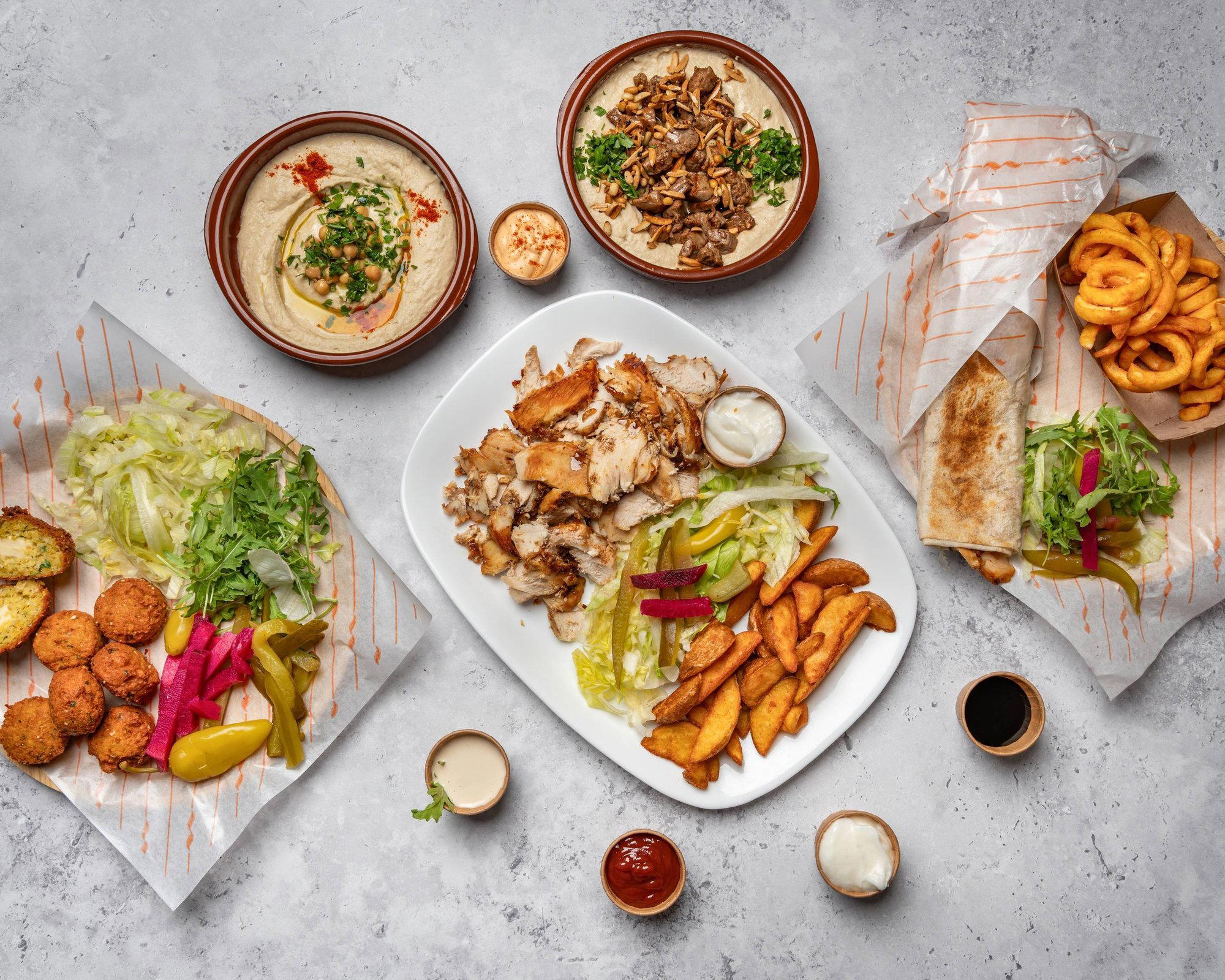
On Statiestraat in the Berchem district, Falafel spot occupies the affordable, plant-forward end of Antwerp's eating spectrum, a counter that draws on Middle Eastern street-food tradition at a moment when the city's dining scene is broadening well beyond its Flemish fine-dining roots. For a quick, filling meal built around legumes rather than livestock, this address delivers without ceremony.

Pearl is the En Primeur Club membership app, where members save venues, book tables and use the concierge.
Where Antwerp's Street-Food Circuit Meets Ethical Eating
Antwerp's restaurant identity has long been anchored by Flemish creative cuisine and French bistro tradition. Think the tasting-menu formalism of Hertog Jan at Botanic, the classic bourgeois cooking at 't Fornuis, or the precision Japanese work at DIM Dining. But alongside that fine-dining tier, a parallel circuit of affordable, ingredient-led street-food counters has been expanding steadily through the city's outer neighbourhoods, and Statiestraat 159, in Berchem, sits squarely inside that circuit.
Falafel spot occupies a position that the city's more decorated addresses do not: the sub-€15 meal built almost entirely around plant-based protein. That positioning carries its own editorial weight in 2024. Across European cities, the falafel counter has quietly become one of the more compelling arguments for low-footprint eating, a format that was sustainable before sustainability became a dining trend.
The Logic of the Falafel Counter as a Low-Impact Eating Format
There is an inconvenient truth buried in Belgium's fine-dining circuit: the higher the price point, often the heavier the protein footprint. The country's most celebrated kitchens, from Hof van Cleve in Kruishoutem to Boury in Roeselare, are built around exceptional sourcing, but still operate in a tradition where meat and fish are the structural centre of most menus. The falafel counter inverts that logic entirely.
Falafel is, at its core, a chickpea or broad-bean preparation with one of the lowest carbon profiles of any street food in common circulation. The deep-frying process uses comparatively little oil per portion. The herbs, garlic, and cumin that define a well-made falafel are high-yield, low-input crops. And the format itself, wrap, flatbread, or plate, generates almost no food waste when run by a competent operation, because the filling-to-carbohydrate ratio is calibrated per order rather than plated in advance.
That is the environmental argument for the falafel counter as a format. It predates the sustainability conversation in European fine dining by decades, which is part of what makes it interesting. While restaurants from Vrijmoed in Gent to Willem Hiele in Oudenburg are building elaborate frameworks around ethical sourcing and waste reduction, the falafel counter achieves a similar outcome through structural simplicity rather than programmatic intent.
Berchem and the Statiestraat Address
Statiestraat runs through Berchem, a district south of Antwerp's historical centre with a density of independent food businesses that the tourist-facing streets around the Grote Markt do not replicate. The neighbourhood functions as one of the city's more reliable everyday eating zones, less deliberately arranged than the areas around Zilte and the MAS, more representative of how Antwerp residents actually eat across price brackets.
Berchem's food character reflects the city's demographic breadth. Middle Eastern, Turkish, and North African food counters operate alongside Belgian bakeries and neighbourhood cafés, creating a strip that reads more like a working city than a dining destination. For a visitor whose itinerary includes dinner at one of Antwerp's multi-course addresses, a falafel lunch on Statiestraat functions as useful counterweight, a reminder that the city's eating culture runs wider than its Michelin footprint.
Reaching the address is direct from central Antwerp. Berchem station connects directly to Antwerp-Centraal on the main rail line, and Statiestraat itself is walkable from there. The area does not require a taxi or tram, which adds to its accessibility as a midday stop.
Middle Eastern Street Food in a Northern European Context
The falafel format arrived in Western Europe through Lebanese and broader Middle Eastern diaspora communities, and its diffusion across cities like Antwerp, Brussels, Amsterdam, and Berlin tracks closely with those migration patterns. What distinguishes a strong falafel operation from a weak one is rarely the concept, it is execution consistency: the temperature and texture of the falafel at the moment of service, the freshness of the accompanying herbs and pickles, the structural integrity of the wrap or plate under the weight of its components.
Belgium has a comparatively deep Lebanese restaurant presence for a country of its size, which means that the reference points for quality Middle Eastern food are not absent from the local food culture. Antwerp's version of the falafel counter sits inside that broader Belgian context, where the competition for the midday plant-based meal has increased meaningfully over the past decade.
For travellers accustomed to the falafel counters of Tel Aviv, East London, or Berlin's Mitte district, the Antwerp incarnation of the format will feel familiar in structure if different in precise flavour register. The chickpea-based falafel common in Belgium tends toward a slightly denser interior than the Israeli-style version, though this varies by operation.
How Falafel Spot Fits Into the Broader Antwerp Eating Day
Antwerp rewards the kind of eating itinerary that moves across price tiers within a single day. A lunch on Statiestraat followed by dinner at Bistrot du Nord covers meaningful range, from sub-€15 plant-based street food to mid-range French bistro cooking, without requiring the kind of budget or advance planning that a full tasting menu demands. For visitors whose dining interests extend beyond Belgium, the same framework applies: a comparable contrast plays out in cities like New York, where a counter lunch precedes an evening at a place like Le Bernardin, or San Francisco, where the range between street food and a reservation at Lazy Bear is similarly wide.
The Antwerp restaurant scene at the higher end is documented in our full Antwerp restaurants guide, which covers the city's fine-dining circuit alongside more accessible addresses. Belgium's wider restaurant geography, from Bozar in Brussels to Le Chalet de la Forêt in Uccle and La Durée in Izegem, provides the comparative frame within which a Berchem falafel counter occupies its specific, useful niche.
Planning Your Visit
The Statiestraat address does not carry the booking pressure of Antwerp's tasting-menu restaurants, where reservations at addresses like Cuchara in Lommel or Ralf Berendsen in Neerharen require planning weeks in advance. A falafel counter operates on walk-in logic, and the Berchem location is leading approached as a midday stop rather than an evening destination. Peak lunch hours in the neighbourhood run roughly 12:00 to 14:00 on weekdays.
Frequently asked questions
Where do I go for Falafel spot?
Falafel spot is located at Statiestraat 159, 2600 Antwerpen, Belgium, Antwerp.
Is Falafel Spot in Antwerp suitable for vegetarian or vegan diners?
The falafel format is rooted in plant-based Middle Eastern street-food tradition, making this Berchem counter a practical option for vegetarians and often vegans by default.
What dish is Falafel spot famous for?
The name is the answer: falafel is the format this Statiestraat counter is built around. In the Middle Eastern street-food tradition, that means chickpea or broad-bean fritters served wrapped or plated, typically with tahini, pickles, and fresh vegetables.
How far ahead should I plan for Falafel spot?
Statiestraat 159 operates as a street-food counter in Berchem, a format that does not carry the reservation pressure of Antwerp's tasting-menu restaurants. Walk-in visits are the norm at this category of address.
Category Peers
Comparable venues nearby, for context on price, style, and recognition.
| Venue | Cuisine | Price | Notes |
|---|---|---|---|
| Falafel spotThis venue (the venue you are viewing) | Lebanese Falafel | $10–20 | Not listed |
| Boker Tov Markgrave | Authentic Israeli & Levantine Deli | $30–50 | Markgrave |
| Mandarin | Lebanese | $10–20 | near Central Station |
| Ting Kee Mie | Chinese Noodle Bar | $10–20 | Chinatown |
| Jitsk | Artisanal Chocolates & Pralines | $10–20 | Mechelen |
| Takumi Ramen Kitchen | Authentic Japanese Ramen | $20–30 | Centrum |