Ezov

Michelin Plate
Our verdict
Ezov brings Israeli cooking to East Austin's Cesar Chavez corridor, earning consecutive Michelin Plate recognition in 2024 and 2025. The kitchen works in a register that sits apart from the city's barbecue and Tex-Mex defaults, drawing on Middle Eastern pantry depth while staying grounded in Texas produce.

Pearl is the En Primeur Club membership app — saves, bookings, and concierge access live there. Same editors, same standards.
- Address
- 2708 E Cesar Chavez St, Austin, TX 78702
- Phone
- (512) 305-1118
- Hours
- Mon–Thu 5–10 PMFri–Sat 5–11 PMSun 11 AM–3 PM, 5–9 PM
- Website
- ezovatx.com
- Directions
- Get directions
- Booking
- Book on OpenTable
The menu
What to order
- Smashed cucumber with labneh and amba
- Hummus with roasted pattypan squash
- Chicken shawarma
- Falafel with schug
- Baklava with tahini ice cream
East Austin's Israeli Kitchen and What It Tells You About the City
East Cesar Chavez has been absorbing ambitious restaurants for the better part of a decade, and the strip now reads as a reliable indicator of where Austin's dining culture is heading rather than where it has been. The neighborhood sits at a remove from the downtown hotel-restaurant circuit, which tends to filter out concepts built purely around trend rather than conviction. Ezov, at 2708 E Cesar Chavez St, occupies that context: a stretch of Austin where the surrounding blocks set a high bar for specificity and where a generic concept would have a hard time building a repeat audience.
Israeli cuisine in the American dining scene has been moving steadily from novelty to category, driven largely by New York operators and, more recently, by a second generation of kitchens that opened outside the coasts. 12 Chairs in New York City helped establish the template for casual Israeli in the American market; Ash'Kara in Denver demonstrated that the format could travel to landlocked Western cities with real success. Ezov is Austin's answer to that same question, and the consecutive Michelin Plate recognition it received in 2024 and 2025 confirms it is operating at a level that puts it in serious company.
The Intersection of Technique and Pantry
The editorial angle that matters most with a kitchen like Ezov's is not simply the food's origin story but the specific tension it creates between imported method and local material. Israeli cooking at its most considered is not a fixed cuisine in the way French or Japanese traditions are codified. It is, at its core, a synthesis: Levantine pantry staples, North African spice logic, Eastern European preservation instincts, and a Mediterranean relationship with vegetables as primary rather than secondary. When that framework arrives in Central Texas, it encounters a completely different agricultural context, one defined by Gulf Coast produce seasons, Hill Country ranching, and the kind of heat that pushes certain ingredients and rules out others.
That collision is where kitchens of Ezov's type either find something genuinely interesting to say or fall back on importing ingredients and techniques wholesale from a coastal model. The Michelin Plate designation, awarded in consecutive years, signals that the inspectors found coherence rather than confusion in how the kitchen resolves that tension. At the $$$ price point, Ezov sits in a tier that places it alongside Austin's more considered mid-range rooms: a step above the casual end of the market and in the same general bracket as Hestia, which operates at the same price tier with a live-fire American format that also draws heavily on ingredient sourcing as a structural principle.
Where Ezov Fits in Austin's Award-Recognized Set
Austin's Michelin-recognized restaurants now span a wide enough range of cuisines and formats that the guide functions less as a ranking of similar things and more as a map of different entry points into serious cooking. Barley Swine holds a full star with its New American tasting format at $$$$; la Barbecue holds a star while operating at $$, demonstrating that the guide is rewarding cooking logic rather than price bracket alone. Ezov's Plate recognition places it inside that broader Michelin-acknowledged set without the star, which is the accurate and honest read of its current standing: cooking the inspectors consider worth attention, in a format and cuisine that is doing something specific enough to register.
For a reader calibrating where to spend an evening in Austin, that distinction matters. The Plate is not a consolation prize in the Michelin framework; it marks restaurants where the food quality is sound and the concept is coherent. In a city where the dining conversation is still dominated by barbecue and Tex-Mex defaults, a Plate-recognized Israeli kitchen represents a genuine alternative in the award-tracked tier. Travelers looking at the full picture of what Austin's serious restaurant scene covers can explore further through our full Austin restaurants guide.
The East Cesar Chavez Address as Context
Location shapes audience in ways that menu alone cannot. East Cesar Chavez runs through a part of Austin that has gentrified faster than almost anywhere else in the city, which creates a dining public that skews toward residents with strong food literacy and a preference for specificity over spectacle. That is a good customer base for a cuisine like Israeli, which rewards diners who are willing to engage with an unfamiliar ingredient grammar rather than defaulting to comfort-food recognition.
The volume and rating combination at Ezov suggests a loyal local base supplemented by word-of-mouth rather than a venue running on foot traffic alone. That dynamic tends to produce more stable kitchens and more considered service than restaurants that depend primarily on first-time visitors.
Broader Context: Israeli Cooking in American Cities
The growth of Israeli restaurant culture in the United States is one of the cleaner stories in American dining over the past fifteen years. What began as a handful of New York-centric operators has expanded into a format with real geographic range. The cuisine's emphasis on vegetables, legumes, and fermented or preserved components aligns naturally with the plant-forward tendencies that have moved from niche to mainstream in American fine-casual cooking. It also translates well to markets with strong farmers' market cultures, since the cooking can absorb local produce without losing its structural identity.
Austin, with its year-round growing season and strong farm-to-table infrastructure, is a logical city for Israeli cooking to root itself. The Hill Country's herb production and the Gulf's proximity create specific seasonal windows that a kitchen attuned to vegetable-led cooking can use with more flexibility than a protein-centric format might. Ezov's position in that context suggests it is working with those conditions rather than against them, which is the approach that tends to produce the kind of consistency Michelin inspectors return to find.
Planning a Visit
Ezov operates at the $$$ tier, which for Austin represents a thoughtful mid-range spend rather than a special-occasion stretch. The East Cesar Chavez address is accessible by car with street parking options nearby, and the neighborhood's density means it pairs naturally with a drink at one of the area's bars before or after; readers can check our full Austin bars guide for options in the same corridor. Booking specifics are best confirmed directly with the restaurant, as hours and availability can shift. Those planning a broader Austin itinerary can draw on our full Austin hotels guide, our full Austin wineries guide, and our full Austin experiences guide to build out the surrounding days.
For those mapping Austin's Michelin-tracked restaurants more broadly, InterStellar BBQ and Craft Omakase represent two very different ends of what the guide has recognized in the city, and both reward the same kind of deliberate planning that Ezov requires. Nationally, readers comparing Israeli-inflected cooking at the recognized fine-dining level might also look at what Le Bernardin, Lazy Bear, Alinea, Single Thread Farm, The French Laundry, and Emeril's represent in terms of how regional kitchens build identities around a specific culinary inheritance applied to local conditions.
FAQ: What Do People Recommend at Ezov?
The kitchen's Israeli framework draws on Levantine and Mediterranean conventions, meaning vegetable preparations, legume-based dishes, and spiced proteins are all central to what the kitchen does. The consecutive Michelin Plate awards in 2024 and 2025 indicate the inspectors found the cooking coherent and the quality reliable across visits, which is the clearest available signal about what to order: trust the menu's range rather than chasing a single item. For dishes informed by local Texas sourcing within an Israeli pantry structure, the seasonal menu components are likely where the kitchen is making its most specific editorial statements.
Similar Picks
| Venue | Cuisine | Price | Awards | Notes |
|---|---|---|---|---|
| EzovThis venue — the venue you are viewing | Modern Eastern Mediterranean | $50–100 | Michelin Plate | Not listed |
| Barley Swine | Modern American Fine Dining | $100–150 | 1 Michelin Star · James Beard Award Semi Finalist | New American, Contemporary |
| la Barbecue | Texas Barbecue | $50–100 | 1 Michelin Star · James Beard Award Semi Finalist | Barbecue |
| Olamaie | Modern Southern | $100–150 | 1 Michelin Star | Southern |
| Jeffrey's | Modern American Steakhouse | $150–200 | Michelin Plate · Wine Spectator Best of Award of Excellence | French - Steakhouuse, Contemporary |
| Kemuri Tatsu-ya | Japanese-Texas BBQ Izakaya | $50–100 | Michelin Bib Gourmand | Izakaya |
Recognition history
Dated appearances from independent guides and award organizations, with the underlying list record or original source where available.
Michelin Plate
Michelin
Full recognition history (2 entries)
Michelin Plate
Michelin
Continue exploring
More in Austin
Restaurants in Austin
Browse all →
Bars in Austin
Browse all →
Hotels in Austin
Browse all →


Ezov
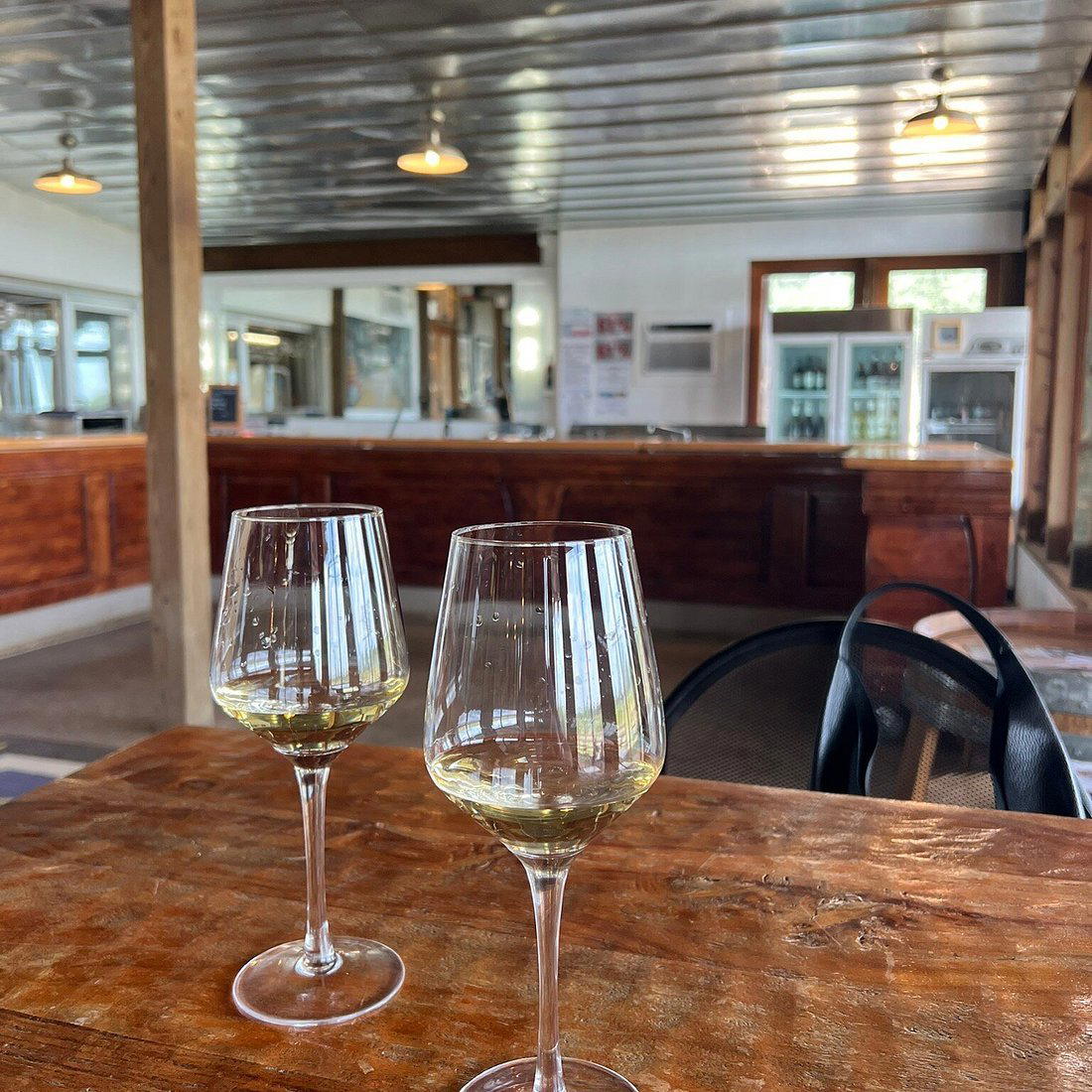
The wine
- Wine program
- Curated wine list
- Extensive wine list
- Craft cocktails
- Zero-proof drinks
Details
- Lively
- Modern
- Energetic
- Elegant
- Intimate
- Date Night
- Group Dining
- Celebration
- Special Occasion
- Design Destination
- Open Kitchen
- Extensive Wine List
- Craft Cocktails
- Zero Proof
- Local Sourcing
- Family Style
- Small Plates
- Craft Cocktails
- Mediterranean Wines
- Zero Proof Options
- Vegetarian Friendly
- Gluten Free Options
- Allergy Accommodating
Current opening hours
- Monday
- 5–10 PM
- Tuesday
- 5–10 PM
- Wednesday
- 5–10 PM
- Thursday
- 5–10 PM
- Friday
- 5–11 PM
- Saturday
- 5–11 PM
- Sunday
- 11 AM–3 PM, 5–9 PM
Hours can change for holidays and private events. Last verified .
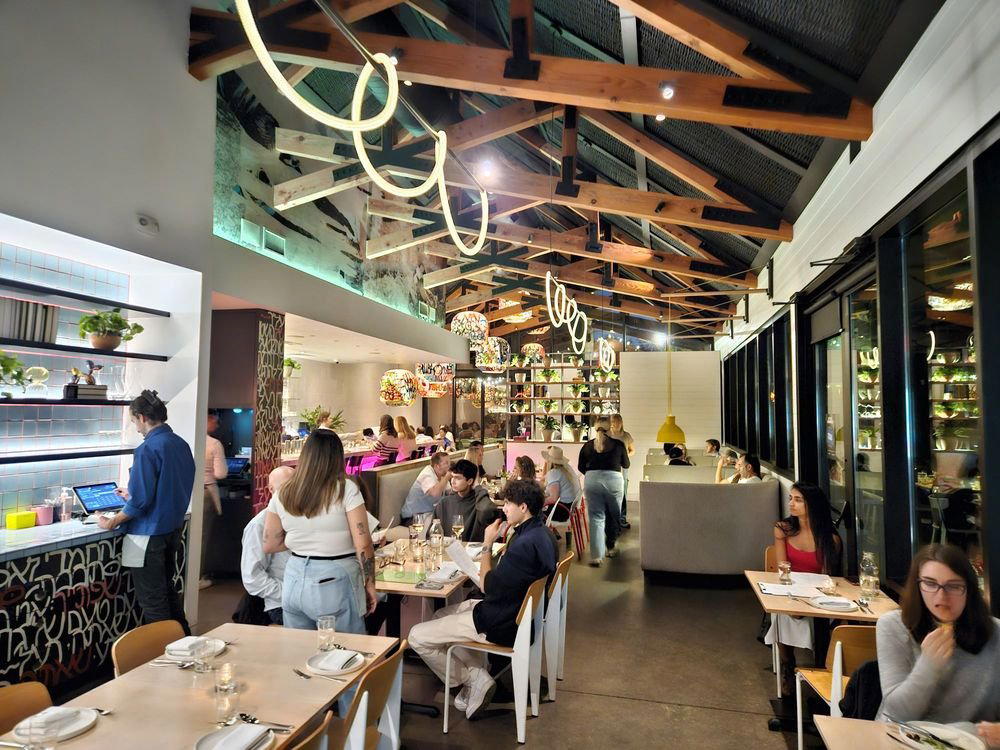
Lively and energetic with graffiti art motifs, floating light fixtures, and club-oriented music creating a lively party atmosphere; modern design with Hebrew lyrics and paper lanterns.