Errington's Barn
Our verdict
A converted farm barn outside Biggar in the South Lanarkshire uplands, Errington's Barn sits at the source of its own supply chain in a way few Scottish dining rooms can claim. The setting frames the food before a plate arrives: open countryside, farm buildings, the logic of provenance made physical. For visitors making the drive from Edinburgh or Glasgow, the journey is part of the argument.

Pearl is the En Primeur Club membership app — saves, bookings, and concierge access live there. Same editors, same standards.
- Address
- South Melbourne Farm, Elsrickle, Biggar ML12 6QZ, United Kingdom
- Phone
- +441968682291
- Hours
- Mon–Thu 10 AM–4 PMFri–Sat 10 AM–9 PMSun 10 AM–4 PM
- Website
- erringtonsbarn.co.uk
- Directions
- Get directions
- Booking
- Book on the venue's website
The menu
What to order
- Lanark Blue cheese
- Home-made cakes
- Breakfast rolls
Where the Food Begins
The road south from Edinburgh into South Lanarkshire loses the city gradually, trading suburban edges for moorland and then the quieter valleys around Biggar. By the time the farm buildings at Elsrickle come into view, the shift from urban to agricultural is complete. Errington's Barn sits within that landscape in the literal sense: a working farm setting where the distance between source and plate is measured in metres, not supply-chain spreadsheets. That physical proximity to production is the central argument of the place, and the barn conversion format makes it visible rather than rhetorical.
This is a model with serious precedent in British dining. Places like L'Enclume in Cartmel and Moor Hall in Aughton built reputations in part by controlling their own ingredient chains, running kitchen gardens and farm plots that allowed chefs to cook at the pace of actual seasons rather than wholesale availability. Errington's Barn occupies a similar philosophical position in the Scottish context, though at a different scale and without the same institutional weight of awards recognition behind it.
The Provenance Frame: Why Location Matters Here
Scotland's larder argument is well-rehearsed in food writing, but it tends to concentrate on Highland game, west-coast shellfish, and Aberdeen beef. The South Lanarkshire uplands operate on quieter registers: sheep country, dairy pasture, market garden territory. Biggar itself is a market town with agricultural roots that predate any contemporary interest in farm-to-table as a concept. The region's food identity is less glamorous than the Highlands and more grounded for it.
Errington's Barn draws on that agricultural character directly. The address at South Melbourne Farm, Elsrickle, is not incidental: the farm setting defines what is possible on the menu and, more importantly, what is not. Sourcing disciplines of this kind tend to produce shorter menus, more seasonal variation, and a closer relationship between what is abundant and what appears on the plate. That is a constraint, but it is also an editorial position, and in the current British dining moment it carries more cultural credibility than extensive à la carte choice.
For comparison, consider how venues further south have built entire critical reputations on similar logic. Le Manoir aux Quat' Saisons in Great Milton has long maintained kitchen gardens as both a practical and symbolic commitment to sourcing. Gidleigh Park in Chagford built its identity around Dartmoor proximity and local supply chains in the southwest. What Errington's Barn represents is a Scottish version of that instinct, closer to the farm in the most direct sense possible.
The Barn Format and What It Signals
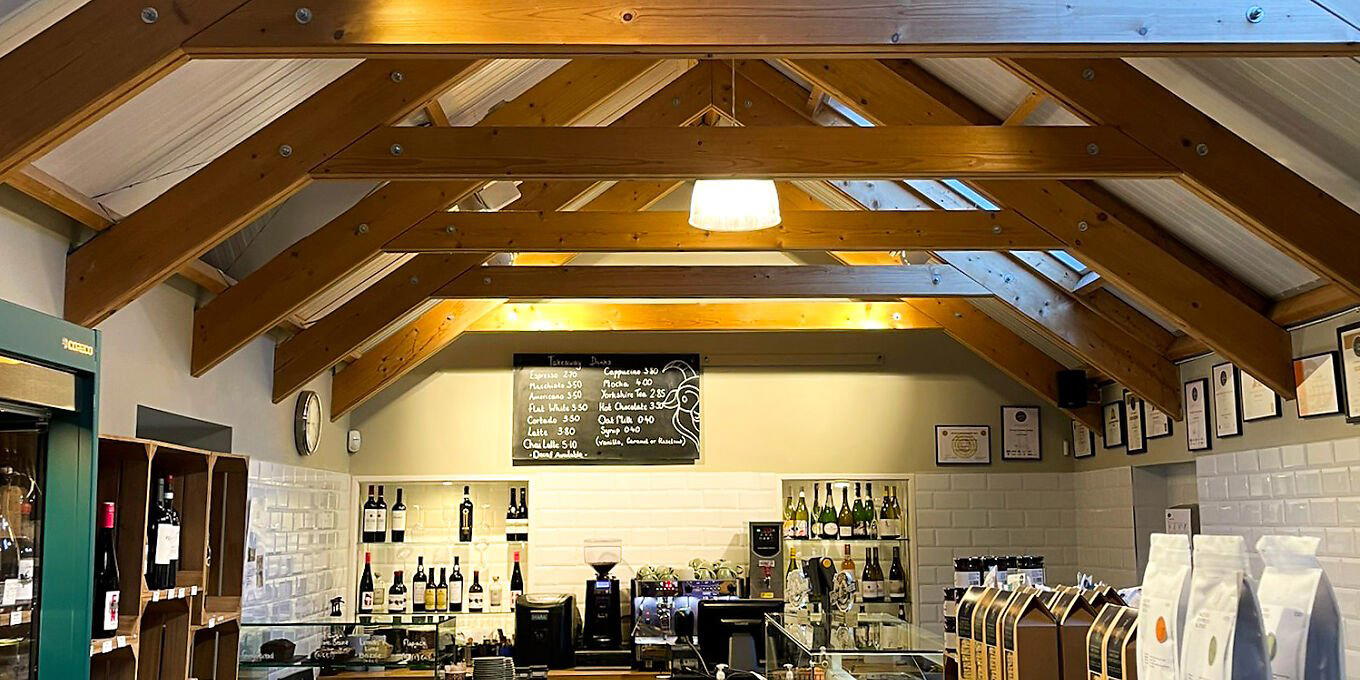
Converted agricultural buildings have become a recognisable format in British destination dining over the past decade. At their weakest, they offer the aesthetic without the substance: exposed beams and reclaimed wood dressing a kitchen that buys from the same wholesalers as everywhere else. At their strongest, they deliver on the implied contract: that the setting and the sourcing are genuinely connected, and that coming here means eating food that could not be produced in the same way anywhere else.
The barn format also tends to produce a specific kind of atmosphere, one that reads as informal in structure but often serious in intent. It is a different register from the dining room formality of, say, Restaurant Andrew Fairlie in Auchterarder or The Glenturret Lalique in Crieff, both of which operate within grander hospitality contexts. Errington's Barn sits at the other end of that spectrum: the architecture does not perform grandeur, and the expectation on arrival is one of genuine rural informality rather than countryside hotel polish.
That informality has practical implications for families. Children are not out of place in settings of this kind, and the physical environment of a working farm tends to make the experience more accessible to younger visitors than a tasting-menu room built around silence and precision service. That said, the drive to Elsrickle is purposeful, and the venue works well for those who arrive having chosen it specifically rather than as a convenience option.
Scotland's Quieter Dining Tier
The Scottish fine dining conversation concentrates heavily on Edinburgh and Glasgow, with a handful of destination venues pulling attention to more remote locations. The Biggar area does not feature prominently in that conversation, which means Errington's Barn operates in a space that is less competitive by category but also less supported by the surrounding critical infrastructure. There are no peer restaurants within walking distance, no wine bars to extend the evening, no hotel options immediately adjacent that would make an overnight stay automatic.
This is both a limitation and an asset. Venues in this position either fail to build repeat traffic or become sufficiently embedded in their communities and regional food cultures to generate loyalty that operates independently of media attention. The farm setting, if it is as connected to its supply chain as the location implies, is the kind of foundation that sustains the latter outcome. See our full Biggar restaurants guide for broader context on what the area offers.
For travellers comparing Scottish dining experiences, the contrast is instructive. Venues like Ynyshir Hall in Machynlleth (technically Wales, but a useful peer in the remote-destination category) have demonstrated that serious culinary ambition does not require a city address. In England, hide and fox in Saltwood, Artichoke in Amersham, and Hand and Flowers in Marlow have all built substantial reputations from non-metropolitan positions. The question for Errington's Barn is whether the farm provenance is sufficiently developed to make the drive feel necessary rather than merely scenic.
Planning Your Visit
Errington's Barn is located at South Melbourne Farm, Elsrickle, Biggar ML12 6QZ, roughly 40 minutes by road from Edinburgh and a similar distance from Glasgow, making it a plausible day trip from either city. The rural location means a car is effectively required; there is no practical public transport option to Elsrickle. Given the limited venue data currently available through booking platforms, contacting the barn directly before planning a visit is advisable, particularly to confirm current opening days, format, and whether advance reservation is required. The farm setting suggests seasonal variation in what is available, which is itself a reason to check current programming before travelling.
Frequently asked questions
Is Errington's Barn suitable for children?
The farm setting at South Melbourne Farm, Elsrickle gives the venue a relaxed, rural character that tends to suit families with older children more naturally than formal city restaurants. The barn format signals a less rigid dining environment than a metropolitan fine dining room. check the venue's official channels before visiting with young children to confirm current arrangements.
What should I expect atmosphere-wise at Errington's Barn?
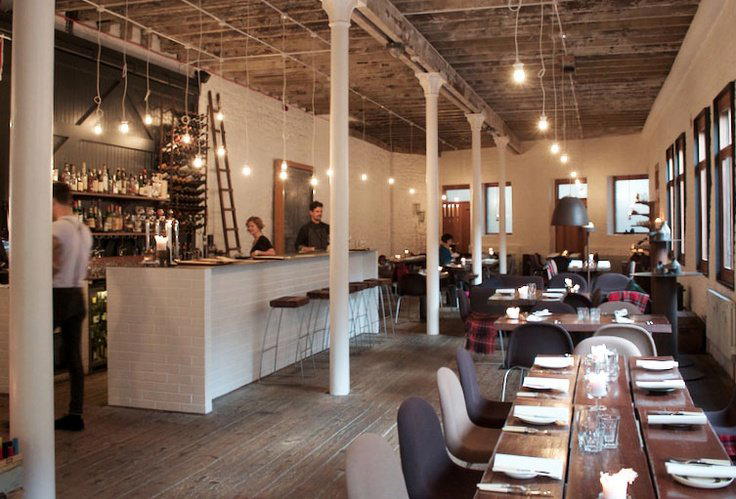
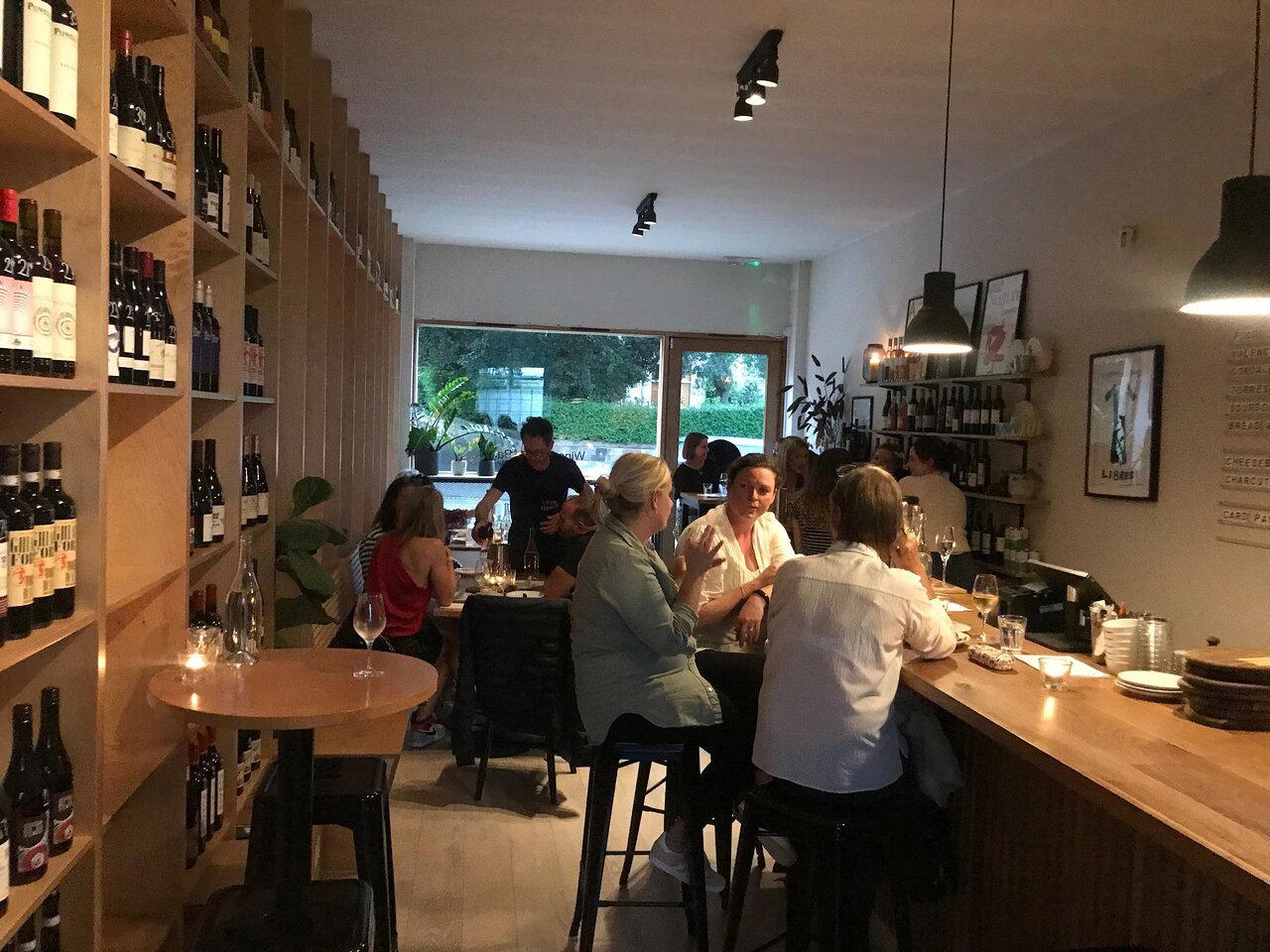
The converted agricultural building at South Melbourne Farm sets the tone: expect working farm surroundings rather than polished hotel-restaurant interiors. Barn-format venues in this tier of British destination dining typically run with close seating, natural materials, and an informal pace that contrasts with city fine dining. The drive south from Edinburgh into South Lanarkshire moorland is part of the experience before you arrive.
How far is Errington's Barn from Edinburgh, and is it worth the drive from the city?
South Melbourne Farm, Elsrickle sits approximately 40 minutes south of Edinburgh by road, placing it in the same travel bracket as other Scottish destination venues that draw city visitors into rural South Lanarkshire. The distance is short enough for a dedicated lunch or dinner trip without requiring an overnight stay. For visitors interested in Scottish larder-driven dining outside the Edinburgh and Glasgow restaurant circuit, the setting itself adds context that city venues cannot replicate.
What do people recommend at Errington's Barn?
The venue's positioning in the South Lanarkshire countryside, drawing on Scotland's broader larder of local produce, suggests the menu leans on regional sourcing rather than imported produce. Specific dish recommendations are best sourced from current visitors, as menus at farm-based venues of this type tend to shift with availability and season.
How do I find Errington's Barn?
Errington's Barn is located at South Melbourne Farm, Elsrickle, Biggar ML12 6QZ, United Kingdom, Biggar.
Can I walk in to Errington's Barn?
Given the rural location at Elsrickle, Biggar, and the destination nature of the venue, walk-ins are unlikely to be reliable. Farm dining operations of this format typically run on bookings, and the drive from Edinburgh or Glasgow — roughly 40 minutes either way — makes advance planning practical regardless.
Comparable Venues
Comparable venues nearby, for context on price, style, and recognition.
| Venue | Cuisine | Price | Awards | Notes |
|---|---|---|---|---|
| Errington's BarnThis venue — the venue you are viewing | Scottish Farmhouse Cafe | $10–20 | Not listed | Not listed |
| The Hart | Modern British Gastropub | $30–50 | Michelin Plate | Marylebone |
| Glencoe Gathering | Scottish Highland Pub and Seafood | $20–30 | Not listed | Glencoe Village |
| The Highland Laddie | Modern British Gastropub | $30–50 | Not listed | Burley |
| Badger & Co | Modern Scottish Gastropub | $20–30 | Not listed | New Town |
| Slug & Lettuce Edinburgh, Omni Centre | British Gastropub | $20–30 | Not listed | Greenside |
Details
- Rustic
- Cozy
- Scenic
- Family
- Casual Hangout
- Brunch
- Garden
- Historic Building
- Beer Program
- Farm To Table
- Local Sourcing
- Garden
- A La Carte
- Locally Roasted Coffee
- Vegetarian Friendly
- Vegan Options
- Gluten Free Options
Current opening hours
- Monday
- 10 AM–4 PM
- Tuesday
- 10 AM–4 PM
- Wednesday
- 10 AM–4 PM
- Thursday
- 10 AM–4 PM
- Friday
- 10 AM–9 PM
- Saturday
- 10 AM–9 PM
- Sunday
- 10 AM–4 PM
Hours can change for holidays and private events. Last verified .
Cozy atmosphere with soaring rafters, log burner for warmth, and woodland views from the garden conservatory.