
A Michelin Plate-recognised Japanese restaurant on a quiet De Pijp street, EN sits within a small but serious tier of Amsterdam dining that takes Japanese technique as a primary language rather than a point of fusion. The €€€ price point places it below the city's starred Creative tables while delivering comparable seriousness in the kitchen.
Pearl is the En Primeur Club membership app — saves, bookings, and concierge access live there. Same editors, same standards.
- Address
- Dusartstraat 53 h, 1072 HP Amsterdam, Netherlands
- Phone
- +31 20 470 3666
- Website
- en-amsterdam.nl
- Directions
- Get directions
 Saves & bookings on Pearl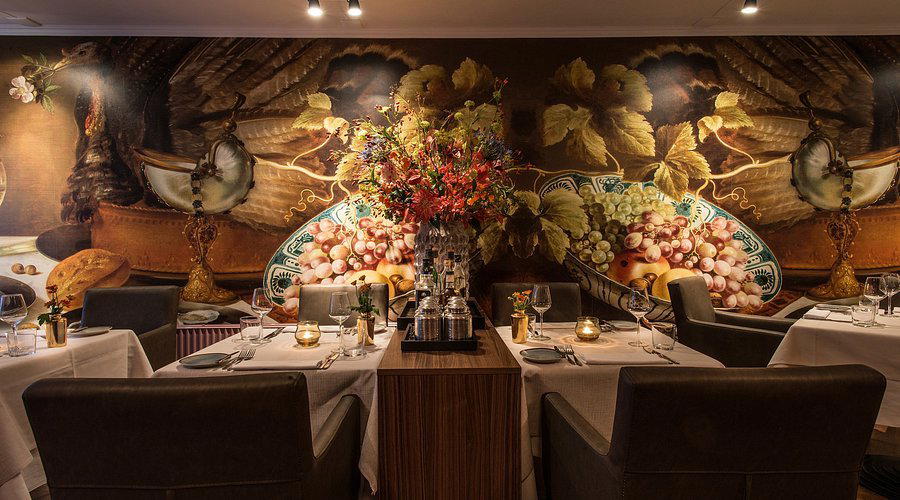
Japanese Precision in De Pijp
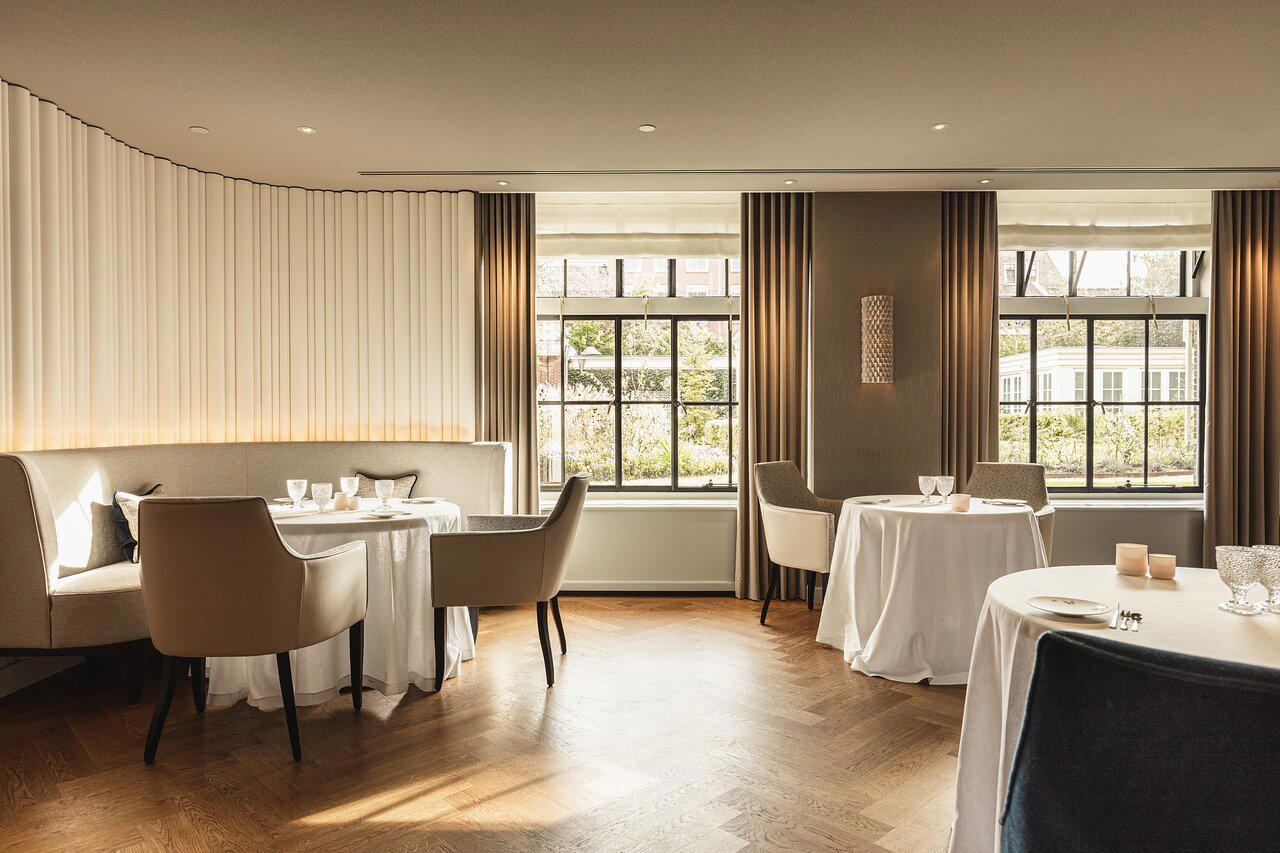
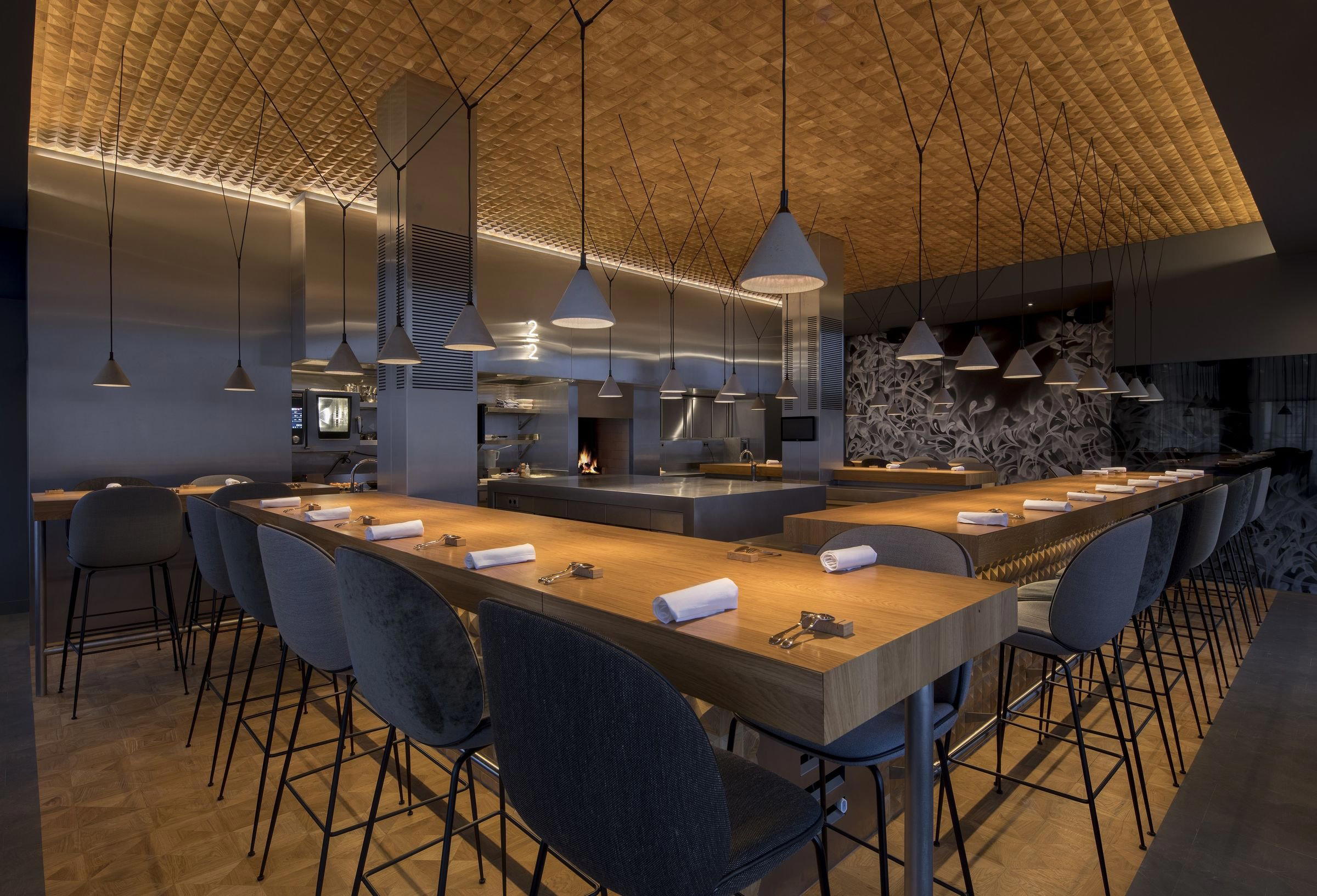
De Pijp has spent the past decade shifting from Amsterdam's most affordable neighbourhood to one of its most food-literate. The streets around the Albert Cuyp market now hold a cross-section of the city's mid-to-upper dining tier, and Dusartstraat, a quieter residential spur off the main corridor, is where EN has established itself as the area's most serious Japanese address. The room reads compact and considered: the kind of space where the absence of visual noise is a deliberate decision, and where the distance between tables is enough to suggest that the kitchen, not the atmosphere, is the main event.
Where EN Sits in Amsterdam's Japanese Scene
Amsterdam's Japanese dining offer is smaller than you might expect for a city of its size and international character. The committed Japanese restaurants operating at €€€ or above are few, and most sit well below the technical standards set in London, Paris, or Antwerp. EN holds a distinct position in that sparse field: two consecutive Michelin Plates, in 2024 and 2025, signal that the Michelin inspectors find the kitchen credible without yet awarding a star. That gap between plate and star is meaningful. It places EN in a tier of Amsterdam restaurants where the cooking is consistent and serious, the sourcing shows care, and the overall offer is worth the price point, but where something, whether ambition, distinctiveness, or execution ceiling, keeps it from the starred bracket.
For comparison, Amsterdam's starred Japanese-adjacent tables operate at €€€€ and above. Ciel Bleu, the city's two-star Creative address, and Spectrum and Vinkeles in the €€€€ Creative tier all draw on Japanese technique as part of a broader vocabulary but do not operate as Japanese restaurants. EN does. That specificity, at a lower price point and with Michelin recognition, makes it the clearest answer to a particular question: where do you eat Japanese food at a serious level in Amsterdam without crossing into fine dining territory?
The Dutch city's broader mid-tier dining scene offers alternatives worth noting. Bistro de la Mer at €€€ covers classic cuisine with comparable pricing, and Flore in the Contemporary €€€€ bracket provides a point of upward comparison. None of them, however, operate in the same cuisine tradition as EN, which means the restaurant effectively has its niche to itself at this price point.
The Wine Question at a Japanese Table
The editorial angle here is worth addressing directly, because it is one of the least-discussed challenges in European Japanese dining: what does a serious wine list look like at a restaurant where the cuisine tradition has almost no native relationship with European wine?
Japanese restaurants in Europe have historically solved this problem in one of three ways. The first is to ignore it, offering a short, generic list that covers the bases without conviction. The second is to go aggressively into sake and Japanese whisky and treat wine as a secondary consideration. The third, increasingly common at the better European Japanese tables, is to build a list that treats the delicacy and umami depth of Japanese cuisine as a filter for wine selection: leaning toward low-intervention whites, precise German Rieslings, Burgundian Chardonnay, and lighter reds that do not compete with dashi-led cooking.
What can be said is that the Michelin Plate recognition over two consecutive years implies a front-of-house operation that meets a baseline of hospitality quality, and that the €€€ price tier suggests the list is priced for accessibility rather than trophy collecting.
EN in the Context of Dutch Japanese Dining Nationally
To understand EN's position more fully, it helps to look at where serious Japanese dining sits across the Netherlands. Hanasato in Groningen and Japans Restaurant Shiro in Hertogenbosch both operate at the €€€ Japanese tier outside Amsterdam, which indicates that the Netherlands has a small but distributed base of serious Japanese restaurants beyond the capital. Among the broader Dutch fine dining field, destinations like De Librije in Zwolle, 't Nonnetje in Harderwijk, Aan de Poel in Amstelveen, Brut172 in Reijmerstok, De Bokkedoorns in Overveen, and De Groene Lantaarn in Staphorst represent the country's fine dining geography at the upper end, with none of them operating in the Japanese cuisine tradition.
Practical Planning
EN is located at Dusartstraat 53h in Amsterdam's De Pijp district, a ten-minute tram or bicycle ride from Museumplein. The address sits in a residential block, and the entrance is scaled to match the neighbourhood rather than to signal a destination restaurant from the street, which is consistent with how the better mid-tier Japanese restaurants in European cities tend to present themselves. The restaurant holds.
Side-by-Side Snapshot
Comparable venues nearby, for context on price, style, and recognition.
| Venue | Cuisine | Price | Awards | Notes |
|---|---|---|---|---|
| ENThis venue — the venue you are viewing | Modern Japanese Kaiseki | $$$ | Michelin Plate | Not listed |
| IZAKAYA | Japanese-South American Fusion Izakaya | $$$ | Not listed | Frans Halsbuurt |
| Ikkoku | Japanese Omakase & Robatayaki | $$$ | Not listed | Hercules Seghersbuurt |
| A-Fusion | Asian Fusion | $$$ | Bib Gourmand | Burgwallen Oost |
| Tokyo Ramen Takeichi | Authentic Japanese Ramen | $$ | Not listed | Van Loonbuurt |
| Serre | International Fusion with Far Eastern Influences | $$$ | Bib Gourmand | Lizzy Ansinghbuurt |
Recognition history
Dated appearances from independent guides and award organizations, with the underlying list record or original source where available.
Michelin Plate
Michelin
Michelin Plate
Michelin
Continue exploring
More in Amsterdam
Restaurants in Amsterdam
Browse all →
Bars in Amsterdam
Browse all →
Hotels in Amsterdam
Browse all →
Wineries in Amsterdam
Browse all →
At a Glance
- Intimate
- Elegant
- Modern
- Date Night
- Special Occasion
- Chefs Counter
- Open Kitchen
- Sake Program
Current opening hours
- Monday
- Closed
- Tuesday
- 6–11 PM
- Wednesday
- 6–11 PM
- Thursday
- 6–11 PM
- Friday
- 6–11 PM
- Saturday
- 6–11 PM
- Sunday
- Closed
Hours can change for holidays and private events. Last verified .
Low-key, unassuming, relaxed atmosphere with warm, sincere service and lively energy reflected in the artful food presentation.