El Bistro Ondarreta

Macarfi 7.5 Food Rating
Our verdict
El Bistro Ondarreta occupies a quietly considered address on Vitoria-Gasteiz Kalea in San Sebastián's Ondarreta district, a residential stretch that sits at the western edge of the city's dining geography. The neighbourhood operates at a different register than the Parte Vieja's pintxo density, drawing a local crowd that treats the bistro format as a daily ritual rather than a tourist occasion.

Pearl is the En Primeur Club membership app — saves, bookings, and concierge access live there. Same editors, same standards.
- Address
- Vitoria-Gasteiz Kalea, 2, 20018 Donostia / San Sebastián, Gipuzkoa, Spain
- Phone
- +34943297614
- Hours
- Mon 1–3 PM, 8–10 PMTue–Wed 1–3 PMThu–Fri 1–3 PM, 8–10 PMSat–Sun Closed
- Website
- bistroondarreta.com
- Directions
- Get directions
The menu
What to order
- Pasta con Bogavante
- Gougère
- Mejillones Marinière
Where Ondarreta Eats: The Neighbourhood Bistro at San Sebastián's Quieter Edge
The western end of San Sebastián has always functioned differently from the old town. Ondarreta, tucked beyond La Concha's main sweep and bordered by the Cristina Enea park approach, is the kind of neighbourhood where residents eat out with the same frequency that visitors spend chasing pintxo bars on 31 de Agosto. El Bistro Ondarreta sits on Vitoria-Gasteiz Kalea at number two, a street address that places it squarely in residential San Sebastián rather than in the tourist circuit that clusters around the cathedral or the Gros riverfront. That positioning matters more than any single dish on the menu.
San Sebastián has long sustained two parallel dining cultures that rarely intersect: the internationally cited fine-dining tier, represented by houses like Arzak in San Sebastián and Mugaritz in Errenteria, and the day-to-day neighbourhood format that feeds the city's own people. El Bistro Ondarreta belongs to the second category, which is not a consolation prize but a different discipline entirely. Cooking for a returning local clientele demands consistency above spectacle, and the bistro format across Europe has historically been the laboratory where that discipline gets tested.
The Evolution of the Neighbourhood Restaurant in Basque Country
Understanding where El Bistro Ondarreta sits today requires a brief account of how the neighbourhood restaurant has shifted in San Sebastián over the past two decades. The city's fine-dining boom, which accelerated through the 1990s and into the 2000s with chefs whose work now appears in discussions alongside El Celler de Can Roca in Girona and Martin Berasategui in Lasarte - Oria, had a secondary effect on the mid-market: it raised the baseline expectation for ingredient sourcing and kitchen technique even in restaurants that had no ambitions toward Michelin recognition.
That trickle-down effect is visible across San Sebastián's neighbourhood tier. Places like Astelena and Aizepe Elkartea in different parts of the city demonstrate how Basque culinary culture has embedded a baseline of seasonal sourcing and technical care that would be considered exceptional in other European cities but reads as standard here. El Bistro Ondarreta operates within that same raised floor, where the question is not whether to use good ingredients but how to treat them at a price point that keeps the tables full with regulars rather than one-time visitors.
The bistro format itself has undergone its own quiet evolution in Spain. Through the early 2000s, the French-derived bistro label often signified little more than table service and a slightly longer menu than a bar. By the 2010s, a generation of cooks returning from stints in Parisian kitchens and international restaurants began using the format more deliberately, as a container for technical cooking that didn't require the formality or expense of a tasting menu. Venues across Spain's dining circuit, from Ricard Camarena in València to operations in Madrid connected to the world that DiverXO in Madrid disrupted, spawned more accessible satellite formats that carried kitchen DNA without the theatrical overhead. The neighbourhood bistro became, in this context, a statement of intention.
Ondarreta's Dining Register and What It Asks of a Bistro
Vitoria-Gasteiz Kalea runs parallel to the beach zone but sits back from it, in the kind of urban fabric where you pass a dry cleaner and a pharmacy before you find a restaurant. That context shapes what a bistro on this street needs to be. The dining room is not competing with the pintxo-bar density of the Parte Vieja, where venues like Aldamar Kalea operate in a high-turnover, standing-at-the-bar register. Nor does it sit in the same bracket as the Gros neighbourhood's more trend-aware restaurant scene, anchored by spots like Bodega Donostiarra Gros.
Ondarreta's dining culture is quieter and more self-contained. Residents here tend to patronise the same tables across seasons rather than chasing novelty, which creates a different kind of pressure on a kitchen: the need to evolve the offer without alienating the people who came last month and the month before. Across Spain's neighbourhood bistro tier, the venues that sustain themselves over time are those that treat the menu as a living document, adjusting with the market and the season while maintaining enough continuity that regulars feel at home. Compare this to the structural demands on a destination restaurant like Aponiente in El Puerto de Santa María or Quique Dacosta in Dénia, where the audience arrives once and expects a singular, unrepeatable experience. The bistro model inverts that calculus entirely.
How to Approach El Bistro Ondarreta
For visitors to San Sebastián, El Bistro Ondarreta offers something the old town's most-visited addresses cannot: a meal eaten among people who live here. That is not a trivial distinction in a city where the tourist-to-local ratio in certain neighbourhoods has shifted sharply over the past decade. Ondarreta remains one of the city's more residential zones, and a table at a bistro on Vitoria-Gasteiz Kalea is more likely to be surrounded by families and couples from the neighbourhood than by travellers consulting a guidebook.
Practically, the address is reachable from the city centre on foot via the coastal path skirting La Concha, or by taxi from the Parte Vieja in under ten minutes. For visitors planning a broader San Sebastián itinerary that extends beyond the high-end tasting menu circuit, see our full San Sebastián restaurants guide. Booking conditions and specific hours for El Bistro Ondarreta are best confirmed directly given the current absence of a published online booking channel. Given the neighbourhood's local patronage model, weekday lunches are typically more accessible than weekend evenings, when regulars reserve tables in advance.
Visitors who have spent time at technically ambitious operations outside Spain, whether at Le Bernardin in New York City or Lazy Bear in San Francisco, will find the Basque neighbourhood bistro format a useful counterpoint: less structured, more conversational, and calibrated to a pace that the city's own residents have set. The ambition is different, but so is the satisfaction. For a richer sense of how the neighbourhood bistro sits within San Sebastián's broader dining output, comparison visits to Casa Senra Donostia or Cocina Hermanos Torres in Barcelona (for a different regional model of the same mid-market ambition) provide useful reference points.
Frequently asked questions
Where exactly is El Bistro Ondarreta?
El Bistro Ondarreta is located at Vitoria-Gasteiz Kalea, 2, 20018 Donostia / San Sebastián, Gipuzkoa, Spain, San Sebastian.
Is El Bistro Ondarreta a good option for dining away from San Sebastián's tourist centre?
For visitors who want to eat in the same register as Ondarreta residents rather than alongside tour groups, the address on Vitoria-Gasteiz Kalea, 2 in the 20018 district is one of the few dining options in this part of the city with bistro-format service. San Sebastián's old town concentrates the majority of internationally reviewed restaurants; the western neighbourhoods, Ondarreta included, operate at a different pace and for a different audience. That contrast is the reason to go.
What should I order at El Bistro Ondarreta?
Specific menu details for El Bistro Ondarreta are not listed publicly, which is common for neighbourhood bistros in San Sebastián that change their offer according to season and market availability. Given the address on Vitoria-Gasteiz Kalea in the Ondarreta quarter, the kitchen is likely drawing on the same Basque produce supply chain that defines cooking across Gipuzkoa. Ask the room what arrived that day — in this part of the city, that question usually gets a direct answer.
How far ahead should I plan for El Bistro Ondarreta?
No reservations data is published for El Bistro Ondarreta, and the venue does not currently list a website or phone number through which to book in advance. For neighbourhood bistros in San Sebastián's residential western end, walk-in availability at lunch is generally more reliable than at dinner. Checking closer to your visit via Google Maps or local aggregators is the most practical approach given the absence of a dedicated booking channel.
What is El Bistro Ondarreta known for?
El Bistro Ondarreta occupies a position in San Sebastián that most visitor-facing restaurants do not: a residential street in Ondarreta, the quieter western neighbourhood beyond La Concha's main tourist arc. That address on Vitoria-Gasteiz Kalea places it among the dry cleaners and pharmacies of everyday Donostia life rather than the pintxos-bar corridor of the old town. Its reputation, to the extent it travels at all, is built on a local clientele rather than international press coverage.
Recognition Snapshot
Comparable venues nearby, for context on price, style, and recognition.
| Venue | Cuisine | Price | Awards | Notes |
|---|---|---|---|---|
| El Bistro OndarretaThis venue — the venue you are viewing | Modern French Bistro | $30–50 | Macarfi 7.5 Food Rating | Not listed |
| Pollitena jatetxea | Traditional Basque | $20–30 | Not listed | Old Town (Casco Viejo) |
| Restaurante Gandarias | Traditional Basque Grill & Pintxos | $50–100 | Macarfi 7.5 Food Rating | Old Town |
| Bar Txepetxa | Traditional Basque Pintxos | $10–20 | Macarfi 7.2 Food Rating | Parte Vieja (Old Town) |
| Astelena | Modern Basque | $50–100 | Macarfi 7.8 Food Rating · Guía Repsol 1 Sol | Parte Vieja |
| Muka | Modern Basque Fire-Grilled | $50–100 | Michelin Plate · Macarfi 7.9 Food Rating | Gros |
Recognition history
Dated appearances from independent guides and award organizations, with the underlying list record or original source where available.
Macarfi 7.5 Food Rating
Macarfi
Continue exploring
More in San Sebastián
Restaurants in San Sebastián
Browse all →
Bars in San Sebastián
Browse all →
Hotels in San Sebastián
Browse all →
Wineries in San Sebastián
Browse all →
El Bistro Ondarreta
The wine
- Wine program
- Curated wine list
- Natural wine
Details
- Cozy
- Intimate
- Classic
- Date Night
- Casual Hangout
- Open Kitchen
- Natural Wine
- Local Sourcing
- A La Carte
- Small Plates
- Natural Wine
- Vegetarian Friendly
Current opening hours
- Monday
- 1–3 PM, 8–10 PM
- Tuesday
- 1–3 PM
- Wednesday
- 1–3 PM
- Thursday
- 1–3 PM, 8–10 PM
- Friday
- 1–3 PM, 8–10 PM
- Saturday
- Closed
- Sunday
- Closed
Hours can change for holidays and private events. Last verified .
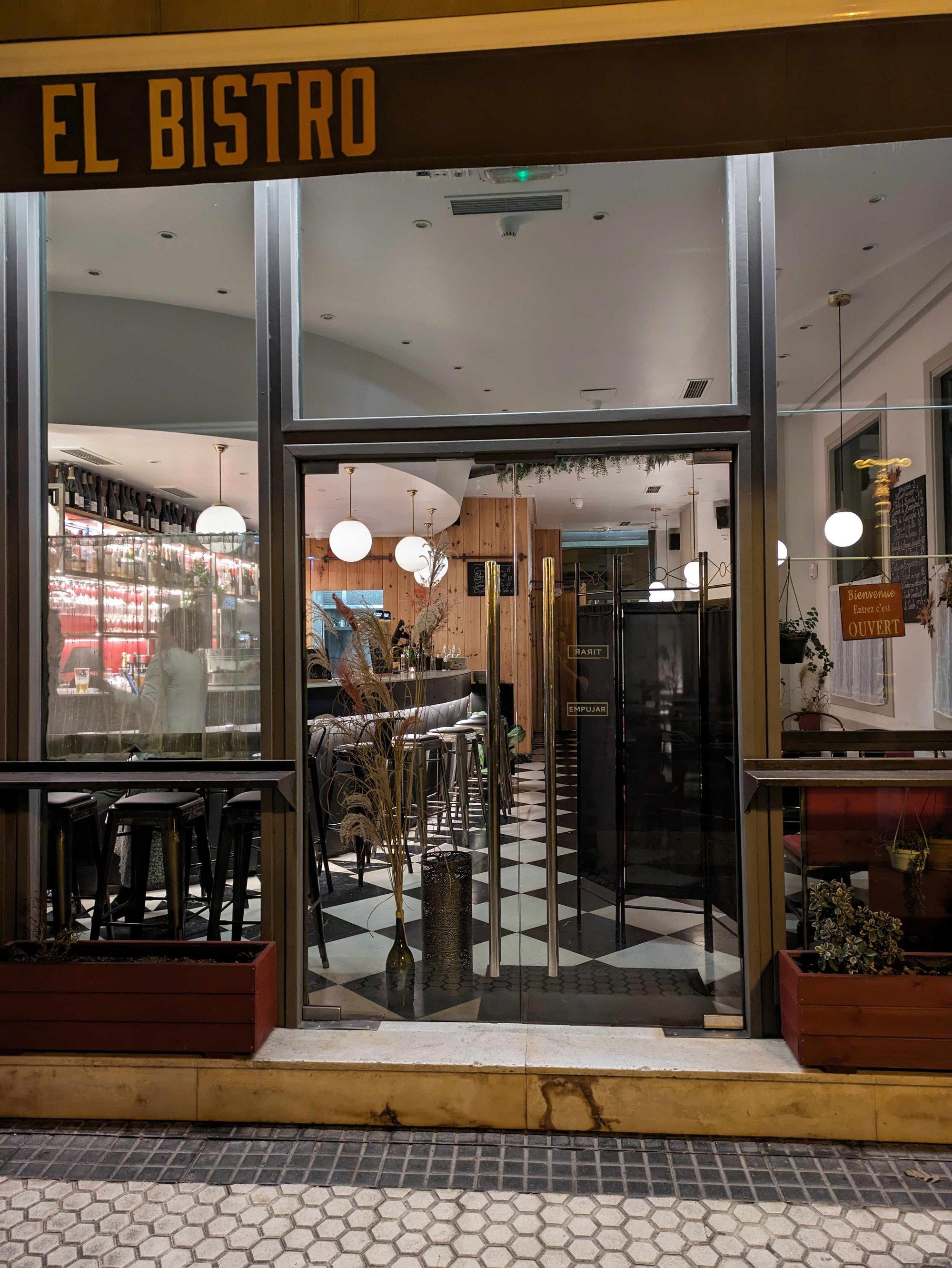
Cozy bistro atmosphere with tiny tables, retro black-and-white floors, and a long curvy bar.