Eileen’s by Steve Barringer

A tasting-menu restaurant in a Bedfordshire market town that runs closer to a night out than a formal dinner sitting. Steve Barringer's kitchen delivers five or seven courses built around seasonal British produce, with a late-night energy, retro soul soundtrack, and touch-lit tables that make it one of the more characterful dining rooms in the county.
Pearl is the En Primeur Club membership app — saves, bookings, and concierge access live there. Same editors, same standards.
- Address
- 86A Dunstable St, Ampthill, Bedford MK45 2JP, United Kingdom
- Phone
- +44 1525 839889
- Website
- eileensampthill.co.uk
- Directions
- Get directions
 Saves & bookings on Pearl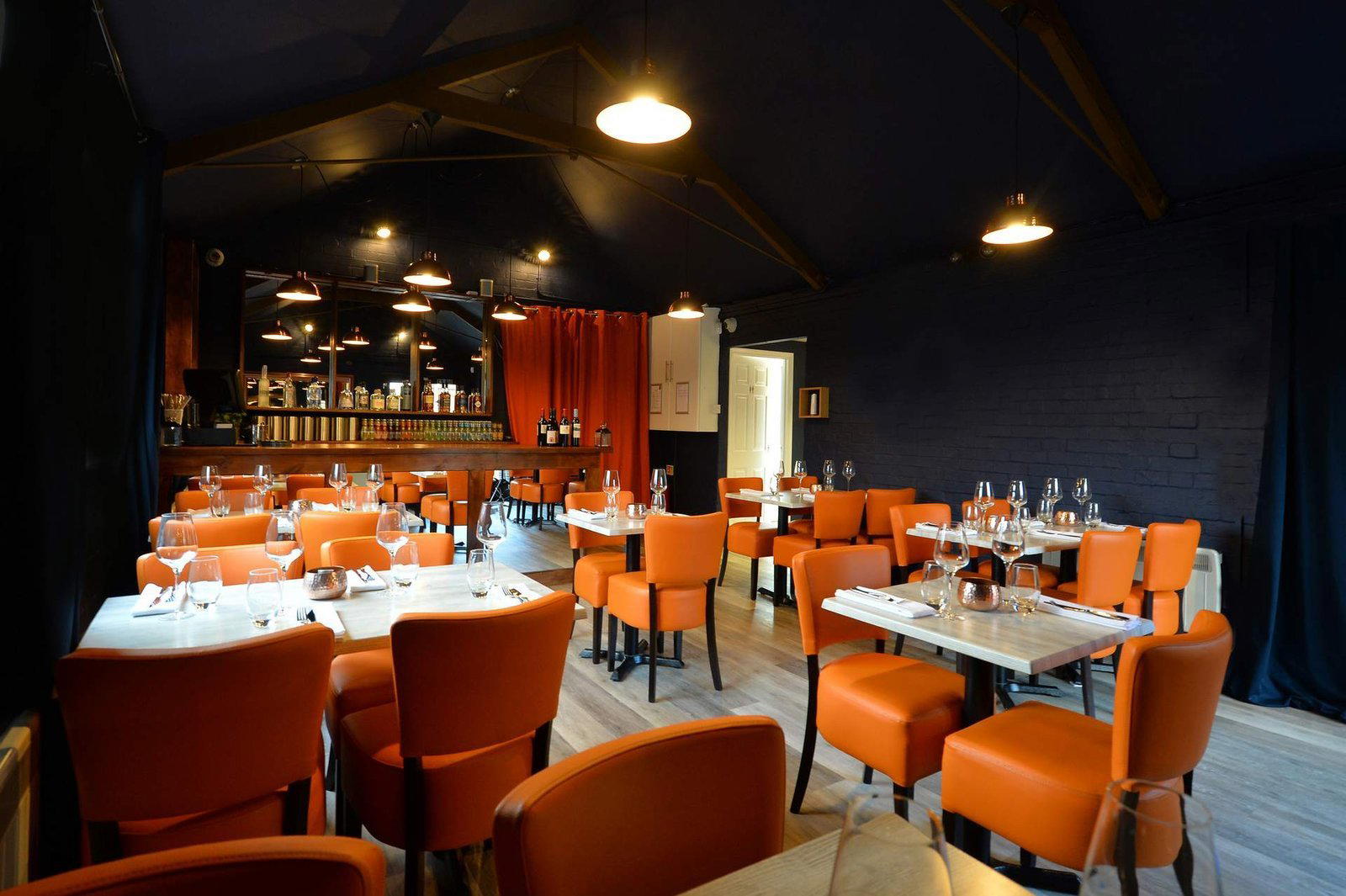
Where Ampthill Comes to Eat Seriously
Small English market towns tend to produce two types of restaurant: the gastropub coasting on Sunday-roast goodwill, and the ambitious tasting-menu room that arrives, briefly dazzles, and then quietly closes. Eileen's by Steve Barringer, on Dunstable Street in Ampthill, has managed something harder than either: it has built a genuinely loyal following in a town of a few thousand people, packed midweek, and sustained the kind of clamour for seats that most restaurants in far larger cities would envy. For the broader context of what's on offer across the town, see our full Ampthill restaurants guide.
The dining room sets expectations clearly the moment you walk in. Dark blue walls and ceilings absorb the light; an upbeat soundtrack of retro funk and soul runs at a volume that feels closer to a neighbourhood bar than a county restaurant. Touch-sensitive table lamps give each table a low, pooled glow. The kitchen is open to view, positioned between two split-level dining rooms, and the whole arrangement has a near-nightclub energy that is unusual in this price bracket outside London. It works, partly because the format enforces a shared rhythm: diners arrive between 7pm and 8pm, and the pacing from there is managed by staff who are generally well-briefed and attentive without being ceremonial.
Seasonal Produce as the Structural Principle
The menu changes with the seasons, and the kitchen's relationship with British seasonal ingredients is the clearest editorial thread running through the cooking. A late-autumn visit illustrated both what Barringer does well and where the balance occasionally tips. The meal opened with Swiss milk bread, warm and brioche-like, served with whipped butter scattered with onion powder — a small, well-judged flourish. A log of parsnip followed: freshly breadcrumbed, deep-fried, and plated with parsnip purée, black garlic ketchup, and a spicy harissa emulsion. It was a course built entirely around a single winter root vegetable, cooked three ways, with each preparation drawing out a different register of the same ingredient.
Approach reflects a broader trend in British seasonal cooking: rather than sourcing a single hero protein and surrounding it with minor accompaniments, the kitchen builds courses around ingredient families, using the same produce across multiple preparations to create depth and economy at once. Restaurants like Moor Hall in Aughton and L'Enclume in Cartmel have pushed this methodology into highly refined territory; at Eileen's, it operates at a more accessible scale but with evident technical intent.
Highlight of the autumn menu was a lightly smoked haddock fillet matched with small chunks of stewed smoked eel, cubes of zesty raw apple, and celeriac purée served in a celeriac broth, scattered with sea purslane leaves. The smoke runs through the fish and the eel in different concentrations; the raw apple provides acidity; the celeriac broth ties everything without dominating. This is the kind of course that demonstrates genuine understanding of how flavour components interact rather than simply how to cook proteins correctly. It compares favourably to what you would find at formally recognised regional rooms such as hide and fox in Saltwood or Midsummer House in Cambridge.
Where the Balance Shifts
Courses that followed were less convincing on the same terms. Braised beef cheek arrived under a heap of Parmesan, accompanied by Parmesan custard, beef-fat roasted swede, and swede purée, with pickled sheets of swede alongside. The beef itself was tender and well-seasoned, but the richness of fat and dairy ran uncontested throughout the plate. The pickled swede was not enough of a counterweight. The mallard course that followed had the same structural problem: expertly cooked breast with a confit leg croquette, onion purée, fried potato terrine, and Stilton was genuinely accomplished cooking, but thin slices of salted pear and pickled red onion could not lighten what was an accumulation of dense, fatty elements. By this point, a plate of simple green vegetables would have done more for the meal than another purée.
This is worth noting not as a dismissal but as a specific criticism: the kitchen has the technical range to cook at a high level, as the haddock course demonstrates. The issue is one of menu architecture rather than kitchen skill. Rooms like Hand and Flowers in Marlow and Restaurant Sat Bains in Nottingham show how restrained sequencing and deliberate contrast across a tasting menu can make the sum feel lighter than its parts. At Eileen's, the menu currently leans toward accumulation.
Dessert was milk chocolate crémeux with caramel ice cream, the texture contrasted against a crunchy chocolate and almond crumble. It was rich in the same register as the savoury courses, though the textural counterpoint worked more effectively here than elsewhere in the menu.
Drinking and Logistics
The wine list is modest in scope, but cocktails and a gin selection supplement the options for guests who arrive early or want to drink outside the wine format. A £60 wine flight is available and contains selections not on the printed list, which is worth knowing before you order. If wine is a priority, it's worth enquiring about the flight when booking rather than defaulting to the list. For a broader view of what to drink around Ampthill, our full Ampthill bars guide covers the options.
Booking is necessary, and the format demands it: diners must arrive between 7pm and 8pm, which creates a single shared seating rhythm rather than the rolling turnover of a more casual room. This is a five- or seven-course tasting menu format, not à la carte, and the experience is built around that structure. If you are planning a longer stay in Bedfordshire, our full Ampthill hotels guide and our full Ampthill experiences guide cover the surrounding area.
Eileen's sits in a specific tier of British regional dining: below the formally recognised rooms that attract the kind of national attention commanded by Le Manoir aux Quat' Saisons or The Ledbury, but clearly above the market-town norm. Its energy is its clearest asset: the room buzzes in a way that formal tasting-menu restaurants rarely do, and the kitchen's ambition with seasonal British produce exceeds what the town's size would suggest. The sequencing could use more restraint, but there is enough evidence of real ability here to make the booking worthwhile.
How Eileen's by Steve Barringer compares with similar nearby venues.
| Venue | Cuisine | Price |
|---|---|---|
| Paris House | Modern Cuisine | ££££ |
Recognition history
Dated appearances from independent guides and award organizations, with the underlying list record or original source where available.
The Good Food Guide GFG Good
The Good Food Guide
Continue exploring
More in Ampthill
Restaurants in Ampthill
Browse all →
Bars in Ampthill
Browse all →
Hotels in Ampthill
Browse all →
Wineries in Ampthill
Browse all →
At a Glance
- Intimate
- Modern
- Elegant
- Lively
- Special Occasion
- Celebration
- Date Night
- Open Kitchen
- Chefs Counter
- Craft Cocktails
Current opening hours
- Monday
- Closed
- Tuesday
- Closed
- Wednesday
- 6:30–11 PM
- Thursday
- 6:30–11 PM
- Friday
- 6:30–11 PM
- Saturday
- 6:30–11 PM
- Sunday
- Closed
Hours can change for holidays and private events. Last verified .
Dark blue walls and ceilings with retro funk and soul soundtrack create a near-nightclub vibe; touch-sensitive table lights add contemporary feel; lower ground floor dining room is minimalist with sparse decor and small tables.