Eighth Street Soondae 8가순대
"Soondae isn’t for everyone. It’s a type of Korean sausage that’s a mixture of cow’s blood, sweet potato glass noodles, ground beef, and various vegetables, sliced and served with a side of offal (tongue, liver, and heart being the popular). Eighth Street Soondae is the king of soondae in LA, and for those who are ready to take their next step in the world of Korean cuisine, this is the place to come. Like so many spots in the neighborhood, the strip mall location and bare-bones interior aren’t much to look at, but when you come here, you’re guaranteed to try something you haven’t before."
Pearl is the En Primeur Club membership app — saves, bookings, and concierge access live there. Same editors, same standards.
- Address
- 2703 W 8th St D, Los Angeles, CA 90005
- Phone
- +1 213 487 0038
- Website
- eighthstreetsoondae8.shop
- Directions
- Get directions
 Saves & bookings on Pearl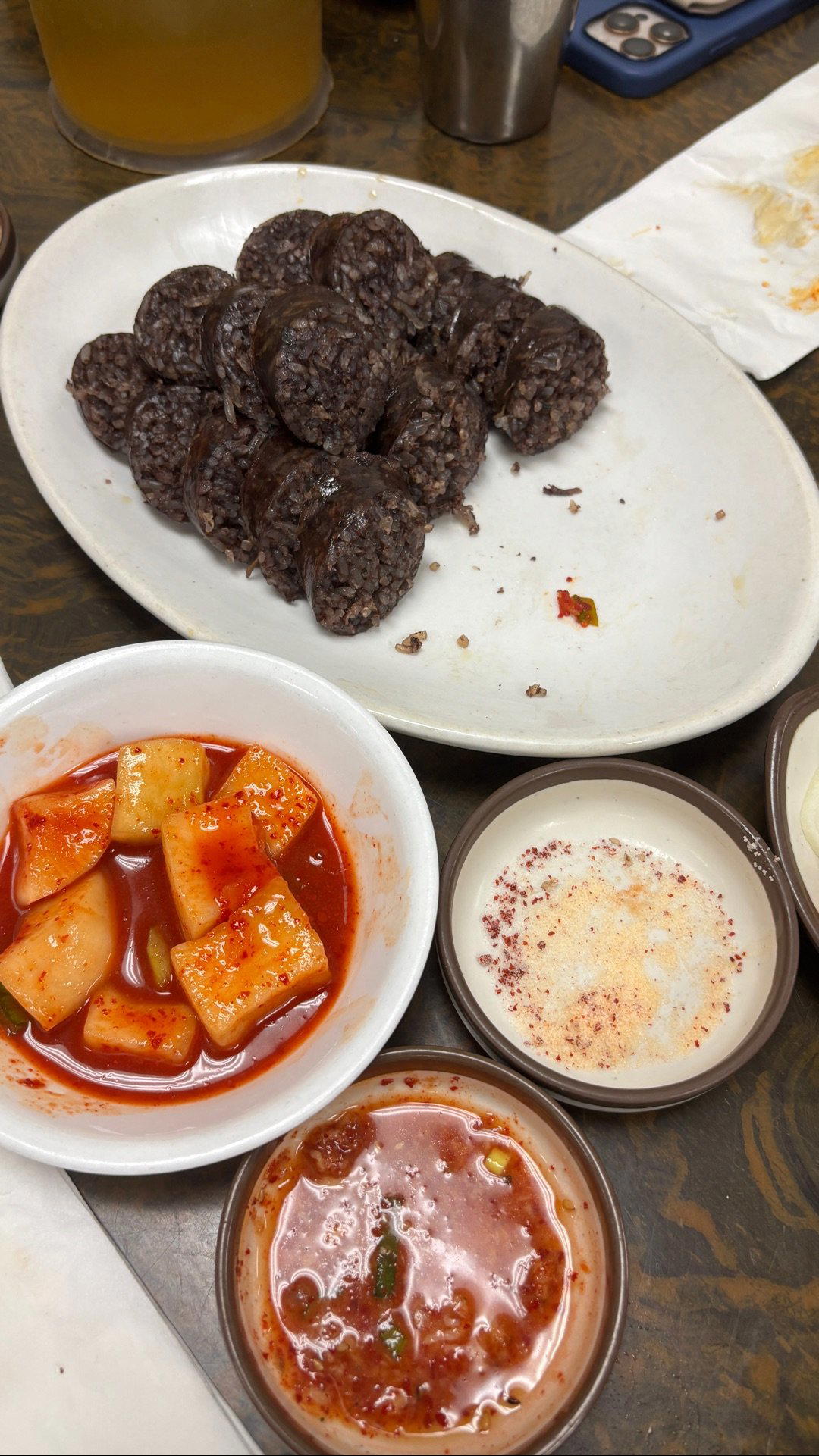
Where Koreatown Eats Before the Night Begins
On West 8th Street, a few blocks from the dense retail corridors of Koreatown, a particular kind of restaurant operates largely outside the attention of the city’s food media circuit. Eighth Street Soondae (8가순대) is not a destination in the tasting-menu sense that shapes coverage of Kato or Hayato. It belongs instead to a different and equally serious category: the neighborhood specialist, a place where a single dish tradition is executed with the kind of focus that only comes from years of commitment to one thing.
Soondae, the Korean blood sausage made with glutinous rice, glass noodles, and coagulated pork blood stuffed into intestine casings, sits at the outer edge of what most non-Korean diners in Los Angeles have tried. That is precisely what makes a venue like this worth understanding. In Seoul, soondae gukbap shops occupy the same cultural position as pho houses in Ho Chi Minh City or menudo counters along the US-Mexico border: working-class, deeply traditional, resolutely unsentimental about atmosphere. Koreatown’s version of this tradition is some of the most faithful in the United States, and Eighth Street Soondae is one of its clearer expressions.
Daytime and Evening: Two Different Restaurants in the Same Space
The lunch-versus-dinner divide at a soondae specialist reveals something important about how Korean dining culture structures its day. Lunch service at places like this tends to draw a crowd with practical intentions: workers from nearby businesses, Korean-speaking regulars who treat the stop as a midday reset, and the occasional adventurous visitor who read something online. The mood is quick, functional, and unpretentious in the way that only places with genuine local clientele tend to be. Broth is the backbone, and a bowl of soondae gukbap at midday, the sausage sliced and arranged in a pork-bone soup, operates less as a meal to linger over and more as something efficiently restorative.
Evening service shifts the dynamic without changing the menu. Koreatown after dark draws a different wave of visitors, including those moving between venues in what has become one of the most active late-night dining corridors on the West Coast. The soondae table at night often becomes a stop in a longer sequence of eating, a grounding counterpoint to the grilled meats and seafood pancakes nearby. This is consistent with how similar establishments function across Seoul’s pojangmacha culture, where blood sausage and offal dishes serve as the kind of anchor food that keeps a night coherent. The dish does not change, but its function within an evening is different from its function at noon.
For value, daytime has an edge. Portions in this category of restaurant are generally generous against their price point, and the lunch period typically means faster turnover, fresher broth cycles, and the full attention of a kitchen that hasn’t yet been stretched by evening demand. Diners who prioritize the food over the atmosphere will find the case for lunch direct.
Koreatown as Context
Understanding Eighth Street Soondae requires understanding where Koreatown sits within the broader Los Angeles dining ecology. The neighborhood operates at a different register from the Michelin-tracked restaurants that anchor the city’s prestige circuit, places like Providence, Somni, or Osteria Mozza. It runs on volume, repetition, and community trust rather than on discovery cycles driven by press coverage. The restaurants that survive longest here do so because they are genuinely used by the people who live nearby, not because they successfully courted a wider audience.
The relevant comparison is not with Korean fine dining in the city, of which there is a growing tier represented nationally by places like Atomix in New York City, but with the working-format Korean specialists that define Koreatown’s daily eating life. In that context, a soondae house occupies a specific and somewhat rarefied position: it is a single-dish specialist in a neighborhood of generalists, which requires a level of commitment to craft that multi-dish menus do not demand in the same way.
Across the US, Korean-focused editorial attention has gradually expanded beyond barbecue and bibimbap toward the offal traditions, fermented dishes, and regional specialties that Korean communities have long maintained for themselves. Soondae sits squarely in that expanding frame, in the same way that tripe-focused trattorias in Rome or andouillette specialists in Lyon represent a cuisine’s commitment to using the whole animal with skill rather than sentiment.
Who Eats Here and Why It Matters
The clientele at a place like Eighth Street Soondae tells you as much as the food does. A room filled predominantly with Korean speakers ordering without consulting a menu is a reliable signal that the kitchen is not performing for an outside audience. This is not a restaurant calibrated to explain itself. There is no English-language tasting narrative, no dish description designed to ease a nervous newcomer into offal territory. The assumption is that you know what you came for.
For the visitor without that background, that clarity is actually useful. A restaurant that does not hedge its identity for tourism tends to be more consistent than one that does. The same principle applies across categories: Le Bernardin in New York City does not apologize for its French technique, The French Laundry in Napa does not soften its formality, and Eighth Street Soondae does not frame its blood sausage as an adventure. Each operates at the center of its own tradition.
Planning Your Visit
Eighth Street Soondae is located at 2703 W 8th St, Suite D, in the Mid-Wilshire section of Koreatown, Los Angeles. The area is dense with parking and reasonably accessible by Metro, with Wilshire/Normandie station within walking distance. No website or phone number is publicly listed in available records, which is common among Koreatown’s working-format specialists; walk-in is the standard approach, and lines, when they form, move quickly given the casual service format. Daytime visits between the lunch rush hours of noon and 1:30 pm will see the highest demand from regulars; arriving before or after that window typically means a shorter wait. For context on the broader dining scene this restaurant sits within, see our full Los Angeles restaurants guide.
Those building a longer Los Angeles itinerary around Korean food specifically may also want to consider how this kind of working-format specialist fits alongside higher-register options. The gap between a soondae counter and a tasting-menu Korean experience like those gaining recognition in other cities is not a hierarchy so much as a difference in intention. Both are worth your time; they are answering different questions about what a cuisine can do.
How Eighth Street Soondae 8가순대 Los Angeles compares with similar nearby venues.
| Venue | Cuisine |
|---|---|
| Soowon Galbi | Korean BBQ |
| Gritz N' Wafflez | Brunch/soul food |
Continue exploring
More in Los Angeles
Restaurants in Los Angeles
Browse all →
Bars in Los Angeles
Browse all →
Hotels in Los Angeles
Browse all →
Wineries in Los Angeles
Browse all →
At a Glance
- Cozy
- Classic
- Casual Hangout
- Late Night
Current opening hours
- Monday
- 9 AM–8:30 PM
- Tuesday
- 9 AM–8:30 PM
- Wednesday
- 9 AM–8:30 PM
- Thursday
- 9 AM–8:30 PM
- Friday
- 9 AM–8:30 PM
- Saturday
- 9 AM–8:30 PM
- Sunday
- Closed
Hours can change for holidays and private events. Last verified .
Nostalgic atmosphere evoking traditional Korean eateries.
Know Before You Go
- Getting there
- 2703 W 8th St D, Los Angeles, CA 90005