
Michelin Plate
Our verdict
Inside a neo-Canarian villa adjoining the Iberostar Heritage Grand Mencey, Duke brings a Japanese-fusion kitchen to one of Santa Cruz de Tenerife's more architecturally considered settings. The menu runs from nigiri and sashimi to robata grill work, with cold dishes prepared live at the bar. It is an address that sits outside the city's traditional Canarian dining circuit and occupies a distinct position in the local Japanese restaurant category.

Pearl is the En Primeur Club membership app — saves, bookings, and concierge access live there. Same editors, same standards.
- Address
- Casa Duque, Calle Dr. Jose Naveiras, 38, 38004 Santa Cruz de Tenerife, Spain
- Phone
- +34 611 96 20 52
- Hours
- Mon–Sat 1:30–3:30 PM, 8–10:30 PMSun Closed
- Website
- dukerestaurante.com
- Directions
- Get directions
- Booking
- Book on CoverManager
The menu
What to order
- Tartar Toro
- Usuzukuri Toro
- Moriawase
A Villa Setting That Reframes the Japanese Kitchen
Santa Cruz de Tenerife's dining scene has long been anchored in Canarian tradition: papas arrugadas, mojo sauces, fresh Atlantic fish served with minimal intervention. That tradition remains the dominant register, and addresses like El Aguarde sustain it well. Duke operates on a different frequency entirely. Positioned in the gardens adjacent to the Iberostar Heritage Grand Mencey, inside a neo-Canarian villa in the north of the city, it places a Japanese-fusion kitchen inside an architectural frame that most visitors associate with the island's colonial-era elegance rather than omakase or robata smoke.
The approach is not incidental. Across Spain's more experimental dining addresses, from DiverXO in Madrid to Cocina Hermanos Torres in Barcelona, the tension between heritage setting and contemporary technique has become a recurring device. Duke deploys a version of that tension at a more accessible register, using the villa's period architecture as a counterpoint to a menu that covers nigiri, maki, sashimi, and robata specialities. The interior reads as contemporary against that backdrop: clean lines, a considered aesthetic that does not attempt to replicate the Japanese minimalism of dedicated kaiseki rooms, but instead finds its own tone between the two traditions.
What the Menu Draws On
Japanese cuisine in the Canary Islands carries a specific logistical weight. The Atlantic fish supply that sustains the island's traditional kitchens, bluefin tuna among them, is not wholly different from the ingredient base that Japanese techniques prize. Tenerife sits within striking distance of waters that have historically fed European and Japanese markets alike. At the level of raw material, the case for Japanese technique applied to Atlantic-sourced seafood is less of a conceptual leap than it might first appear.
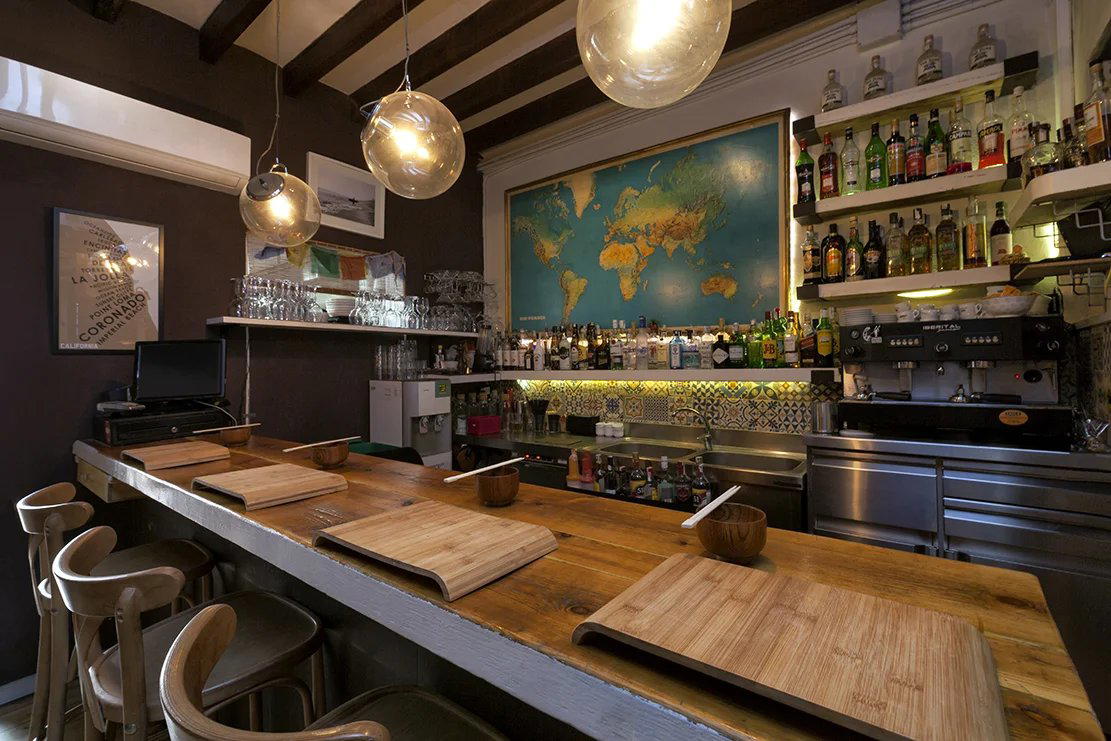
Duke's menu reflects that overlap. The nigiri and sashimi formats depend on fish quality above almost any other variable, and the Atlantic supply chain available to Tenerife-based kitchens is a meaningful asset. Robata grilling, which uses high-heat charcoal to cook proteins and vegetables with minimal mediation, is a technique that rewards well-sourced primary ingredients precisely because it does not mask them. The cold dishes prepared live at the bar, a format that gives the bar area the character of an open preparation counter rather than a service station, extend the same logic: live preparation is a transparency device, one that keeps ingredient quality visible and central.
For context, Spanish kitchens that have pushed Japanese technique furthest, such as Aponiente in El Puerto de Santa María, have done so by treating Atlantic seafood with an almost scientific rigor. Duke operates at a different ambition level, but the underlying premise, that Iberian Atlantic sourcing and Japanese technique are genuinely compatible rather than merely fashionable, holds across the register.
Where Duke Sits in the City's Japanese Category
Santa Cruz de Tenerife now has more than one serious Japanese address. Kiki occupies the Japanese category at the €€ tier, as does Duke, which means the two operate in a shared competitive band. The differentiating factors sit in format and setting rather than price. Duke's villa location and the live preparation bar give it a distinct physical identity, while its fusion framing, incorporating robata alongside the more standard sushi formats, positions it slightly differently from restaurants that remain closer to Japanese orthodoxy.
The broader Santa Cruz contemporary dining field includes addresses working across several registers. Moral works in contemporary cuisine at the same price tier, and San Sebastián 57 anchors the seasonal cuisine category. Etéreo by Pedro Nel covers meats and grills. Duke does not compete directly with any of them by cuisine type, which gives it a reasonably clear lane in a city that has been expanding its non-Canarian dining options steadily over the past decade.
For reference points on what Japanese fusion at the top of the global register looks like, Atomix in New York City applies Korean-Japanese technique at a level that sets the international benchmark, while Le Bernardin in New York City demonstrates what rigorous sourcing philosophy does to seafood-focused menus over decades. These are not direct comparators for Duke, but they illustrate the broader conversation about technique, sourcing, and format that Japanese-influenced fusion restaurants worldwide are situated within.
The Setting as Part of the Experience
The Iberostar Heritage Grand Mencey is one of the city's most architecturally significant hotels, and the gardens that surround it give the Casa Duque villa a buffer from the city's street-level noise. Arriving via the gardens rather than a standard urban dining-room entrance changes the register of a meal before the first dish arrives. That kind of environmental framing is something that hotel-adjacent restaurant spaces in this price category rarely manage without tipping into formality that dulls the experience. The neo-Canarian architecture here works because it does not feel retrofitted: the villa existed before the contemporary menu, and the kitchen has been placed into it rather than designed around it.
Within the room, the bar area's live preparation format is worth particular attention. The format places diners in visual contact with the cold-dish preparation process, which functions both as theatre and as a trust signal about ingredient handling. In high-end Japanese restaurants internationally, the open counter has long served exactly this purpose: the chef's proximity to the diner collapses the distance between sourcing and consumption. Duke adapts that principle to a bar-counter context, making it accessible without requiring the full omakase commitment in format or price.
Planning Your Visit
Duke is located at Casa Duque, Calle Dr. José Naveiras 38, in the north of Santa Cruz de Tenerife, within the gardens adjoining the Iberostar Heritage Grand Mencey. The address is walkable from the city centre and sits in a quieter residential-garden zone that feels distinct from the commercial dining streets further south. Given its hotel adjacency and the villa setting, it draws a mixed crowd of hotel guests and city residents, which tends to support a more extended evening pace than the faster-turnover addresses closer to the waterfront. For a fuller picture of the city's dining options across all categories, see our full Santa Cruz de Tenerife restaurants guide, as well as our guides to bars, wineries, and experiences across the city.
Frequently asked questions
Is Duke Michelin-listed?
Duke has received recognition including: In the north of the city, inside a neo-Canarian style villa located in the gardens adjacent to the iconic Iberostar Heritage Grand Mencey, this restaurant surprises both for its elegant interior with a contemporary aesthetic and for its cul….
Where is Duke located?
Duke is located at Casa Duque, Calle Dr. Jose Naveiras, 38, 38004 Santa Cruz de Tenerife, Spain, Santa Cruz de Tenerife.
What do regulars order at Duke?
The menu runs across nigiri, maki, sashimi, and robata grill dishes, with cold preparations assembled live at the bar counter. Robata items are worth prioritising as they represent the fusion dimension of the kitchen, where Japanese grilling technique intersects with local Atlantic ingredients. The live bar preparation format also makes it a good entry point for cold dishes before moving to the grill side of the menu.
Do I need a reservation for Duke?
Duke draws two distinct crowds: hotel guests from the adjoining Iberostar Heritage Grand Mencey and Santa Cruz locals who seek it out specifically for its Japanese-fusion format, which has no direct equivalent in the city at the same setting. That dual demand means walk-in availability at peak hours is unreliable, and booking ahead is the practical approach, particularly for evening seatings.
What has Duke built its reputation on?
Duke's position in Santa Cruz de Tenerife rests on combining a neo-Canarian villa setting inside the Grand Mencey hotel gardens with a Japanese-fusion menu spanning nigiri, sashimi, maki, and robata grill dishes. The live cold-dish preparation at the bar adds a kitchen-theatre element that the city's other Japanese addresses at the same price tier do not replicate. The format is specific enough that it has created its own category in the local dining conversation.
Is Duke allergy-friendly?
Japanese-fusion menus of this type routinely involve soy, sesame, shellfish, and gluten-containing ingredients distributed across nigiri, maki, sashimi, and robata preparations, often in shared kitchen conditions. Guests with serious allergies should check the venue's official channels before visiting, as cross-contact risk is structurally higher in multi-format Japanese kitchens than in more narrowly focused menus. Duke's phone and booking details are best confirmed through the Iberostar Heritage Grand Mencey, given Duke's location within those gardens at Calle Dr. José Naveiras 38.
How does Duke's setting inside the Grand Mencey gardens affect the dining experience?
The Iberostar Heritage Grand Mencey is one of Santa Cruz de Tenerife's most architecturally prominent hotels, and Duke occupies Casa Duque within its adjacent gardens, housed in a neo-Canarian style villa. That physical context means arrival and the surrounding environment are part of the visit in a way that a standalone restaurant address on a commercial street cannot replicate. The contemporary interior aesthetic inside the villa creates a deliberate contrast with the traditional architecture of the building itself.
Comparison Snapshot
Comparable venues nearby, for context on price, style, and recognition.
| Venue | Cuisine | Price | Awards | Notes |
|---|---|---|---|---|
| DukeThis venue — the venue you are viewing | Japanese-Mediterranean Fusion | $30–50 | Michelin Plate | Not listed |
| Kiki | Modern Japanese Fusion with Canary Islands Ingredients | $50–100 | Michelin Plate · Guía Repsol 1 Sol | Santa Cruz de Tenerife |
| Moral | Modern Canarian | $30–50 | Michelin Bib Gourmand · Guía Repsol 1 Sol | Santa Cruz de Tenerife |
| Etéreo by Pedro Nel | Modern Canarian Fine Dining with Latin Fusion | $50–100 | Michelin Plate · Guía Repsol 1 Sol | El Toscal |
| Shibui | Modern Japanese Omakase | Not listed | Michelin Plate | Santa Cruz de Tenerife |
| San Sebastián 57 | Contemporary Canarian with Mediterranean influences | $50–100 | Michelin Bib Gourmand · Guía Repsol 1 Sol | Santa Cruz de Tenerife city center |
Recognition history
Dated appearances from independent guides and award organizations, with the underlying list record or original source where available.
Michelin Plate
Michelin
Continue exploring
More in Santa Cruz de Tenerife
Restaurants in Santa Cruz de Tenerife
Browse all →
Bars in Santa Cruz de Tenerife
Browse all →
Hotels in Santa Cruz de Tenerife
Browse all →
Wineries in Santa Cruz de Tenerife
Browse all →
Details
- Elegant
- Sophisticated
- Intimate
- Date Night
- Special Occasion
- Open Kitchen
- Historic Building
- Hotel Restaurant
- Craft Cocktails
- Garden
- A La Carte
- Small Plates
Current opening hours
- Monday
- 1:30–3:30 PM, 8–10:30 PM
- Tuesday
- 1:30–3:30 PM, 8–10:30 PM
- Wednesday
- 1:30–3:30 PM, 8–10:30 PM
- Thursday
- 1:30–3:30 PM, 8–10:30 PM
- Friday
- 1:30–3:30 PM, 8–10:30 PM
- Saturday
- 1:30–3:30 PM, 8–10:30 PM
- Sunday
- Closed
Hours can change for holidays and private events. Last verified .
Intimate setting in neo-Canarian villa with low noise, well-spaced tables, and sophisticated atmosphere.