Dolce Osteria
Dolce Osteria on Kenilworth Avenue sits in Charlotte's Dilworth neighborhood, where the city's Italian dining conversation has quietly sharpened over recent years. The room draws a neighborhood crowd that returns regularly, and the kitchen operates with the kind of collaborative rhythm that distinguishes a settled dining room from a transient one. It belongs to a tier of Charlotte Italian that takes the format seriously.
Pearl is the En Primeur Club membership app — saves, bookings, and concierge access live there. Same editors, same standards.
- Address
- 1710 Kenilworth Ave, Charlotte, NC 28203
- Phone
- +17043327525
- Website
- dolce-osteria.com
- Directions
- Get directions
 Saves & bookings on Pearl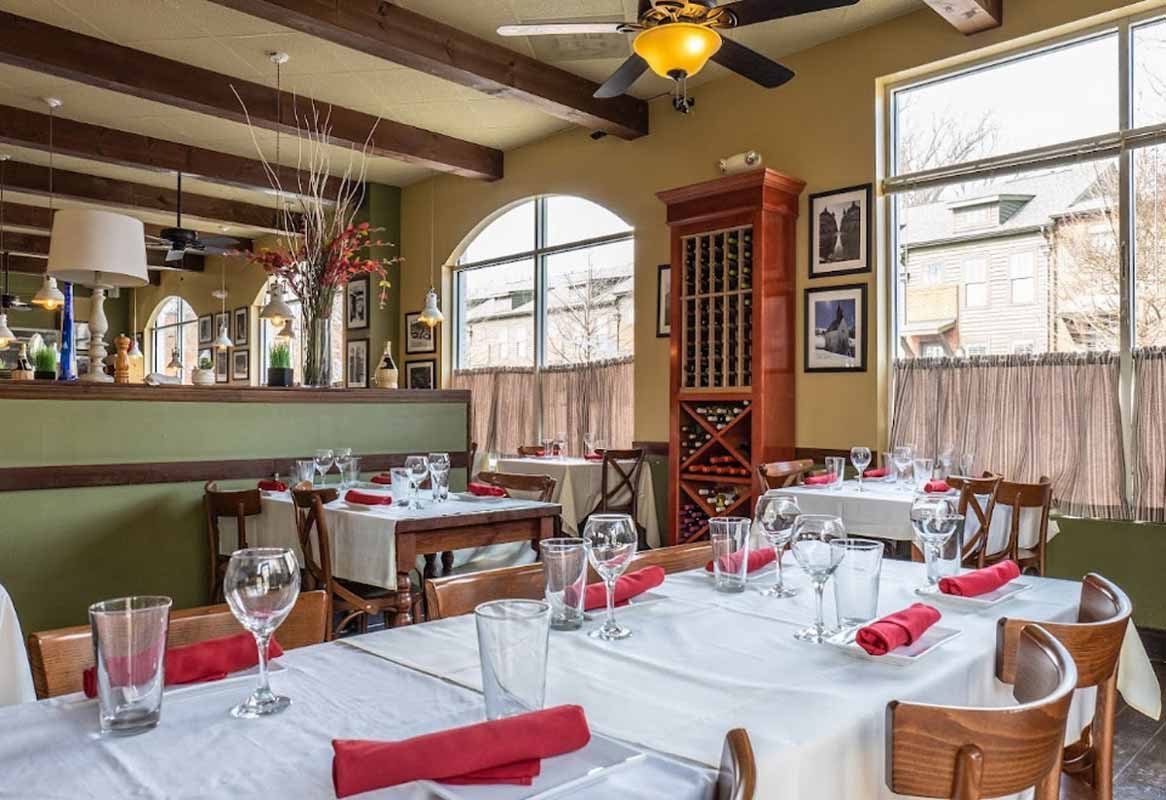
Where Dilworth Meets the Italian Table
Kenilworth Avenue in Dilworth runs through one of Charlotte's older residential grids, a stretch of tree-lined blocks where the dining scene has grown organically rather than through the developer-led surges that reshaped Uptown and South End. The address at 1710 puts Dolce Osteria in that neighborhood fabric rather than on a restaurant row, which shapes the room before you order anything. Osteria formats in Italian cities carry a specific social contract: food that is direct and seasonal, wine that is poured without ceremony, and a pace that accommodates a long evening without pressure. Charlotte's interpretation of that format has varied widely, from abbreviated pasta menus bolted onto broader American kitchens to more considered Italian programs. Dolce Osteria operates closer to the considered end of that range.
The broader Italian dining tier in Charlotte has split in a direction familiar from other mid-sized American cities. At the accessible end, Italian-American formats like Ever Andalo anchor a reliable mid-market, while the upper tier has thinned as the city's fine dining ambitions have pulled toward New American and Southern formats. Osteria-specific positioning sits between those poles, a format that can carry serious cooking without the apparatus of a tasting menu operation. That positioning suits Charlotte's current dining character, a city whose food scene has grown in confidence faster than its formal fine dining infrastructure.
The Collaborative Architecture of the Room
What distinguishes the more coherent restaurants in any city is not a single department but the calibration between kitchen, floor, and wine program. At the level where Charlotte's dining scene competes with comparable cities, the front-of-house and sommelier functions either amplify the kitchen's intent or dilute it. The osteria format puts particular pressure on that collaboration because the room is designed to feel effortless, which requires more internal coordination, not less. A guest who moves through an evening without noticing the logistics is experiencing a floor team working at a specific level of attention.
In Charlotte's current restaurant cohort, that kind of service calibration has become a differentiating factor. Venues like Angeline's and 204 North Kitchen and Cocktails have built reputations partly on floor-level consistency. The wine dimension matters here too. Italian wine literacy has deepened in American dining rooms over the past decade, and an osteria without a wine program that reflects that depth is operating below the format's potential. The progression from kitchen to glass to table is where osteria dining either coheres or fragments.
This team dynamic is worth naming because it describes a structural quality rather than a moment. Restaurants that hold together across a dinner service do so because the collaboration is practiced, not improvised. The more refined American counterparts to this format, from Smyth in Chicago to Atomix in New York City, demonstrate how far that coordination can travel when every department is operating with shared intent. The scale differs enormously, but the principle transfers.
Charlotte's Italian Dining Context
Italian cooking in the American South carries a particular history. The influence arrived through immigration patterns concentrated in major port cities, and Southern Italian-American food has its own regional grammar, different from the Northern Italian vocabulary that dominates contemporary fine dining. Charlotte's Italian scene has drawn on both traditions without being doctrinaire about either. The osteria model, with its flexibility around regional Italian references, accommodates that ambiguity well.
Comparison with Charlotte's adjacent dining options is useful for placing Dolce Osteria on the local map. The city's Southern American category, represented by venues like 1897 Market, operates with a strong regional identity. New American formats like those at Aura Rooftop and the more formal end of the market share some kitchen ambitions with osteria-style Italian but differ in the directness of the food. Italian cooking at the osteria register is less interested in constructing new dishes than in executing traditional ones with current sourcing discipline. That is a different proposition, and it attracts a different kind of repeat customer: one who is returning for a specific pasta or a specific wine by the glass rather than for surprise.
The Dilworth location also situates the restaurant away from Charlotte's central dining density, which has consequences for booking behavior and for the room's character on a given evening. Neighborhood restaurants in residential grids tend to build a more stable regular clientele than destination restaurants in commercial corridors. That stability shows in the service cadence when it is working well.
What the Format Asks of the Kitchen
Osteria cooking is less forgiving than it appears. Pasta texture, sauce reduction, and protein timing carry the meal without the structural complexity that can mask execution gaps in more elaborate formats. The American restaurants that have most credibly interpreted Italian cooking at serious levels, from Blue Hill at Stone Barns in Tarrytown in its sourcing discipline to the service architecture of The Inn at Little Washington, have done so by treating simplicity as a constraint that raises the bar rather than lowers it.
Charlotte's dining scene has produced kitchens capable of that discipline, but they have more often appeared in Southern or New American contexts than in specifically Italian ones. The space that osteria-format restaurants occupy in the city is still developing, which makes the Kenilworth Avenue address worth tracking. The Southern American category has well-established critical benchmarks in Charlotte. Italian dining at the osteria register is building toward comparable definition.
Planning Your Visit
The restaurant sits at 1710 Kenilworth Ave in Dilworth, walkable from the neighborhood's residential core and reachable from South End and Uptown by a short drive. Dilworth street parking is available along Kenilworth and the adjacent blocks, though weekend evenings can require a brief search. For those comparing the Charlotte Italian tier against higher-order reference points, Le Bernardin in New York City and Providence in Los Angeles represent the level of service and kitchen coordination that the format can reach at its upper ceiling. Closer to home, Afternoon Tea at Ballantyne and Angeline's offer points of comparison for Charlotte hospitality at different registers.
At-a-Glance Comparison
Comparable venues nearby, for context on price, style, and recognition.
| Venue | Cuisine | Price | Notes |
|---|---|---|---|
| Dolce OsteriaThis venue — the venue you are viewing | Authentic Italian Trattoria | $$ | Not listed |
| Toscana | Classic Northern Italian | $$$ | Barclay Downs |
| Primo Prime | Classic Italian Steakhouse | $$$ | Crescent Heights |
| Flour Shop | House-made Italian Pasta | $$ | Ashbrook |
| Moon Thai & Japanese | Thai & Japanese Fusion | $$ | SouthPark |
| OneSixty Cocktails & Kitchen | Contemporary American Grill & Cocktails | $$ | Shopton Road area |
Continue exploring
More in Charlotte
Restaurants in Charlotte
Browse all →
Bars in Charlotte
Browse all →

At a Glance
- Intimate
- Romantic
- Classic
- Date Night
- Family
- Group Dining
- Special Occasion
- Standalone
- Local Sourcing
Current opening hours
- Monday
- 5–9 PM
- Tuesday
- Closed
- Wednesday
- 11:30 AM–2 PM, 5–9 PM
- Thursday
- 11:30 AM–2 PM, 5–9 PM
- Friday
- 11:30 AM–2 PM, 5–9:30 PM
- Saturday
- 5–9:30 PM
- Sunday
- 5–9 PM
Hours can change for holidays and private events. Last verified .
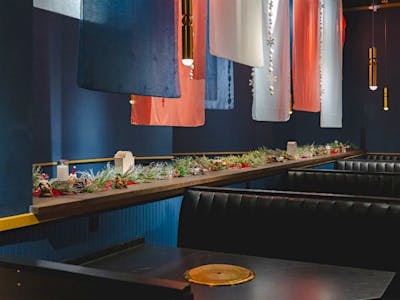
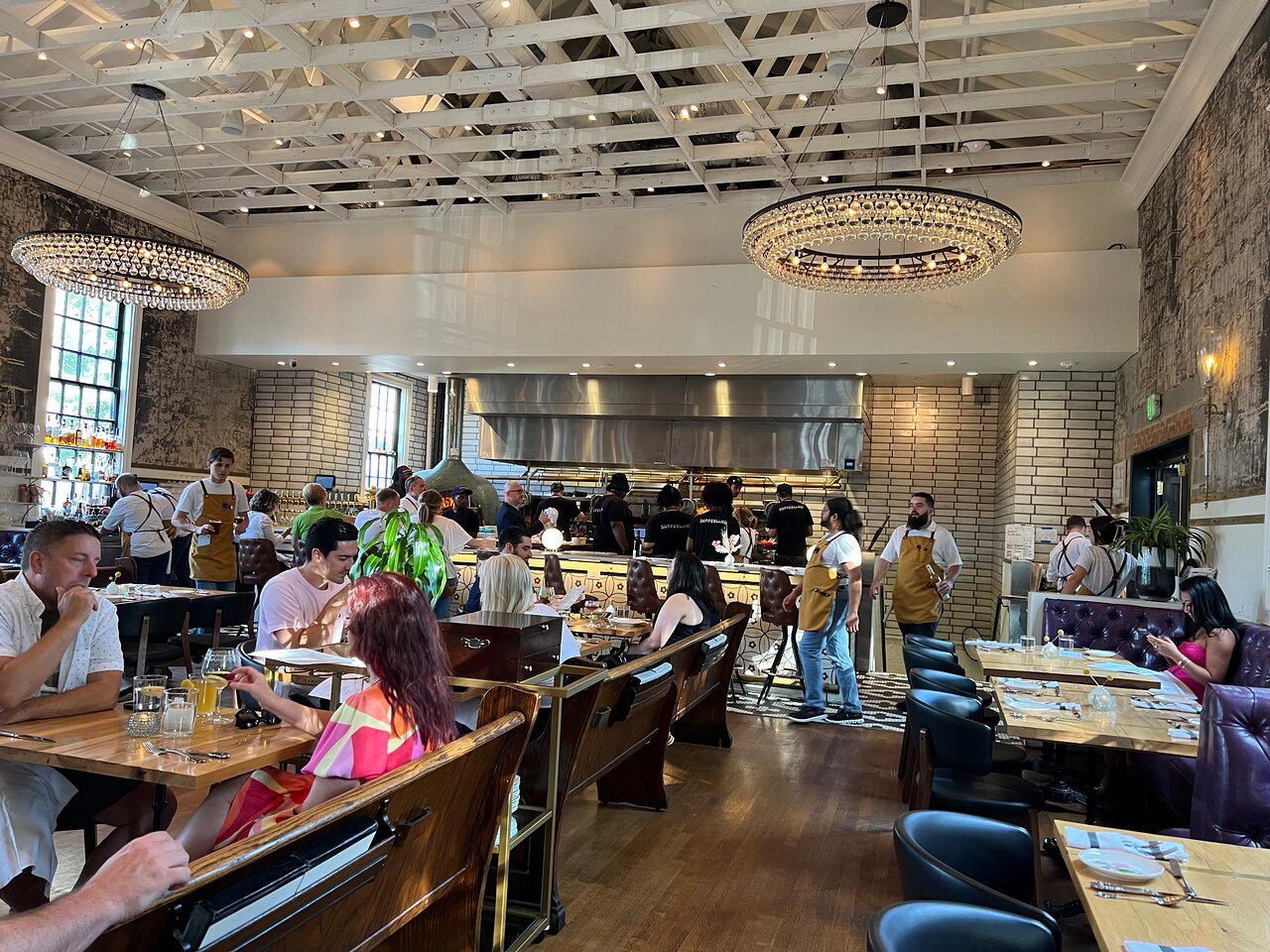
Airy and bright with deep Mediterranean feel, Italian-style artwork, and an intimate dining setting well-suited for date nights or family dinners.