D'Italia Casitas

Star Wine List
Our verdict
The flagship restaurant at Dorado Royale operates inside a distinct tier of resort dining on the Mayan Riviera, where a disciplined wine program and a standing policy of decanting every red wine aged over ten years set it apart from the broader hotel-restaurant category. The sourcing approach and staff training reflect an investment in Italian hospitality traditions that most beach-corridor restaurants skip entirely.

Pearl is the En Primeur Club membership app — saves, bookings, and concierge access live there. Same editors, same standards.
- Address
- Solidaridad, 77740 Dorado Royale, Quintana Roo, Mexico
- Website
- lomashospitality.com
- Directions
- Get directions
The menu
What to order
- Burata
- Ravioli
- Beef Cheeks with Polenta
Where Resort Dining Meets a Serious Wine Floor
There is a version of Italian restaurant that exists in nearly every luxury resort corridor in the world: pasta under mood lighting, a Chianti list assembled by a procurement manager, service that resets the same script for every table. D'Italia Casitas, the flagship dining room at Dorado Royale in the Solidaridad stretch of Quintana Roo, operates in a different register. The room carries the weight of a property that has made a deliberate wager on wine, training, and a specific policy around aged reds that is unusual enough in this part of Mexico to function as a genuine differentiator.
The Mayan Riviera's restaurant scene has long been sorted between two poles: high-concept Mexican kitchens drawing on the country's extraordinary indigenous larder, and resort restaurants that prioritize comfort over conviction. The space between those poles is where Italian fine dining in this region has always struggled to find footing. Italian cuisine's dependence on imported pantry staples, on cellared wine, and on a pace of service calibrated to conversation rather than turnover puts it in tension with the beach-holiday rhythm that defines most of the corridor from Cancun down to Tulum. D'Italia Casitas makes a case that the tension can be resolved with the right operational commitments.
The Wine Policy as an Editorial Statement
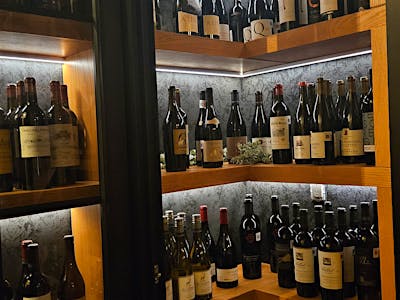
The detail that sets the room apart is not on the plate — it's in the cellar. Every bottle of red wine aged more than ten years is decanted before service, without exception. In resort dining, where the wine program is typically a revenue mechanism rather than a hospitality statement, a blanket decanting policy is an act of institutional confidence. It requires staff trained to identify aging thresholds, to handle bottles without disturbing sediment, and to time the decant relative to table pacing. That is a significant operational commitment on a property where multiple restaurants compete for the same trained labor pool.
For context, the Mayan Riviera's broader wine scene is thin relative to what a comparably priced Italian restaurant in, say, Mexico City would carry. The region's importing and storage infrastructure is not matched to the humidity and logistics challenges of the Yucatan coast, which makes any cellar-serious program here considerably harder to maintain than the same effort in a highland city. The fact that a wine selection is singled out as excellent against that backdrop carries real weight.
Sourcing Italian Tradition in a Caribbean Context
Italian cuisine's claim to integrity rests on ingredient provenance in a way that few other European traditions make so explicitly. The relationship between a specific pasta shape and the wheat variety it was designed for, between a cured meat and the microclimate where the pig grazed, between a particular olive oil and the cultivar pressed — these are not marketing details. They are the architecture of the food. Bringing that architecture to the Mayan Riviera means navigating import chains, cold storage, and the quiet attrition that happens to delicate European ingredients in tropical logistics. Kitchens that do it well tend to be selective: fewer imported elements, treated with more precision, rather than a broad menu that cannot maintain quality across the range.
This approach to sourcing is what separates serious Italian hotel restaurants from decorative ones. At the top of that spectrum in Mexico, you find kitchens like Pujol in Mexico City, which has built an entire procurement infrastructure around ingredient provenance, or Animalón in Valle de Guadalupe, where the surrounding valley does most of the sourcing work. The challenge for an Italian kitchen on the Caribbean coast is that no equivalent local infrastructure exists for Italian-specific ingredients. The editorial question is always: what comes from where, and does it justify the price point?
Staff Training as the Other Half of the Program
The decanting policy is only credible if the staff executing it understand what they are doing and why. Well-trained service in the resort context is rarer than the category pricing would suggest, most properties train for efficiency and upsell, not for the kind of knowledgeable hospitality that can hold a conversation about provenance, vintage variation, or why a particular wine needs two hours rather than forty-five minutes in the decanter.
Service quality at this level situates D'Italia Casitas in a small bracket of Mayan Riviera dining rooms where the front-of-house program is treated as equal in importance to the kitchen. That bracket also includes HA' in Playa del Carmen, which has made service rigor a core part of its identity in a market where attentive hospitality is the exception. Across Mexico more broadly, the restaurants that have built lasting reputations at the high end, KOLI Cocina de Origen in Monterrey, Pangea in San Pedro Garza Garcia, Alcalde in Guadalajara, share a consistent investment in service that matches the kitchen's ambition.
Planning a Visit
D'Italia Casitas sits within the Dorado Royale property in the Solidaridad municipality, roughly equidistant from the Cancun airport and the center of Playa del Carmen. As a hotel flagship, access for non-staying guests warrants confirmation in advance. Resort flagship restaurants in this part of the Riviera generally prioritize in-house guests for prime seating, particularly during the November-to-April high season when occupancy at beachfront properties runs close to capacity. Evening reservations made earlier in a stay tend to yield better table placement than same-day requests. Those coming specifically for the wine program should inquire about the current vintage selection when booking, since Quintana Roo's importing timelines mean cellared inventory can shift more than at a city restaurant. For a fuller view of the dining options along this corridor, see our full Mayan Riviera restaurants guide. The hotels guide, bars guide, experiences guide, and wineries guide cover the broader region for trip planning purposes. Nearby, Fuentes rounds out the area's high-end dining options worth considering alongside D'Italia Casitas.
For reference points further afield, the wine-and-service combination at D'Italia Casitas finds analogs more in city dining rooms with institutional commitment to both programs, places like Le Bernardin in New York City or Emeril's in New Orleans, than in the standard beach-resort reference set. Additional regional context comes from ingredient-driven kitchens like Levadura de Olla in Oaxaca, Olivea Farm to Table in Ensenada, and Lunario in El Porvenir, each of which has built its identity around where the food comes from rather than how it is presented.
Frequently asked questions
Is D'Italia Casitas a family-friendly restaurant?
D'Italia Casitas operates within the Dorado Royale property in Solidaridad, a full-service resort environment that typically accommodates families. That said, the restaurant's emphasis on a serious wine program and trained table service positions it closer to a formal dining occasion than a casual family meal. Families with older children comfortable in a sit-down Italian setting will find it manageable; those with younger children may prefer other resort dining options for evening meals.
Is D'Italia Casitas formal or casual?
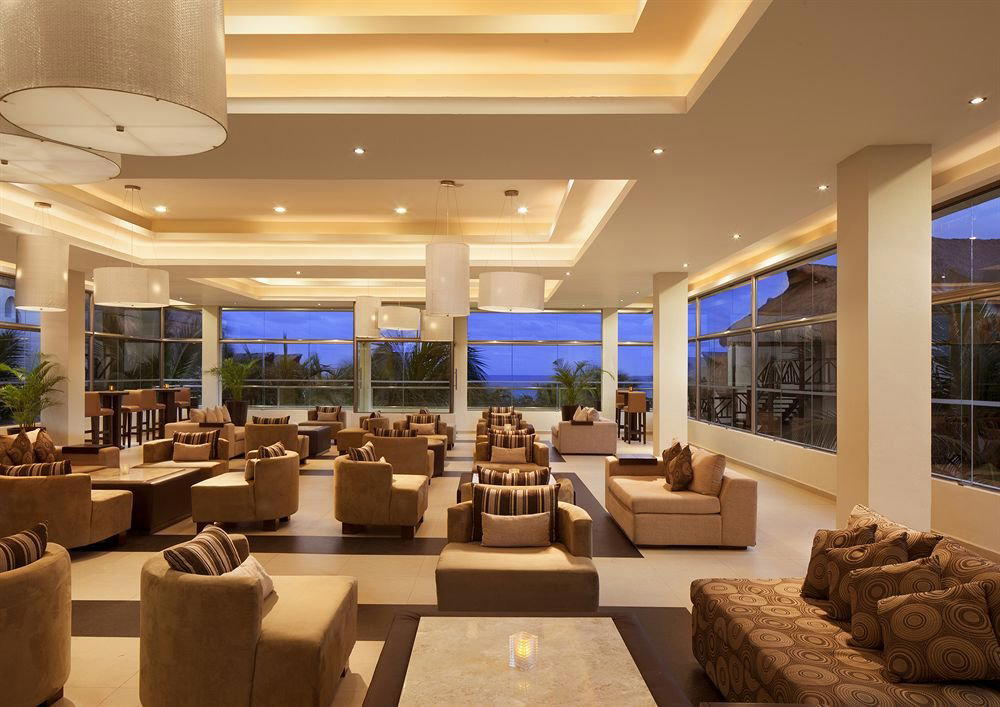
The atmosphere skews toward polished resort dining rather than strict formality. Staff are well-trained and the service protocol includes decanting all red wines aged more than ten years before pouring, which signals a room that takes its program seriously. Expect a step above typical resort Italian: composed service, a considered wine floor, and table conduct that rewards some degree of dress.
Is D'Italia Casitas Michelin-listed?
D'Italia Casitas has received recognition including: This is the hotel's flagship restaurant where the wine selection is excellent, the staff are very well trained, and one of its most intriguing policies is that every bottle of red wine more than 10 ye....
What dish is D'Italia Casitas famous for?
No single signature dish is documented in available editorial records for D'Italia Casitas. What the restaurant is specifically noted for is its wine program: a strong cellar selection and a standing policy of decanting every red wine over ten years old. That policy, alongside well-trained staff, is the clearest marker of the restaurant's identity within the Dorado Royale property.
In Context: Similar Options
Comparable venues nearby, for context on price, style, and recognition.
| Venue | Cuisine | Price | Awards | Notes |
|---|---|---|---|---|
| D'Italia CasitasThis venue — the venue you are viewing | Contemporary Italian | Not listed | Star Wine List | Not listed |
| Fuentes | Culinary Theater Fusion | $100–150 | Star Wine List | Puerto Morelos |
| Arva | Modern Italian at Amanvari | Not listed | Not listed | Costa Palmas / East Cape |
| Noma Mexico | Modern Mexican Fine Dining | Not listed | Not listed | Tulum |
| Los Pacos -Alta Cocina Oaxaqueña- | Alta Cocina Oaxaqueña | Not listed | Not listed | Colonia Reforma |
| The Blue Shrimp | Coastal Mexican Seafood | $20–30 | Not listed | Zona Romántica |
Recognition history
Dated appearances from independent guides and award organizations, with the underlying list record or original source where available.
Star Wine List
Star Wine List
Continue exploring
More in Mayan Riviera
Restaurants in Mayan Riviera
Browse all →
Bars in Mayan Riviera
Browse all →
Hotels in Mayan Riviera
Browse all →

Details
- Romantic
- Elegant
- Sophisticated
- Date Night
- Special Occasion
- Waterfront
- Hotel Restaurant
- Extensive Wine List
- Sommelier Led
- Waterfront
- A La Carte
- Wine
Elegant and romantic with sea views, formal setting, and refined atmosphere.