Din Tai Fung 鼎泰豐
Din Tai Fung's Seattle outpost, on NE 46th Street in the University District, brings the Taiwanese chain's disciplined xiaolongbao format to the Pacific Northwest. The menu is structured around precision-folded dumplings and a tight supporting cast of noodles and rice dishes, with the kitchen's consistency drawing steady queues. For Seattle diners who have encountered the brand across Asia or Los Angeles, the University District location holds its own within the chain's global footprint.
Pearl is the En Primeur Club membership app — saves, bookings, and concierge access live there. Same editors, same standards.
- Address
- 2621 NE 46th St, Seattle, WA 98105
- Phone
- +1 206 525 0958
- Website
- dtf.com
- Directions
- Get directions
 Saves & bookings on Pearl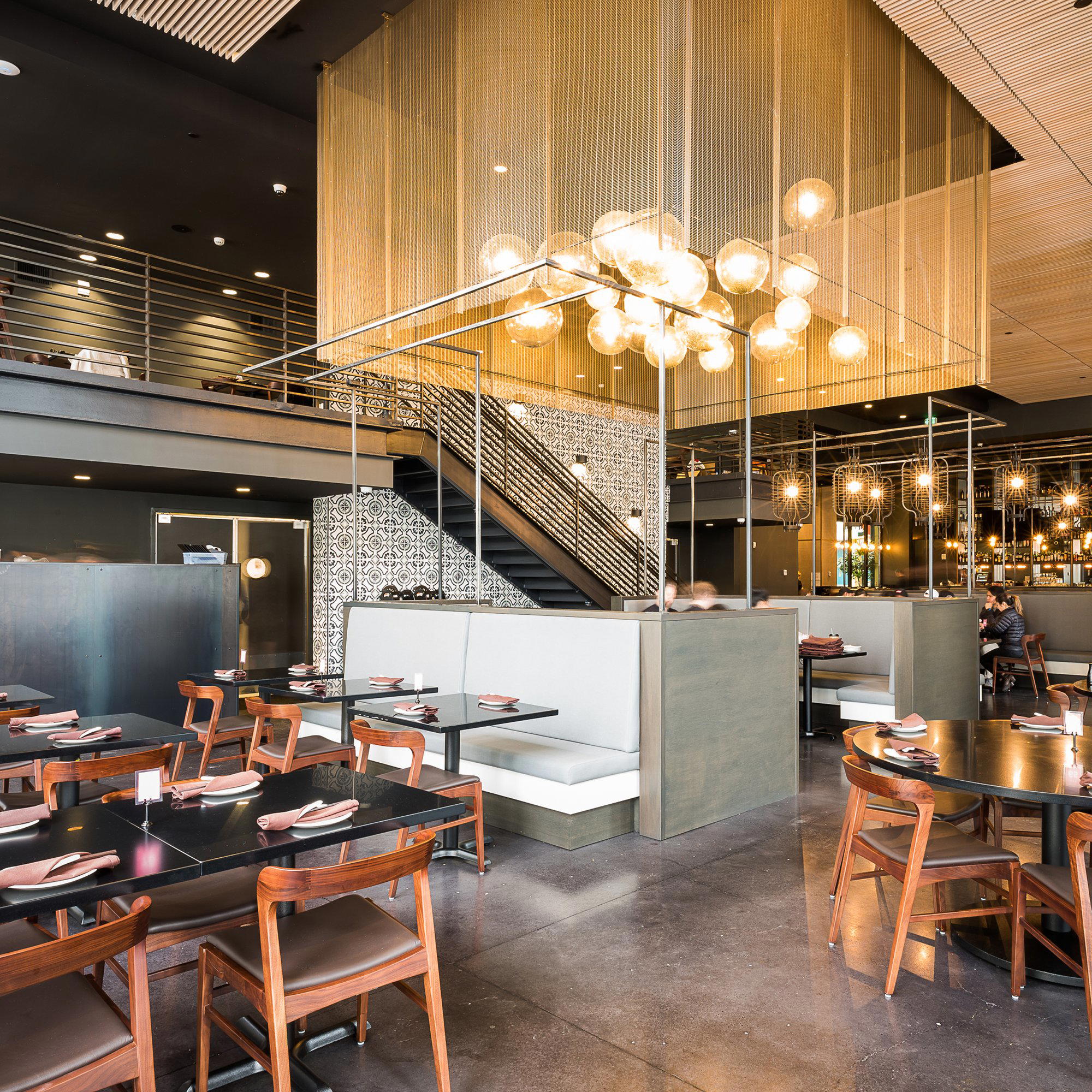
The Queue Is Part of the Architecture
Walk up to Din Tai Fung on NE 46th Street on a weekend afternoon and the line outside tells you something before you reach the door. It is not a dressed-up scene, not a room angling for a certain kind of guest. The space reads as deliberately functional: visible kitchen activity, close-set tables, the low ambient noise of a room designed for volume and throughput rather than occasion dining. This is a chain that built its reputation on removing ambiguity from the experience, and the Seattle location reproduces that template faithfully.
How the Menu Is Built, and What That Signals
Din Tai Fung's menu is structured around a single technical discipline and then extended outward in concentric rings. The core is the xiaolongbao, the Shanghainese soup dumpling that the chain standardized at a level of geometric consistency, eighteen folds per piece, a defined gelatin-to-pork ratio in the filling, that made it legible to an international audience without flattening it into approximation. Around that core sits a broader category of steamed dumplings, pan-fried variants, and wontons. Further out, the menu offers fried rice, dan dan noodles, and a short selection of vegetable dishes. Dessert, if you take it, runs toward the sweeter steamed bun format.
This structure is worth reading carefully because it reflects a specific restaurant logic: choose a technically demanding anchor dish, execute it at scale with enough precision that the consistency becomes the differentiator, and surround it with a supporting menu that does not compete with the anchor but extends the visit. It is the opposite of the eclectic approach that characterizes much of Seattle's Asian dining, including operations like Joule, where the kitchen moves across influences deliberately. Din Tai Fung's architecture is narrower and deeper.
In that sense the brand sits in a different conversation than the tasting-menu restaurants that define premium dining in other American cities. The comparison set is not Le Bernardin in New York City or The French Laundry in Napa or Smyth in Chicago. The conversation Din Tai Fung belongs to is about accessible precision: the kind of restaurant that holds a technical standard across hundreds of covers without tipping into fast-casual disorder.
Seattle's Position in the Din Tai Fung Network
The University District location is one of several Din Tai Fung outposts in the greater Seattle area, reflecting both the region's large Taiwanese-American community and broader Pacific Northwest appetite for the format. The brand originated in Taipei as an oil and rice shop before pivoting to dumplings and expanded across East Asia before reaching North America.
Seattle's version of the brand sits in a city that has its own developed Asian dining tradition, including long-running Japanese establishments and a Taiwanese presence that predates the chain's American expansion. For diners comparing across that tradition, Din Tai Fung occupies a different register than a neighborhood-scale specialist. It is a format restaurant, not a local idiosyncrasy, and that is not a criticism, it is a description of what the experience is designed to deliver.
If the Din Tai Fung format interests you as part of a broader Asian dining program in the city, it pairs logically with visits to more localized Japanese operations. The University District is also a reasonable base for exploring nearby dining corridors.
Ordering Logic for a First Visit
The pork xiaolongbao is the reference point against which everything else is measured. If you have eaten the dish at other Din Tai Fung locations in Los Angeles, Taipei, or Singapore, the Seattle version gives you a calibration point within the chain's consistency model. The shrimp and pork variant adds texture variation. The pan-fried dumplings, a different product than the steamed version, with a crisped base and a different filling ratio, reward ordering alongside rather than instead of the core soup dumplings.
Beyond dumplings, the braised pork rice draws regularly on the ordering patterns of returning guests. The dan dan noodles, depending on heat tolerance, function either as a main or a side. The spicy wontons in chili oil have become increasingly visible on social media among Seattle diners in recent years, which is worth noting less as a trend indicator and more as a signal that the appetizer section of the menu holds up independently of the dumplings.
Arrive with a group if the format allows. The menu is designed for shared ordering, and eating across four or five dishes from different sections gives a more complete picture of the kitchen's range than ordering within a single category. This is, in any case, how the dish architecture is meant to function: the xiaolongbao as anchor, everything else as context and complement.
Planning the Visit
The University District location at 2621 NE 46th St handles significant weekend volume, and walk-in waits during peak lunch and dinner hours can extend substantially. Reservations are recommended, though walk-in queuing remains common for smaller groups. The room is family-friendly and smart casual in tone. Din Tai Fung's friction is different: it is a queue question, not a reservation-availability question, for most visits.
Nearby dining coordinates in the University District and surrounding neighborhoods, including addresses along 1415 1st Ave, 1744 NW Market St, and 2963 4th Ave S, offer a range of formats for building out a Seattle dining itinerary beyond a single stop.
Standing Among Peers
Comparable venues nearby, for context on price, style, and recognition.
| Venue | Cuisine | Price | Notes |
|---|---|---|---|
| Din Tai Fung 鼎泰豐This venue — the venue you are viewing | Taiwanese Soup Dumplings | $$ | Not listed |
| A+ Hong Kong Kitchen | Authentic Hong Kong Cha Chaan Teng | $$ | International District |
| Orrapin Thai Cuisine | Authentic Thai Cuisine | $$ | East Queen Anne |
| Willmott's Ghost | Roman-Style Italian Pizza | $$ | Denny Triangle |
| Elephant & Castle | British Pub | $$ | Central Business District |
| Harbor Cafe | Thai Noodles and Curries | $$ | Central Business District |
Continue exploring
More in Seattle
Restaurants in Seattle
Browse all →
Bars in Seattle
Browse all →
Hotels in Seattle
Browse all →
At a Glance
- Modern
- Lively
- Well Known
- Family
- Group Dining
- Casual Hangout
- Open Kitchen
- Sake Program
Current opening hours
- Monday
- 11 AM–9 PM
- Tuesday
- 11 AM–9 PM
- Wednesday
- 11 AM–9 PM
- Thursday
- 11 AM–9 PM
- Friday
- 11 AM–9:30 PM
- Saturday
- 11 AM–9:30 PM
- Sunday
- 11 AM–9 PM
Hours can change for holidays and private events. Last verified .
Classy and understated decor with an engaging open kitchen that showcases the dumpling-making artistry.