DiFabio's
On Frankfort Avenue, Louisville's most food-curious corridor, DiFabio's occupies a position in the neighbourhood's ongoing conversation between local produce and applied culinary technique. The address at 2311 Frankfort Ave places it squarely within a stretch that has drawn serious kitchen talent to a decidedly residential context, making it a reference point for how the city's dining culture matures outside the downtown core.
- Address
- 2311 Frankfort Ave, Louisville, KY 40206
- Phone
- +15028910411
- Website
- difabios.com
- Directions
- Get directions
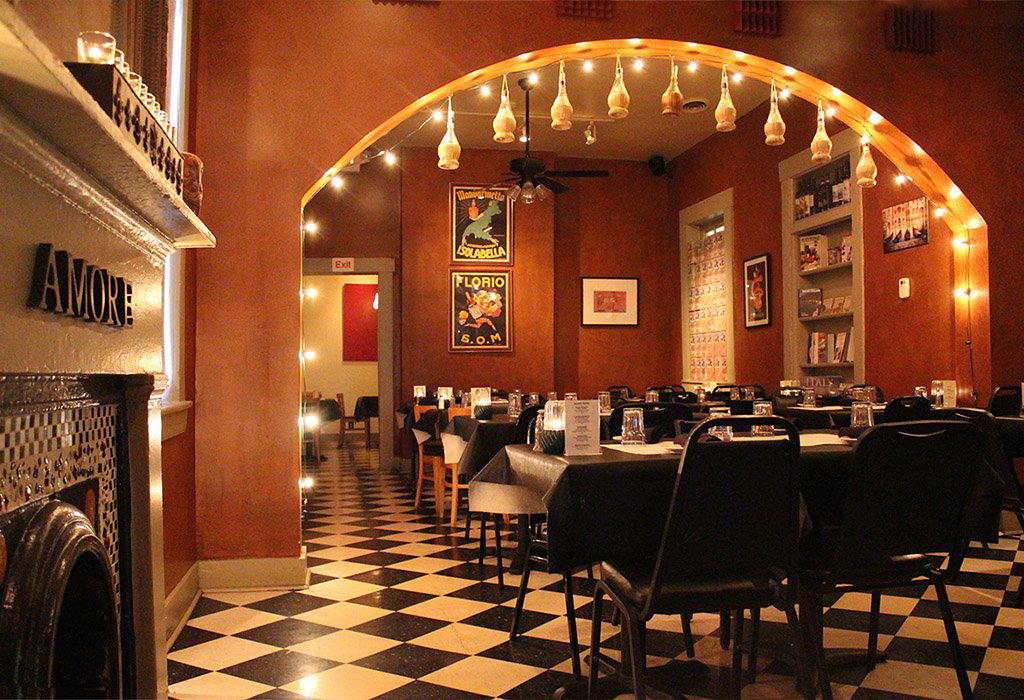
Frankfort Avenue and the Architecture of a Neighbourhood Restaurant
There is a particular kind of restaurant that a city's food culture depends on more than it typically acknowledges: not the downtown flagship built for occasions, but the neighbourhood address that locals return to without needing a reason. Frankfort Avenue in Louisville has developed that character over the past decade, drawing kitchens that treat the corridor as a proving ground rather than a fallback. DiFabio's, at 2311 Frankfort Ave, sits inside that dynamic. DiFabio's is a Traditional Italian restaurant in Louisville priced at about $25 per person. The address itself tells you something about intent: this is not a venue positioning itself against the hotel dining rooms or the celebratory steakhouses closer to the river, but one that has chosen the quieter, more demanding audience of a residential neighbourhood where reputation travels by word of mouth and repetition is the real metric.
Louisville's dining geography has split along recognisable lines. The downtown and NuLu cluster draws visitors and occasion diners; the Highlands and Frankfort Avenue corridor draws a more localised, opinionated crowd.
The Intersection of Local Product and Applied Technique
The more interesting editorial question about any serious restaurant on Frankfort Avenue is how it positions its food relative to the ingredients available in Kentucky and the techniques imported from elsewhere. This tension between place and method defines much of what is happening in American regional cooking right now, and Louisville is not exempt from it.
The restaurants earning sustained attention in mid-sized American cities share a recognisable approach: they source with enough regional specificity to feel anchored, and they apply enough technical discipline to justify the price differential from casual dining. This is the model that has defined places like Smyth in Chicago and, at greater scale, Blue Hill at Stone Barns in Tarrytown, where the sourcing narrative is not decorative but structural. At the other end of the formality spectrum, Lazy Bear in San Francisco demonstrated that technique-led cooking can coexist with an unpretentious room.
Kentucky gives a kitchen real material to work with: the agricultural tradition here runs to heritage pork, bourbon-region grain, river fish, and seasonal produce from a growing network of small farms within reasonable distance of the city. The question for any serious Louisville kitchen is whether it treats those materials as marketing copy or as actual constraints on how a menu is built. The neighbourhood restaurant format, more than the flagship format, tends to enforce the latter: there is no occasion budget to obscure a poorly sourced product, and the regulars notice.
DiFabio's address on Frankfort Avenue places it in a corridor where that expectation is live. For comparison within Louisville, 610 Magnolia (New American) has long occupied the formal end of the local-sourcing conversation, while 80/20 at Kaelin's represents the more casual iteration. The restaurant sits in neither extreme, which is often where neighbourhood restaurants do their most durable work.
How Louisville Compares to Its Peer Cities
Louisville is not a city that has historically attracted the kind of national press attention that routes food tourists through it the way New Orleans draws visitors to Emeril's or Napa draws them to The French Laundry. But the city's dining culture has been doing something more quietly useful: building a mid-tier of serious, independent restaurants that serve a local audience well without depending on destination traffic. That mid-tier includes both the bar-forward operators like Against the Grain and the more kitchen-focused addresses that populate Frankfort Avenue.
The comparison set for the restaurant is less about the formal American tasting-menu circuit, where venues like Addison in San Diego, Atomix in New York City, and Providence in Los Angeles compete on credential and format, and more about the neighbourhood standard that sustains a city's food culture between the flagships. Le Bernardin in New York City and The Inn at Little Washington define what American fine dining looks like at its most formal; the restaurant operates in a register closer to where most people actually eat, which is a different kind of relevance.
Internationally, the tension between regional ingredient identity and imported culinary method is visible at places like Atelier Moessmer Norbert Niederkofler in Brunico, where Alpine product and contemporary technique have found a specific and defended synthesis. The analogy is not direct, but the editorial logic applies: a kitchen that commits to a specific ingredient geography and refuses to paper over it with generic international technique will develop a point of view that holds up over time. That is the standard by which Frankfort Avenue restaurants eventually get measured.
Planning a Visit: What to Know Before You Go
The restaurant is located at 2311 Frankfort Ave, Louisville, KY 40206, in a section of the avenue that is walkable from several nearby residential neighbourhoods and accessible by car with street parking typical of the corridor. The Frankfort Avenue stretch rewards a longer visit: there are enough adjacent bars and coffee shops to build an evening around the area rather than treating the restaurant as a single stop. Nearby options like 8UP refined Drinkery & Kitchen and 740 Front extend what the neighbourhood can offer across a full evening.
The Frankfort Avenue neighbourhood is busiest from late spring through early autumn, when outdoor space and foot traffic create a lively evening atmosphere. A mid-week visit during that window tends to offer more room and less pressure than a Saturday dinner rush.
For those building a longer Louisville itinerary around food, the city's dining season peaks around Derby in early May, when restaurants across the city are operating at full capacity and booking windows close quickly. Outside that window, Frankfort Avenue in particular is more accessible and more representative of what the neighbourhood actually is on a normal evening.
Comparable Spots
Comparable venues nearby, for context on price, style, and recognition.
| Venue | Cuisine | Price | Notes |
|---|---|---|---|
| DiFabio'sThis venue — the venue you are viewing | Traditional Italian | $$ | Not listed |
| Vincenzo's | Authentic Italian Fine Dining | $$$ | West Main |
| Fishery | Fried Seafood & Fish Sandwiches | $$ | Rockcreek Lexington Road |
| Feast BBQ | Traditional American BBQ | $$ | Phoenix Hill |
| Ditto's Grill | American Grill with Global Flavors | $$ | The Highlands |
| Sidebar At Whiskey Row | American Burgers & Bourbon Gastropub | $$ | Downtown Louisville |
Continue exploring
More in Louisville
Restaurants in Louisville
Browse all →
Bars in Louisville
Browse all →
Hotels in Louisville
Browse all →
At a Glance
- Cozy
- Intimate
- Classic
- Date Night
- Family
- Celebration
- Standalone
- Extensive Wine List
Casual, warmly decorated interior with cozy, quiet atmosphere ideal for intimate dinners; outdoor porch seating available seasonally.