Des Balances
.png)
Des Balances occupies a historic building on Lucerne's Weinmarkt, offering Classic Cuisine at the €€€ price point with consecutive Michelin Plate recognition in 2024 and 2025. The restaurant draws a broad local and visitor audience, reflected in a 4.6 rating across more than 1,500 Google reviews. It sits in Lucerne's mid-to-upper dining tier, below the starred counters but well above casual.
 Discover on Pearl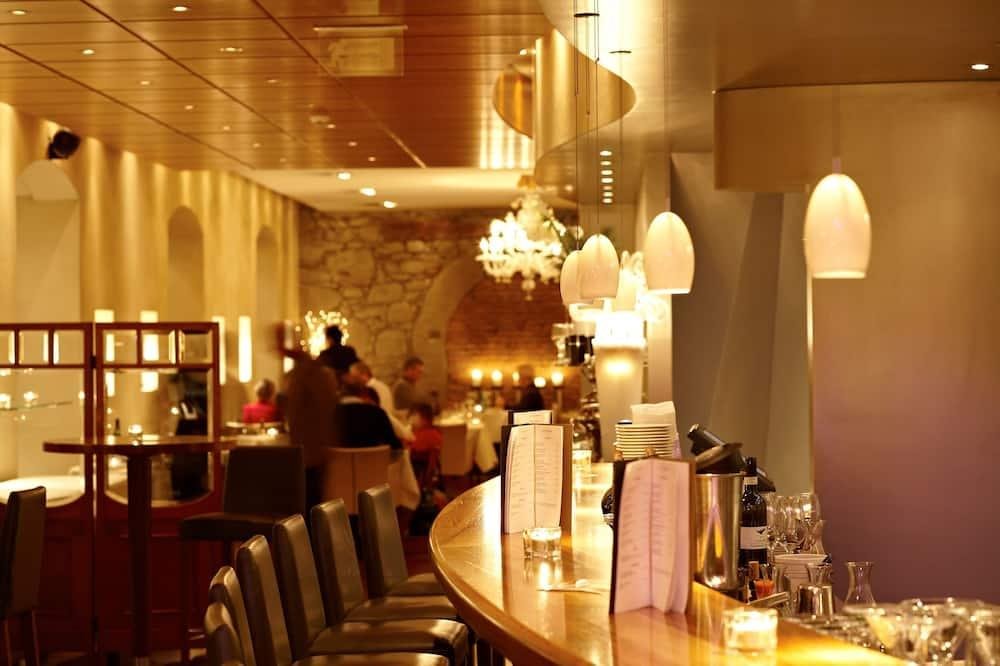
Weinmarkt and the Weight of Place
The Weinmarkt is one of the most photographed squares in German-speaking Switzerland, its painted façades and arcaded ground floors a direct line back to the medieval trading town Lucerne once was. Restaurants in this part of the Altstadt carry that context whether they choose to or not. Diners arrive through lanes that predate any kitchen concept by several centuries, and the physical setting frames expectations before anyone sits down. Des Balances operates from within that frame, at an address where the building does much of the storytelling and the kitchen is asked to hold its own alongside it.
That context matters for Classic Cuisine specifically. The category, in Swiss and broader Central European terms, tends toward refined preparations rooted in French technique, seasonal ingredients handled without radical intervention, and a service register that reflects the formality of the surroundings. It is a style that suits historic urban rooms better than most contemporary formats do, and the Weinmarkt provides as direct an argument for that alignment as any address in Lucerne.
The shortlist, unlocked.
Hard-to-book tables, cellar releases, and concierge-planned trips.
Get Exclusive Access →Classic Cuisine in Lucerne's Dining Tier
Lucerne's upper dining bracket has shifted considerably in the past decade. The city now holds several Michelin-starred addresses, including Colonnade, which operates in the Modern French register at the €€€€ tier, and Lucide, a one-star Contemporary room also priced at €€€€. The creative end of the market has its own representation through Maihöfli by UniQuisine, a Michelin-starred Creative format at the €€€ level. Against that peer set, Des Balances occupies a different position: Michelin Plate recognition in both 2024 and 2025, €€€ pricing, and a Classic Cuisine approach that prioritises continuity over novelty.
The Michelin Plate designation is not a star, but it is not a consolation either. Michelin awards the Plate specifically to restaurants whose cooking is described as good, distinct from the broader field of unrecognised addresses. Two consecutive years of that designation represents a stable quality signal, the kind of consistency that matters more to repeat visitors and serious diners than a single strong performance. For context, the starred restaurants in the city sit above Des Balances in the Michelin hierarchy, but Des Balances competes on different terms: it is a restaurant for diners who want Classical execution at a price point that doesn't require the full €€€€ commitment the starred rooms demand.
At the more accessible end, Drei Könige provides farm-to-table cooking at the €€ level, and CAAA by Pietro Catalano takes a Modern Cuisine approach at €€€€. Des Balances sits between those poles, in a position where technical rigour is expected but the format doesn't default to the experimental or the maximalist.
The Cultural Logic of Classic Cuisine
Classic Cuisine as a category carries specific meaning in the Swiss dining context. Switzerland sits at the convergence of French, German, and Italian culinary traditions, and its upmarket kitchens have historically mediated between those influences rather than subordinating one to another. In the French-speaking regions, that mediation tilts strongly toward Paris. In German-speaking cities like Lucerne, it tends to produce a style that honours French technique while accommodating Central European ingredients and presentation registers.
The broader Swiss Classic table has produced some of the country's most durable high-end restaurants. Hotel de Ville Crissier in Crissier and Cheval Blanc by Peter Knogl in Basel operate at the far upper end of that tradition, while Schloss Schauenstein in Fürstenau and Memories in Bad Ragaz represent the alpine variation. Across all those addresses, what connects them is a commitment to product quality, kitchen discipline, and service formality that Classic Cuisine demands as a baseline. Des Balances operates lower in that hierarchy but within the same tradition, offering an accessible point of entry into a style of dining that Switzerland has practised with particular seriousness.
The same disciplinary roots show up in Classic Cuisine rooms beyond Switzerland. KOMU in Munich and Maison Rostang in Paris both sit within the Classic register in their respective cities, and comparing how each city's culinary culture shapes that tradition is a useful exercise for anyone eating their way across Central Europe. The Paris Classic table is inevitably the reference point, but the Munich and Lucerne versions have developed their own character, one that reflects different ingredient supplies, different service cultures, and different relationships to formality.
What the Audience Numbers Say
A 4.6 rating drawn from 1,566 Google reviews is a signal worth reading carefully. The volume matters as much as the score. A result that size at that level suggests a restaurant that performs consistently for a diverse audience, not one that occasionally peaks for reviewers while delivering variable results at scale. Weinmarkt foot traffic includes a heavy international tourist component alongside local Lucerne regulars, and maintaining a rating above 4.5 across both groups requires a kitchen and front-of-house that can calibrate for different expectations.
That performance also says something about how Des Balances sits within the wider visitor economy of Lucerne. The city receives substantial tourist volume, particularly during summer and during the holiday season, and Altstadt restaurants carry a disproportionate share of that traffic given their visibility and address prestige. The fact that Des Balances sustains its Michelin Plate recognition and Google rating simultaneously suggests the kitchen is not coasting on location advantage, which at an address like the Weinmarkt would be an easy default.
Planning a Visit
Des Balances is located at Weinmarkt in the 6004 postal district, the heart of Lucerne's medieval Altstadt and walkable from the Chapel Bridge and the main train station. The €€€ pricing places a meal here in a mid-to-upper range that sits comfortably between the city's more accessible options and its fully starred rooms. For further context on where Des Balances sits in the city's broader dining scene, the full Lucerne restaurants guide covers the complete picture across price points and formats. If the visit extends beyond dining, hotels, bars, wineries, and experiences in Lucerne are covered in full. For those building a broader Swiss itinerary, 7132 Silver in Vals and Da Vittorio in St. Moritz represent the alpine dining tier worth pairing with a Lucerne visit.
The shortlist, unlocked.
Hard-to-book tables, cellar releases, and concierge-planned trips.
Get Exclusive Access →Frequently Asked Questions
Price and Recognition
A compact peer set to orient you in the local landscape.
| Venue | Price | Awards | Notes |
|---|---|---|---|
| Des Balances | €€€ | Michelin Plate (2025); Michelin Plate (2024) | This venue |
| Colonnade | €€€€ | Michelin 2 Star | Modern French, €€€€ |
| Lucide | €€€€ | Michelin 1 Star | Contemporary, €€€€ |
| Maihöfli by UniQuisine | €€€ | Michelin 1 Star | Creative, €€€ |
| CAAA by Pietro Catalano | €€€€ | Modern Cuisine, €€€€ | |
| Drei Könige | €€ | Farm to table, €€ |
Need a table?
Our members enjoy priority alerts and concierge-led booking support for the world's most difficult tables.
Get Exclusive AccessThe shortlist, unlocked.
Hard-to-book tables, cellar releases, and concierge-planned trips.
Get Exclusive Access →