David Burke Tavern
David Burke Tavern occupies a deliberate position in the Upper East Side dining scene, where American cooking with technical ambition sits alongside neighbourhood reliability. The menu architecture here reflects a chef-driven approach to familiar formats, placing it within a tier of New York restaurants that balance creative credentials with accessible execution. Located at 135 East 62nd Street, it draws a crowd that values craft without ceremony.
Pearl is the En Primeur Club membership app — saves, bookings, and concierge access live there. Same editors, same standards.
- Address
- 135 E 62nd St, New York, NY 10065
- Phone
- +12129889021
- Website
- davidburketavern.com
- Directions
- Get directions
 Saves & bookings on Pearl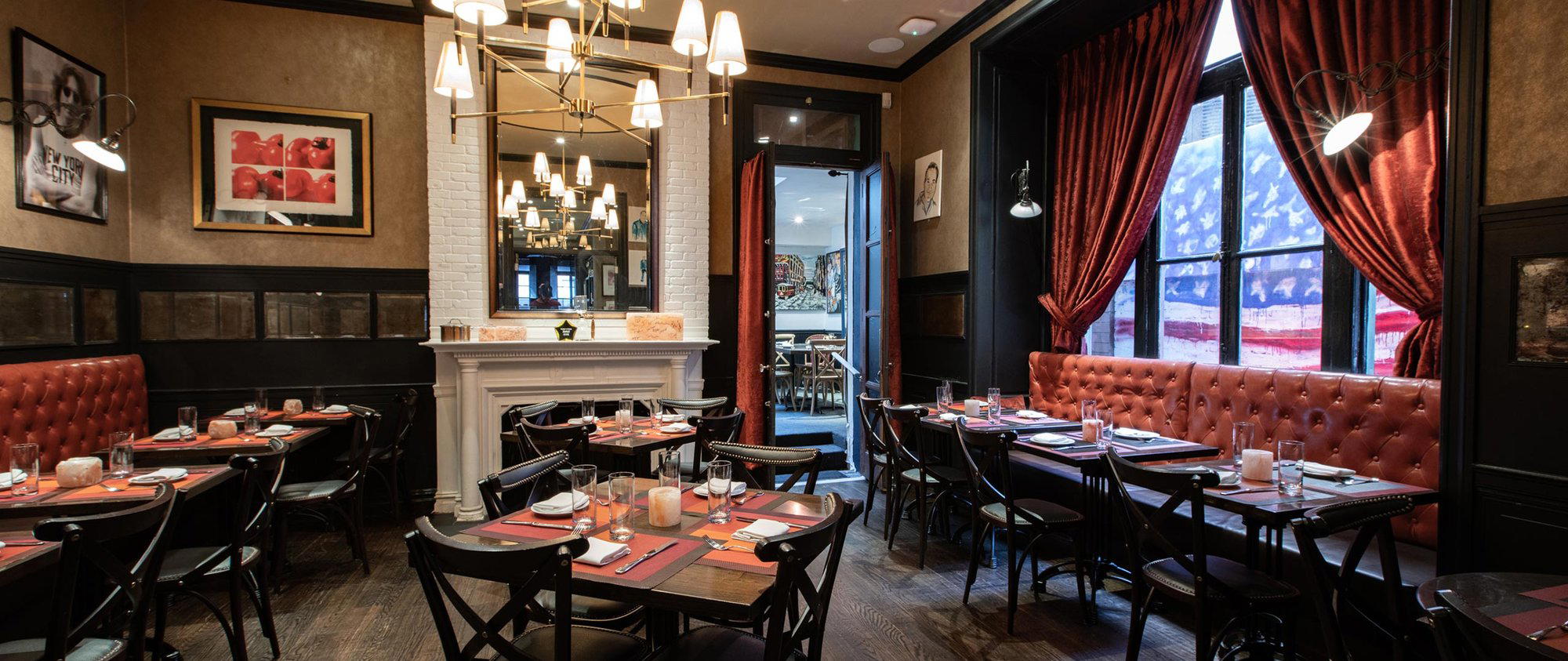
Where the Upper East Side Meets American Ambition
The Upper East Side has always occupied an interesting position in New York's restaurant hierarchy. It carries the weight of old-guard dining rooms that once defined the city's fine dining conversation, while newer arrivals have had to reckon with a neighbourhood clientele that expects polish without pretension. At 135 East 62nd Street, David Burke Tavern sits inside that negotiation. The address places it squarely in a residential stretch where regulars matter as much as destination diners, and where the menu has to perform two jobs simultaneously: satisfy the returning guest and hold the attention of the first-timer who has read the room correctly.
In a city where the upper tier of tasting-menu restaurants, including Le Bernardin, Atomix, Eleven Madison Park, Masa, and Per Se, operates at price points and formality levels that effectively narrow their audience, the mid-to-upper bracket of American restaurant cooking fills a structurally important role. These are the rooms where technique is present but not the performance. The menu architecture signals intent without requiring a rehearsed approach from the guest.
Reading the Menu as a Document
The way a menu is organised tells you more about a restaurant's identity than any single dish. At David Burke Tavern, the structure reflects an American approach to European culinary vocabulary: recognisable categories, familiar protein anchors, and room for the kitchen to express its technical range without subordinating the guest's ability to move through the meal at their own pace. This is a different philosophy from the locked-format tasting menus that dominate the upper end of New York's critical conversation. It places decision-making back with the diner, which is either a feature or a limitation depending on what you're looking for.
That structural choice connects David Burke Tavern to a broader pattern in American chef-driven restaurants that resist the omakase or prix-fixe orthodoxy. Across the country, from Lazy Bear in San Francisco to Emeril's in New Orleans, the question of menu format has become a genuine editorial statement. Offering a la carte dining at this level is not a default; it is a position. It signals that the kitchen is confident enough in each component to let it stand alone, rather than relying on narrative sequence to carry the meal's logic.
The tavern framing in the name is worth taking seriously as a structural cue. Taverns, in the American culinary tradition, are places where hospitality precedes formality. The format implies a certain looseness of approach, a willingness to let the guest determine the pace and scope of the meal. When a technically trained kitchen operates inside that frame, the tension between ambition and accessibility becomes the defining characteristic of the experience. That tension is precisely what distinguishes this tier of New York dining from the commitment-heavy rooms at the summit of the market.
The Chef-Driven American Tier
New York's chef-driven American restaurants occupy a competitive middle ground that is harder to define than the Michelin-starred tasting-menu bracket but no less seriously contested. The names that populate this tier have typically trained through serious kitchens, developed recognisable signatures, and built reputations that travel beyond a single address. The credentials that attach to David Burke's name, accumulated across decades of New York and national cooking, place the Tavern inside a comparable set that includes restaurants of genuine technical seriousness. For context, consider the range of chef-driven American formats across the country: Smyth in Chicago, Single Thread Farm in Healdsburg, Providence in Los Angeles, and Blue Hill at Stone Barns in Tarrytown all approach the same fundamental problem: how to express a kitchen's identity through a format that remains legible and enjoyable for a broad dining public.
David Burke's career arc also connects to a generation of American chefs who came up through French technique and rebuilt that vocabulary into something distinctly American. That lineage puts the Tavern in conversation with places like The French Laundry in Napa, Addison in San Diego, and The Inn at Little Washington, even if the price point and format differ. The underlying grammar is shared: classical training applied to local and seasonal materials, with enough personality to make the translation visible.
Neighbourhood Context and Practical Positioning
The Upper East Side dinner market has specific rhythms. Weekday evenings tend toward neighbourhood regulars; weekends see a broader mix of destination diners who have chosen the area deliberately. For anyone exploring the New York dining scene beyond the obvious Midtown and downtown clusters, the 60s on the East Side offer a different kind of evening: quieter streets, a more residential feel, and rooms where the ambient noise level allows for actual conversation. The restaurant fits that context. It is the kind of address you come back to rather than simply tick off. For a fuller map of where it sits in the wider New York restaurant picture, the New York City restaurant guide covers the range from neighbourhood standbys to the city's most competitive reservation targets.
For international reference, the model of technically serious cooking delivered through a relaxed, navigable format has strong equivalents in European dining. Frasca Food and Wine in Boulder operates on similar principles in an American context, while European rooms like Atelier Moessmer Norbert Niederkofler in Brunico and Dal Pescatore in Runate demonstrate how deep regional identity can anchor a menu without requiring the guest to do interpretive work just to order dinner.
Le Bernardin French, Seafood, prix-fixe $$$$ 3-4 weeks minimum Midtown West Per Se French, Contemporary, tasting menu $$$$ 4-6 weeks minimum Columbus Circle Eleven Madison Park French, Vegan, tasting menu $$$$ 4-6 weeks minimum Flatiron Masa Sushi, omakase $$$$ 6-8 weeks minimum Columbus Circle
Recognition, Side-by-Side
Comparable venues nearby, for context on price, style, and recognition.
| Venue | Cuisine | Price | Notes |
|---|---|---|---|
| David Burke TavernThis venue — the venue you are viewing | Modern American Steakhouse | $$$ | Not listed |
| Lips | American Drag Dining | $$$ | East Midtown-Turtle Bay |
| Herb N' Kitchen | American Market Cafe | $$$ | Midtown-Times Square |
| Dizzy's Club | Southern American Jazz Club Cuisine | $$$ | Upper West Side-Lincoln Square |
| Pershing Square | American Bistro | $$$ | East Midtown-Turtle Bay |
| Riverpark | Seafood-Forward New American | $$$ | Murray Hill-Kips Bay |
Continue exploring
More in New York City
Restaurants in New York City
Browse all →
Bars in New York City
Browse all →



Hotels in New York City
Browse all →





At a Glance
- Modern
- Elegant
- Sophisticated
- Trendy
- Date Night
- Special Occasion
- Brunch
- Open Kitchen
- Extensive Wine List
- Craft Cocktails
Current opening hours
- Monday
- Closed
- Tuesday
- 12–3:30 PM, 4–9 PM
- Wednesday
- 12–3:30 PM, 4–9:30 PM
- Thursday
- 12–3:30 PM, 4–9:30 PM
- Friday
- 12–3:30 PM, 4–10 PM
- Saturday
- 11 AM–3:30 PM, 4–10 PM
- Sunday
- 11 AM–3:30 PM, 4–9 PM
Hours can change for holidays and private events. Last verified .
Sophisticatedly relaxed clubby rooms upstairs with a casual tavern vibe downstairs, dramatic atmosphere.