Our verdict
Set inside a restored 17th-century merchant palace in the Tunis medina, Dar El Jeld is among the most architecturally significant dining rooms in the Maghreb. The kitchen draws on deep Tunisian culinary tradition, presenting dishes rooted in the region's complex spice culture and coastal larder. Reserve well in advance; tables in the central courtyard move quickly.

Pearl is the En Primeur Club membership app, where members save venues, book tables and use the concierge.
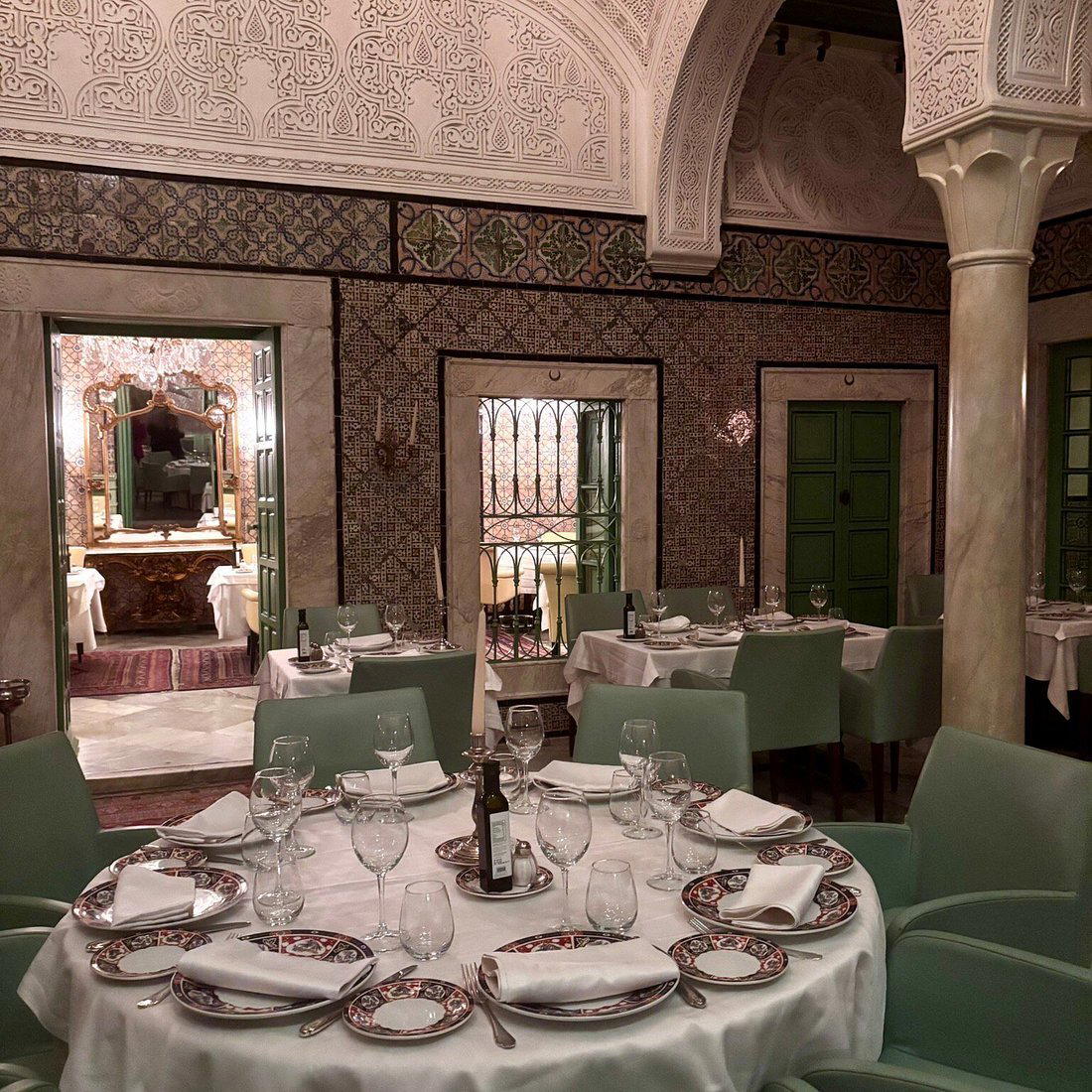
A Medina Dining Room That Earns Its Address
The old merchant palaces of Tunis's medina were not built for restaurants. They were built for families of consequence, arranged around central courtyard gardens with carved stucco ceilings and hand-painted tile work that signalled status through accumulated craft rather than scale. Dar El Jeld occupies one of these structures on Rue Dar El Jeld, and the experience of arriving there, through the narrow lanes of the UNESCO-listed medina, past spice vendors and the occasional cat on a warm stone step, is as much a part of the meal as anything that reaches the table. The building sets expectations that the kitchen then has to meet.
That spatial logic matters because it is not common. Most cities with a serious medina tradition have lost significant portions of their historic domestic architecture to commercial conversion or neglect. Tunis has kept more than most, and the cluster of restored dars around the central medina represents a genuine conservation achievement. Dar El Jeld sits near the best of that cluster in terms of architectural ambition, with interiors that feel worked rather than staged, the kind of tilework and plasterwork that took years to complete and cannot be replicated on a renovation budget.
The Sourcing Argument Behind Tunisian Cuisine
Tunisian cooking has a sourcing story that rarely travels as far as the food itself does. The country's culinary identity sits at a junction point: Berber foundations, Ottoman spice integration, Andalusian refugee influence from the 16th and 17th centuries, and a Mediterranean coastal larder that includes some of the most productive fishing grounds in North Africa. The result is a cuisine that looks simple on the plate but carries significant agricultural and historical depth.
The spice question is worth dwelling on. Tabil, a ground coriander-heavy blend specific to Tunisia, appears in dishes across different regions but varies considerably in composition depending on the household. Harissa, now so widely exported that it has lost some of its specificity, is in its Tunisian form a condiment of real complexity, ranging from sweet-fruited to deeply smoky depending on the pepper variety and preparation method. Restaurants serious about this cuisine do not source harissa or spice blends generically. The quality gap between an industrially produced harissa and one made from dried Nabeul peppers with olive oil and local caraway is significant and immediately legible in cooked dishes.
Olive oil sits at the centre of this sourcing discussion. Tunisia is among the largest olive oil producers in the world, and the country's interior regions, particularly around Sfax and the Sahel, produce oils of considerable character, many of them from varieties that have not yet entered international specialty markets. A kitchen that uses high-quality Tunisian olive oil as a cooking medium rather than a garnish is making a structural statement about ingredient priority. The same applies to the coastal catch: rouget, sea bream, and octopus from the Gulf of Tunis appear in serious medina kitchens as fresh-market product, not as imported commodity protein.
This is the frame through which Dar El Jeld should be read. The restored architecture draws visitors in; the sourcing argument is what justifies a return visit. Restaurants working in this tradition occupy a different bracket from the tourist-facing eateries around the medina entrance, where the cooking flattens regional specificity in favour of recognisable flavours. For context on what serious regional sourcing looks like in other Mediterranean traditions, the work done at places like Uliassi in Senigallia or Quattro Passi in Marina del Cantone shows how coastal-ingredient discipline translates into category definition. In Tunis, Dar El Jeld occupies that anchoring position for traditional haute cuisine.
Where Dar El Jeld Sits in the Tunis Dining Scene
The Tunis restaurant scene covers significant range, from neighbourhood grills in suburban districts like El Menzah, where Chef Zhang represents the city's international layer, to coastal seafood establishments in La Marsa, where Le Golfe draws a different clientele entirely. The medina tier sits apart from both. It is not suburban and it is not beachside; it is urban and historical, and the leading tables here price and position themselves accordingly.
Dar El Jeld competes within a small cohort of restored-palace restaurants that serve Tunisian cuisine at a formal register. The comparison set is not Walima or Restaurant Sultan Ahmet, which represent different stylistic approaches, but rather the handful of addresses where the architecture, the service formality, and the culinary ambition are calibrated to the same level. That is a short list in Tunis, and Dar El Jeld appears on it consistently. Internationally, the approach of anchoring fine dining to a specific regional culinary inheritance, as seen at Dal Pescatore in Runate or Atelier Moessmer Norbert Niederkofler in Brunico, provides a useful comparative lens. The context is different, but the commitment to place-specific cooking is the same structural decision. See our full Tunis restaurants guide for a broader map of where the city's dining sits by neighbourhood and style.
Planning Your Visit
The address on Rue Dar El Jeld places the restaurant inside the medina's historic core, which means arriving by car requires parking outside the pedestrian zone and entering on foot. The walk from Place du Gouvernement takes roughly five to eight minutes through lanes that are not always signposted for visitors. Allowing extra time in the evening makes sense, particularly if arriving after dark. Tables in the courtyard are the priority booking; covered interior rooms are available but carry less of the architectural impact that defines the experience. The restaurant's position as one of the medina's most recognised formal dining addresses means bookings should be made in advance, especially on weekends and during the summer months when Tunis sees higher visitor volumes. The dress code expectation, while not confirmed in published form, aligns with the formal register of the space: the setting sets its own standard.
Frequently asked questions
Would Dar El Jeld be comfortable with kids?
The setting inside a restored medina palace on Rue Dar El Jeld is formal enough that very young children may find the pace slow and the environment better suited to older diners. The courtyard layout and traditional Tunisian service rhythm favour a seated, unhurried meal. Families with teenagers or older children who are curious about Tunisian culinary heritage tend to find it a more natural fit.
Is Dar El Jeld formal or casual?
Dar El Jeld occupies a category somewhere between occasion dining and cultural institution. The 18th-century palace architecture on Rue Dar El Jeld sets a formal tone, and the restaurant's long-standing reputation in Tunis means most guests dress accordingly. It is not a jacket-required room in the European sense, but shorts and beachwear would read as mismatched against the surroundings.
Is Dar El Jeld in Tunis worth visiting for an authentic Tunisian dining experience?
Dar El Jeld is one of a small number of Tunis restaurants operating inside a genuine restored palace in the medina's historic core, which gives the setting a documentary quality that purpose-built restaurants cannot replicate. The Rue Dar El Jeld address places it within walking distance of the Zitouna Mosque and the main souk arteries, making it a natural anchor point for anyone spending serious time in the old city. For travellers whose primary interest is Tunisian cuisine in a historically grounded context, the combination of architecture and cooking tradition is difficult to find at the same address elsewhere in the city.
What's the best thing to order at Dar El Jeld?
Dar El Jeld built its reputation on traditional Tunisian cooking drawn from the country's crossroads position between Berber, Arab, Ottoman, and Mediterranean culinary traditions. Slow-cooked and spiced preparations are central to that canon. The restaurant's address in Tunis's historic medina core has always signalled that the kitchen anchors itself in that classical register rather than pursuing contemporary fusion.
Where is Dar El Jeld in Tunis?
Dar El Jeld is located at 5-10, Rue Dar El Jeld، Street 1005, Tunisia, Tunis.
Comparable Venues
Comparable venues nearby, for context on price, style, and recognition.
| Venue | Cuisine | Price | Notes |
|---|---|---|---|
| Dar El JeldThis venue (the venue you are viewing) | Traditional Tunisian Fine Dining | $30–50 | Not listed |
| Restaurant Sultan Ahmet | Authentic Turkish with Levantine Influences | Not listed | Manar II |
| Chef Zhang | Chinese | Not listed | El Menzah |
| L'antica Pizzeria DaPietro | Traditional Neapolitan Pizza | Not listed | Galaat el Andeless, Ariana |
| Walima | Traditional Tunisian | Not listed | Tunis Carthage Cedex |
| Le Resto du Peuple | Authentic Tunisian | Not listed | Medina of Sousse |
Continue exploring
More in Tunis
Restaurants in Tunis
All restaurants in Tunis →
Details
- Romantic
- Elegant
- Historic
- Intimate
- Sophisticated
- Date Night
- Special Occasion
- Live Music
- Historic Building
- Courtyard
- A La Carte
- Vegetarian Friendly
- Vegan Options
- Halal
Current opening hours
- Monday
- 12–3 PM, 7:30–11:30 PM
- Tuesday
- 12–3 PM, 7:30–11:30 PM
- Wednesday
- 12–3 PM, 7:30–11:30 PM
- Thursday
- 12–3 PM, 7:30–11:30 PM
- Friday
- 12:30–3 PM, 7:30–11:30 PM
- Saturday
- 12–3 PM, 7:30–11:30 PM
- Sunday
- Closed
Hours can change for holidays and private events. Hours as of .
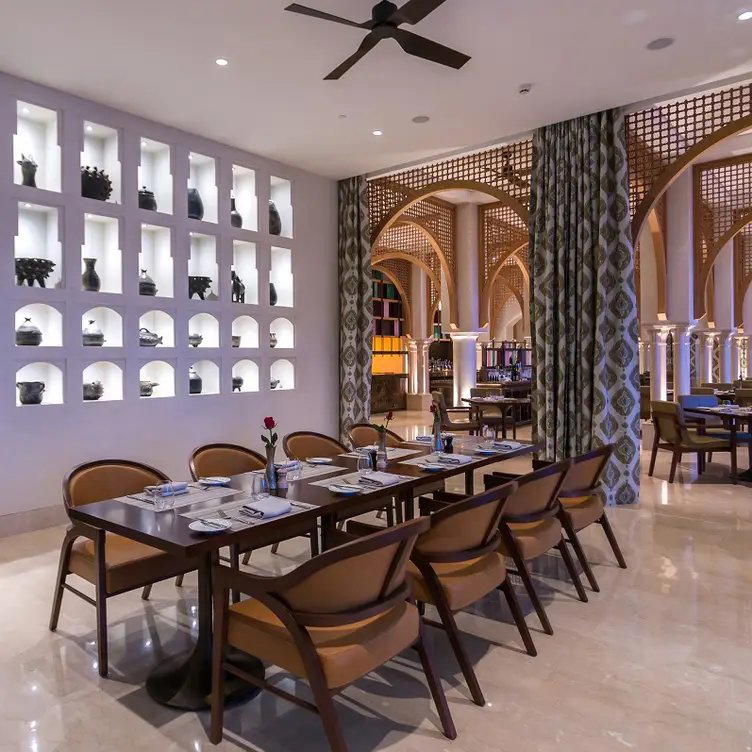
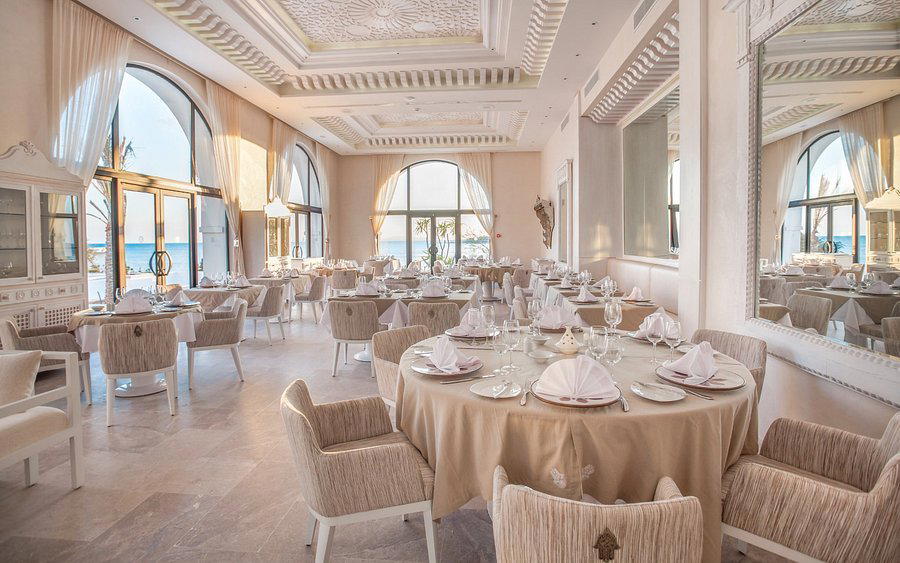
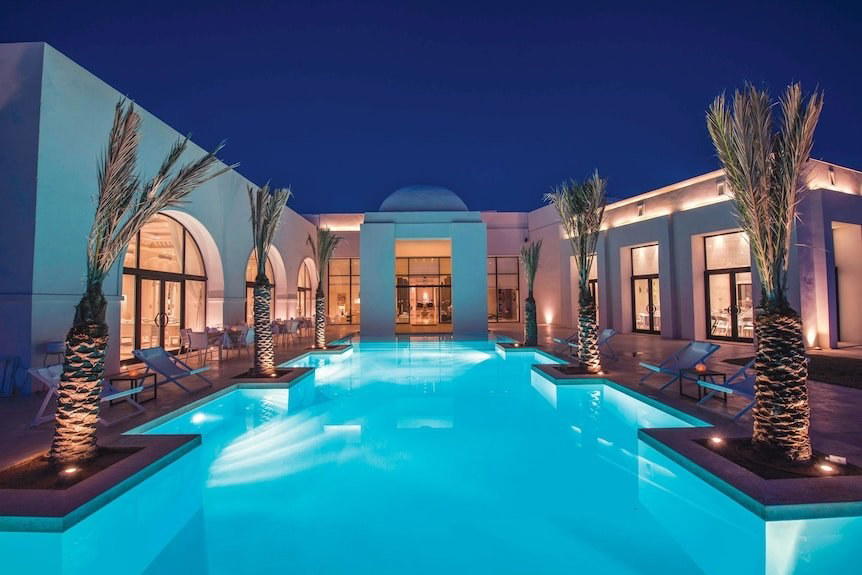
Candlelit courtyard with lively tiling and glittering chandeliers creating a romantic, authentic atmosphere.