D'Amico's Italian Market Cafe
D'Amico's Italian Market Cafe has occupied the Rice Village corridor for decades, making it one of Houston's longer-standing Italian casual formats in a neighbourhood that has cycled through dining trends repeatedly. The market-cafe hybrid positions it differently from the city's fine-dining Italian rooms, trading tableside ceremony for a counter-service familiarity that has kept a steady local following across multiple generations of Houston diners.
Pearl is the En Primeur Club membership app — saves, bookings, and concierge access live there. Same editors, same standards.
- Address
- 5510 Morningside Dr Suite 140, Houston, TX 77005
- Phone
- +17135263400
- Website
- damico-cafe.com
- Directions
- Get directions
 Saves & bookings on Pearl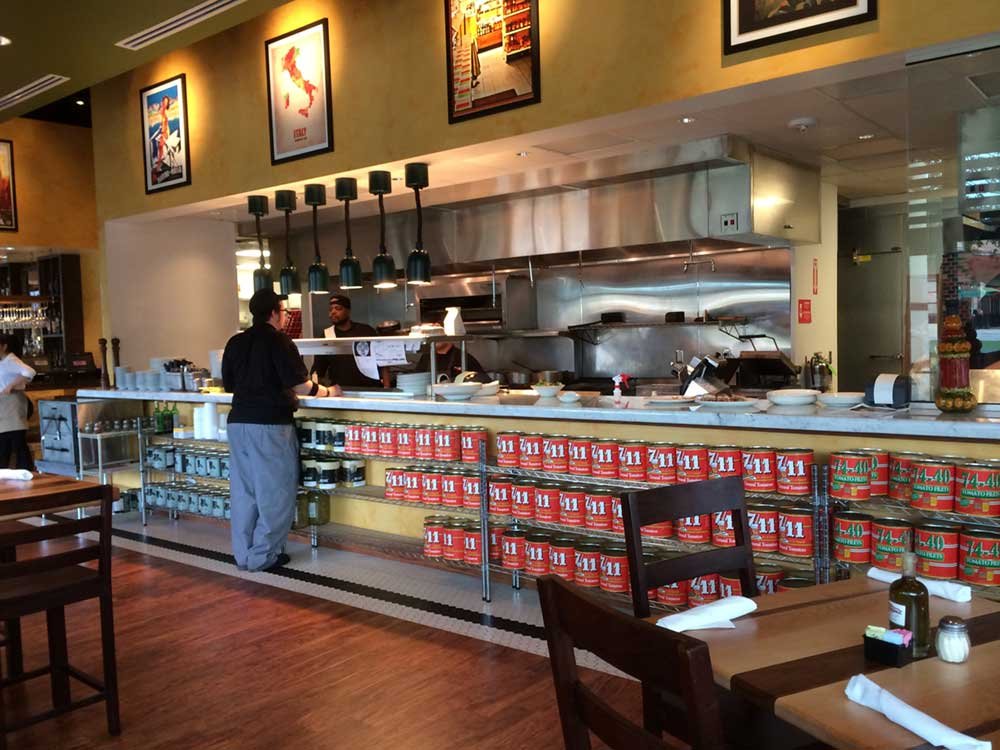
Rice Village and the Italian Casual Format
Houston's Rice Village corridor has absorbed and shed dining concepts at a pace that makes longevity its own credential. Against that backdrop, D'Amico's Italian Market Cafe, at 5510 Morningside Drive, is a casual Sicilian-Italian restaurant in Houston's Rice Village. The market-cafe model it occupies sits apart from the city's current Italian fine-dining tier. D'Amico's trades that ceremony for something closer to the Roman trattoria logic: show up, eat well, leave without a reservation slot having consumed two weeks of your planning attention.
That positioning matters more now than it did when the concept first took shape. Houston's mid-tier Italian category has compressed sharply over the past decade, squeezed between fast-casual chains expanding from above and tasting-menu formats pulling the price conversation upward. The venues that have survived in the middle have generally done so by deepening their neighbourhood identity rather than chasing trend cycles. D'Amico's address in Rice Village, a walkable pocket that runs against Houston's car-dependent grain, gives it a geographic anchor that purely destination-driven concepts lack.
How the Market-Cafe Format Has Shifted
The market-cafe hybrid that D'Amico's represents was a recognizable American Italian format through the 1990s and early 2000s, drawing on the idea that a deli counter, prepared foods case, and sit-down tables could coexist under one roof. That model has since fractured. In most American cities, the components separated: the prepared-foods logic migrated into upscale grocery, the deli counter found its own artisan-focused lane, and the sit-down portion either upgraded toward full-service or retreated to fast-casual. Operations that kept the integrated format intact became rarer, which is partly why D'Amico's draws the local recognition it does. The format itself, rather than any particular reinvention, is now the distinguishing feature.
This is worth understanding for visitors comparing it against Houston's broader Italian options. The city's Italian dining at the upper end runs toward the formal and the regional-specific. March, operating in a Venetian idiom at the $$$$ tier, represents one extreme of that spectrum. D'Amico's operates in a different conversation entirely, one where the reference points are neighborhood regulars rather than destination seekers flying in for a single meal. That comparison isn't a hierarchy so much as a map of what Houston's Italian dining actually looks like across its full range.
The Evolution Question
The useful frame for D'Amico's current position is not what it has added but what it has retained. Across the span of Houston's dining development from the early 2000s through the post-pandemic reconfiguration, the concepts that evolved most aggressively often lost the neighborhood coherence that made them worth returning to in the first place. The Italian casual format, when it works, works through repetition and reliability: the same pasta executed the same way, the same counter staff who recognize a Tuesday regular. That kind of institutional memory is genuinely difficult to rebuild once lost, which is why operations that maintained it through disruption carry a different value proposition than newer entrants.
Houston's dining scene has acquired considerable depth at the upper tiers over the past decade. Venues like Le Jardinier Houston (French), Musaafer (Indian), and BCN Taste and Tradition (Spanish) demonstrate the city's ambition at the formal end. Tatemó shows how the masa-focused Mexican format has found serious critical traction. The Italian mid-tier has not seen the same wave of ambitious new entrants, which leaves D'Amico's as one of the more visible surviving examples of a format that once dominated the neighborhood casual category.
Rice Village as a Dining Address
The neighborhood context shapes the experience as much as any menu detail. Rice Village is walkable by Houston standards, drawing from the Rice University population, the adjacent Museum District, and the established residential density of West University Place. That demographic mix tends to sustain the kind of daily-use Italian operation D'Amico's represents better than high-footfall tourist corridors do. Lunch at a market-cafe works when people are actually walking to it from nearby offices and apartments; it functions less well in districts where dining is purely destination-driven.
The Rice Village address also places D'Amico's adjacent to a cluster of independent retailers and service businesses that have themselves cycled through multiple phases since the 1970s. The neighborhood has absorbed significant development pressure without entirely losing its pre-chain character, though the balance has tightened. Concepts that have held their location through that pressure, as D'Amico's has at the Morningside Drive address, tend to carry a different relationship with the local customer base than newer arrivals do.
Planning a Visit
Market-cafe format means the logistics differ from a conventional restaurant booking. Counter-service or hybrid counter-table operations typically don't require advance reservations at the same threshold that full-service rooms do, though peak lunch hours in a neighborhood this dense can create wait times for seating. The practical approach is to arrive early in a meal period rather than at its peak, particularly on weekdays when the Rice University and Medical Center adjacent workforce pushes midday traffic.
D'Amico's sits outside that tier, which is precisely its value for a neighborhood lunch or an unfussy dinner. Other reference points for how American casual-to-mid-tier dining has evolved include Lazy Bear in San Francisco, Smyth in Chicago, Emeril's in New Orleans, Providence in Los Angeles, Blue Hill at Stone Barns in Tarrytown, Addison in San Diego, The Inn at Little Washington, Atomix in New York City, Atelier Moessmer Norbert Niederkofler in Brunico, and Single Thread Farm in Healdsburg, each of which shows a different resolution to the question of what a restaurant owes its regulars versus its destination visitors.
A Lean Comparison
Comparable venues nearby, for context on price, style, and recognition.
| Venue | Cuisine | Price | Notes |
|---|---|---|---|
| D'Amico's Italian Market CafeThis venue — the venue you are viewing | Not listed | $$ | Not listed |
| Murray’s Pizza & Wine | Hennessey, Artisan Pizza & Small Plates | $$ | Not listed |
| Pizaro’s Pizza | Not listed | $$ | Spring Branch West, Neapolitan Pizza Napoletana |
| Star Pizza | Montrose, Chicago & New York Style Pizza | $$ | Not listed |
| Milton's | Pemberton, Italian-American Trattoria | $$$ | Not listed |
| Pizzeria Solario | Greenway, Neapolitan-Style Pizza | $$ | Not listed |
Continue exploring
More in Houston
Restaurants in Houston
Browse all →
Bars in Houston
Browse all →
Hotels in Houston
Browse all →
At a Glance
- Cozy
- Classic
- Lively
- Family
- Casual Hangout
- Group Dining
- Open Kitchen
Current opening hours
- Monday
- 11 AM–9 PM
- Tuesday
- 11 AM–9 PM
- Wednesday
- 11 AM–9 PM
- Thursday
- 11 AM–9 PM
- Friday
- 11 AM–10 PM
- Saturday
- 11 AM–10 PM
- Sunday
- 12–9 PM
Hours can change for holidays and private events. Last verified .
Casual and relaxed with checkered tablecloths, crowded energy, quiet indoor options, and pleasant outdoor patio seating.